
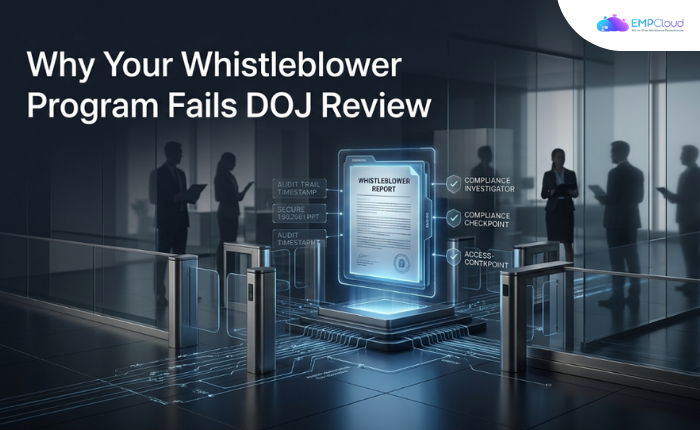
Most companies believe they have a whistleblower program. What they actually have is a phone number nobody calls and a policy buried in the employee handbook. The DOJ knows the difference. Its Evaluation of Corporate Compliance Programs requires that a whistleblower system be genuinely operational, demonstrably confidential, and traceable through resolution with a full audit trail from first receipt to final disposition. That’s a different standard than most HR teams are building to.
The gap is getting harder to ignore. NAVEX’s 2025 Whistleblowing & Incident Management Benchmark Report tracked 2.15 million reports across 4,077 organizations covering 69 million employees — with volume at record levels for the second consecutive year. The SEC received approximately 27,000 whistleblower tips in FY 2025 alone. Reports are rising. Regulatory scrutiny is sharper. And yet most compliance programs carry the same three structural weaknesses they had five years ago.
In a hurry? Listen to the blog instead!
The Three Places Whistleblower Programs Actually Break

These aren’t theoretical failure modes. They’re the ones auditors find repeatedly, and they all stem from the same root cause: HR data living in disconnected systems that weren’t designed for chain-of-custody accountability.
1. Confidentiality Collapses at the Investigation Stage
The intake form is usually fine. A web portal, maybe an anonymous hotline. The problem is what happens ten days later when an HR manager needs to cross-reference the report against attendance records, performance history, or payroll data. That’s when the investigation moves onto shared drives and email threads. That’s when a forwarded attachment reaches someone who shouldn’t see it. Confidentiality didn’t fail at intake — it failed at the moment HR needed to do actual work.
SOC 2 and ISO 27001 both require access logs as proof of data protection. In whistleblower contexts, that extends to chain-of-custody documentation covering every access event from first receipt onward. Shared drives produce none of this automatically.
2. No Chain of Custody on the Report Itself
A timestamped, role-restricted access log sounds like a technicality until a regulator asks: “Who accessed this report, when, and in what capacity?” If you can’t answer that question, your program isn’t auditable — and under the DOJ’s framework, an unauditable program is not a compliant one.
The most common mistake here isn’t malice; it’s architecture. When whistleblower reports live in the same general HR inbox that handles resignation letters and leave requests, there is no technical mechanism to enforce role restriction. Anyone with inbox access can read the report. The log, if it exists at all, shows only that someone opened email — not which report, not in what context.
3. HR Data Living in Silos That Force Manual Cross-Referencing
An investigator needs the accused employee’s attendance pattern over the past quarter, their recent performance review outcomes, and whether any payroll anomalies coincide with the reported period. In a siloed environment, that means three separate system logins, manual exports, spreadsheets, and inevitable version-control problems. The investigation takes weeks. During that time, more people learn about it. The window for retaliation widens.
This is where the FCA’s data is instructive: their Q4 2025 whistleblowing data found that 281 reports contained 788 separate allegations — an average of nearly three allegations per report. Multi-allegation investigations require correlating data across multiple HR modules simultaneously. Manual cross-referencing at that complexity isn’t just slow; it creates documentation gaps that regulators treat as red flags.
What “Genuinely Operational” Actually Requires

The DOJ’s language is worth sitting with. “Genuinely operational” means the system produces evidence — not just policy documents. It means you can demonstrate that reports were received, handled by restricted personnel, cross-referenced against other HR data without that data leaving a permissioned environment, and tracked through to resolution. Every step documented. Every access logged.
That’s an infrastructure problem as much as a policy problem. Which is why the compliance answer isn’t a standalone whistleblower portal bolted onto your existing HR stack — it’s a platform where the access-control architecture extends across every module the investigation might touch.
How the Architecture Has to Work
EMPCloud addresses this at the layer where most programs fail: access control and cross-module data queries. The platform’s RBAC system runs on an OAuth2/OIDC authorization server — which means role-restricted access isn’t a setting someone toggles; it’s enforced at the authorization layer across all modules, including during investigations.
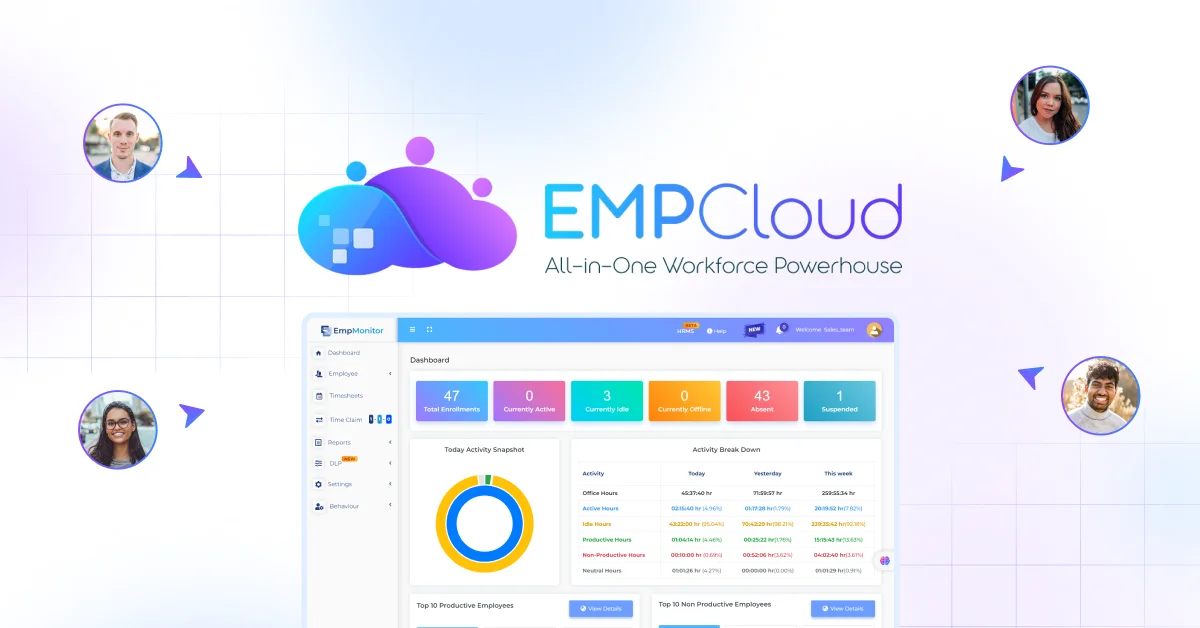
The AI agent’s Feedback Stream tool handles end-to-end confidential report tracking. A whistleblower report moves through the system with its access log intact — who opened it, when, under what role. The report doesn’t migrate to email. It doesn’t land on a shared drive. The chain of custody exists because the system produces it as a structural output, not because someone remembered to document manually.
The cross-referencing problem — the one that forces investigators onto spreadsheets — is addressed by the Smart SQL natural-language analytics tool. An investigator can pull data from attendance, leave, payroll, and performance in a single permissioned conversation, without exporting anything. The query runs inside the platform’s access-control boundary. The data never leaves a controlled environment, and the query itself is logged.
This matters specifically for industries where compliance complexity is highest. Telecom and NBFCs face field-workforce compliance requirements that compound whistleblower risk — distributed workforces, geo-tracked field agents, and sensitive financial data all create more surfaces for the kind of misconduct that generates reports. Having attendance and location data in the same permissioned system as the investigation tool isn’t a convenience feature; it’s what makes cross-module correlation possible without breaking the chain of custody.
The IRS Problem Nobody Talks About
There’s a second compliance risk that gets less attention: retaliation timelines. The IRS admits its whistleblower award processes average over 10 years to resolve. A decade is a long time for retaliation risk to sit open. During that window, your HR system needs to maintain a documentable record of how that employee was treated in performance reviews, promotions, and compensation decisions. If those records live in disconnected systems with inconsistent audit trails, you cannot prove non-retaliation. You can only assert it.
This is one reason offboarding is a higher-stakes process than most HR teams treat it. If a whistleblower eventually leaves — voluntarily or otherwise — the offboarding record needs to preserve the professional record, performance metrics, and recognition history intact. Not archived somewhere inaccessible. Preserved in a way that can be surfaced years later under legal scrutiny.
A Practical Audit Checklist
Before your next compliance review, run these questions against your current setup:
- Can you produce a timestamped, role-restricted access log for any whistleblower report in the past 24 months? Not a general system log — a report-specific chain-of-custody document.
- When an investigator needs attendance, payroll, or performance data for a subject employee, where does that data go? If the answer involves an export, a spreadsheet, or an email attachment, your confidentiality architecture has a gap.
- Does your RBAC system extend to the investigation workflow itself? Or does role restriction stop at the intake portal and rely on honor-system access controls after that?
- Can you demonstrate, to a DOJ auditor, that the program is in active use and producing documented outcomes? Policy documents alone don’t satisfy “genuinely operational.”
None of these are hard questions. They’re just questions most HR teams haven’t been asked yet — because regulators are only now raising the technical bar on what “compliant” means.
The volume of reports isn’t going down. Neither is the regulatory expectation that your system can prove it handled them correctly. Building a whistleblower program on disconnected tools and manual documentation isn’t a gap you can close with better intentions. It requires an architecture that produces compliance evidence as a default output, not as an afterthought.
Start your free 15-day EMPCloud trial and see how RBAC-enforced access control, the Feedback Stream tool, and cross-module natural-language analytics work together to make your whistleblower program auditable by design — not by luck.
Frequently Asked Questions: –
1. Why do whistleblower programs fail DOJ compliance reviews?
Most whistleblower programs do not fail because they lack a reporting hotline or written policy. They fail when companies cannot demonstrate what happened after a report was submitted. Missing access controls, weak investigation records, confidentiality gaps, and incomplete audit trails can make a program difficult to defend during a DOJ compliance review.
2. What does the DOJ expect from a whistleblower reporting program?
The DOJ expects a whistleblower program to be genuinely operational, accessible, trusted by employees, and capable of handling reports effectively. Companies should be able to demonstrate how reports are received, investigated, protected from unauthorized access, and tracked through resolution.
3. How can companies protect whistleblower confidentiality during an investigation?
Confidentiality requires more than an anonymous reporting form. Access to the report should remain restricted throughout the investigation, and organizations should maintain a clear record of who accessed sensitive information and why. Moving reports through shared inboxes, spreadsheets, and email attachments can create unnecessary confidentiality risks.
4. Why is an audit trail important for whistleblower investigations?
A complete audit trail helps organizations demonstrate how a whistleblower report was handled from receipt to final resolution. It can document access events, investigation activity, case updates, and decisions, making it easier to establish accountability during internal reviews or regulatory scrutiny.
5. Can disconnected HR systems create whistleblower compliance risks?
Yes. When investigators must export attendance, payroll, performance, or employee data from multiple systems, sensitive information can move outside controlled environments. Manual cross-referencing also creates documentation gaps, increases the number of people handling sensitive data, and makes it harder to maintain a complete chain of custody.
Quick Search Our Blogs
Type in keywords and get instant access to related blog posts.