
The reports are coming in — and at record volume. NAVEX’s 2025 Whistleblowing & Incident Management Benchmark Report tracked 2.15 million reports across 4,077 organizations covering 69 million employees, with volume holding at record levels for the second consecutive year. That’s an enormous amount of signal entering corporate compliance systems. The problem isn’t collection. It’s what happens — or doesn’t happen — after a report lands.
Most compliance teams concentrate budget on intake: the anonymous portal, the hotline number, the poster in the break room. Almost nothing goes toward the back half of the process. That’s the gap regulators are now probing.
In a hurry? Listen to the blog instead!
The DOJ Doesn’t Care About Your Hotline Poster
The DOJ’s Evaluation of Corporate Compliance Programs is explicit: a whistleblower system earns credit only if it is genuinely operational, demonstrably confidential, and traceable through resolution. Regulators want an audit trail — evidence that reports moved, that investigators were assigned, that outcomes were documented. A hotline that collects reports into an unmanaged inbox satisfies zero of those requirements.
The regulatory environment has made ignoring this expensive. Organizations facing compliance failures don’t typically lack a reporting channel — they lack a system that works end to end. The consequence of that gap isn’t just reputational; it removes the program from the DOJ’s leniency calculus entirely. And the volume of external escalation is climbing: the SEC received approximately 27,000 whistleblower tips in FY 2025 alone. When internal programs feel broken, employees go external — and external is far harder to manage.
Where the Actual Breakdown Happens

There are three failure points that appear repeatedly across organizations of every size.
1. Confidentiality Collapses at the Investigation Stage
Anonymous intake is table stakes. The harder problem is keeping the reporter’s identity protected through the investigation itself. The moment a case gets assigned, emailed around, or discussed in an unmonitored channel, anonymity is at risk. Most compliance teams handle case notes in shared drives or email threads — exactly the kind of untracked data that creates compounding liability before any violation is confirmed.
The DOJ specifically looks for whether employees believe the system protects them. If substantiated reports result in visible retaliation — even circumstantial — the entire program loses credibility and DOJ leniency eligibility. The IRS, for its part, admits its award processes average over 10 years, causing untold hardship to reporters who have already lost their jobs and careers. Employees know these odds. If your internal program signals the same dysfunction, they will escalate externally — which is far harder to contain.
2. No Chain of Custody on the Report Itself
Who saw the report? When? What action did they take, and when? Without timestamped, role-restricted access logs, you cannot answer those questions under audit. SOC 2 and ISO 27001 both require access logs as proof of data protection. In whistleblower contexts, the same principle applies with higher stakes: you need to demonstrate not just that data was protected, but that case-handling was disciplined from first receipt to final disposition.
3. HR Data Lives in Silos
A whistleblower report rarely exists in isolation. It often touches payroll anomalies, attendance records, performance history, or project assignments. When those data sources live in disconnected systems, the investigator assembles context manually — slowly, incompletely, and with documentation that wouldn’t survive external scrutiny. The FCA’s Q4 2025 whistleblowing data found that 281 reports contained 788 separate allegations — an average of nearly three allegations per report. Each allegation may point to a different HR data source. Manual cross-referencing doesn’t scale, and the paper trail it leaves is exactly what regulators pick apart.
What a Functional System Actually Requires
Generic advice — “integrate your systems,” “ensure confidentiality” — is useless without a mechanism. A whistleblower program that satisfies DOJ expectations needs four concrete things: confidential intake with persistent anonymity through resolution; role-restricted case access with full audit logging; the ability to query corroborating HR data without exposing the reporter; and documented outcomes at each stage. That’s a workflow problem, not just a policy problem.

EMPCloud addresses the follow-through gap directly through its AI agent’s Feedback Stream tool, which lets compliance and HR teams track whistleblower reports confidentially end-to-end. Access is governed by role-based permissions — the same RBAC layer and OAuth2/OIDC authorization server that controls the rest of the platform — so case visibility is explicitly granted, not assumed. Every interaction with a report is logged. Investigators don’t get blanket access to the HR database; they ask questions in plain English across modules and receive only what the system is configured to surface.
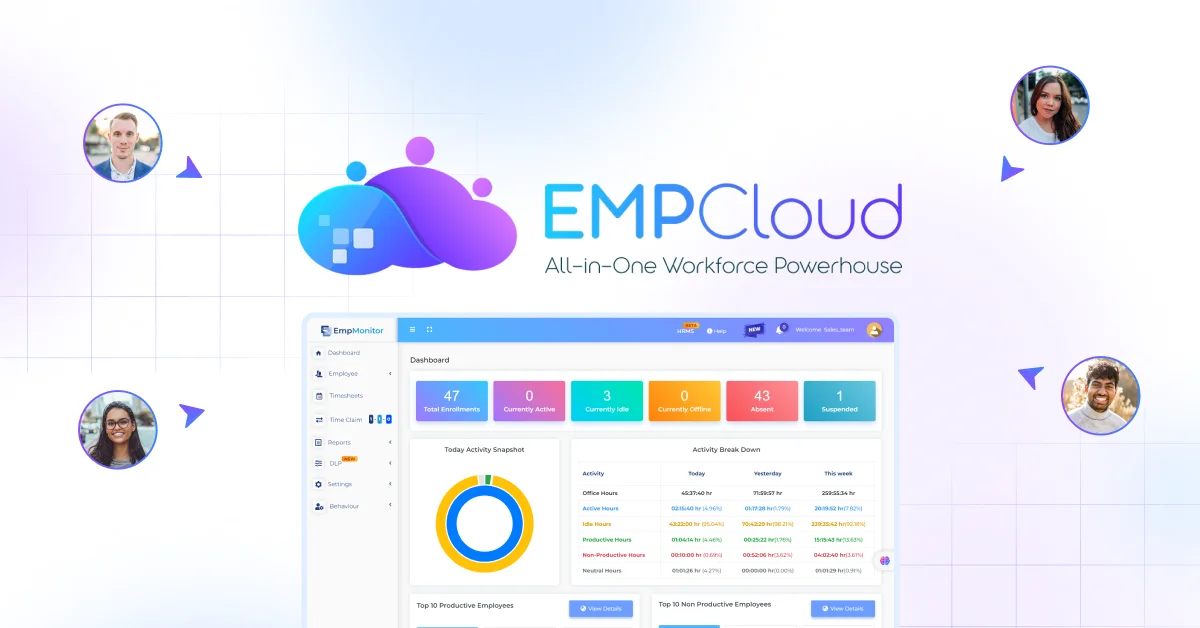
That last point matters more than it sounds. EMPCloud’s Smart SQL natural-language analytics tool lets an investigator ask something like “show attendance and payroll records for department X between these dates” — no query to write, no data export to request. Exports leave confidentiality footprints. Keeping the query inside the platform’s permissioned environment keeps the investigation contained and the audit trail clean.
For organizations with field workforces — common in telecom and NBFCs — geo-location and activity data from the platform can be surfaced through the same conversational interface. The investigator doesn’t need to know which module holds what; the system surfaces it within the same permissioned session. This is particularly relevant for active versus passive monitoring decisions, where the compliance architecture shapes which data trail exists at all.
The Cultural Problem That Technology Can’t Fully Solve
A platform alone won’t fix a culture where employees don’t believe reporting is safe. The record report volumes NAVEX documented tell you that meaningful concerns are being surfaced — but only from employees who chose to report. The darker figure is what never gets filed because trust is low.
Building that trust requires visible leadership behavior, not just better software. Managers who acknowledge feedback without hunting for the source. HR teams that close the loop with reporters — even anonymously — about what happened. The most common whistleblower reporting mistakes often trace back to culture failures that preceded any technology decision: retaliation never formally addressed, reports that vanished without response, anonymity promises that weren’t operationally credible.
Also worth noting: the pattern of malicious compliance — where employees technically follow policy while undermining its intent — often surfaces first in whistleblower reports. Recognizing it early changes how you structure your investigation questions. If that dynamic sounds familiar, understanding malicious compliance patterns is a useful starting frame before you open a case.
A Practical Starting Point
If your program currently consists of a hotline and a spreadsheet, here’s the sequence that matters.
- Audit your current case-handling trail. Can you reconstruct, for any report from the past 12 months, who accessed it and when? If not, that gap is your first liability — not the intake form.
- Separate intake from investigation access. The person who manages the intake portal should not hold unfiltered access to corroborating HR records. RBAC is the mechanism; the policy has to define the roles first.
- Connect reporting to corroborating data — without manual exports. Every time an investigator emails themselves a payroll extract, you have created an uncontrolled copy outside the audit perimeter. Build the query capability into the platform instead.
- Document outcomes, not just intake. DOJ evaluators look for evidence that reports reached conclusions. Substantiated or not, there should be a record of what was found, what was decided, and by whom.
Before you design your corroborating data queries, it’s worth reviewing the performance analytics mistakes that routinely obscure investigative context — the same blind spots that distort performance reviews can shield misconduct from detection during an investigation.
EMPCloud operates across 15+ countries, managing 50K+ employees across 200+ companies. The confidentiality and audit-logging requirements that matter in financial services and telecom are the same requirements any organization under DOJ scrutiny must meet. The infrastructure to meet them exists. The question is whether it’s wired together — and whether it covers the full lifecycle of a report, not just the moment it arrives.
If your whistleblower program ends when a report is submitted, it doesn’t meet current standards. Close the loop, or regulators will do it for you.
Start your free 15-day EMPCloud trial and see how the Feedback Stream tool handles confidential reporting end-to-end, without stitching together disconnected systems.
Quick Search Our Blogs
Type in keywords and get instant access to related blog posts.