Non-compliance isn’t a minor oversight; it’s a balance sheet event.
In recent years:
- Meta was fined €1.3 billion (~$1.3B) under GDPR.
- Didi Global paid ~$1.19 billion for cybersecurity violations.
- Dozens of financial firms have absorbed multimillion-dollar penalties for weak internal controls.
One breach can erase hundreds of millions in value overnight.
Consider a global service provider that once led its industry. A single unmonitored communication channel, employees using unauthorized off-channel messaging, slipped past manual oversight. What seemed like a small procedural gap escalated into a systemic compliance failure:
- Over $200 million in regulatory fines
- A 15% drop in share price
- Lasting reputational damage to a century-old brand
When organizations rely on manual controls, “dark data” accumulates quietly in the background: untracked conversations, undocumented decisions, and unmanaged risk. It’s not a hypothetical threat; it’s a compounding liability.
The solution isn’t more policy; it’s smarter oversight. A comprehensive, automated compliance monitoring framework shifts businesses from reactive damage control to proactive risk prevention, identifying vulnerabilities before they become institutional crises.
Listen To The Podcast!
What Is Compliance Monitoring?
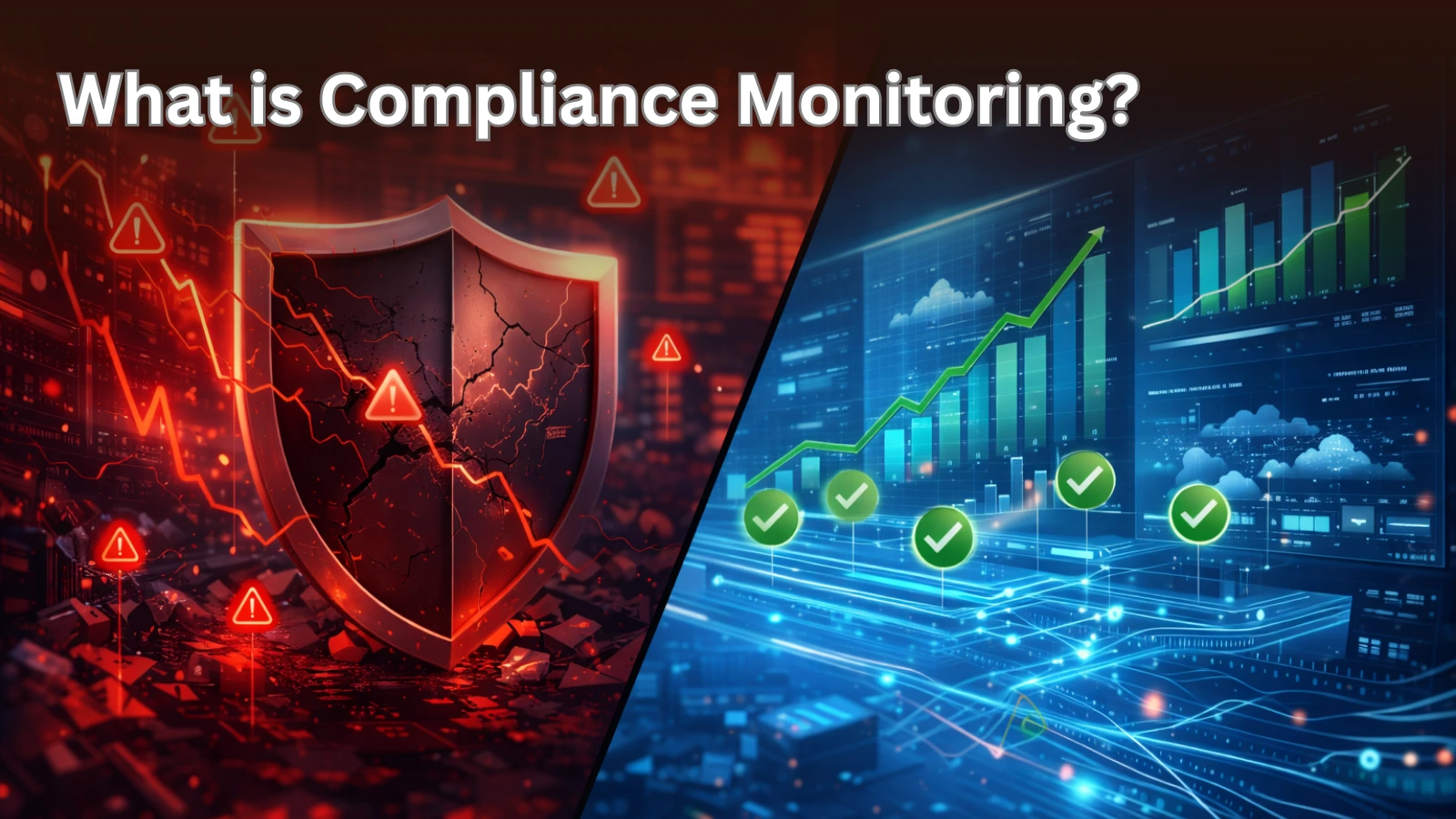
Trust is a very important factor in today’s world. Whether an organization is a start up or a global enterprise, even a single compliance failure can lead to data breaches, environmental violations, financial inaccuracies, or legal penalties that can damage brand reputation and cost millions in losses.
Compliance monitoring is a continuous, systematic process of tracking and evaluating the organization’s adherence to law regulations, and internal policies. Unlike periodic audits, which focus on the past performance of the organization, it remediates the risks before they escalate into violations.
Modern monitoring software uses automated tools and analytics to provide ongoing visibility across the operations.
Maintaining consistent oversight helps the business to reduce risk exposure, strengthen internal governance, and maintain accountability across departments. More importantly, it enables organizations to build long-term trust with customers, regulators, and stakeholders by demonstrating a strong commitment to transparency and ethical business practices.
Why Compliance Monitoring Is Essential for Modern Businesses
As global regulations grow more complex, manual oversight has become a primary point of failure for many enterprises. Continuous management is now a strategic necessity for several reasons:
- Risk mitigation: It identifies compliance gaps, process errors, or suspicious behavioral patterns at an early stage, preventing them from turning into costly violations.
- Operational integrity: by enforcing clear rules for data handling and reporting, monitoring ensures that internal controls remain and makes sure that there is no human error.
- Stakeholder trust: consistent adherence to standards builds credibility with customers, investors, and partners, which helps in safeguarding the reputation and market position.
- Audit readiness: continuous monitoring automatically generates immutable logs and documentation, which are required for inspection. Making the audit process easy and convenient.
Practical Ways Businesses Use Compliance Monitoring

Compliance has evolved from a static set of rules into a dynamic, integrated component of the modern workplace.
In a global economy where billions of transactions occur every second and data is an organisation’s most valuable asset, manual oversight is no longer enough; one mistake can change to a big threat.
To mitigate these threats, businesses are embedding automated compliance monitoring systems to prevent financial crime and secure sensitive databases. Here are three practical ways modern companies use technology to ensure they remain both compliant and secure.
1. Automated Flags: The Financial “Tripwire.”
Billions of transactions happen every second in the business world. Monitoring every transaction with the same amount of concentration and accuracy is impossible, so businesses use automated flags to act as instant filters.
How automated flag systems work:
- Businesses feed their transaction data into an AI-driven monitoring system. The system is specially programmed with thresholds (e.g., any transfer over $10,000) and “watchlists.”
- When a transaction hits the tripwire, the system doesn’t just record it—it can freeze the funds and send an immediate “Suspicious Activity Report” (SAR) to a human analyst.
- The system helps in preventing crimes like money laundering or terrorist financing.
2. Access Control: The “Digital Vault” Guardian
Data plays a very important role in tech and healthcare companies; the importance also brings the danger, so businesses no longer rely on a simple lock-and-key approach; they use dynamic monitoring to ensure access remains authorized and necessary.
How access control works:
- Tech companies use monitoring software to enforce the rule that employees should have access only to the specific data needed for their job and nothing more.
- If a software developer tries to download a massive set of raw customer credit card data. The system will not only block the user, but it will also generate an immediate alert to the security team.
- It is not just about stopping; every time a user accesses a database, the system creates a time-stamped log. When it’s time for an SOC 2 or ISO 27001 audit, the company can prove with 100% certainty that sensitive customer data was never exposed to unauthorized eyes.
- The motive of access control is not to spy on the employee but to protect against accidental data leaks, which are often more common than the intentional ones.
3.Monitoring employee behaviour
In a digital workplace, a company’s communication channels, like Slack, Microsoft Teams, and emails, are the modern water cooler. However, they also have significant compliance risk. To minimize the risk, HR and the legal department use monitoring tools to ensure that these places remain professional, inclusive, and lawful.
Also read
How To Choose Between Active Vs Passive Monitoring?
How To Implement Remote Employee Monitoring Without Micromanaging
Real-World Example: Preventing Off-Channel Compliance Failures with EmpCloud
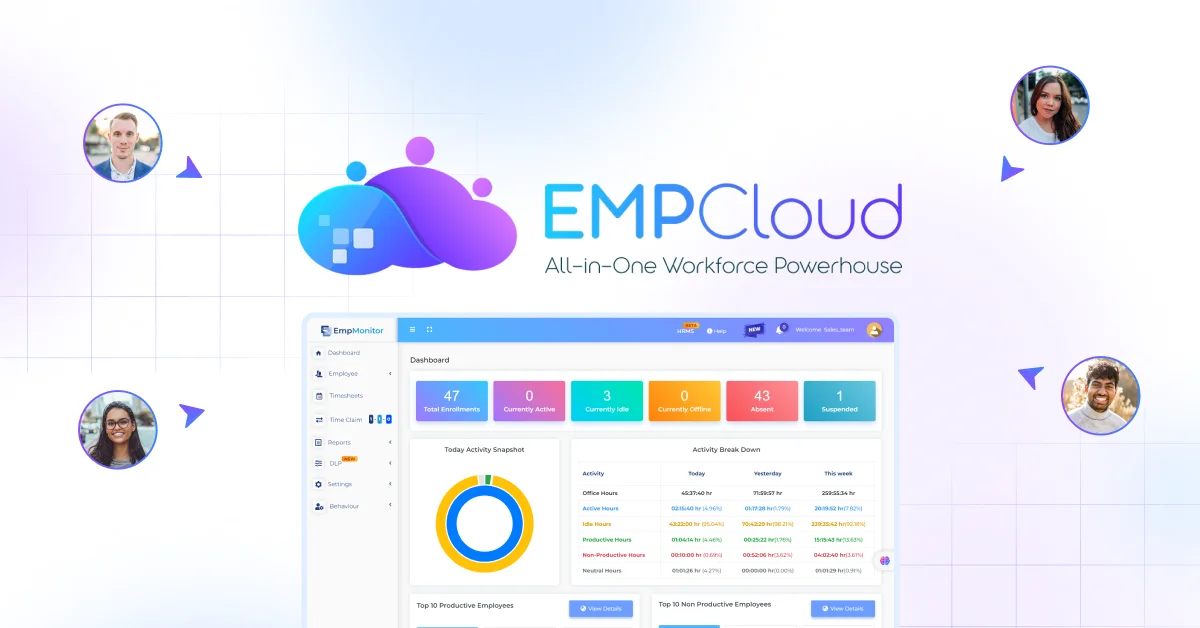
In regulated industries such as financial services, one of the fastest-growing compliance risks is off-channel communication. Employees using unauthorized messaging platforms for business discussions can create invisible legal exposure.
A financial services firm implemented EmpCloud as part of its continuous compliance monitoring framework to address this risk.
Here is how the system helped prevent a potential regulatory incident:
- Behavioral Pattern Detection
EmpCloud provides an employee monitoring solution (EmpMonitor) that gives real-time screen visibility and activity intelligence, identifying repeated access to unauthorized messaging applications during trading hours. - Automated Risk Flagging
The system automatically flagged the behavior based on predefined compliance rules. Instead of relying on manual reporting, the anomaly was detected instantly. - HRMS and Payroll Compliance Controls
Compliance risks often originate in HR and payroll processes. Errors in overtime calculation, statutory deductions, employee documentation, or wage compliance can quickly escalate into regulatory penalties.
EmpCloud includes HRMS and payroll management tools within its core suite, so compliance is embedded directly into daily workforce operations, with no third-party integrations required.
Also, its attendance monitoring module ensures accurate attendance tracking, policy enforcement, and secure employee records. The payroll system automatically manages statutory deductions, tax compliance, and wage calculations while flagging irregular entries in real time.
This built-in oversight turns compliance management from a periodic audit task into a continuous, automated control system.
The Outcome
The firm avoided regulatory escalation, prevented potential multimillion-dollar penalties, and reinforced internal communication policies without disrupting operations.
This example illustrates how compliance monitoring software moves beyond passive tracking. With automated oversight and intelligent alerts, organizations shift from reactive damage control to proactive risk prevention.
Benefits of Implementing Compliance Monitoring Software
Cost Reduction & Fine Avoidance
Many organizations see compliance software as a cost addition, but in reality, non-compliance can cost far more than compliance.
In 2025, the average global cost of a single data breach reached approximately $4.44 million.
When a business lacks a proactive monitoring system, they are not just risking the fine but also their entire financial stability.
The data shows that the fine for non-compliance includes business disruption, productivity losses, and legal settlements, which is 2.7 times higher than the cost of maintaining a robust compliance program.
Beyond direct fines, non-compliance can also erode 15-25% of a company’s revenue through lost customer trust and brand damage.
By catching errors in real-time monitoring software, it ensures that the reputation remains intact, which is the most important asset of the business.
Operational Efficiency
Compliance monitoring might look like a slowdown, which involves a series of manual checks that pause productivity, so automated monitoring changes this by turning a reactive chore into a seamless, background process.
Traditional monitoring often requires employees to manually review thousands of spreadsheets or logs. Automation can do these in seconds, covering 100% of the data rather than just a small sample, which allows the team to focus on high-level strategy instead of policing mundane entries.
Without software, preparing for a SOC 2 or ISO 27001 audit can take weeks of manual evidence gathering. Monitoring tools maintain ready data, allowing you to generate comprehensive reports with a single click.
The average business has seen a 40% reduction in audit preparation by using automation.
Even the best team can miss a flagged transaction or a permission error. Automated systems don’t get tired or exhausted; they provide a consistent, objective standard of oversight that ensures nothing slips through the cracks.
Rather than waiting for months for reports to see where risks lie, executives can use real-time dashboards to see organizational compliance at any moment. This allows data-driven adjustments before minor issues become major operational crises.
Audit Readiness & Documentation
The most stressful period of any compliance team is the audit, the weeks spent manually digging through email logs and spreadsheets to prove that rules were followed. Monitoring eliminates all this chaos by maintaining permanent audit readiness.
Unlike manual records, which can be lost anytime due to minor accidents, compliance software creates immutable logs that monitor every transaction, database access, and policy change. When a SOC 2 or ISO 27001 auditor asks for proof, you aren’t searching for files; you are providing a verified, tamper-proof history.
The biggest drain on the company’s time is evidence gathering; monitoring tools pull data from the integrated system. Which can reduce the time spent in automation by 40%, saving hundreds of billable hours every year.
Regulations often require a business to prove compliance over a long period. Monitoring software ensures that even if a key employee leaves the company, their actions and the associated compliance data remain perfectly documented and accessible for the auditors.
Scalable Risk Management
For small start-ups, compliance might be manageable with a few spreadsheets. However, as a business scales, hiring more people, entering new markets, and handling more data, the attack surface grows too.
Automated monitoring allows a company to scale in security at the same pace as its revenue.
When a company goes from 1000 transactions to 1000000, it is impossible for the company to check them all. Automated systems scale effortlessly, processing massive data loads with the same precision and speed, regardless of how large the business becomes.
Instead of waiting for a breach to happen to realize that the security you were using is outdated, AI-driven tools identify patterns and anomalies before they turn into crises. On average, automated systems identify risks over 100 days sooner than manual methods, allowing businesses to make changes before the problem becomes bigger.
As a company adds new departments or acquisitions, monitoring software ensures everyone is held to the same standard. It creates a unified “compliance culture” across the entire organization, ensuring that the rules in a satellite office are just as strict as those at the headquarters.
How Modern Software Simplifies Compliance Monitoring
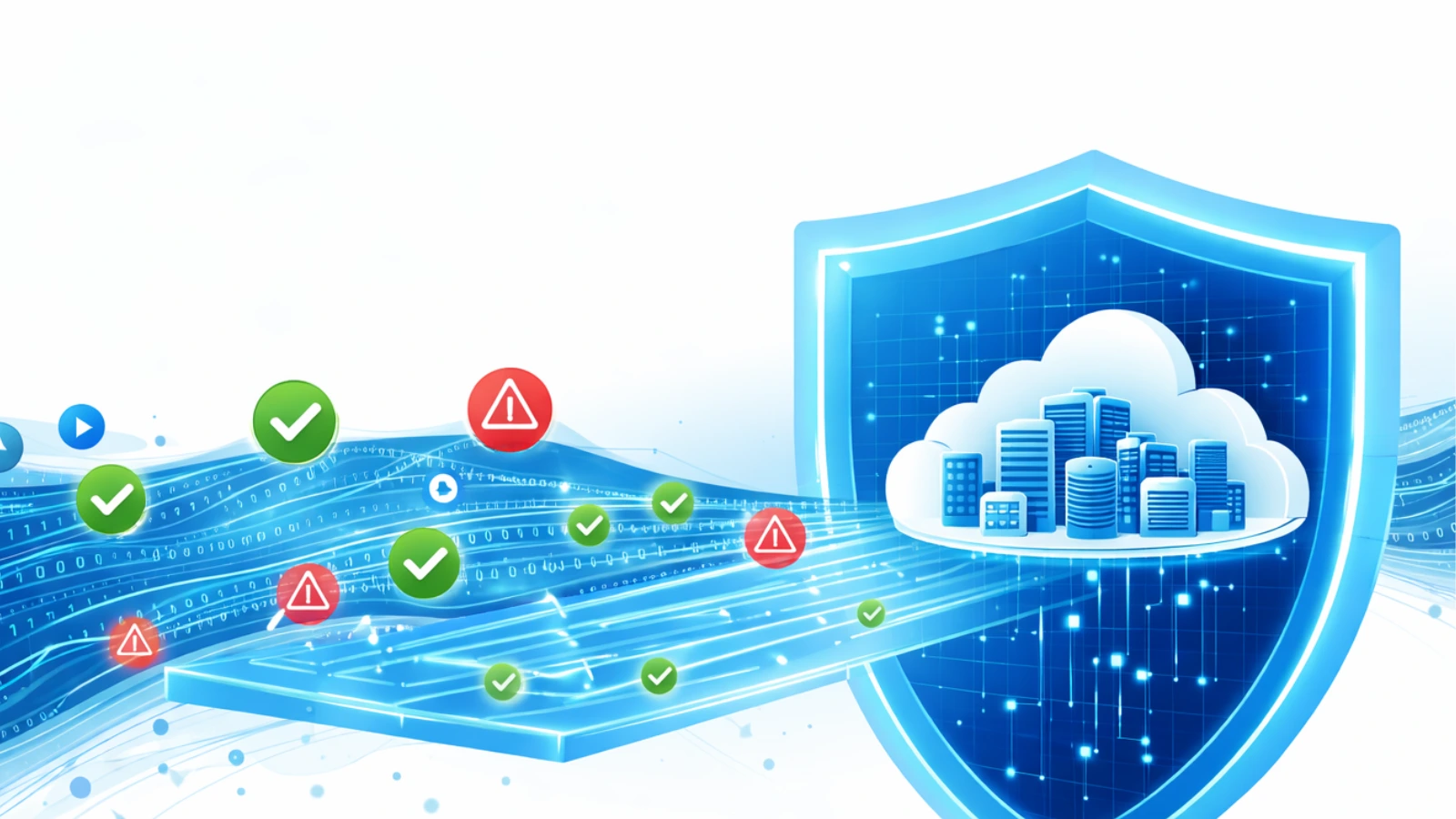
Managing compliance manually is extremely difficult in today’s complex regulatory environment. Businesses need automated systems that continuously monitor operations and detect risks before they become violations.
EmpCloud helps organizations to simplify compliance monitoring through real-time workforce visibility and automated risk detection.
The software identifies suspicious activity of users, prevents unauthorized data transfers through built-in Data Loss Prevention (DLP) features, and ensures employees follow company policies and regulatory standards.
It supports HR and statutory compliance by tracking work hours of the employees, maintaining secure employee documentation, and generating audit-ready reports with timestamped logs.
With built-in support for frameworks like GDPR and HIPAA, EmpCloud helps organizations maintain global compliance while strengthening overall security.
Conclusion
In the era where regulations are constantly evolving and data risks are increasing, continuous compliance monitoring is no longer optional; it is a critical pillar of security and business sustainability. Every enterprise organization that solely depends on manual oversight exposes itself to financial penalties, operational disruptions, and long-term reputational damage.
By implementing automated monitoring, businesses gain real-time visibility, reduce human errors, and maintain continuous audit readiness. It allows organizations to shift from reacting to violations to preventing them altogether.
FAQ
1. What is compliance monitoring?
Compliance monitoring is the continuous process of tracking, reviewing, and ensuring that an organisation follow s applicable laws, regulations, industry standards, and internal policies.
2. How is compliance monitoring different from auditing?
Compliance monitoring is an ongoing real-time process that detects and prevents the risk before the occurrence, while an audit is a periodic review that evaluates past activity to verify if the compliance is followed or not.
3. What is continuous compliance monitoring?
Compliance monitoring is an ongoing, real-time process that detects and prevents risks before they turn into violations.
4. Why is compliance monitoring important?
Compliance monitoring protects organisations from regulatory penalties, data breaches, and reputational damage.
5. What industries require compliance monitoring software?
Compliance monitoring software is essential in industries that handle sensitive data, financial transactions, or strict regulatory requirements. These include:
- Banking and Financial Services
- Healthcare and Pharmaceuticals
- Information Technology and SaaS Companies
- Government and Public Sector
- Manufacturing and Supply Chain
- Legal and Insurance Services
Quick Search Our Blogs
Type in keywords and get instant access to related blog posts.