

NAVEX’s 2025 Benchmark Report puts the 2024 substantiation median at 46% — up from 45% the year before — and calls 50% within reach. When nearly one in two internal reports turns out to be a real violation, your whistleblower program stops being an HR nicety. It becomes a legal infrastructure question.
And most HR teams are failing that question quietly — not because they lack a hotline, but because the system they built cannot prove it worked.
In a hurry? Listen to the blog instead!
The Checkbox Program vs. the Operational Program
There is a version of a whistleblower program that looks fine from the outside: a reporting email, maybe a third-party hotline, a policy in the employee handbook. It checks the box. It does not survive DOJ scrutiny.
The DOJ’s Evaluation of Corporate Compliance Programs is explicit: a whistleblower system must be genuinely operational, demonstrably confidential, and traceable through resolution with a full audit trail. Not “we have a policy.” Not “we take reports seriously.” A traceable chain from first receipt to final disposition — timestamped, role-restricted, and documentable on demand.
Here is the failure mode that repeats: compliance teams handle case notes in shared drives or email threads. Those are untracked data points. Every access, every forwarded email, every edit to a case note in a shared folder creates compounding liability before any violation is confirmed. If the DOJ or an external auditor asks to see the access log — there is none.
A program that fails DOJ requirements is not merely penalized. It is removed from the DOJ’s leniency calculus entirely. That is not a small distinction when the alternative is cooperation credit.
The Audit Trail Gap Nobody Talks About

SOC 2 and ISO 27001 both require access logs as proof of data protection. In a whistleblower context, that means timestamped, role-restricted access logs from the moment a report arrives to the moment it closes. Most HRMS implementations do not produce this automatically for case-tracking workflows because case tracking was bolted on — it was never a first-class module.
The result: HR teams that genuinely believe they are compliant, because they receive reports and investigate them. What they lack is the paper trail showing who saw the report, when, in what role, and what action followed each access event.
NAVEX’s 2025 data tracked 2.15 million reports across 4,077 organizations covering 69 million employees, with volume at record levels for the second consecutive year. More reports means more cases. More cases means more exposure if your logging infrastructure is informal.
Meanwhile the SEC received approximately 27,000 whistleblower tips in FY 2025 alone. Employees who do not trust internal channels go external. When they do, the company loses both the early warning and the leniency window.
Why Confidentiality Is Harder Than You Think
Employees know when confidentiality is theoretical. A 2025 Case IQ report found phone remains a top reporting channel — but AI chatbots ranked a close second in employee comfort scores. People want options that feel anonymous by design, not just by policy.
The mechanism matters. If a report arrives by email and lands in a shared compliance inbox, the reporter has no real guarantee of who reads it. If the system routes the report through a role-restricted channel where only named investigators with logged credentials can access it, that guarantee becomes structural. Policy says “we keep it confidential.” Architecture enforces confidentiality.

The FCA has been pressing this same distinction. The FCA’s Q4 2025 whistleblowing data found that 281 reports contained 788 separate allegations — nearly three allegations per report. Multi-allegation cases require investigators to track threads independently. That is exactly where informal tools collapse and a structured case management workflow becomes essential.
What an Operational Feedback Stream Actually Requires
Here is the framework to audit whether your current system meets operational standards — not checkbox standards.
- Structured intake with immutable timestamps. The moment a report is received, it should be time-stamped in a system that cannot be edited retroactively. Email fails this. A dedicated reporting tool passes it.
- Role-restricted access, not team-restricted access. “The compliance team can see this” is not enough. Named roles with logged credentials — so you can show, on request, exactly who accessed a specific case and when.
- Case state tracking through resolution. Open, under investigation, escalated, closed — with timestamps at each transition. The DOJ wants to see that reports were not just received but resolved, and that the resolution followed a documented path.
- Confidentiality by architecture, not just policy. The reporter’s identity should be decoupled from the case record at the data layer, not merely by convention.
- A full audit log exportable on demand. If you cannot export the access history for a case within 24 hours of a regulator asking, you are not operationally compliant regardless of what your policy document says.
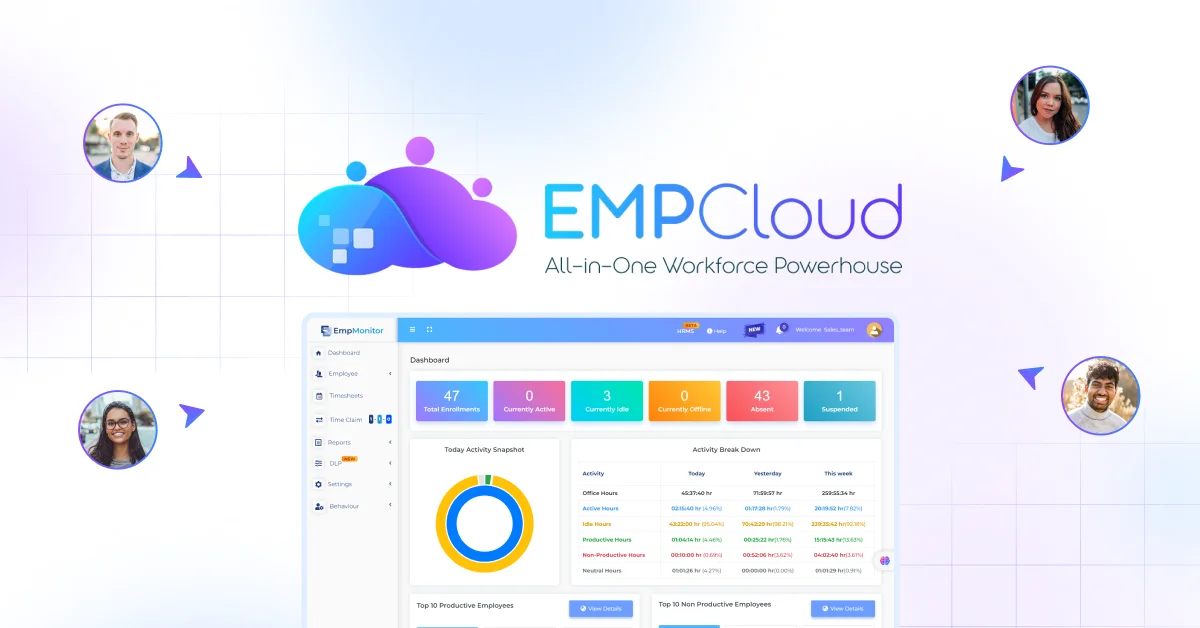
Where purpose-built platforms differ from retrofit solutions is in how these requirements are handled at the infrastructure level. EMPCloud routes whistleblower reports through the AI agent’s Feedback Stream tool — designed for confidential reporting from the ground up. The platform runs on OAuth2/OIDC authorization with role-based access controls and multi-tenant data isolation. That means access-log and role-restriction requirements are structural, not procedural. HR teams do not have to manually enforce confidentiality; the architecture does it.
That matters because procedural confidentiality breaks under pressure. When investigations get busy, when someone new joins the compliance team, when a manager asks an informal question — procedure bends. Architecture does not.
The IRS Warning Hidden in Plain Sight
One data point compliance professionals rarely cite but should: the IRS admits its own whistleblower award processes average over 10 years to resolve. A decade. That is a systems problem, not a staffing problem — and it illustrates what happens when case management is informal and audit trails are incomplete. Cases drag because they cannot be reconstructed cleanly from the record.
Internal programs with the same architectural gap produce the same outcome, scaled down. Cases drag on for months — not because the investigation is complex, but because investigators cannot reconstruct who knew what and when. That reconstruction time is not just inefficient. Every day the case stays open adds exposure.
The Practical Takeaway
Run this test on your current setup. Pull up a closed whistleblower case from the past 12 months. Ask: can I show a regulator, within one hour, every person who accessed that case, their role at the time, and the timestamp of each access? If the answer involves opening multiple inboxes, checking a shared drive, or asking someone to reconstruct from memory — your program is a checkbox, not an operational system.
Fixing that does not require a compliance overhaul. It requires moving case management into a platform where the audit trail is automatic, confidentiality is architectural, and the Feedback Stream is a first-class workflow rather than a workaround built on email.
For a deeper look at the reporting mistakes that create liability before any investigation begins, the common whistleblower reporting mistakes breakdown covers the intake-side failures in detail. And if you are evaluating how compliance intersects with your broader HR data infrastructure, the compliance monitoring guide is worth reading alongside this one.
The substantiation rate is climbing. Regulatory scrutiny is not easing. If nearly half of what your employees report will turn out to be real, you want a system that can show its work — from the first message to the final disposition.
Start your free EMPCloud trial and see how the Feedback Stream handles confidential reporting with the audit infrastructure your compliance program actually needs.
FAQs: –
1. What does the DOJ expect from a whistleblower program?
The DOJ expects whistleblower programs to be genuinely operational, confidential, accessible, and capable of tracking reports through investigation and resolution with a clear audit trail.
2. How can a company prove that its whistleblower program is compliant?
A company should be able to demonstrate when a report was received, who accessed it, what actions were taken, how the investigation progressed, and how the case was ultimately resolved.
3. Why is an audit trail important for whistleblower compliance?
An audit trail provides evidence of how a whistleblower case was handled. It records access, actions, timestamps, and case-status changes, helping organizations demonstrate that their reporting process actually works.
4. What makes a whistleblower reporting system confidential?
True confidentiality depends on the system’s architecture. Role-based access, restricted investigator permissions, secure case records, and controlled identity access provide stronger protection than relying only on a confidentiality policy.
5. How do you know if your whistleblower program is just a compliance checkbox?
If your team cannot quickly show who accessed a case, when they accessed it, what actions followed, and how the case reached its final resolution, the program may be a checkbox process rather than a genuinely operational whistleblower system.
Quick Search Our Blogs
Type in keywords and get instant access to related blog posts.