
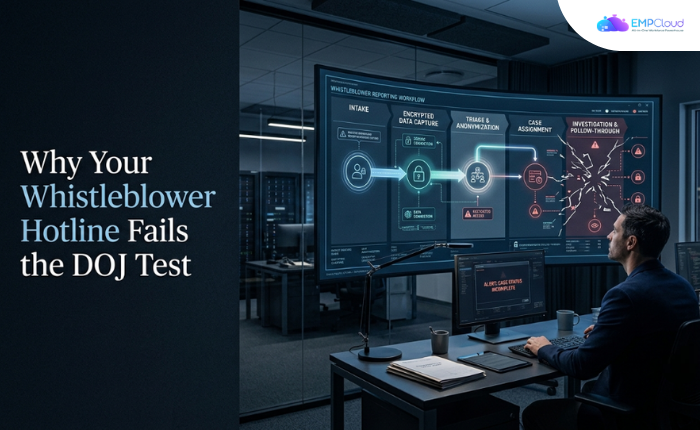
A hotline is not a program. That distinction — obvious once you’ve sat through a DOJ enforcement review — is the mistake costing organizations eight-figure penalties right now. The $4.6 billion in global whistleblowing penalties handed down in 2025 didn’t mostly hit companies with no reporting channel. They hit companies whose channels existed but couldn’t prove they worked.
That gap is where compliance programs quietly collapse.
In a hurry? Listen to the blog instead!
The DOJ Doesn’t Grade on Existence — It Grades on Operability
The DOJ’s Evaluation of Corporate Compliance Programs sets three tests for a whistleblower system: genuinely operational, demonstrably confidential, and traceable from first receipt through final resolution. A hotline routing reports into an unmanaged inbox satisfies zero of those requirements. Fail all three and you’re removed from the DOJ’s leniency calculus entirely. No credit toward reduced fines or favorable prosecution terms when the investigation arrives.
Most HR teams don’t realize this until it’s too late. They installed the channel years ago, updated the policy page, and checked the box. The channel is operational in the sense that a broken fire alarm is operational — it exists.
Three Ways Programs Actually Fail (That Aren’t About the Intake Form)

The intake form is almost never the problem. The problems live downstream, in the parts of the process nobody built a workflow for.
1. Confidentiality Collapses at the Investigation Stage
The report comes in anonymously. Good. Then someone assigns it to a case manager — who emails the subject’s department head to gather context. The anonymity evaporates the moment that email is sent. Confidentiality collapsing at the investigation stage is the most common systemic failure point the DOJ identifies, and it’s almost always a process failure, not a technology failure. The reporting tool worked. Nobody thought through who could see what once the case was open.
The downstream effect is documented: the Ethics and Compliance Initiative’s 2023 survey found that nearly 50% of employees who reported misconduct experienced some form of retaliation. Retaliation doesn’t happen because a company is malicious — it often happens because case access wasn’t gated, and the subject found out.
2. No Chain of Custody on the Report Itself
SOC 2 and ISO 27001 both require timestamped, role-restricted access logs as proof of data protection. In a whistleblower context, that means a clean record of who accessed the report, when, and what they did with it — from first receipt to final disposition. Most organizations cannot produce that log because the report lived in an email thread or a shared folder with no audit trail attached.
The EU Whistleblower Protection Directive (2019/1937) adds a statutory layer: formal internal reporting channels are mandatory for organizations with 50 or more employees. Early enforcement has been expensive. The combined fines to five EU member states already exceeded €40 million in early enforcement rounds — regulators couldn’t verify that the required process had been followed because no auditable record existed.
3. HR Data Living in Siloed Systems
An investigator reviewing a harassment complaint needs attendance records, payroll history, reporting-line data, and performance reviews — often to establish patterns, timelines, or conflicts of interest. When those systems don’t talk to each other, the investigator either exports data (creating an unsecured paper trail) or works without it (missing context that would change the outcome).
This is the third named systemic failure point for DOJ compliance: HR data living in siloed systems. The irony is that most large organizations have all the relevant data — it’s just inaccessible within a single permissioned session.
The Intake Channel Problem Is Real, Just Overstated
The conversation about whistleblower programs tends to focus almost entirely on intake channels. That’s not wrong — hotlines capture only 29.5% of incoming reports by intake method, per the NAVEX 2025 benchmark tracking 4,077 organizations, 2.15 million reports, and 69 million employees. Text, web form, and AI chat channels collectively carry the majority. If you’re hotline-only, you’re already missing two-thirds of your volume.
But fixing intake without fixing the case-handling process behind it is like widening a highway on-ramp that leads to a parking lot. Organizations with third-party hotlines staffed by trained specialists see significantly higher reporting rates — around 3.6 reports per 100 employees compared to 1–2 at organizations relying on internal-only channels. Higher volume doesn’t help if the case management infrastructure behind it is informal.
The more pressing number: 23% of employees cite fear of not being taken seriously as the primary reason they don’t file. That’s a case-handling credibility problem, not an intake problem. Employees have learned — often from watching colleagues — that reports go in and nothing traceable comes out.
What a DOJ-Compliant System Actually Requires

Three things, none of them exotic:
- Role-gated case access from the moment of intake. The case manager should be determined by a defined protocol — not by whoever happened to be available — and access to the report should require explicit permission, not just being in the right department. The “report-first, discuss-never” sequence — embedded in onboarding, manager training, and speak-up communications — prevents the parallel problem of employees discussing complaints on social media or with colleagues before a formal record exists.
- A timestamped audit trail from receipt to resolution. Every status change, every access event, every investigative step needs a contemporaneous record. The FCA’s Q4 2025 data found that 281 reports contained 788 separate allegations — nearly three per report. Managing that complexity without a system that tracks each thread separately is operationally impossible.
- Permissioned access to HR data inside the investigation workflow. Investigators need context. The answer is not data exports. It’s querying attendance, payroll, and performance records inside a session that logs the query, restricts results to what the investigator is authorized to see, and leaves no unsecured file behind.
How EMPCloud Addresses Each Failure Mode
EMPCloud‘s Feedback Stream tool routes employee concern reports without exposing source identity to case managers. Access control runs through RBAC and an OAuth2/OIDC authorization server. That’s the same identity layer governing the rest of the platform — so the case assignee is defined by role, not by whoever picks up the email. The confidentiality problem at the investigation stage becomes a configuration, not an afterthought.
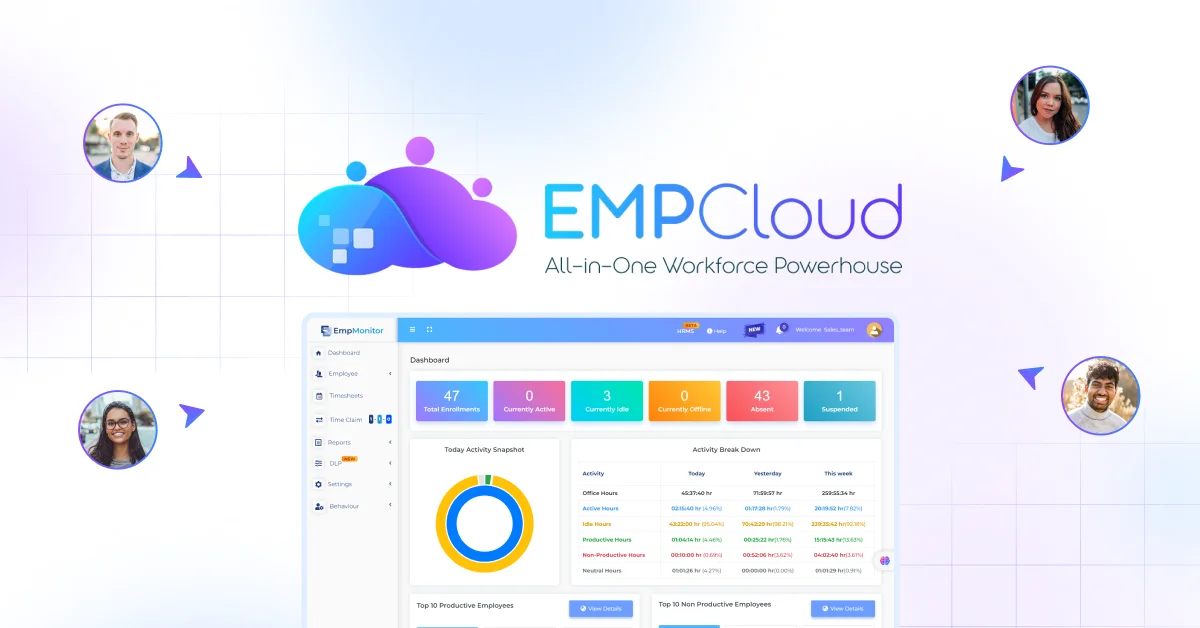
For the data-access problem, EMPCloud’s Smart SQL natural-language analytics tool lets investigators query HR data — attendance records, payroll history, department-level patterns — in plain English inside a permissioned session. No exports. No unsecured spreadsheets. The audit trail stays clean because the query itself is logged, not the extracted data sitting on someone’s desktop.
This matters particularly for organizations navigating sector-specific obligations. SEBI and RBI guidelines place whistleblower obligations on listed entities and NBFCs in India. SOX Section 806 covers publicly traded companies in the US. The requirements differ in specifics but converge on the same three operational tests the DOJ applies. A platform operating across 15+ countries managing 50,000+ employees needs an architecture that handles jurisdiction-level variation without rebuilding the compliance process from scratch in each one.
The Case-Handling Failures That Actually Trigger Liability
Three named patterns appear repeatedly in enforcement actions and post-mortems. Recognizing them is the first step to designing them out:
- Assigning cases to a manager tangentially connected to the subject. “Tangential” is enough. The subject hears about it. The reporter hears that the subject heard about it. The program’s credibility is gone.
- Failing to document investigation steps in an auditable trail. Memory is not documentation. An investigator’s verbal summary to their supervisor six weeks later is not documentation. Regulators ask for contemporaneous records.
- Letting cases go stale with no status update to the reporter. The IRS’s whistleblower award processes average over ten years to resolve — partly because the incentive structure doesn’t require speed. Internal investigations have no such excuse, and the DOJ looks at case velocity as an indicator of whether the program is genuinely operational.
None of these failures are mysterious. They’re predictable consequences of treating a compliance program as a channel rather than a managed workflow. The channel is easy to build. The workflow is what gets audited.
For a deeper look at what most compliance teams overlook in their intake setup, the common whistleblower reporting mistakes breakdown covers the specific gaps that surface under regulatory review. And if you’re assessing your current DOJ exposure specifically, the DOJ compliance requirements for whistleblower systems piece maps the evaluation criteria to concrete program requirements.
The enforcement math is unambiguous. A program that can’t demonstrate operability, confidentiality, and traceability gets no credit when regulators arrive. Building that demonstrability into the system from the start — not retrofitting it after an incident — is the only version of this that works. Start your EMPCloud free trial and see how the Feedback Stream and Smart SQL tools handle the case-management workflow regulators actually scrutinize.
FAQs: –
1. What is a whistleblower hotline?
A whistleblower hotline gives employees a confidential channel to report misconduct, fraud, harassment, or compliance concerns. A compliant system must protect confidentiality and track each report through investigation and resolution.
2. What are the DOJ requirements for a whistleblower hotline?
The DOJ evaluates whether a whistleblower system is genuinely operational, protects confidentiality, and maintains a traceable record from report intake through resolution. A basic hotline alone may not satisfy these expectations.
3. How do companies keep whistleblower reports confidential?
Companies can protect confidentiality with role-based access, restricted case visibility, secure reporting channels, and controlled communication throughout the investigation. Sending case details through unrestricted email can quickly expose the reporter or sensitive information.
4. Why do whistleblower reporting systems fail?
Many systems fail after intake because organizations lack controlled case assignment, audit trails, investigation workflows, and permissioned access to supporting HR data. The reporting channel works, but the process behind it does not.
5. How can HR improve whistleblower compliance?
HR can strengthen compliance by using a structured whistleblower reporting system with role-gated access, a complete audit trail, documented investigation steps, and secure access to relevant employee data. This makes the process easier to manage and demonstrate during regulatory review.
Quick Search Our Blogs
Type in keywords and get instant access to related blog posts.