

Introduction: Your Instincts Are Right. Now Let’s Prove It.
You can usually feel when something is off. Meetings get quieter, responses slow down, and energy fades. But turning that instinct into employee engagement metrics that leadership trusts is where things get difficult.
That gap between feeling and proof is where most teams struggle. Only 23% of employees globally are engaged at work, according to Gallup. The real issue is not just lost productivity. It is the slow drag on morale, culture, and momentum that builds over time.
Measuring employee engagement is not about tracking people. It is about listening at scale. Done right, metrics for employee engagement help you spot issues early, understand what is driving them, and act with confidence.
By the end of this guide, you will know how to measure engagement metrics in a way that actually leads to decisions. Not just dashboards.
Read Aloud!
Quick Answer: What Are Employee Engagement Metrics, and Which Ones Actually Matter?
Employee engagement metrics are measurable signals that show how connected, committed, and motivated employees feel toward their work and organization.
The most important ones include:
- Employee Net Promoter Score (eNPS)
- Voluntary turnover rate
- Absenteeism rate
- Pulse survey participation rate
- Manager effectiveness score
- Recognition frequency
These metrics fall into three layers. Some reflect what employees feel, others show behavior, and a few reveal business outcomes. Measuring engagement metrics across all three gives a complete picture.
Not All Metrics Are Created Equal: The Three-Tier Engagement Stack
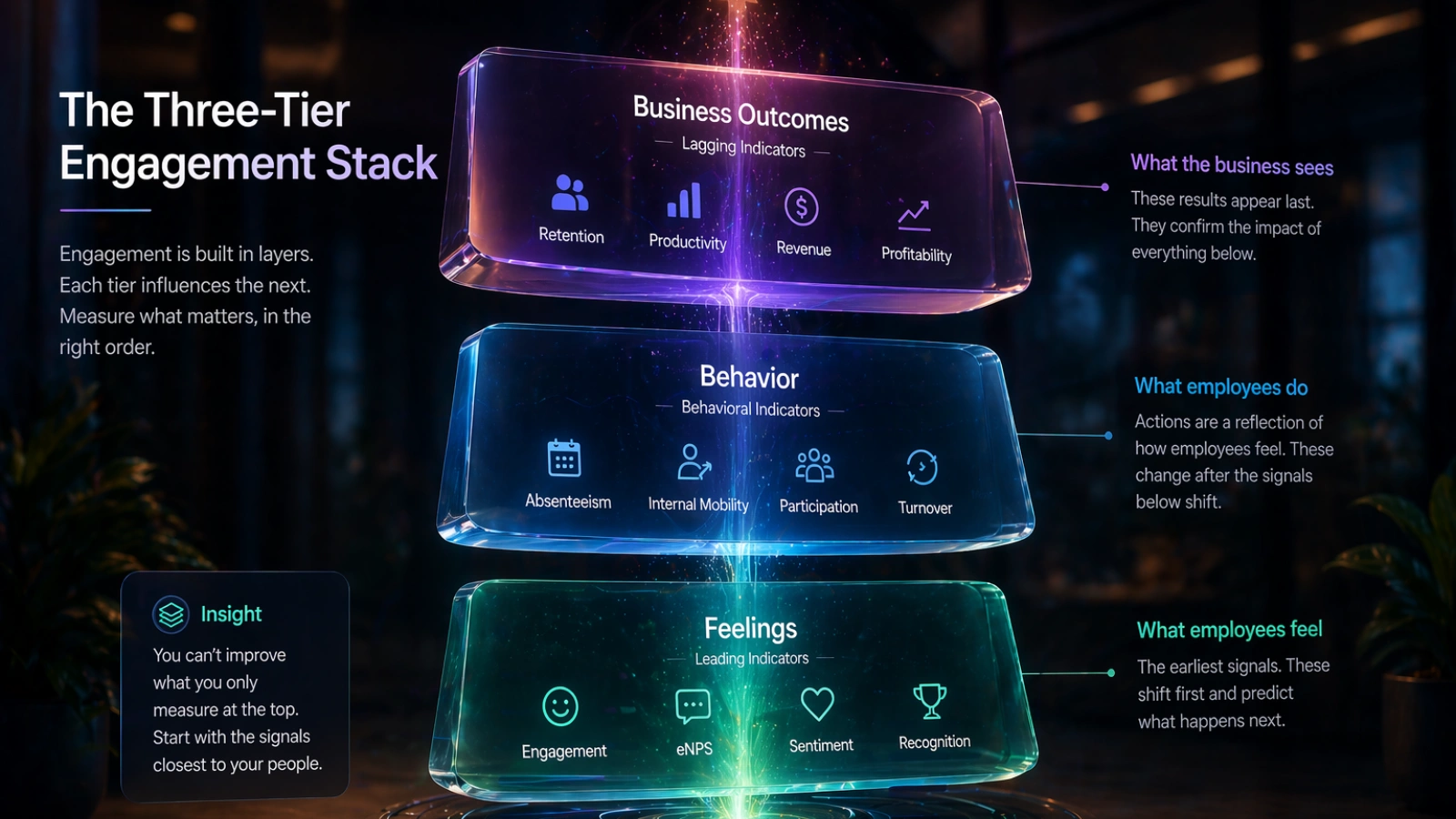
Most teams make the same mistake early on. They track one or two numbers and assume they tell the full story. They do not.
A better approach to employee engagement metrics is to think in layers. Each layer answers a different question.
Tier 1: Leading Indicators (What Employees Feel Right Now)
These metrics capture sentiment in the moment. They shift quickly and often give the earliest warning signs.
Common examples include eNPS, pulse survey sentiment, and recognition participation. If these dip, something is changing beneath the surface.
Measure these monthly or even more frequently if possible. They are your early signal system when measuring employee engagement metrics.
Tier 2: Behavioral Indicators (What Employees Do)
Feelings eventually show up in actions. That is where behavioral data comes in.
Absenteeism, internal mobility, and participation rates tell you how employees are responding to their environment. There is usually a delay of a few weeks between sentiment and behavior.
If sentiment drops but behavior stays stable, you still have time to act. This is where measuring employee engagement metrics becomes predictive, not reactive.
Tier 3: Lagging Indicators (What the Business Sees)
These are the outcomes leadership notices first. Turnover, productivity, and revenue per employee fall into this category.
They confirm patterns after the fact. By the time these move, the issue has been building for months.
That is why relying only on lagging metrics for employee engagement often leads to late decisions.
The Core Metrics, Explained for People Who Have to Present Them to Leadership
You do not need dozens of numbers. You need a few that you can explain clearly and defend confidently.
Employee Net Promoter Score (eNPS)
Formula: % Promoters minus % Detractors
A score between 10 and 30 is considered solid. Above 50 is exceptional. Anything below zero needs attention.
This metric shows whether employees would recommend your workplace. It is one of the simplest ways of measuring employee engagement metrics at scale.
Voluntary Turnover Rate
Formula: (Voluntary exits ÷ Average headcount) × 100
Across industries, 10–15% is common. But averages can mislead.
Break this down by tenure. High exits in the first year suggest onboarding issues. Higher exits later often point to growth or leadership gaps.
Absenteeism Rate
Formula: (Unplanned absences ÷ Total scheduled workdays) × 100
A rate above 3% often signals deeper issues. It could be burnout, disengagement, or even poor management practices.
On its own, it is incomplete. Combined with other employee engagement metrics, it becomes far more meaningful.
Pulse Survey Participation Rate
This one is often ignored. That is a mistake.
If fewer than 60% of employees respond, the issue is not the data. It is trust. People do not believe their feedback will lead to change.
Participation itself is a signal when measuring employee engagement metrics.
Manager Effectiveness Score
This comes from direct feedback on managers. Questions usually focus on communication, support, and clarity.
Strong managers lift engagement. Weak ones drag entire teams down.
If you had to pick one metric to prioritize, this is often the most actionable.
Recognition Frequency
Track how often employees give and receive recognition.
Consistent recognition builds momentum. But it needs to feel real. High frequency without meaning can backfire.
This is one of those metrics for employee engagement where quality matters as much as quantity.
What Your Metrics Are Telling You When You Read Them Together
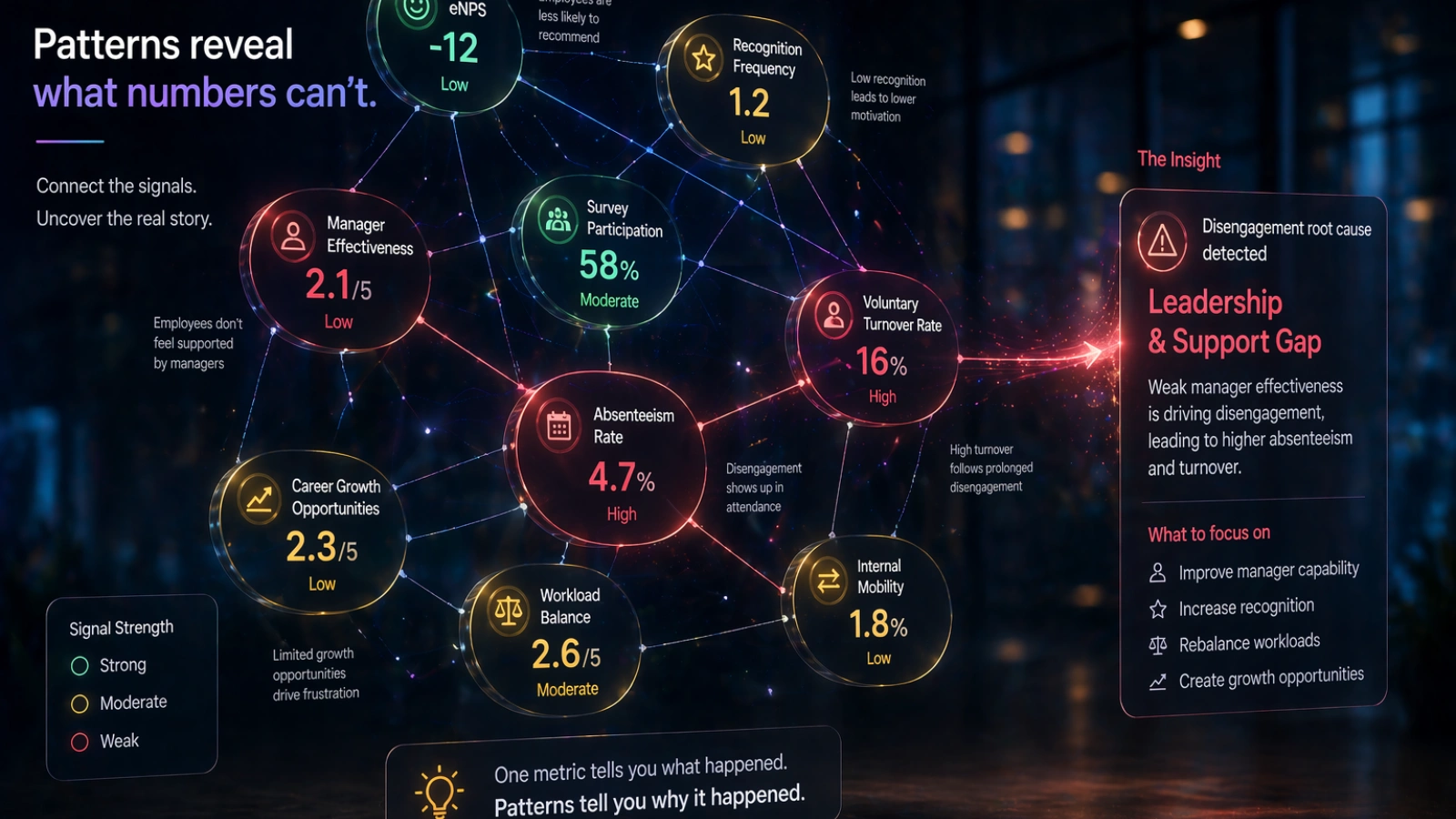
Looking at one number rarely tells the truth. Patterns do.
This is where measuring employee engagement metrics becomes diagnostic.
Consider a few common combinations:
- High eNPS with rising turnover
Employees like the culture but do not see growth. Career paths may be unclear or limited. - Low absenteeism with low survey participation
People are present but disengaged. They show up but have mentally checked out. - Low manager score with high absenteeism
This points to a leadership issue, not a company-wide problem. - High recognition with falling eNPS
Recognition may feel forced or superficial. It is worth reviewing how it is delivered.
Once you start reading patterns, your conversations with leadership change. You are no longer reporting numbers. You are explaining what they mean.
How to Build a Measurement System That Doesn’t Burn Out Your Team (Or You)
You do not need to track everything at once. In fact, trying to do so often leads to failure.
Start With Two: The Minimum Viable Measurement Stack
If you are just starting, focus on:
- eNPS quarterly
- A short monthly pulse survey
This combination gives you both a broad view and real-time insight. It is a practical way to begin measuring employee engagement metrics without overwhelming your team.
The Measurement Cadence That Actually Works
Different metrics need different rhythms.
- Real-time: recognition activity, communication engagement
- Monthly: pulse sentiment and participation
- Quarterly: eNPS, absenteeism, manager scores
- Annually: full surveys and turnover analysis
Trying to measure everything constantly creates fatigue. A balanced cadence keeps employee engagement metrics useful.
Closing the Feedback Loop Is the Metric That Matters Most
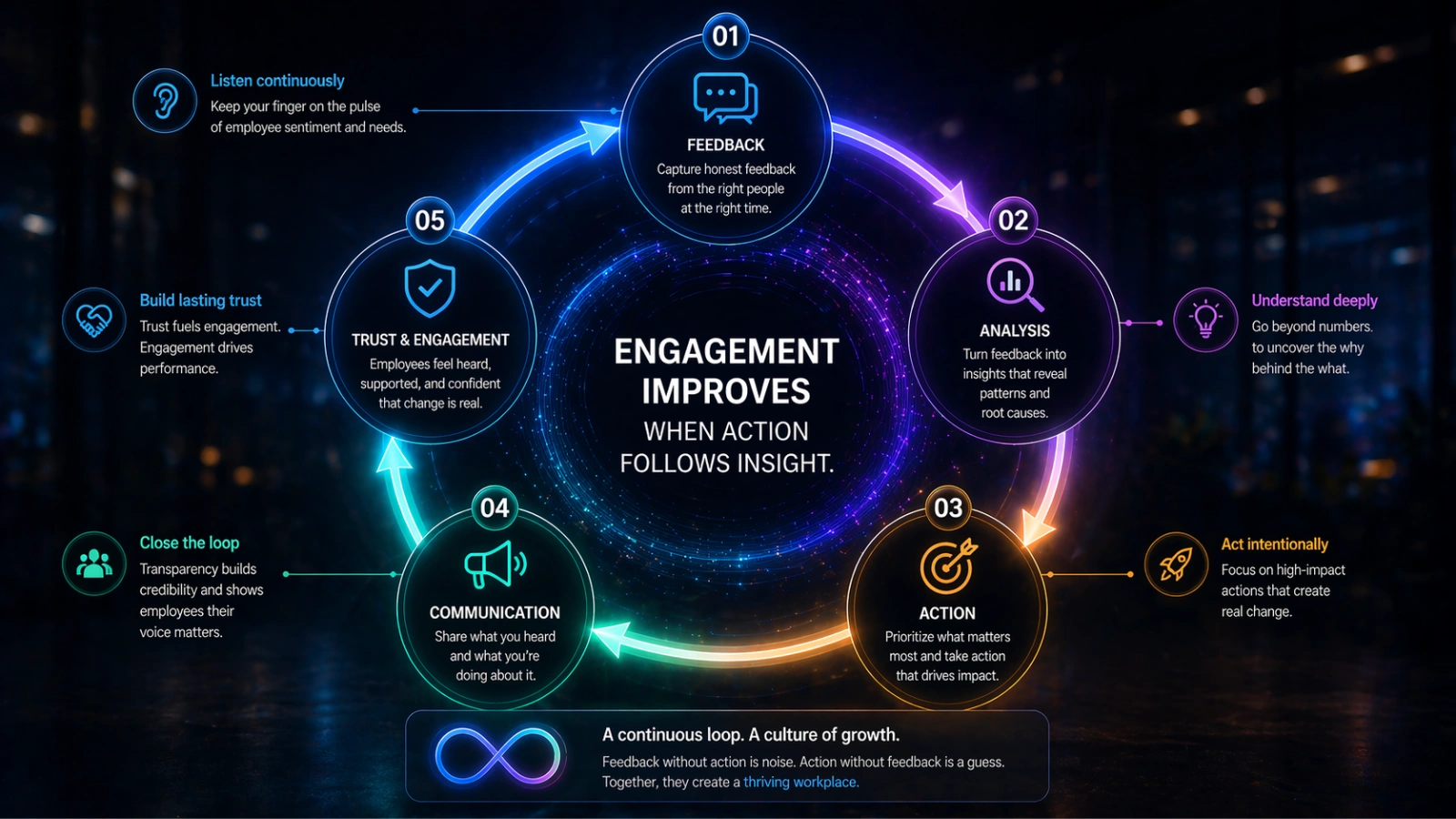
Collecting data is only half the job.
Employees disengage quickly if they see no action. That is why every measurement cycle should include:
- Sharing results within two weeks
- Communicating one clear action within 30 days
When people see change, participation improves. Measuring employee engagement metrics becomes part of the culture, not a task.
How EmpCloud Turns Engagement Data Into Decisions
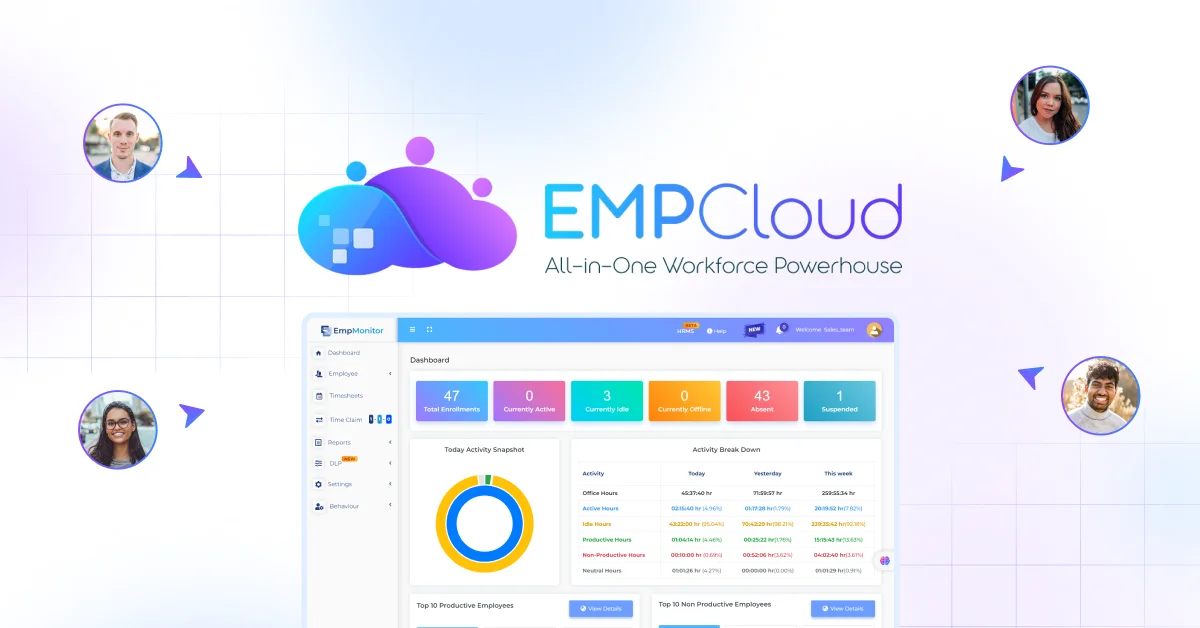
Most teams struggle not with collecting data, but with using it.
This is where EmpCloud becomes valuable. It removes the friction between insight and action while supporting metrics for employee engagement in a practical way.
As part of a broader workforce management solutions strategy, empcloud connects engagement data with daily operations, making it easier to act on insights.
- Real-time dashboards that highlight patterns, not just scores
- Built-in pulse surveys with flexible scheduling
- Manager-level insights for targeted action
- Recognition tracking integrated into engagement data
- Automated feedback loops to close communication gaps
Instead of juggling tools, everything sits in one place. That makes measuring employee engagement metrics easier to sustain.
The Measurement Mistakes That Make Your Data Useless
Even well-designed programs can fail if common mistakes go unchecked.
One of the biggest issues is measuring once a year and doing nothing with the results. It creates the illusion of listening without real impact.
Another problem is confusing satisfaction with engagement. Someone can be happy but not motivated to contribute.
Averages can also mislead. A decent overall score might hide a struggling department. That is why segmentation matters when measuring employee engagement metrics.
Repeated surveys without visible action quickly erode trust. Participation drops, and the data becomes less reliable.
Finally, focusing on improving scores instead of outcomes leads to short-term thinking. Real progress comes from addressing root causes.
The Future of Engagement Measurement: From Surveys to Signals
The way we measure engagement is evolving.
Organizations are moving from static surveys to continuous signals. Instead of snapshots, they track patterns over time.
AI is beginning to play a role. It can analyze communication trends and sentiment in aggregated ways. The goal is insight, not surveillance.
Another shift is toward predictive models. Early data from onboarding can indicate future retention risks.
These advancements make employee engagement metrics more proactive. But they also require trust. Transparency and consent are essential.
The organizations leading this shift are connecting engagement directly to business results. That is where measurement becomes strategic.
Read Also!
Conclusion – Measurement Isn’t the Goal, Understanding Your People Is
Numbers alone do not improve engagement. What you do with them does.
The most effective teams do not just measure more. They respond faster and more visibly. That is what builds trust.
If you are unsure where to start, pick one metric this month. Share the result openly. Then act on it.
Engaged teams do not happen by accident. They happen because someone decided to pay attention and follow through.
FAQ – Questions HR Professionals Actually Search For
What is a good employee engagement score?
A strong eNPS typically falls between 10 and 30. Scores above 50 are considered excellent. However, context matters more than any single number.
How often should you measure employee engagement?
A mix works best. Monthly pulse surveys, quarterly eNPS, and annual deep surveys create a balanced system for measuring employee engagement metrics.
What’s the difference between employee satisfaction and employee engagement?
Satisfaction reflects how employees feel about their job. Engagement shows how committed they are to contributing and staying.
How do you calculate employee engagement metrics?
Most metrics use simple formulas. For example, eNPS subtracts detractors from promoters, while absenteeism tracks missed workdays as a percentage.
What engagement metrics should small businesses track?
Start simple. eNPS, turnover rate, and a short pulse survey are enough to begin measuring employee engagement metrics effectively.
Quick Search Our Blogs
Type in keywords and get instant access to related blog posts.