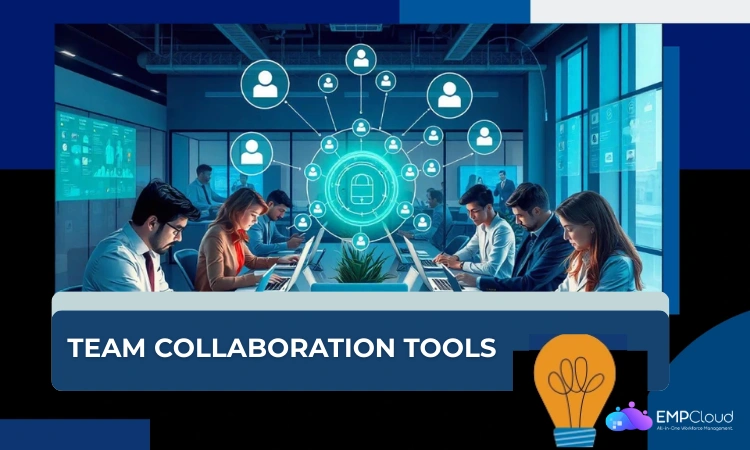
Every business wants faster results, stronger output, and a team that works like a well-oiled machine. But without the right team collaboration tools, even the most talented employees struggle to stay aligned.
Scattered messages, missed deadlines, and poor communication cost businesses thousands of hours every year. The solution is not hiring more people; it is equipping your existing team with tools that remove friction and create clarity.
This blog breaks down everything you need to know about choosing, using, and maximizing team collaboration tools and how the right platform can completely transform your team’s performance.
In a hurry? Listen to the blog instead!
The Growing Need For Collaboration Tools For Teams
Work has changed. Teams no longer sit in the same office, follow the same schedule, or work in the same time zone. Businesses now operate across cities, countries, and continents.
This shift created a massive demand for collaboration tools for teams that keep everyone connected, accountable, and productive regardless of location.
Studies show that poor collaboration costs businesses over $37 billion annually in lost productivity. That is not a small number. It reflects real damage to delayed projects, employee trust, and missed revenue opportunities.
Forward-thinking businesses recognized this early. They invested in team collaboration tools that centralize communication, task management, and performance tracking under one roof. The results speak for themselves: faster project delivery, happier employees, and measurable growth.
If your team still relies on long email threads and scattered spreadsheets, you are already behind. The businesses winning today use smart collaboration tools for teams that make work faster, clearer, and more connected.
What Makes A Team Collaboration Tool Truly Powerful?

Not every tool deserves a place in your workflow. Many tools promise results but deliver complexity. A truly powerful team collaboration tool does the opposite; it simplifies work without sacrificing capability.
Here are the qualities that separate great tools from average ones:
- Real-Time Communication — Your team needs instant access to conversations, updates, and decisions. A powerful team collaboration tool eliminates back-and-forth delays with real-time messaging and notifications.
- Task and Project Visibility — Everyone on the team should know what they own, what is due, and where the project stands. Transparency removes confusion and keeps deadlines intact.
- Integration Capability — The best tools connect with your existing systems, payroll, HR, CRM, and more. Siloed tools create more problems than they solve.
- Mobile Accessibility — Your team does not always work from a desk. A strong team collaboration tool works seamlessly across devices: laptop, tablet, and mobile.
- Security and Compliance — Businesses handle sensitive data. The right tool protects that data with strong access controls, encryption, and compliance features.
When a tool checks all these boxes, it stops being just software. It becomes a competitive advantage.
More!
30 Employee Incentives Programs: Boost Retention & Engagement
Collaboration Tools For Remote Teams: A New Workplace Essential
Remote work is not a trend anymore. It is a permanent feature of modern business. Millions of professionals now work from home, co-working spaces, and locations their managers never see.
This reality makes collaboration tools for remote teams not just helpful but essential.
A remote employee without the right tools faces daily frustration. They cannot quickly ask a colleague a question. They cannot see project progress in real time tracking. They feel disconnected, undervalued, and unproductive.
Collaboration tools for remote teams solve all of this. They create a shared workspace where every team member, regardless of location, can communicate, collaborate, and contribute at full capacity.
The best platforms bring together messaging, task tracking, file sharing, and performance monitoring in one place. Remote employees no longer feel like they work alone. They feel like part of a cohesive, high-performing team.
Businesses that invest in strong collaboration tools for remote teams report higher employee satisfaction, lower turnover, and significantly better project outcomes. That is a return on investment no business can afford to ignore.
Top Challenges Remote Teams Face Without The Right Tools

Remote teams that operate without proper team collaboration tools face serious, recurring problems:
- Communication Breakdown — Without a central communication platform, messages get lost across email, WhatsApp, and personal chats. Decisions go undocumented. Confusion spreads fast.
- Lack of Accountability — When managers cannot see what their team works on, productivity drops. Employees without clear task ownership miss deadlines and lose focus.
- Poor Project Tracking — Without a shared project view, teams work in isolation. Duplicate work, missed dependencies, and last-minute surprises become the norm.
- Low Team Morale — Remote employees who feel invisible quickly disengage. Without recognition, feedback, and connection, motivation drops, and so does performance.
- Security Risks — Remote work increases exposure to data breaches. Without proper tools that enforce access controls, sensitive business data becomes vulnerable.
Each of these challenges has a direct cost. Businesses that ignore them pay through missed deadlines, poor quality, and high employee incentives. The right team collaboration tools eliminate these problems before they escalate.
Best Collaboration Tools For Remote Teams In 2026
The market offers many options. Here are the categories of best collaboration tools for remote teams that deliver consistent results:
Communication Platforms — Tools like Slack and Microsoft Teams allow instant messaging, channel-based conversations, and video calls. They replace scattered email chains with organized, searchable conversations.
Project Management Tools — Platforms like Asana, Trello, and Monday.com give teams a shared view of tasks, timelines, and priorities. Managers assign work, track progress, and spot bottlenecks early.
Productivity Monitoring Tools — Solutions like EmpMonitor track how employees spend their work hours. They provide real-time insights that help managers support, not micromanage, their teams.
HR and Workforce Management Platforms — Tools that handle attendance, leave, payroll, and compliance keep operations smooth and reduce administrative burden on HR teams.
Video Conferencing Tools — Zoom and Google Meet keep face-to-face communication alive for remote teams. Regular video check-ins build trust, alignment, and team culture.
The best collaboration tools for remote teams combine several of these functions or integrate them so teams operate from one unified system rather than a confusing stack of disconnected apps.
How EmpCloud Supercharges Your Team Collaboration
EmpCloud is more than just HR software. It is a complete workforce management suite designed to improve how teams communicate, coordinate, and perform together.
Here is how it solves common collaboration challenges:
- Real-time productivity visibility
EmpMonitor provides real-time insights into team productivity across remote, hybrid, and in-office setups. Managers can understand work patterns clearly without constant follow-ups, which builds trust and reduces unnecessary micromanagement.
- Better task and project coordination
Built-in project management tools such as Gantt charts and Kanban boards help teams plan tasks, assign responsibilities, and track deadlines. This ensures everyone stays aligned and work progresses smoothly across departments.
- Centralized HR operations
The HRMS system keeps attendance, leave records, and compliance data in one place. This reduces administrative workload and allows HR teams to focus more on employee engagement and support.
- Improved connectivity for field teams
Field force management with geo-location tracking helps businesses stay connected with employees working on-site or in different locations. It ensures accountability and keeps everyone aligned with business goals.
- Seamless onboarding experience
Recruitment and team onboarding tools help new employees integrate quickly into the team. A smooth start improves communication, clarity, and long-term collaboration.
- All-in-one collaboration ecosystem
By bringing productivity tracking, project management, HR processes, and onboarding into a single platform, EmpCloud eliminates the need for multiple tools. This creates a more connected and efficient work environment.
EmpCloud vs Traditional Collaboration Tools For Teams
Traditional collaboration tools for teams solve one problem at a time. You buy a messaging app, then a project tool, then an HR system, then a payroll platform. Soon, your team juggles five different logins, five different interfaces, and five different data silos.
EmpCloud takes a different approach. Instead of patching problems with separate tools, it unifies your entire workforce’s insights operations on one platform.
The result? Less confusion, lower costs, faster decisions, and a team that actually works together rather than working around broken systems.
Traditional tools also struggle with scalability. As your business grows, managing multiple tools becomes an operational nightmare. EmpCloud scales with you from startup to enterprise without adding complexity.
How To Choose The Right Team Collaboration Tool For Your Business

Before you invest in any team collaboration tool, ask yourself these five questions:
- Does it solve your biggest pain point? Identify your primary challenge: communication, productivity, or project tracking, and choose a tool built to solve that first.
- Will your team actually use it? The best tool is the one your team adopts. Prioritize tools with intuitive interfaces and minimal learning curves.
- Does it integrate with your existing systems? Avoid tools that create new silos. Choose platforms that connect with your current HR, payroll, and project systems.
- Is it scalable? Your business will grow. Your team collaboration tool should grow with you without forcing a painful migration later.
- Does it offer strong support? Implementation is just the beginning. Choose a vendor that provides dedicated onboarding, training, and ongoing customer support.
Answer these questions honestly, and you will make a smarter, more confident decision for your team and your business.
Conclusion
Strong teams do not happen by accident. They happen because business leaders give their people the right environment, the right processes, and the right team collaboration tools to succeed.
Whether your team works in an office, from home, or across the globe, the tools you choose define how well they perform. Businesses that invest in powerful team collaboration tools consistently outperform those that do not.
EmpCloud gives you everything you need: productivity monitoring, project management, HR operations, field tracking, and more in one unified platform designed to make your entire workforce more connected and more effective.
Stop letting disconnected tools hold your team back. Choose smarter. Collaborate better. Skyrocket your results.
FAQs
Q1. What are team collaboration tools?
Team collaboration tools are software platforms that help employees communicate, manage tasks, share files, and track project progress all from one centralized workspace. They eliminate scattered communication and keep every team member aligned toward shared goals.
Q2. Why do businesses need collaboration tools for teams?
Businesses lose billions every year due to poor communication and misaligned teams. Collaboration tools for teams solve this by creating a single workspace where everyone stays connected, accountable, and productive regardless of location or department.
Q3. What are the best collaboration tools for remote teams?
The best collaboration tools for remote teams combine communication, task management, productivity tracking, and HR operations in one place. Platforms like EmpCloud offer all of these features under one unified system, making remote team management simple and effective.
Q4. How do collaboration tools for remote teams improve productivity?
Collaboration tools for remote teams give managers real-time visibility into employee work patterns, task progress, and project status. This transparency removes guesswork, reduces delays, and helps teams deliver better results faster.
Q5. Is EmpCloud suitable for small businesses?
Yes. EmpCloud serves businesses of all sizes, from startups to large enterprises. Its modular structure allows small businesses to start with the features they need most and scale up as their team grows.
Quick Search Our Blogs
Type in keywords and get instant access to related blog posts.