
Disengaged employees cost U.S. companies nearly $1.9 trillion in lost productivity every year, according to Gallup’s 2024 Engagement Index. Numbers like this show why employee incentives have become a serious priority for modern organizations.
When planned thoughtfully, incentives do far more than reward performance. They strengthen motivation, encourage loyalty, and help teams feel recognized for the work they do.
Many businesses already invest in incentives, yet the results often fall short because the programs lack structure or clear intent.
Well-planned employee incentives create a direct link between effort and recognition. Instead of relying only on annual bonuses, organizations are building programs that support daily engagement and long-term retention. This guide explores practical ideas, real-world examples, and implementation strategies to help you design employee incentives that employees genuinely value.
Hit ‘Play’ Button & Tune Into The Blog!
What Are Employee Incentives Programs?

Incentives are structured rewards that encourage specific behaviors or recognize achievements. Companies use them to motivate employees, reinforce strong performance, and align individual effort with organizational goals.
Incentives are often misinterpreted as benefits and perks. While all three improve the employee experience, they serve different purposes.
Benefits such as health insurance or paid leave are guaranteed entitlements. Employees receive them regardless of performance.
Perks are small extras that make the workplace more enjoyable. Coffee bars, team lunches, or gym access fall into this category.
Incentives, on the other hand, are earned. They reward measurable actions like achieving sales targets, completing projects, or demonstrating leadership.
Many successful employee incentive programs focus on recognition as much as compensation. Research from Achievers shows that employees who receive frequent recognition are significantly more engaged and far less likely to leave their jobs.
Turnover costs also make a strong case for thoughtful incentives. According to SHRM, replacing a single employee can cost anywhere from 50 percent to 200 percent of their annual salary. Well-designed programs help prevent those losses by improving retention and morale.
Types of Employee Incentives
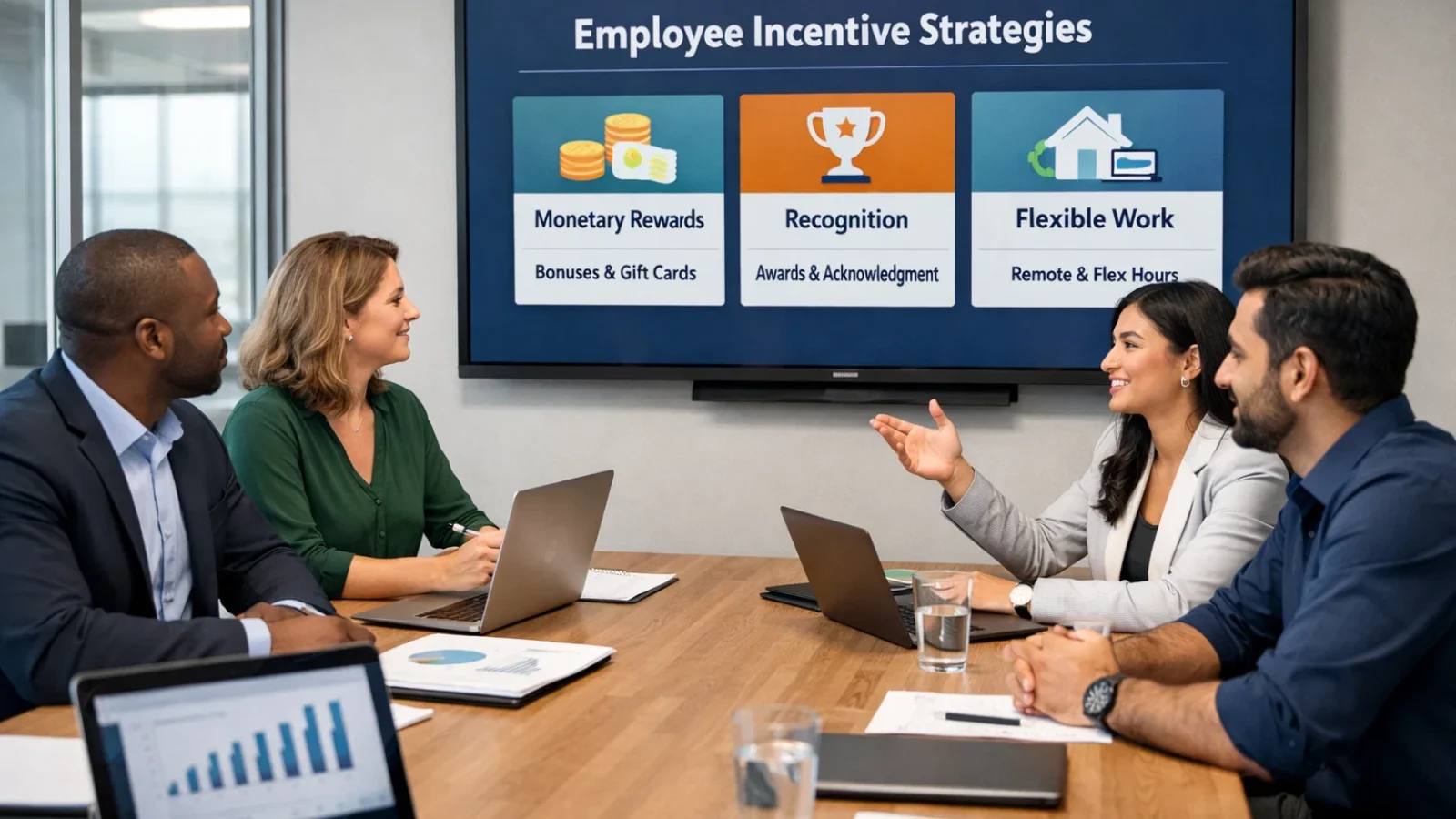
Most discussions about incentives begin with financial rewards. Bonuses and commissions certainly play an important role. Yet research shows that non-monetary recognition often has a stronger impact on engagement.
In practice, the most effective programs combine both approaches.
Monetary Incentives
Financial rewards deliver clear and immediate motivation. These incentives typically focus on performance outcomes or business results.
Examples include performance bonuses, profit sharing, stock options, commissions, retention bonuses, sign-on bonuses, spot bonuses, referral bonuses, project completion bonuses, sales SPIFFs, annual merit increases, and gainsharing plans.
Monetary rewards work best when employees clearly understand the criteria for earning them. Transparent goals build trust and encourage employees to stay focused on measurable outcomes.
Non-Monetary Incentives
While financial rewards can drive short-term results, non-monetary incentives strengthen long-term commitment.
Popular examples include flexible work arrangements, additional PTO, public recognition programs, career development plans, learning opportunities, mentorship programs, project ownership, title advancement, wellness initiatives, team retreats, volunteer time off, and sabbaticals.
These approaches acknowledge employees as individuals rather than just contributors to revenue targets.
Hybrid Incentives
Hybrid systems combine both categories to create flexible rewards.
Common examples include points-based recognition platforms, gift card programs, wellness stipends, experience rewards, anniversary awards, and personalized recognition moments.
Many modern employee incentive programs rely on hybrid systems because they allow employees to choose rewards that feel meaningful to them.
Employee Incentive Program Ideas
Companies use many different incentives to motivate employees and improve retention. Below are practical ideas that reward performance, encourage growth, and strengthen company culture.
Monetary Incentives
1. Performance-Based Bonuses
Performance-based bonuses reward employees for achieving clearly defined goals tied to their role or team, such as revenue targets, project delivery, or customer satisfaction. For example, a marketing manager might earn a bonus for increasing qualified leads, while a support team could be rewarded for maintaining high service ratings. Clear and measurable goals ensure employees understand what they need to achieve.
Best for: Organizations with clear KPIs and measurable performance.
2. Profit Sharing
Profit sharing gives employees a portion of the company’s profits, usually distributed quarterly or annually. This connects rewards to overall business success and encourages employees to think beyond individual roles. When the company performs well, everyone benefits, creating a stronger sense of ownership.
Best for: Companies with stable and predictable profitability.
3. Stock Options / ESOPs
Stock options or ESOPs provide employees with equity in the company, allowing them to benefit from long-term growth. These typically vest over time, encouraging employees to stay and contribute to future success. This approach works best when employees understand how equity and vesting function.
Best for: Startups and high-growth companies.
4. Commission Structures
Commission structures reward employees, typically in sales roles, based on the revenue they generate. This can be a flat percentage or a tiered system, creating a direct link between effort and income. A well-balanced structure ensures motivation without encouraging poor-quality sales.
Best for: Sales and revenue-driven roles.
5. Retention Bonuses
Retention bonuses encourage employees to stay for a defined period, especially during critical business phases or transitions. For example, employees may receive a bonus after completing 12 or 24 months. This helps reduce turnover when stability is essential.
Best for: Roles where employee turnover can disrupt operations.
6. Sign-On Bonuses
Sign-on bonuses are offered to new hires as an incentive to accept job offers, especially in competitive markets. They help secure top talent quickly but do not guarantee long-term retention. Many companies tie them to a minimum tenure to reduce risk.
Best for: Hard-to-fill or highly competitive roles.
7. Spot Bonuses
Spot bonuses are immediate rewards given for exceptional work or contributions. For example, employees may receive bonuses shortly after solving a critical problem or exceeding expectations. Timely recognition reinforces positive behavior effectively.
Best for: Fast-paced teams needing quick recognition.
8. Referral Bonuses
Referral bonuses reward employees for recommending candidates who get hired and stay for a certain period. This often leads to higher-quality hires and reduces recruitment costs. It also speeds up the hiring process. To set up your referral bonuses, you can use dedicated referral tools, like ReferralCandy.
Best for: Companies with ongoing hiring needs.
9. Project Completion Bonuses
Project completion bonuses reward employees for successfully delivering major projects or milestones. These incentives help maintain focus and accountability throughout the project lifecycle. They are especially useful for time-bound work.
Best for: Project-based teams and client-driven roles.
10. Sales SPIFFs
Sales SPIFFs are short-term incentives designed to boost sales of specific products or services. They are often used during product launches or promotional campaigns. These incentives create urgency and quick results.
Best for: Sales teams during campaigns or new launches.
11. Annual Merit Increases
Annual merit increases are salary raises based on performance reviews. They reward consistent effort and long-term contribution rather than short-term wins. This helps employees feel recognized and valued over time.
Best for: Organizations with structured performance review systems.
12. Gainsharing Plans
Gainsharing plans reward teams for improving efficiency, reducing costs, or increasing productivity. Savings generated are shared with employees as bonuses. This encourages collaboration and operational improvement.
Best for: Operations, manufacturing, and logistics teams.
Non-Monetary Incentives
13. Flexible Work Arrangements
Flexible work arrangements allow employees to choose when and where they work, including remote or hybrid setups. This improves work-life balance and reduces burnout. It also increases job satisfaction and productivity.
Best for: Knowledge workers and remote teams.
14. Extra PTO or Mental Health Days
Offering additional paid time off helps employees rest, recharge, and avoid burnout. Mental health days are especially valuable in high-pressure roles. This shows that the company values employee well-being.
Best for: High-stress or client-facing roles.
15. Public Recognition Programs
Public recognition highlights employee achievements through meetings, emails, or internal platforms. This boosts morale and encourages others to perform well. Recognition often feels more meaningful when shared openly.
Best for: Collaborative and team-oriented environments.
16. Career Development Paths
Clear career paths show employees how they can grow within the organization. This includes defined promotion criteria and role progression. It helps employees stay motivated and committed long-term.
Best for: Skilled professionals and growth-focused teams.
17. Learning and Development Opportunities
Providing access to courses, certifications, or conferences supports continuous learning. Employees gain new skills while contributing more effectively to the organization. This also improves retention.
Best for: Technical and early-career employees.
18. Mentorship Programs
Mentorship programs pair employees with experienced leaders to guide their growth. This helps employees develop skills faster and build confidence. It also strengthens internal relationships.
Best for: Future leaders and high-potential employees.
19. Autonomy and Ownership
Giving employees ownership of projects builds trust and accountability. It allows them to make decisions and take responsibility for outcomes. This often leads to higher engagement and innovation.
Best for: High-performing and experienced employees.
20. Title Advancement
Title advancement recognizes growth in responsibility, even without immediate salary changes. It signals trust and progress within the organization. This can motivate employees to continue developing.
Best for: Employees nearing promotion milestones.
21. Wellness Programs
Wellness programs include benefits like gym memberships, therapy support, or health initiatives. These programs help employees maintain physical and mental well-being. Healthier employees are more productive and engaged.
Best for: Organizations prioritizing employee well-being.
22. Team Retreats and Offsites
Team retreats and off-site events help employees connect outside of daily work. These experiences strengthen relationships and improve collaboration. They are especially useful for distributed teams.
Best for: Remote or hybrid teams.
23. Volunteer Time Off (VTO)
Volunteer time off allows employees to spend paid time supporting social or community causes. This creates a sense of purpose beyond work. It also enhances company culture and brand image.
Best for: Organizations focused on social impact.
24. Sabbatical Programs
Sabbaticals offer extended leave to long-term employees after several years of service. This helps prevent burnout and rewards loyalty. Employees often return more engaged and motivated.
Best for: Experienced employees with long tenure.
Hybrid & Tech-Enabled Incentives
25. Points-Based Rewards Platforms
Points-based systems allow employees to earn points for achievements and redeem them for rewards. This creates flexibility and ongoing engagement. Employees can choose rewards that matter to them.
Best for: Large teams needing scalable recognition systems.
26. Gift Card Programs
Gift cards provide simple and quick rewards for employee achievements. They are easy to distribute and widely appreciated. This makes them a practical option for frequent recognition.
Best for: Instant and informal recognition.
27. Wellness Wallets
Wellness wallets give employees a set budget to spend on health-related activities. This could include fitness, therapy, or wellness apps. It allows employees to personalize their benefits.
Best for: Companies focused on personalized well-being.
28. Experience Rewards
Experience rewards include travel, events, or unique activities instead of cash. These create lasting memories and feel more meaningful than traditional rewards. They are often used for top performers.
Best for: High performers and milestone achievements.
29. Anniversary Awards
Anniversary awards recognize employees for their years of service. These can include gifts, bonuses, or public recognition. They reinforce loyalty and long-term commitment.
Best for: Companies focused on retention and tenure.
30. Custom Recognition Moments
Custom recognition celebrates personal milestones like birthdays, promotions, or life events. This makes employees feel valued as individuals, not just workers. It strengthens emotional connection to the company.
Best for: Building a strong and personal company culture.
Employee Incentives by Company Size
Different organizations face different constraints when designing programs.
Small companies often assume they cannot compete with large enterprises. In reality, many effective employee incentive programs for small businesses rely on simple but meaningful rewards such as flexible schedules, public recognition, and learning budgets.
Mid-sized companies typically introduce structured recognition platforms, profit-sharing plans, and career progression frameworks.
Large enterprises often implement equity programs, gainsharing models, and integrated digital recognition systems.
Understanding these differences is important when designing employee incentive programs for small business environments where resources and administrative capacity may be limited.
How to Build an Employee Incentives Program

Knowing the available options is only the first step. Organizations must also build a program that operates consistently and fairly.
A typical process begins with employee feedback. Surveys reveal what employees actually value rather than what leadership assumes they want.
Finance and HR teams should collaborate early to ensure the program remains sustainable.
Companies then select a program structure or recognition platform. Many organizations start with a pilot program involving one team before expanding company-wide.
Once the pilot is complete, HR teams analyze feedback and refine the program. A full rollout usually follows after adjustments are made.
Several principles improve success rates.
First, incentives should align with company values. Recognizing behaviors that reflect those values reinforces culture.
Second, recognition should happen quickly. Delayed recognition loses motivational impact.
Third, programs must remain fair and consistent across departments.
Organizations that follow these principles often see stronger results from their employee incentives.
Managing Incentives with Technology
Running incentive systems manually often leads to mistakes. Delayed rewards, inconsistent recognition, and administrative errors can undermine even well-designed programs.
Modern HR platforms help organizations manage employee incentives more efficiently. Recognition tools allow employees to give peer appreciation, while performance management systems link rewards to measurable goals.
Payroll integration also reduces compliance risks. Automated bonus processing ensures incentives are paid correctly and on time.
Analytics tools provide insights into engagement trends, helping leaders understand which employee incentives truly influence retention and productivity.
Are Employee Incentives Tax Deductible?
Many HR leaders eventually ask the same question: Are employee incentives tax-deductible?
In many cases, they are, but the details depend on the type of reward.
Cash bonuses are generally treated as supplemental wages and must follow specific withholding rules.
Certain achievement awards may qualify for partial tax exemptions when they meet IRS criteria.
Small, occasional gifts may be classified as de minimis benefits and can be excluded from taxation.
Because rules vary, companies should confirm the details with a tax professional. Understanding whether employee incentives are tax-deductible is an important step before launching a new program.
Common Employee Incentive Program Mistakes
Even well-intentioned incentive programs can fail due to poor design or execution. Some of the most common mistakes include:
- Offering identical rewards to everyone
Not all employees value the same type of recognition. A one-size-fits-all approach often reduces the impact of incentives. - Focusing only on final results
Rewarding only outcomes ignores important behaviors like collaboration, innovation, and mentorship that drive long-term success. - Ignoring tax and compliance rules
Misunderstanding how incentives are taxed can lead to payroll issues and compliance risks later. - Delaying recognition
When rewards are given too late, the connection between effort and appreciation weakens, reducing motivation. - Lack of clear success metrics
Without tracking engagement, retention, or performance data, it becomes difficult to measure whether the program is actually effective.
The Future of Employee Incentives
Workplace recognition continues to evolve as organizations rethink how they support employees.
Personalized rewards are becoming more common. Data-driven platforms analyze employee preferences and recommend incentives that match individual interests.
Well-being incentives are also growing rapidly. Mental health benefits, financial wellness programs, and flexible schedules are now central components of modern incentives.
Another emerging trend is transparency. Companies increasingly monitor how rewards are distributed to ensure fairness across teams and demographics.
Recognition is also gaining recognition as a measurable retention strategy. Employees who feel consistently appreciated are significantly less likely to leave their roles.
You Might Also Like:
How To Be More Productive Without Burnout?
40 Creative Team Building Activities For Work & Remote Teams
How EmpCloud Helps You Manage Employee Incentive Programs
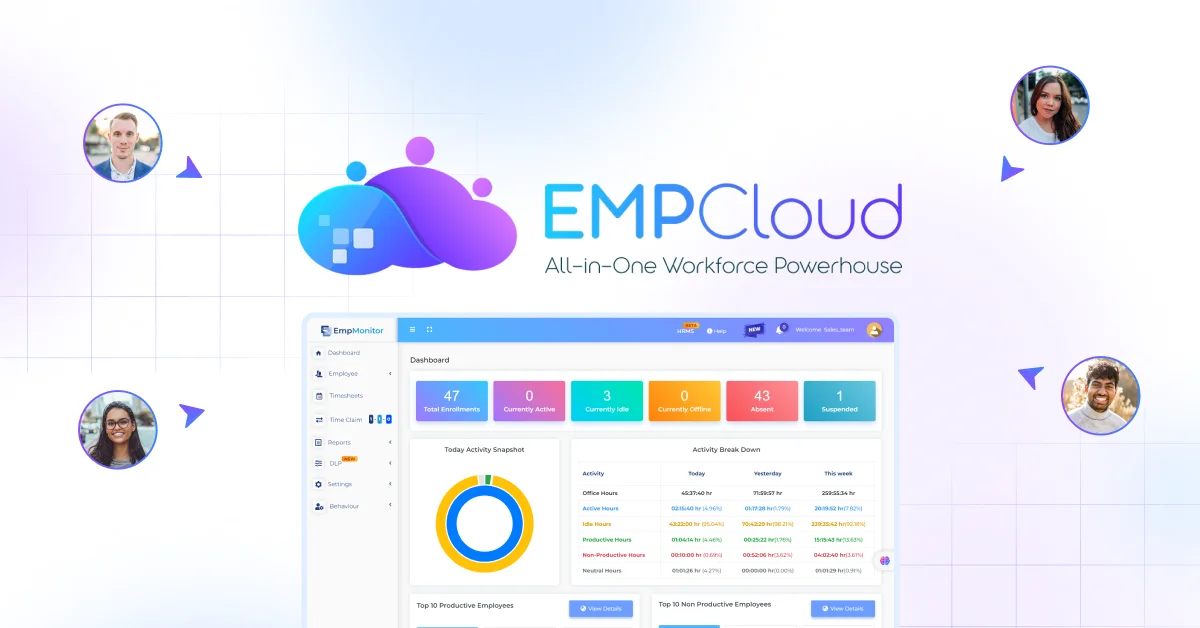
Designing incentives is easy. Executing them consistently is the real challenge. Managing programs across teams, managers, and locations often leads to errors, inconsistent rule application, and delays in rewards.
EmpCloud solves this by giving HR teams a structured system to run incentive programs at scale while keeping the process accurate and manageable.
- The Rewards and Recognition module allows both peer-to-peer and manager-led recognition. Employees can acknowledge achievements through a points-based system, which helps scale non-monetary recognition across teams.
- The Performance Management system supports goal tracking, OKR alignment, and performance reviews. These tools allow HR teams to connect incentive triggers directly to measurable outcomes rather than relying on subjective decisions.
- Employee Payroll Management Automate payroll, tax calculations, and bonus payouts to ensure accurate, timely, and error-free salary processing.
- The Analytics and Reporting layer provides real-time dashboards that track engagement and program outcomes. HR leaders can use these insights to evaluate whether their employee incentive programs are improving retention and engagement.
EmpCloud is designed to support mid-market and enterprise organizations. The platform integrates with existing HRIS and payroll systems, allowing companies to manage incentive processes without needing to replace their current infrastructure.
Conclusion
Effective employee incentives are not always the most expensive ones. The programs that succeed are carefully designed, delivered consistently, and connected to behaviors that matter.
Organizations that listen to employee feedback and tailor rewards to their workforce usually see the strongest results. Recognition that feels personal and timely often matters more than the size of the reward itself.
Companies that invest in thoughtful incentives create workplaces where employees feel valued, motivated, and more likely to stay for the long term.
Frequently Asked Questions
What are the most effective employee incentives?
Programs that combine financial rewards with recognition tend to perform best. Flexible work options, career development opportunities, and peer recognition often deliver stronger engagement than cash rewards alone.
Are employee incentives tax-deductible?
In many situations, they are, but the exact treatment depends on the type of reward. Cash bonuses are taxable, while some achievement awards may qualify for exemptions. Always confirm details with a tax professional.
What’s the difference between incentives and benefits?
Benefits are guaranteed entitlements such as health insurance or paid leave. Incentives are rewards employees earn by meeting certain goals or milestones.
How do you measure the ROI of incentives?
Companies typically monitor engagement surveys, voluntary turnover rates, productivity data, and retention metrics to evaluate the impact of employee incentives.
What incentives work best for remote teams?
Flexible schedules, digital recognition platforms, learning budgets, and wellness programs are particularly effective for distributed teams.
How much should companies spend on incentives?
Industry benchmarks suggest allocating about one to three percent of total payroll to structured incentive programs.
Quick Search Our Blogs
Type in keywords and get instant access to related blog posts.