Nearly 50% of employees who reported misconduct experienced some form of retaliation, according to the Ethics and Compliance Initiative’s 2023 survey. HR leaders read that and immediately think: we need a safer intake channel. That’s the wrong diagnosis. The intake channel is rarely where whistleblower programs break down. The break happens after submission — in the silence, the untraceable routing, and the absence of any feedback loop to the person who took the risk of reporting in the first place.
Fix the intake and ignore the follow-through, and you’ve built a louder funnel into a dead end.
The Actual Problem: Reports as One-Way Black Boxes
Data from the NAVEX 2025 Whistleblowing Benchmark Report gives a sense of the scale: 2.15 million reports across 4,077 organizations covering 69 million employees. Hotlines still account for only 29.5% of intake. That means the majority of reports arrive through web forms, email, or integrated HRMS tools — and most of those systems have no native case-tracking visible to the reporter.
Think about what that means from the employee’s side. They’ve filed something sensitive. They don’t know if it was received, who has it, or whether it’s being investigated—or if it simply disappeared into someone’s inbox. That uncertainty doesn’t just feel bad — it creates the exact conditions that produce retaliation, because the lack of process visibility makes the reporter’s identity easier to guess.
The fix isn’t a hotline. It’s a confidential, trackable feedback loop built into the HRMS itself.

Why Regulatory Pressure Is Making This Urgent in 2025
Compliance timelines are compressing. The SEC Whistleblower Reform Act of 2025 expands protections for employees who report internally before escalating externally — which means organizations now have a narrow window to demonstrate that their internal processes actually work. An intake form with no audit trail is not a defensible internal process. It’s a liability.
Regulators aren’t asking whether you have a reporting channel. They’re asking whether reports are routed, tracked, and resolved. That distinction is costing companies that haven’t modernized their compliance infrastructure.
For industries operating across jurisdictions — financial services, telecom, IT services — the patchwork of national whistleblower laws makes a centralized, auditable system even more critical. A report filed in one country needs to move through a traceable process that satisfies that country’s labor and compliance law, not just the HR team’s internal preference.
What a Functional Whistleblower Workflow Actually Requires

Most HR teams, when they audit their current setup honestly, find three gaps:
- No anonymized tracking for the reporter. The employee who files a report has no reference number, no status updates, no confirmation that their report reached anyone with authority to act.
- No separation between intake and investigation. The same manager who receives reports may have influence over the subject of the report. This isn’t just a conflict-of-interest problem — it’s the primary structural reason retaliation rates stay high.
- No connection to the broader employee record. When a report does lead to action, the resolution often lives in a separate system, completely disconnected from performance records, exit data, or team-level patterns that might reveal systemic issues.
Addressing these gaps requires the reporting function to sit inside — not adjacent to — the HRMS.
How EMPCloud’s Feedback Stream Tool Changes the Architecture
EMPCloud handles this through the AI agent’s Feedback Stream tool, which lets employees track whistleblower reports confidentially through the platform. This isn’t a standalone hotline bolted onto the side of the HRMS. It’s integrated into the same system that manages attendance, payroll, performance, and offboarding. That means a compliance team can pull up a report, cross-reference the employee’s leave patterns, check their performance trajectory, and scan their team’s attrition data — all in a single context.
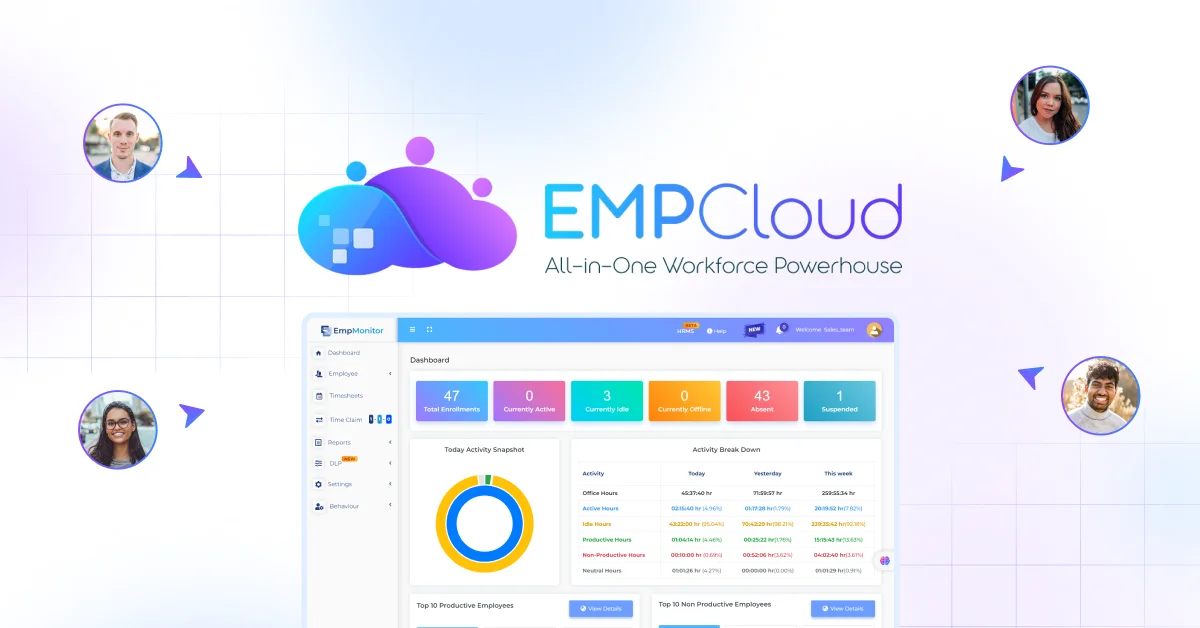
That integration matters for a reason most compliance consultants understate: patterns only become visible when data isn’t siloed. A single whistleblower report looks like an isolated event. Three reports from the same department over eight months, cross-referenced against that department’s performance review scores and voluntary turnover, looks like a management problem. You can only see the latter if your reporting tool and your HRMS share a data layer.
The confidentiality piece is structural, not just a promise.
Multi-tenant isolation and RBAC control access to Feedback Stream data at the role level, so only authorized users can view open reports. That’s the kind of architectural separation that compliance auditors look for when assessing whether internal reporting channels are genuinely protected.
Organizations with field workforces or multiple locations face a particular challenge — one common in telecom and NBFC environments. EMPCloud’s geo-location and activity monitoring tools, when properly configured, help compliance teams corroborate or contextualize reported incidents without forcing the reporter into the open.
The Offboarding Trap Nobody Talks About
Here’s a failure mode that rarely makes it into compliance guides. An employee files a whistleblower report, nothing visibly happens, and then they resign. Standard offboarding processes wipe or archive their record. The report — and the context that makes it credible — disappears with them.
EMPCloud’s offboarding workflow retains professional records, recognitions, projects, and performance metrics after an employee exits. The data trail associated with a report survives even when the reporter doesn’t. For compliance teams dealing with the SEC Whistleblower Reform Act’s expanded internal-reporting protections, this retention capability is more than a nice-to-have — it’s part of demonstrating that reports were received and handled, not just filed and forgotten.
If you’re evaluating your current offboarding process against these requirements, the guide to employee offboarding software for HR teams is worth reading alongside your compliance checklist.
The Natural-Language Analytics Angle
One underused capability for compliance teams is EMPCloud’s Smart SQL natural-language custom analytics tool. No SQL required. An HR or compliance lead can query attendance, leave, payroll, and performance in plain English — the kind of cross-module analysis that normally means a data analyst and a week of lead time.
For whistleblower program management, this matters because the most valuable analysis is often correlational. Are retaliation-adjacent patterns — sudden performance downgrades, unexpected schedule changes, leave rejections — appearing after reports are filed? With a natural-language query tool, a compliance officer can ask that question directly and get an answer without waiting for IT. That speed is the difference between spotting a retaliation pattern while it’s forming and discovering it six months later during an investigation.
What to Actually Audit in Your Current Setup
Before assuming your whistleblower program is compliant, run through these four checks:
- Can the reporter track their own submission? If not, they have no signal that anything is happening — which means they assume nothing is.
- Is intake separated from the management chain of the reported party? Structural separation, not just policy, prevents the most common retaliation pathway.
- Does your reporting data connect to the rest of your HRMS? Isolated tools produce isolated reports. Patterns stay invisible.
- Does employee data survive offboarding? If the reporter exits, the evidentiary context for their report should not exit with them.
Most HR teams will find at least two of these are unsatisfied by their current setup. That’s not an indictment — it’s a starting point. The most common whistleblower reporting mistakes tend to cluster around exactly these structural gaps, and most are fixable without rebuilding your compliance program from scratch.
For broader compliance infrastructure questions, the compliance monitoring guide covers how continuous monitoring connects to enterprise security posture — relevant context for any organization treating whistleblower data as a security-sensitive asset.
The Bottom Line
Whistleblower programs don’t fail because employees won’t report. They fail because the system that receives reports gives reporters no reason to believe anything will happen. Closing that gap requires a tool that tracks reports, preserves data across the employee lifecycle, and connects compliance data to the rest of the HRMS — not a hotline poster in the break room.
EMPCloud operates across 15+ countries, serving 200+ companies and managing 50,000+ employees. That reach means the Feedback Stream tool and the compliance architecture around it have been stress-tested across the kinds of regulatory environments — telecom, IT, NBFCs — where whistleblower program failures carry real legal exposure.
If your current reporting setup fails two or more of the four checks above, it’s worth seeing how an integrated approach changes the picture. Start your free 15-day EMPCloud trial and evaluate the Feedback Stream tool against your actual compliance requirements — not a vendor demo designed to skip the hard questions.
FAQs: –
1. What happens after a whistleblower report is submitted?
After a whistleblower report is submitted, it should be acknowledged, securely assigned to the appropriate person or investigation team, assessed for conflicts of interest, and tracked through investigation and resolution. A clear audit trail and confidential status updates help ensure the report does not disappear after intake.
2. How should companies manage whistleblower reports?
Companies should manage whistleblower reports through a confidential, trackable workflow with clear case ownership, restricted access, investigation documentation, status tracking, and an audit trail. Separating report intake from the reported person’s management chain can also reduce conflicts of interest and lower the risk of retaliation.
3. What is whistleblower case management?
Whistleblower case management is the structured process of receiving, assigning, investigating, tracking, documenting, and resolving reports of workplace misconduct. A dedicated case management system helps organizations maintain confidentiality while creating a defensible record of how each report was handled.
4. How can HR prevent retaliation after a whistleblower report?
HR can reduce retaliation risks by protecting the reporter’s identity, limiting access to case information, separating intake from potentially conflicted managers, and monitoring relevant employment changes after a report is filed. Tracking changes in performance, schedules, leave decisions, or other employment actions can help identify potential retaliation patterns.
5. What should companies look for in whistleblower management software?
Companies should look for confidential reporting, anonymous or protected case tracking, role-based access controls, investigation workflows, audit trails, status updates, data retention, and analytics. Integration with the broader HRMS can also help compliance teams identify workforce patterns that may be difficult to see in an isolated reporting system.
Quick Search Our Blogs
Type in keywords and get instant access to related blog posts.