

The report arrives. HR reads it, decides it needs investigation, and emails it to a manager. Anonymity is already gone.
That’s not a hypothetical. It’s the single most common failure mode across compliance programs, and almost no one talks about it — because step one, collecting the report, feels like the hard part. It isn’t. Step two is where confidentiality collapses, and most teams never see it happen.
In a hurry? Listen to the blog instead!
The Confidentiality Problem Nobody Admits

NAVEX’s 2025 Whistleblowing & Incident Management Benchmark Report tracked 2.15 million reports across 4,077 organizations covering 69 million employees — volume at record levels for the second consecutive year. Workplace conduct remains the largest single report category globally, regardless of region.
That volume is not the problem. The problem is what happens to each report after it lands.
Most compliance teams handle case notes in shared drives or email threads. Assigning, forwarding, or discussing a case through an unmonitored channel can compromise the reporter’s anonymity. The reporter may not know their identity has leaked. The HR team may not know either. But a defense attorney reviewing your documentation in a DOJ inquiry will know immediately.
This is what common whistleblower reporting mistakes actually look like in practice — not malicious intent, just ordinary operational sloppiness that a hotline vendor never warned you about.
What the DOJ Actually Requires (and What Doesn’t Count)
The DOJ’s Evaluation of Corporate Compliance Programs sets a clear bar: a whistleblower system must be genuinely operational, demonstrably confidential, and traceable through resolution with an audit trail. A hotline that collects reports into an unmanaged inbox satisfies none of those requirements. Failure to meet them removes a compliance program from the DOJ’s leniency calculus entirely — not partially, entirely.
That word “demonstrably” is doing a lot of work. It means you must be able to show — not assert — that case access was restricted, that data moved through logged channels, and that the investigation produced documentation that would survive external scrutiny. SOC 2 and ISO 27001 both require access logs as proof of data protection; in a whistleblower context, this extends to disciplined case-handling from first receipt to final disposition.
Most HR teams cannot produce that chain. Not because they mishandled cases deliberately, but because their HR data lives in disconnected systems. Investigators manually cross-reference payroll anomalies, attendance records, performance history, and project assignments across separate tools — producing documentation that wouldn’t survive external scrutiny.
The SEC awarded more than $60 million to 48 individual whistleblowers in fiscal year 2025. Regulators are getting better at this. HR operations aren’t keeping pace.
The Three-Layer Fix: Confidentiality by Design

There is no single tool that solves this. What works is architecture — building the case-handling workflow so that confidentiality is structural, not dependent on individuals remembering to be careful.
Layer 1: Intake That Stays Isolated
Report intake must be separated from general HR communication. No email. No shared inbox. No forwarding. The report should land in a purpose-built channel where access is role-restricted by default, not by request.
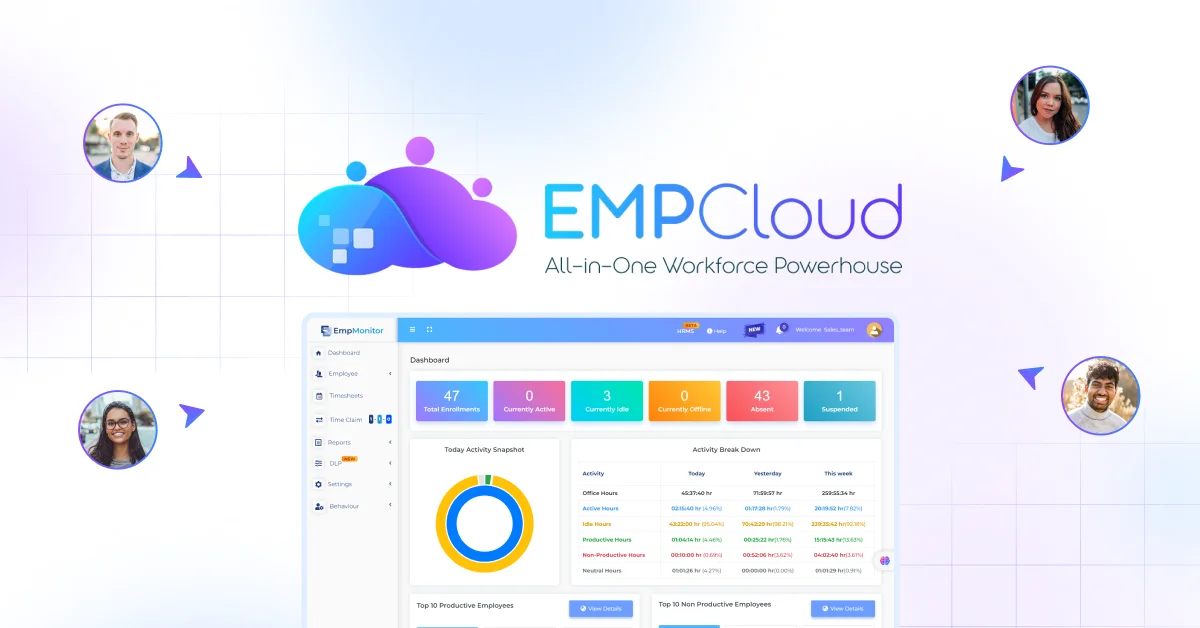
EMPCloud‘s AI agent Feedback Stream tool is built specifically for this — end-to-end confidential report tracking, with the RBAC layer enforced at the OAuth2/OIDC authorization server level. Access is not opt-in confidentiality. It is opt-in access. That distinction matters enormously when you’re constructing an audit trail.
Layer 2: Investigation That Doesn’t Leak
Once a report is live, investigation requires pulling from multiple HR modules. Attendance records to check presence patterns. Payroll data to surface compensation anomalies. Performance history to establish baseline behavior. Project assignments to understand team dynamics.
In most organizations, each of those data sources sits in a different system. The investigator exports files, opens spreadsheets, and creates a paper trail that lives entirely outside any access-controlled environment.
EMPCloud’s Smart SQL natural-language analytics tool changes the mechanics here. An investigator asks a plain-English question — across attendance, leave, payroll, and performance — and gets an answer without exporting anything. The data never leaves the permissioned environment. For field workforces in sectors like telecom and NBFCs, the same conversational interface can surface geo-location and activity data while maintaining the same access controls.
This isn’t a feature convenience. It’s the difference between an investigation that produces a defensible audit trail and one that produces a folder of spreadsheets with no chain of custody.
Layer 3: Resolution That Can Be Proved
Closure documentation is where most programs fail the “demonstrably” test. If you cannot show exactly who accessed the case, when, what actions were taken, and what the final determination was — with timestamps and role attribution — you don’t have compliance documentation. You have notes.
The RBAC layer in EMPCloud’s OAuth2/OIDC authorization server maintains that access log across the entire case lifecycle. Every module interaction is tied to a role-verified identity. That’s what SOC 2 and ISO 27001 auditors are looking for, and it’s what a DOJ reviewer expects to see when they ask for your audit trail.
The Sector Angle: Why IT, Telecom, and NBFCs Face Higher Stakes
Not every organization faces the same exposure. Information technology, telecom, and non-banking financial companies operate under data security and compliance requirements that make whistleblower case mishandling particularly costly. Regulatory scrutiny is higher. The data involved in investigations — compensation records, access logs, client-facing activity — is more sensitive. And reputational damage from a confidentiality breach compounds faster.
These are exactly the sectors where building the three-layer architecture pays off fastest. The compliance infrastructure you build for whistleblower case management overlaps directly with what you need for broader data governance — you are not building something twice. The cross-jurisdiction obligations facing IT services and NBFC environments — SEBI, RBI guidelines, EU Directive 2019/1937, SOX Section 806 — make auditable, role-restricted case handling a baseline requirement, not a best practice.
Why Low Report Volume Is the Real Warning Sign
One honest caveat: the three-layer architecture above addresses operational failure. But 23% of employees cite fear of not being taken seriously as the primary reason they don’t file a report at all. That’s a program design failure, not an employee motivation failure. Separately, the Ethics and Compliance Initiative’s 2023 survey found nearly 50% of employees who reported misconduct experienced some form of retaliation — meaning the employees who do file have real reasons to be cautious.
Low report volume, in that context, isn’t evidence of a healthy culture. It’s evidence that employees have already decided the system won’t protect them. Technical architecture doesn’t fix that perception overnight. What it does is create the preconditions — genuinely confidential intake, traceable investigation, demonstrable closure — that allow trust to rebuild through demonstrated behavior. That’s a slower process, but it starts with getting the mechanics right.
Whistleblower volume is rising. Regulatory expectations are rising faster. The gap between “we have a hotline” and “we have a compliant program” is exactly the three layers described above — and most organizations are currently sitting at layer zero.
Start your free 15-day EMPCloud trial and see how confidential case tracking, cross-module analytics, and role-restricted access work together in a single platform.
Frequently Asked Questions: –
1. Where does whistleblower confidentiality usually break down?
Confidentiality often breaks after intake, when teams forward reports through email, shared drives, or unmonitored channels during case assignment and investigation.
2. What does the DOJ expect from a whistleblower compliance program?
The DOJ expects companies to maintain reporting mechanisms that operate effectively, protect confidentiality, provide appropriate access, and document how teams handle and resolve reports.
3. How can HR investigate whistleblower reports without exposing employee data?
HR can limit access through role-based permissions and investigate within controlled systems rather than exporting sensitive attendance, payroll, performance, or other employee data into spreadsheets and email threads.
4. What should a whistleblower case audit trail include?
A defensible audit trail should record who accessed the case, when they accessed it, what actions they took, who made key decisions, and how the investigation reached its final resolution.
5. Does low whistleblower report volume mean a company has fewer compliance problems?
Not necessarily. Low reporting can indicate that employees do not trust the reporting process or fear retaliation. A healthy program needs both accessible reporting and genuine confidentiality protections.
Quick Search Our Blogs
Type in keywords and get instant access to related blog posts.