
Managing tasks across a team is not as simple as it sounds. As businesses grow, communication gets scattered, deadlines get missed, and no one is quite sure who owns what. These are not small inconveniences. They are operational problems that cost time, money, and team morale.
This is why team task management has become a priority for modern businesses. Whether your team is remote, in-office, or hybrid, having a structured system to assign, track, and complete work is no longer optional. It is the foundation of consistent productivity.
In this guide, we break down the most common team task management challenges, explain exactly why they happen, and offer clear, practical solutions. We will also look at how tools like task manager platforms and production planning software help businesses stay organized at scale.
Read Aloud
What Is Team Task Management?

Team task management refers to the process of organizing, assigning, tracking, and completing tasks across a group of people. Unlike managing your own to-do list, team task management involves coordinating multiple people, timelines, and priorities at the same time.
A structured team &task management system gives everyone clarity on what needs to be done, who is responsible, and when it is due. It replaces fragmented communication with one central source of truth. When this works well, teams move faster, make fewer errors, and stay aligned even as workloads grow.
Top Team Task Management Challenges and How to Solve Them

Let us look at the most common challenges teams face and what you can do about each one.
1. Lack of Task Visibility
One of the most frequent complaints in any growing organization is that no one knows where a project actually stands. Updates live in email threads, status reports are outdated the moment they are written, and managers spend hours chasing progress instead of making decisions.
The Challenge
Tasks tracked in emails and spreadsheets. No centralized view. Managers spend time chasing updates instead of moving work forward.
The Solution
A centralized team task management app with real-time dashboards. Shared project boards keep everyone aligned without the need for status meetings.
2. Poor Communication Between Teams
When communication is scattered across different tools and channels, teams end up duplicating work, missing approvals, and misunderstanding priorities. This is especially common in larger teams or cross-functional projects.
The fix is not just adding another messaging tool. It is integrating communication directly into your task manager so that every comment, approval, and update is tied to the relevant task. This keeps context intact and eliminates the back-and-forth.
3. Unclear Priorities and Deadlines
When everything is marked urgent, nothing is truly urgent. Teams without clear priority systems end up working on the wrong things, and critical tasks slip through the cracks.
Priority-based task assignment, deadline automation, and milestone tracking solve this. When a team task management app automatically flags overdue tasks and surfaces the highest-priority work first, teams stop guessing and start executing.
4. Lack of Accountability
Without clear ownership, tasks sit in limbo. This is one of the most damaging team task management challenges because it is often invisible until a deadline is already missed.
Role-based assignments and activity logs make accountability visible. When every task has a named owner and every action is logged, it becomes easy to identify where delays are happening and address them early.
5. Workload Imbalance and Employee Burnout
Some team members end up stretched thin while others have capacity to spare. This imbalance is often invisible without proper tracking tools and leads directly to burnout, high turnover, and declining quality of work.
Capacity planning and resource allocation tools give managers a clear view of who has bandwidth and who is overloaded. Automated workload balancing can redistribute tasks before burnout becomes a problem.
6. Managing Remote and Hybrid Teams
Remote work has made flexibility a standard expectation. But it has also made team task management harder. Without physical presence, collaboration delays increase, time-zone coordination becomes a daily challenge, and workflow transparency drops.
Cloud-based task manager systems with asynchronous collaboration features address this directly. Teams can share progress, leave updates, and move work forward without needing to be online at the same time.
7. Overdependence on Manual Processes
Spreadsheets and manual follow-ups were never designed for team coordination at scale. Yet many businesses still rely on them. The result is human error, inconsistent processes, and hours of avoidable admin work.
Workflow automation replaces manual tasks with smart, rule-based processes. When a task is completed, the next step triggers automatically. When a deadline approaches, a notification fires without anyone having to remember. This is how modern team and task management systems save time.
8. Inefficient Resource and Production Planning
Poor production planning leads to bottlenecks. Teams run out of resources mid-project, dependencies are ignored, and timelines collapse. This is particularly damaging in manufacturing, IT, and service delivery operations.
Production planning software solves this by giving teams the ability to forecast workloads, schedule resources accurately, and manage task dependencies before they become blockers. When integrated with your team task management app, production planning software creates a seamless link between what needs to be done and who has the capacity to do it.
Features to Look for in a Team Task Management App

Not all tools are created equal. When choosing a team task management app, these are the features that separate good platforms from great ones:
| Feature | Why It Matters |
|---|---|
| Task Assignment & Tracking | Ensures every task has a clear owner and deadline |
| Workflow Automation | Eliminates repetitive manual follow-ups and saves time |
| Real-Time Reporting | Gives managers instant visibility into team progress |
| Production Planning Software Integration | Links task management with resource scheduling |
| Collaboration & Communication Tools | Keeps all team communication in one place |
| AI-Based Prioritization | Helps teams focus on what matters most, automatically |
| Mobile Accessibility | Lets remote and hybrid teams stay connected anywhere |
Also Read:
How Task Management Improves Team Productivity and Workflow Efficiency
How to Choose the Best Remote Collaboration Tools (Without Drowning in Options)
How EmpCloud Simplifies Team Task Management
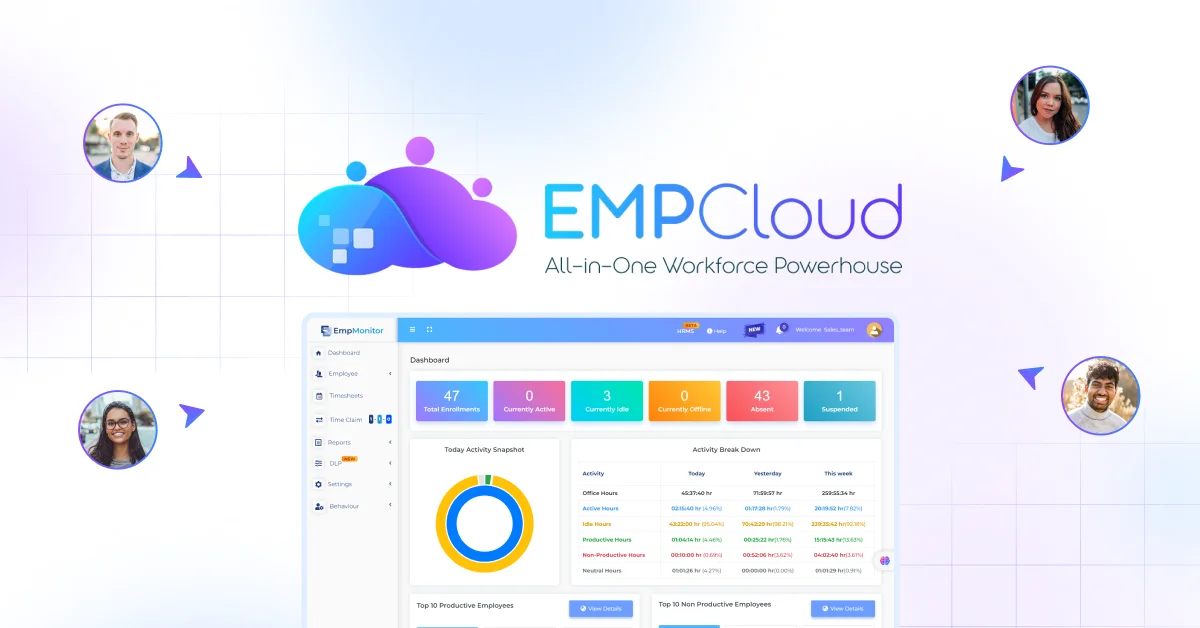
EmpCloud is a workforce and project management platform built for businesses that need more than basic task tracking. It brings together team task management, workforce monitoring, and productivity analytics into one unified system, giving teams full visibility and control over their operations.
What EmpCloud Offers
At its core, EmpCloud is designed to solve the exact challenges we have covered in this guide. Here is how it addresses each one:
- Real-time task tracking so managers always know where projects stand
- Role-based access control to ensure every task has a clear owner
- Kanban boards and Gantt charts for flexible project visualization
- Subtask management that breaks complex projects into manageable steps
- Custom workflows that adapt to how your team actually works
- Productivity analytics that highlight bottlenecks before they become crises
- Remote and hybrid team support through cloud-based deployment and async collaboration
EmpCloud is particularly effective for teams that have outgrown basic spreadsheets but do not want to manage multiple disconnected tools. Its integrated workforce intelligence means that task management and employee productivity tracking happen in the same place, giving managers a complete picture without switching between systems.
Why Businesses Choose EmpCloud
Beyond its feature set, EmpCloud is valued for its ease of deployment, intuitive onboarding, and real-time productivity insights. For businesses managing growing teams or scaling operations, it removes the friction that typically slows down task coordination and replaces it with structure, clarity, and speed.
If your team is dealing with visibility gaps, accountability issues, or workload imbalance, EmpCloud gives you the tools to address all of them in one place.
Best Practices for Effective Team Task Management
Even with the best tools, execution matters. Here are the habits that high-performing teams consistently use:
- Standardize your workflows so every type of task follows the same steps from start to finish
- Conduct weekly progress reviews to catch delays early and realign priorities
- Automate wherever possible to eliminate manual follow-ups and reduce human error
- Minimize tool fragmentation by consolidating work into one platform
- Encourage transparent communication by keeping all task-related discussion in your task manager
- Measure productivity with data rather than relying on instinct or anecdotal feedback
Future Trends in Team Task Management
The way teams manage work is continuing to evolve. Here are the trends shaping the next generation of team task management:
- AI-powered workflow automation that anticipates task bottlenecks and auto-reassigns work
- Predictive productivity analytics that flag at-risk projects before deadlines are missed
- Smart resource allocation that combines production planning software with real-time team capacity data
- Remote-first collaboration systems designed from the ground up for distributed teams
- Integrated workforce intelligence platforms that connect task management with HR, finance, and operations
Conclusion
Team task management is not just a productivity trend. It is a business necessity. When tasks are unclear, communication is fragmented, and accountability is missing, even talented teams underperform.
The challenges we have covered, from poor visibility and workload imbalance to manual processes and remote coordination, all have practical, proven solutions. The right task manager does not just organize work; it transforms how a team operates.
Platforms like EmpCloud make this transformation achievable by combining task tracking, workforce analytics, and production planning into one system that grows with your business. If your team is ready to work with more clarity, speed, and confidence, the first step is replacing fragmented processes with a structured team task management system.
Frequently Asked Questions
What is team task management?
Team task management is the process of organizing, assigning, tracking, and completing tasks across a group of people using structured workflows and shared tools.
Why is team task management important?
It improves visibility, accountability, and collaboration, reducing errors and ensuring projects are completed on time and within budget.
What are the biggest team task management challenges?
Common challenges include poor task visibility, unclear deadlines, workload imbalance, communication gaps, and overdependence on manual processes.
How does a task manager improve collaboration?
A task manager centralizes communication, provides real-time updates, and keeps all team members aligned through shared boards and notifications.
What is production planning software?
Production planning software helps businesses schedule resources, manage timelines, and coordinate workloads, making it easier to execute projects without bottlenecks.
How can EmpCloud help my team?
EmpCloud combines task management, workforce analytics, and project monitoring into one platform, helping teams improve productivity and reduce operational delays.
Quick Search Our Blogs
Type in keywords and get instant access to related blog posts.