

Strong collaboration is no longer optional in today’s fast-moving workplaces. Teams that deliver consistent results rely on coordination, trust, and clarity. This is why practical teamwork tips are essential for groups that want to stay productive, focused, and motivated.
Organizations that actively invest in collaboration outperform those that rely solely on individual effort. Teams that embrace clear structure, defined roles, and open communication complete tasks efficiently, solve problems faster, and maintain high morale. Using proven teamwork tips, such as setting shared goals, encouraging cooperation, and recognizing contributions, transforms everyday work into consistent success.
When employees understand expectations, communicate openly, and support one another, productivity increases, creativity flourishes, and engagement grows. Teams that apply these strategies consistently create a positive environment where collaboration feels natural, challenges become manageable, and long-term success becomes achievable. Effective teamwork starts with intention, habits, and actionable tips.
Tap to listen:
Why Teamwork Is Critical For Long-Term Success?

Teamwork influences productivity, creativity, and employee morale. When collaboration breaks down, deadlines slip, communication weakens, and frustration rises. Strong teams solve problems faster and respond to change with confidence.
Businesses that apply effective teamwork tips create spaces where employees feel supported, valued, and confident in their roles.
What Makes A Good Team Truly Successful?

Many professionals wonder why some teams consistently perform better than others. The difference rarely comes from talent alone. True success comes from how well people work together.
A strong team builds its foundation on a few essential elements:
Clear goals
Every team needs a shared direction. When everyone understands the goal, decisions become easier, and efforts stay focused. Applying effective teamwork skills ensures that goals remain clear and everyone stays aligned.
Mutual trust
Trust allows team members to rely on one another. It creates confidence, reduces hesitation, and encourages people to contribute openly.
Open communication
Healthy teams share ideas, concerns, and feedback without fear. Clear communication prevents confusion and keeps everyone aligned.
Accountability
Each person takes responsibility for their role and follows through on commitments. Accountability builds reliability and strengthens teamwork. Using effective teamwork skills daily helps teams maintain accountability consistently.
Respect for diverse ideas
Different perspectives lead to better solutions. Teams that value diverse viewpoints make smarter decisions and solve problems faster.
When these elements work together, collaboration feels natural rather than forced. Consistent teamwork tips help teams strengthen these qualities and maintain balance over time
Also Read!
How to Build an Effective Remote Onboarding Process for Employees
Tips For Successful Teamwork That Actually Work
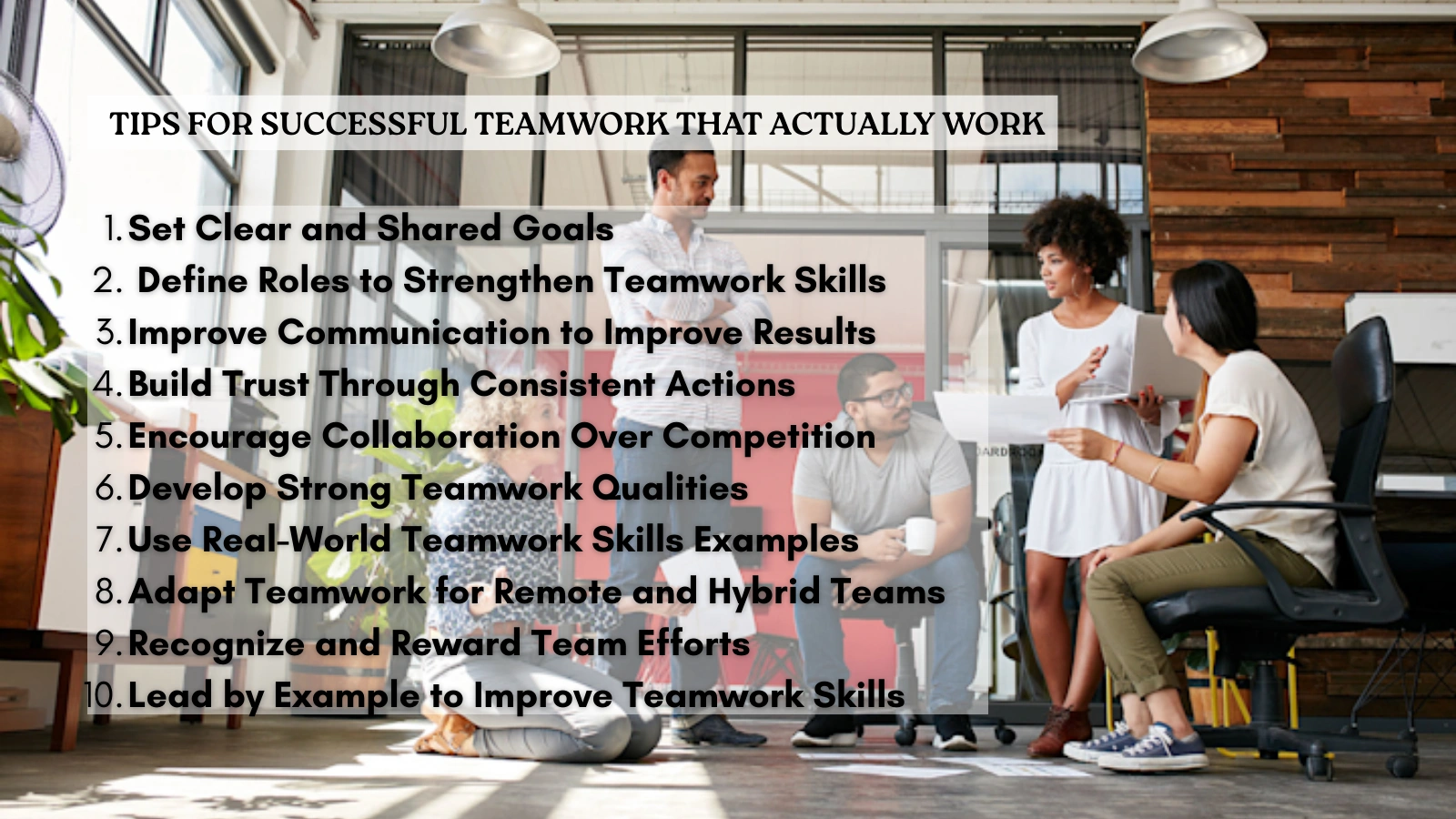
Here, we will see the tips for Effective Teamwork that actually work.
1. Set Clear and Shared Goals
Every team needs a clear direction. When goals are unclear, even the most skilled professionals can lose focus and drift off track. One often overlooked teamwork tip is aligning everyone around a shared purpose, not just individual tasks.
Clear and shared goals help team members understand what they are working toward and why it matters. They reduce confusion, guide daily decisions, and create a sense of unity. When everyone moves toward the same outcome, teamwork becomes stronger, smoother, and more effective.
2. Define Roles to Strengthen Teamwork Skills
Clarity in roles keeps teams organized and efficient. When everyone knows their responsibilities:
- Overlap and confusion disappear
- Conflicts reduce naturally
- Confidence in contributions grows
- Collaboration becomes smoother
Strong teamwork skills start with understanding who owns what. Clear roles empower each member, guide efforts, and reflect essential teamwork tips for consistent success.
3. Improve Communication to Improve Results
Clear communication is the backbone of strong teamwork. Teams that share openly work faster and handle challenges efficiently. Key teamwork tips for better communication include:
- Honest and respectful dialogue
- Active listening to all members
- Regular updates and check-ins
- Sharing ideas without fear
Good communication keeps everyone aligned and boosts overall team performance monitoring.
4. Build Trust Through Consistent Actions
Trust doesn’t happen instantly; it develops through consistent, reliable actions. Teams strengthen trust when members honor commitments, support each other during challenges, and follow through on promises. A trusted environment encourages open idea-sharing, boosts confidence, and allows team members to take initiative without fear.
When trust is strong, collaboration flows naturally, conflicts reduce, and teams tackle challenges together more effectively, achieving better results.
5. Encourage Collaboration Over Competition
Teams thrive when cooperation outweighs internal competition. Focusing on shared success builds trust, strengthens relationships, and drives better outcomes. Key teamwork tips to encourage collaboration include:
- Prioritizing team goals over individual wins
- Sharing knowledge and supporting teammates
- Celebrating group achievements
- Encouraging open problem-solving
When collaboration is valued, teams work more efficiently and achieve success together.
6. Develop Strong Teamwork Qualities
Strong teams rely on shared values that guide behavior. Key teamwork qualities include:
- Empathy and understanding
- Accountability for responsibilities
- Adaptability to change
- Respect for diverse perspectives
Reinforcing these qualities daily creates a positive environment where members trust each other, communicate effectively, and stay motivated. Consistent practice of these qualities strengthens collaboration and ensures long-term team success.
7. Use Real-World Teamwork Skills Examples
Advice works best through action. Teams learn faster through experience.
Real teamwork skills examples include:
- Support during heavy workloads
- Shared credit after success
- Clear and respectful feedback
- Help before deadlines
These actions strengthen trust and reinforce everyday teamwork tips.
8. Adapt Teamwork for Remote and Hybrid Teams
Remote and hybrid work changes how teams connect, but strong structure ensures collaboration remains effective. Clear expectations, defined roles, and communication standards help everyone stay aligned, even without daily in-person interaction.
Teams that follow practical teamwork tips like regular check-ins, transparent updates, and shared goals maintain trust, productivity, and engagement, allowing collaboration to flourish across distances.
9. Recognize and Reward Team Efforts
Acknowledging team efforts strengthens motivation and morale. When leaders consistently appreciate contributions, team members feel valued and engaged. Recognition encourages positive behavior, loyalty, and a sense of shared purpose.
Applying practical teamwork tips, such as celebrating successes, highlighting collaborative achievements, and giving timely praise, keeps teams motivated and reinforces habits that drive better performance analysis and stronger collaboration over the long term.
10. Lead by Example to Improve Teamwork Skills
Leaders set the tone for how teams collaborate. When leaders communicate clearly, stay accountable, and show respect for all team members, collaboration becomes natural. Following proven teamwork tips, leaders inspire confidence, encourage cooperation, and foster a positive environment.
By modeling strong teamwork habits, leaders motivate teams to work together effectively, handle challenges with unity, and achieve collective success consistently.
How EmpCloud Supports Strong Teamwork?
Teams perform at their best when they have the right tools to stay organized, communicate effectively, and track progress. EmpCloud makes teamwork easier with features designed for collaboration. Key benefits include:
- HRMS (Human Resource Management System): Streamlines remote onboarding, roles, and responsibilities, ensuring everyone knows their tasks and stays accountable.
- Project Management: Keeps goals clear, deadlines visible, and progress tracked, supporting effective collaboration.
- Attendance & Access Systems: Monitors team availability and presence, helping managers plan workloads and coordinate smoothly.
- Performance Tracking: Provides real-time insights into contributions and achievements, reinforcing motivation and recognition.
By using EmpCloud, teams can apply essential teamwork tips, build trust, encourage cooperation, and maintain productivity, allowing everyone to focus on achieving collective success.
Real-World Teamwork Skills Examples That Boost Collaboration
Practical teamwork comes to life through action. Some key teamwork skills examples include:
- Helping colleagues during heavy workloads to share the effort and reduce stress.
- Sharing credit for achievements to recognize contributions and build morale.
- Offering constructive feedback that improves performance without causing friction.
- Stepping in to meet deadlines when the team needs support.
Consistently practicing these examples reinforces trust, strengthens collaboration, and creates a positive environment where everyone feels valued, motivated, and able to perform at their best.
Essential Teamwork Qualities Every Successful Team Shares
Strong teams rely on shared teamwork qualities to guide behavior and collaboration. Key qualities include:
- Empathy: Understanding and supporting teammates’ perspectives.
- Accountability: Taking responsibility for individual roles and actions.
- Adaptability: Adjusting to change and solving problems effectively.
- Respect: Valuing diverse ideas and opinions.
- Strong communication: Sharing ideas clearly and listening actively.
Practicing these qualities daily reduces conflicts, boosts morale, and builds trust. Teams that embrace these values create a positive environment where members feel confident, motivated, and empowered to achieve shared goals.
What Makes a Good Team: Traits That Drive Success?
Building a great team isn’t just about skills; it’s about habits and mindset. Key factors that make a good team include:
- Shared Vision: Every team member understands the purpose, long-term goals, and direction, ensuring alignment, focus, and unified effort toward common objectives.
- Trust and Reliability: Team members rely on one another, consistently deliver on commitments, and support each other, building confidence and strong collaboration.
- Open Dialogue: Ideas, concerns, and feedback are shared freely, promoting transparency, preventing misunderstandings, and encouraging creativity and effective problem-solving.
- Ownership and Responsibility: Each person takes accountability for tasks, meets deadlines, and contributes fully, ensuring the team functions efficiently and reliably.
- Valuing Different Perspectives: Diverse viewpoints are welcomed, considered, and respected, leading to smarter decisions, creative solutions, and inclusive team engagement.
- Team-Oriented Attitude: Collaboration takes priority over personal recognition, fostering unity, synergy, mutual support, and higher team productivity and success.
When these traits are in place, teams become more adaptable, productive, and motivated, turning challenges into opportunities for collective success.
Common Mistakes That Weaken Teamwork
Even experienced teams face challenges when:
- Communication lacks consistency
- Feedback disappears.
- Individual results outweigh team success
- Roles remain unclear
Addressing these gaps strengthens teamwork tips and prevents long-term disengagement.
Measuring The Impact Of Effective Teamwork
The success of teamwork becomes clear in measurable results. Teams can track collaboration by monitoring:
- Productivity trends: Are tasks completed efficiently and on time?
- Project completion rates: Are projects delivered successfully and consistently?
- Employee engagement: Are team members motivated, involved, and committed?
- Communication clarity: Is information flowing smoothly without confusion?
Teams that apply structured teamwork tips consistently see steady improvements in these areas, building stronger collaboration, higher performance, and long-term success.
Final Thoughts:
Teamwork is not something that happens by chance; it requires intention, structure, and consistent effort. Successful teams thrive when members understand their roles, communicate openly, and trust each other to deliver on commitments. Clear goals, shared accountability, and respect for diverse ideas form the foundation of strong collaboration.
Applying practical teamwork tips, like setting shared objectives, encouraging collaboration, and recognizing contributions, helps teams work more efficiently and maintain motivation. Real-world teamwork skills examples, such as supporting colleagues during busy periods or sharing credit for successes, turn theory into action and reinforce positive habits.
Understanding what makes a good team trust, clear communication, accountability, and strong values allows organizations to build cultures that promote growth, engagement, and long-term success. Strong teams take time to develop, but consistent application of proven teamwork tips ensures they remain effective, resilient, and capable of achieving outstanding results.
FAQs
What are the most important teamwork tips for success?
The key teamwork tips include setting clear goals, defining roles, improving communication, building trust, and recognizing contributions. Applying these strategies consistently strengthens collaboration and boosts team performance.
How can I improve teamwork skills in my team?
Teams can improve teamwork skills by practicing active listening, sharing responsibilities, encouraging collaboration over competition, and learning from real-world teamwork skills examples. Consistency and trust are essential for growth.
What makes a good team stand out?
A good team thrives on trust, clear communication, accountability, and respect for diverse perspectives. Teams that follow structured teamwork tips often perform better and adapt quickly to challenges.
How do remote teams apply teamwork tips effectively?
Remote teams stay aligned by setting clear expectations, maintaining regular check-ins, using project management tools, and fostering transparent communication. Applying teamwork tips ensures productivity and engagement even without in-person contact.
How can I improve teamwork skills in my team?
Improving teamwork skills starts with clear communication, defined roles, and trust among team members. Encourage collaboration over competition, provide regular feedback, and recognize contributions. Practicing real-world teamwork skills examples, like supporting colleagues during high workloads, helps teams apply these tips consistently and work more efficiently together.
Quick Search Our Blogs
Type in keywords and get instant access to related blog posts.