Hiring the right talent is only half the battle. The real challenge begins after the offer letter is signed.
A new employee’s first experience with your company can directly impact engagement, productivity, and long-term retention. Yet many organisations still rely on manual processes, spreadsheets, paperwork, and scattered email threads to manage onboarding. This traditional approach often leads to delays, confusion, and inconsistent experiences.
That’s where onboarding software enters the conversation.
As businesses scale, manage remote teams, and handle increasing compliance requirements, digital solutions are replacing outdated HR workflows. But what exactly makes onboarding software different from traditional HR processes? And is it truly worth the investment?
In this guide, we’ll break down:
- What onboarding software actually does
- How traditional HR onboarding works
- The key differences between the two approaches
- The benefits, costs, and long-term impact
- When it makes sense to upgrade
You can listen to this blog here.
What Is Onboarding Software?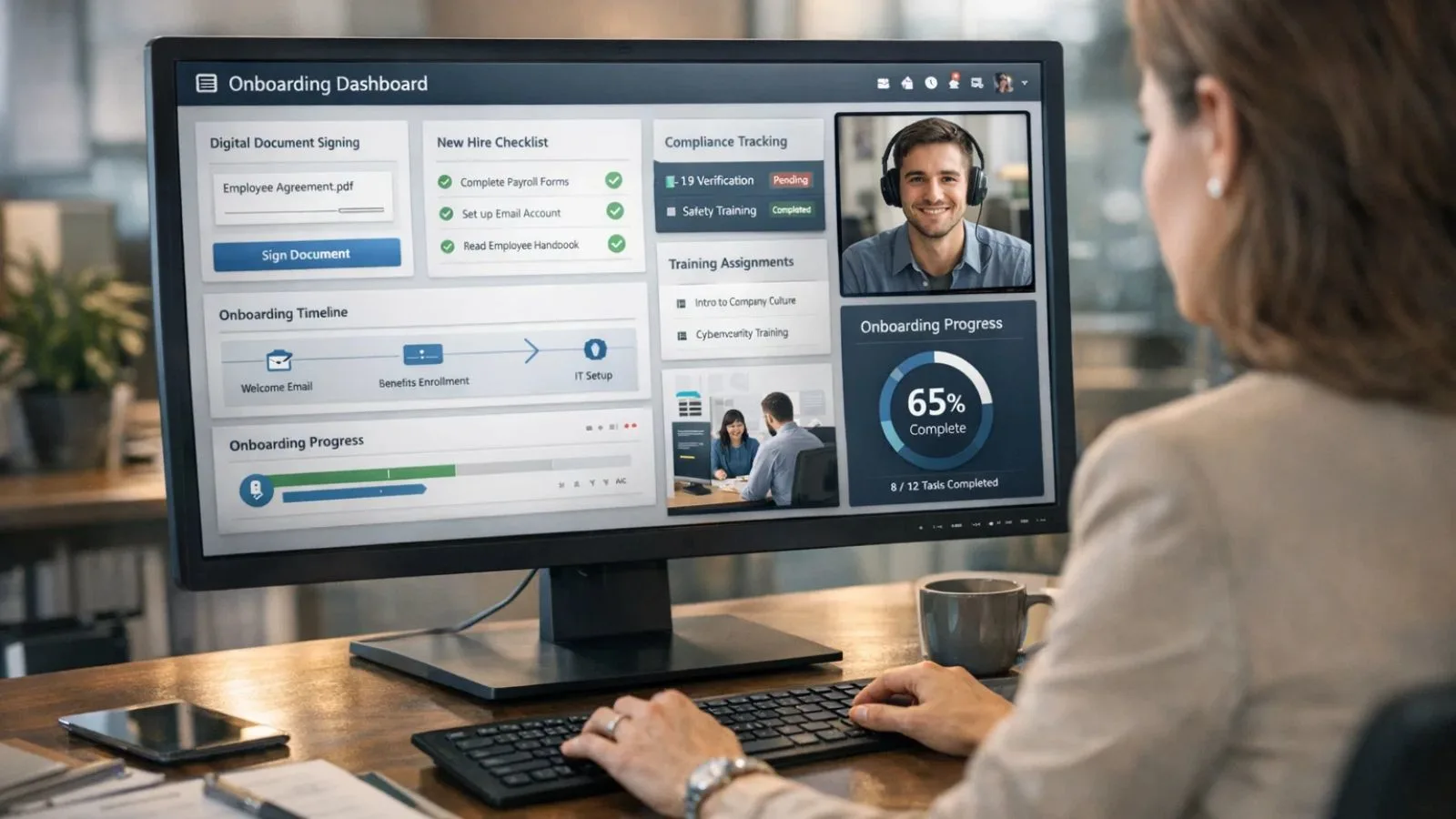
Before comparing approaches, it’s important to understand the basics: what is employee onboarding software?
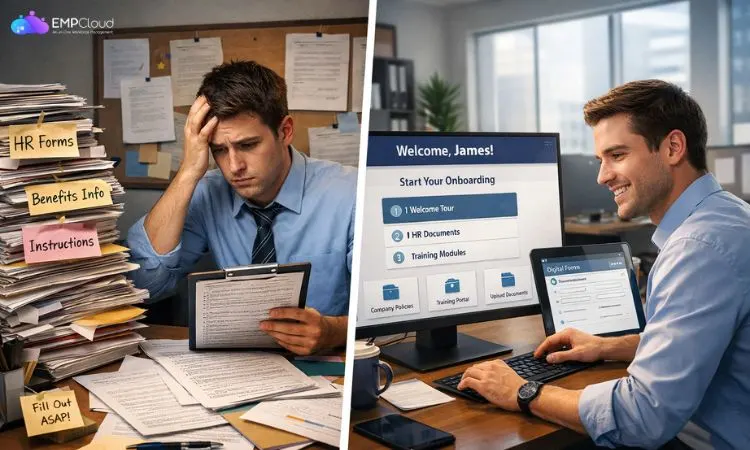
Onboarding software is a digital platform designed to automate, organize, and streamline the process of welcoming and integrating new employees into an organization. Instead of relying on paper forms, manual emails, and spreadsheets, companies use an onboarding system to manage everything in one centralized place.
In simple terms, onboarding software helps HR teams:
- Collect and manage documents digitally
- Assign tasks to new hires and managers
- Track compliance requirements
- Automate communication and reminders
- Monitor onboarding progress in real time
Unlike generic HR tools, dedicated employee onboarding software focuses specifically on the journey from offer acceptance to full productivity.
Core Functions of an Onboarding System
A modern onboarding system typically includes:
- Digital document signing
- Pre-boarding portals
- Policy acknowledgment tracking
- Training module assignment
- Workflow automation
- Dashboard reporting
This makes it far more structured than traditional HR onboarding methods.
Why It Matters
As hiring becomes more frequent and work environments become more remote, relying solely on manual processes can slow down operations. HR onboarding software ensures consistency, reduces administrative workload, and creates a smoother experience for new hires.
How Traditional HR Onboarding Works
Before the rise of onboarding software, most companies handled onboarding manually. While this approach can work for small teams, it often becomes inefficient as organizations grow.
Here’s how traditional HR onboarding typically functions.
Paper-Based Documentation
New hires are given physical forms to complete tax documents, contracts, policy acknowledgments, and benefit enrollments. HR teams manually review, file, and store these records.
This increases the risk of:
- Lost documents
- Data entry errors
- Compliance gaps
Email-Driven Communication
Communication often happens through long email threads. HR sends checklists. Managers send welcome notes. IT receives setup requests.
Without a centralized onboarding system, tracking who completed what becomes difficult.
Spreadsheet Tracking
HR teams frequently rely on spreadsheets to monitor onboarding progress. While manageable for a few hires, this method becomes chaotic during bulk recruitment.
Spreadsheets don’t provide automation, reminders, or real-time insights like modern onboarding systems do.
Orientation-Heavy Processes
Traditional onboarding often depends heavily on in-person sessions. While valuable, this approach isn’t scalable for remote or hybrid teams.
Where Traditional HR Falls Short
Manual processes can lead to:
- Delays in document collection
- Inconsistent onboarding experiences
- Higher administrative workload
- Limited visibility into progress
- Increased compliance risk
As hiring volumes increase, these inefficiencies multiply.
yes
Onboarding Software vs Traditional HR: Key Differences
Now that we’ve explored both approaches individually, let’s compare onboarding software and traditional HR processes side by side.
Automation vs Manual Tasks
Traditional HR depends heavily on manual follow-ups, paperwork, and email reminders.
With onboarding software, workflows are automated. Tasks are assigned instantly, reminders are triggered automatically, and progress updates happen in real time.
Impact: Less admin work and fewer delays.
Centralized System vs Scattered Processes
In traditional HR, documents, emails, and tracking sheets are often stored across different platforms.
An onboarding system centralizes everything documents, tasks, compliance forms, and reporting — in one dashboard.
Impact: Better visibility and control.
Scalability
Manual onboarding may work for 5–10 hires per month. But when hiring scales, traditional processes struggle.
Onboarding systems are built to handle bulk hiring, remote employees, and multiple locations without increasing HR workload.
Impact: Growth without operational chaos.
Compliance Management
Traditional HR requires manual tracking of policy acknowledgments and documentation.
HR onboarding software automatically records digital signatures, timestamps, and compliance confirmations.
Impact: Reduced legal and compliance risk.
Employee Experience
Traditional onboarding can feel disorganized if communication isn’t coordinated.
Modern onboarding software creates a structured, guided experience from pre-boarding to training completion.
Impact: Higher engagement and faster productivity.
Reporting & Insights
Spreadsheets provide limited visibility.
Onboarding systems generate dashboards and reports that show completion rates, bottlenecks, and overall onboarding performance.
Impact: Data-driven HR decisions.
While traditional HR methods may seem cost-effective initially, the operational inefficiencies often outweigh the savings.
Benefits of Onboarding Software for Modern Organizations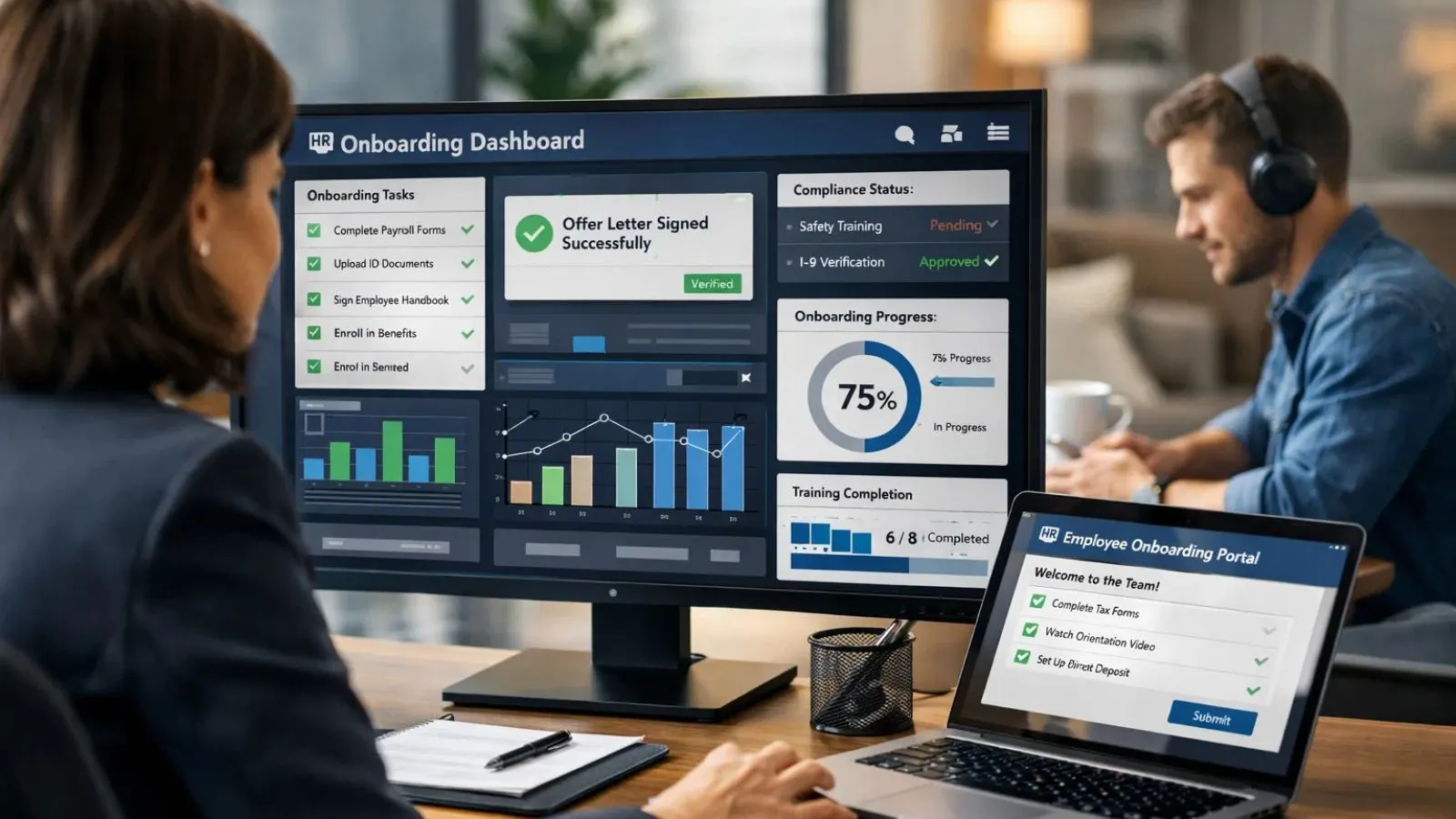
Switching from traditional HR processes to onboarding software isn’t just about digitization — it’s about efficiency, compliance, and employee experience. Here are the key benefits organizations see after implementing a modern onboarding system.
1. Faster Onboarding Process
With onboarding software, documents, approvals, and task assignments happen instantly. New hires can complete forms even before Day 1 through pre-boarding portals.
This reduces delays and helps employees become productive faster.
2. Reduced Administrative Workload
Manual follow-ups, printing paperwork, and spreadsheet tracking consume HR time.
HR onboarding software automates reminders, task allocation, and document collection — freeing HR teams to focus on strategy instead of paperwork.
3. Improved Compliance & Record Keeping
Compliance errors can be costly.
An onboarding system automatically stores digital records, timestamps signatures, and maintains audit trails. This minimizes legal risks and ensures policy adherence.
4. Better Remote & Hybrid Support
Traditional onboarding struggles in remote environments.
New hire onboarding software allows employees to complete documentation, watch training modules, and track progress from anywhere.
5. Real-Time Tracking & Analytics
Modern onboarding systems provide dashboards that show:
- Task completion status
- Pending approvals
- Training progress
- Bottlenecks in workflows
This data-driven visibility is impossible with manual HR processes.
6. Consistent Employee Experience
Consistency matters. When processes vary by department, new hires notice.
Onboarding software standardizes workflows, ensuring every employee receives the same structured and professional experience.
The result? Faster integration, better engagement, and reduced HR stress.
When Should You Switch to Onboarding Software?
Not every organization upgrades immediately. But there are clear signs that traditional HR onboarding is no longer sustainable.
If you notice the following challenges, it may be time to implement onboarding software.
1. Hiring Volume Is Increasing
If your company is onboarding multiple employees each month, manual tracking becomes overwhelming. Spreadsheets, emails, and paperwork slow down HR operations.
An onboarding system helps manage bulk hiring without increasing workload.
2. You Have Remote or Distributed Teams
Traditional onboarding struggles outside the office. Coordinating paperwork, document signing, and training across locations becomes complex.
New hire onboarding software allows digital completion of tasks from anywhere.
3. HR Spends Too Much Time on Admin Tasks
If your HR team is spending hours chasing documents, sending reminders, and updating spreadsheets, automation can dramatically reduce that burden.
HR onboarding software eliminates repetitive tasks.
4. Compliance Is Becoming a Concern
Growing organizations face stricter documentation and audit requirements.
An onboarding system ensures digital records are stored securely and easily accessible.
5. Inconsistent Employee Experience
If some employees receive structured onboarding while others don’t, engagement and productivity suffer.
Onboarding software standardizes workflows across departments and locations.
- Your Company Is Scaling
As companies grow, HR complexity increases. Relying on traditional processes limits scalability.
Modern onboarding systems are designed to grow with your organization.
How to Choose the Right Onboarding Software
Choosing the right onboarding software is more than picking a tool; it’s selecting a solution that fits your company’s needs, culture, and future growth.
Here’s a practical guide to help you evaluate options.
1. Ease of Use
The best onboarding systems should be intuitive for both HR teams and new hires.
Look for:
- Simple interfaces
- Clear workflows
- Minimal training requirements
If the tool is hard to use, adoption will suffer no matter how powerful it is.
- Compliance and Security
Onboarding often involves sensitive data like IDs, tax forms, and contracts.
Ensure the software:
- Stores data securely
- Offers encrypted communication
- Tracks digital signatures
- Provides audit trails
This protects you from legal risks and data breaches.
3. Integration With Existing Systems
Your HR tech stack should work together.
Good onboarding software integrates seamlessly with:
- HRIS / payroll systems
- Time tracking tools
- Learning management systems
- Directory services
Integration reduces duplicate data entry and keeps workflows smooth.
4. Customization and Flexibility
Every company has different onboarding needs.
Choose a solution that allows you to:
- Customize tasks and forms
- Create department-specific workflows
- Adapt processes as your business evolves
This ensures the software grows with you.
5. Remote and Mobile Support
With more remote and hybrid work, onboarding must be accessible anywhere.
Tools with mobile-friendly interfaces and cloud access make onboarding convenient for all employees.
- Reporting and Analytics
Data drives improvement.
Look for onboarding systems that provide:
- Progress dashboards
- Completion reports
- Bottleneck insights
- Compliance tracking
These help you measure success and optimize the experience.
7. Support and Training from the Provider
A strong software partner offers:
- Dedicated support
- Onboarding assistance
- Training resources
- Regular feature updates
Quality support ensures you get maximum value from your investment.
Also read,
How To Build An Effective New Employee Onboarding Process?
How To Pick The Best Onboarding Software For Small Business?
How EmpCloud Simplifies Modern Onboarding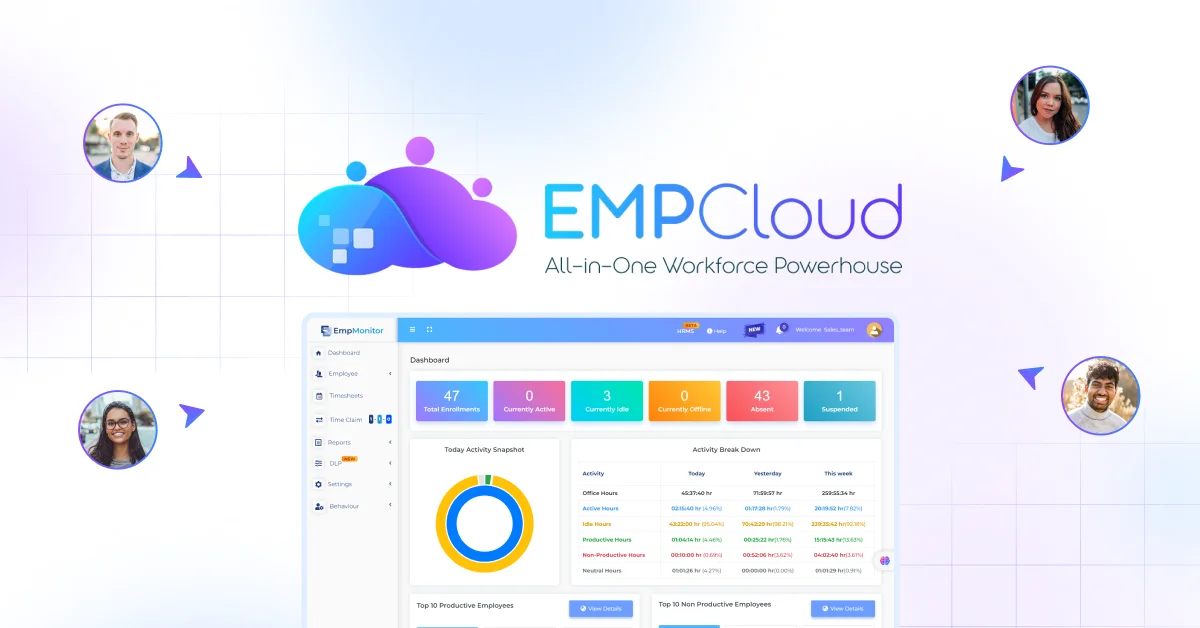
When evaluating onboarding software, the ideal solution should automate processes, improve compliance, and deliver a consistent experience without adding complexity.
Empcloud is a modern onboarding system designed to help HR teams do exactly that.
Here’s how it stands out:
Centralized Onboarding Workflows
Empcloud brings all your onboarding tasks into a single dashboard. From document collection and compliance tracking to training assignments and status overview, everything is organized in one place.
This eliminates scattered spreadsheets and manual follow-ups.
Automated Task Assignment & Reminders
Empcloud’s workflows automatically assign tasks to new hires, managers, and HR teams. Reminders are sent without manual intervention, ensuring nothing slips through the cracks.
Real-Time Tracking & Analytics
With Empcloud, HR leaders can:
- Monitor onboarding progress live
- Identify bottlenecks
- Generate reports
- Track compliance metrics
These insights help improve onboarding efficiency over time.
Remote-Friendly & Cloud-Based
Empcloud supports remote and hybrid teams with cloud access. New hires can complete onboarding steps anytime, anywhere, making the employee experience smoother and more flexible.
Integration With HR Tech Stack
Empcloud integrates with existing HR systems such as payroll, HRIS, and learning management tools, reducing data duplication and improving process continuity.
Customizable Workflows
Every organization is unique. Empcloud allows you to:
- Tailor onboarding steps
- Customize task sequences
- Add departmental requirements
This flexibility ensures your onboarding process matches your company’s needs.
Empcloud isn’t just onboarding software; it’s an HR acceleration platform that helps you deliver consistent, efficient, and engaging onboarding experiences at scale.
Cost Comparison: Onboarding Software vs Traditional HR
At first glance, traditional HR onboarding may appear more cost-effective because it doesn’t require a software subscription. However, hidden costs often tell a different story.
Hidden Costs of Traditional HR
Manual onboarding often leads to:
- Increased HR hours spent on admin tasks
- Paper, printing, and storage expenses
- Errors requiring rework
- Compliance penalties due to missing documentation
- Delays in employee productivity
When calculated over time, these costs add up significantly, especially for growing companies.
ROI of Onboarding Software
Investing in onboarding software delivers measurable returns:
- Reduced administrative workload
- Faster time-to-productivity
- Lower compliance risk
- Improved employee retention
- Scalable hiring without additional HR staff
Instead of increasing HR headcount as hiring grows, an onboarding system helps you scale efficiently.
Conclusion
Switching from traditional HR processes to modern onboarding software isn’t just about digitization; it’s about transforming how you welcome, engage, and retain employees.
Onboarding software streamlines workflows, reduces administrative overhead, ensures compliance, and creates a structured experience for new hires. Traditional methods may work in small settings, but they struggle to scale, especially in remote or fast-growing environments.
With tools like Empcloud, organizations can automate tasks, track progress in real time, and deliver a seamless onboarding journey that drives productivity and engagement.
Investing in the right onboarding system isn’t just a tech upgrade; it’s a strategic move that strengthens your entire HR ecosystem.
FAQs
How is onboarding software different from traditional HR processes?
Traditional HR onboarding relies on paperwork, emails, and spreadsheets. Onboarding software centralizes and automates these tasks, providing structured workflows, better visibility, and stronger compliance tools.
Is onboarding software suitable for small businesses?
Yes, small businesses benefit from faster onboarding, fewer errors, and improved compliance. Scalable onboarding systems like Empcloud grow with your company as hiring demands increase.
What features should I look for in onboarding systems?
Key features include digital document signing, automated reminders, task tracking dashboards, reporting and analytics, remote access, and integration with other HR tools.
Quick Search Our Blogs
Type in keywords and get instant access to related blog posts.