
In an era where a single notification can derail a billion-dollar idea, the quietest room in the building is often the most valuable. Yet, for the average professional, that silence is a luxury they rarely afford. We live in a state of continuous partial attention, where office distractions have become so woven into the fabric of our workday that we almost forget what true “deep work” feels like. Whether it is the rhythmic hum of an open-plan office or the digital buzz of a smartphone, these interruptions do more than just waste time. They fragment our cognitive capacity and prevent us from ever reaching our full potential.
For managers and business owners, the stakes are incredibly high. It isn’t just about losing ten minutes here or fifteen minutes there. It is about the “cost of switching” and the mental fatigue that sets in when an employee is forced to restart their thought process dozens of times a day. To build a high-performing team, you must first understand the anatomy of focus and then take active steps to shield your people from the noise.
Listen To The Podcast Now!
The Science of the “Focus Gap”

The impact of interruptions is often invisible until you look at the data. Most people believe they can simply “get back to work” after a brief distraction. However, researchers at the University of California, Irvine, discovered that it takes an average of 23 minutes and 15 seconds to return to the original task after an interruption. If an employee faces just three or four major distractions at work throughout the day, they have effectively lost nearly two hours of peak mental performance, directly affecting overall employee efficiency.
This phenomenon is known as the “cognitive switching penalty.” Every time you shift your attention, your brain has to load the rules and context for the new task while unloading the old ones. This process consumes glucose and mental energy, leading to that familiar feeling of being exhausted at 5:00 PM despite feeling like you didn’t “get enough done.” When distractions in the workplace are left unchecked, they create a culture of frantic busyness rather than meaningful progress, ultimately reducing employee efficiency across the organization.
Identifying the Primary Sources of Interruption
Before we can implement solutions, we have to look honestly at where focus is being lost. The modern workplace, whether physical or digital, is often designed for accessibility rather than concentration. Here are the most common culprits:
1. Spontaneous Social Interruptions
The “have you got a minute?” culture is perhaps the most persistent of all office distractions. While team bonding is essential, these unplanned taps on the shoulder are productivity killers. They often happen just as an employee has reached a state of flow, forcing them to abandon a complex train of thought for a minor administrative question.
2. The Digital Echo Chamber
Emails, instant messages, and project pings create a constant stream of noise. Many employees feel a psychological pressure to respond instantly to prove they are working. This “digital presenteeism” is one of the most damaging distractions in the office because it turns the workday into a series of reactive fire-fighting sessions rather than proactive planning.
3. Acoustic and Environmental Noise
Open-plan offices were designed to foster collaboration, but they often foster distraction instead. The sound of a distant phone call, a humming printer, or a group of colleagues laughing in the breakroom can be impossible to tune out. For many, these environmental factors are the primary reason they struggle to maintain consistency.
4. Meeting Bloat
Meetings are often the only time teams feel they are “collaborating,” but they are frequently scheduled without a clear purpose. When an employee is pulled into a one-hour meeting that could have been a three-sentence email, it counts as one of the most expensive distractions at work.
Also Read
How To Be More Productive Without Burnout?
How To Improve Efficiency With Real Time Employee Tracking
The Cultural Shift: Protecting Your Team’s Time
Minimizing distractions in the workplace requires more than just a memo. It requires a fundamental shift in how we value time. Many forward-thinking companies are now implementing “Quiet Hours”—blocks of time during the day where internal communication is strictly forbidden. This allows engineers to code, writers to draft, and accountants to audit without the fear of being interrupted.
Another effective strategy is the “Office Traffic Light” system. Using simple visual cues, like a red light on a desk or a specific status icon in a chat app, employees can signal when they are in deep focus mode. Respecting these boundaries is a leadership responsibility. If the manager ignores the “do not disturb” sign, the rest of the team will too.
Eliminating Friction with the Empcloud Integrated Infrastructure
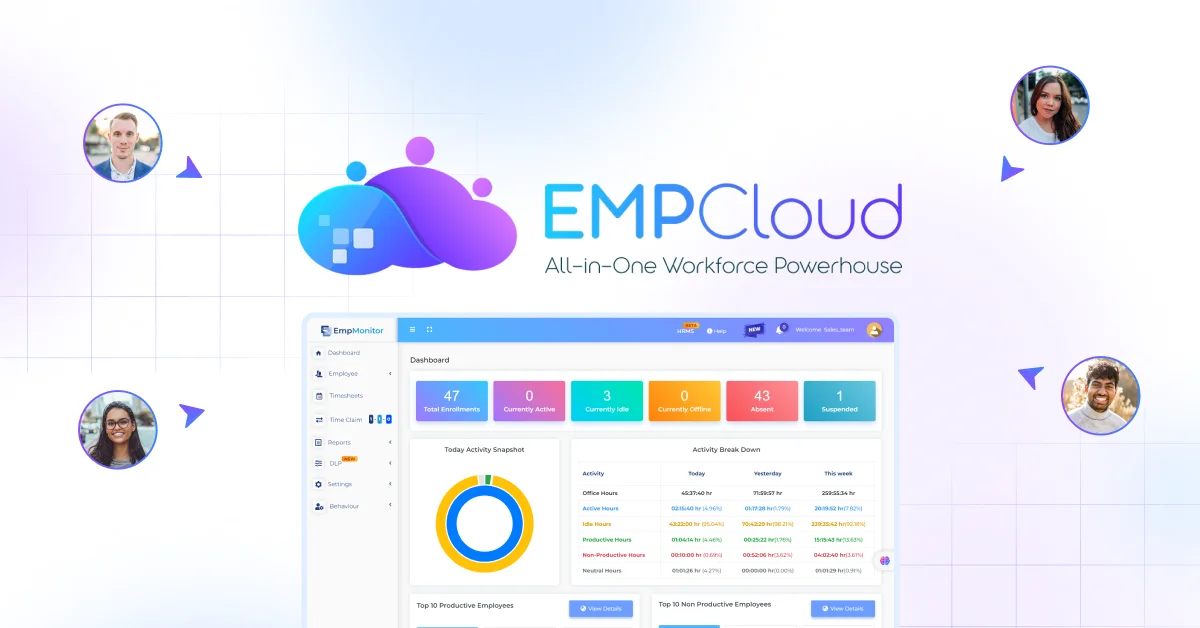
While changing the culture is a necessary foundation, it is often not enough on its own. Human willpower is a finite resource. If your team is forced to use clunky, disconnected tools to manage their daily tasks, the technology itself becomes the distraction. We have all experienced the frustration of having to log into five different systems just to submit an expense report or check a project deadline. This friction pulls people out of their productive rhythm and creates unnecessary mental overhead, leading to employee burnout.
To truly eliminate distractions in the office, you need to provide your team with a seamless digital environment. When the tools for hiring, tracking, and managing work are unified, the noise of administration begins to fade. This is where the Empcloud ecosystem becomes a silent partner in your company’s productivity journey. By centralizing every essential business function, Empcloud ensures your employees spend less time navigating software and more time doing the work that matters.
#### Recruitment & Onboarding
The first step to a focused workplace is bringing in the right people and getting them up to speed quickly. Streamline hiring and onboarding for faster, seamless team growth by using a structured approach. When new hires know exactly what is expected of them from day one, they are less likely to become sources of interruption for their colleagues.
#### EmpMonitor
Data is the best weapon against lost time. With EmpMonitor, you can track employee productivity and optimize performance with real-time insights. This tool helps you identify the specific websites or apps that are acting as office distractions, allowing you to make informed decisions about how to better support your team’s focus.
#### HRMS
Administrative tasks are often the most tedious distractions at work. You can streamline attendance, leave, compliance, and document management for optimal efficiency with a robust HRMS. By automating these routine processes, you free your employees from the “death by a thousand clicks” that so often ruins a productive morning.
#### Field Force Management
For teams on the move, staying focused is even harder. You can efficiently manage and track field operations for maximum efficiency with dedicated software. This ensures that field agents have all the information they need at their fingertips, reducing the need for constant back-and-forth calls to the home office.
#### Payroll Management
Financial stress and errors in pay can be a massive distraction for any employee. Simplify employee payouts, tax management, and compliance for seamless processing to ensure that your team never has to worry about their compensation. A smooth payroll process is a silent contributor to a focused mind.
#### Biometrics
Security shouldn’t be an interruption. Strengthen employee security and accuracy with seamless biometric verification to make the process of entering the building or logging into systems as frictionless as possible.
#### Project Management
Visibility is the enemy of confusion. Manage projects effectively with complete visibility and team coordination to ensure that everyone knows their priorities. When the plan is clear, employees don’t have to waste time asking what they should do next, effectively eliminating a common source of distractions in the workplace.
#### Rewards & Recognition
A focused employee is a motivated employee. Recognize and reward top performers to boost morale and retention. When you acknowledge those who manage their time well and produce high-quality work, you reinforce a culture that values concentration over mere “activity.”
#### Performance & Career Management
Focus is easier to maintain when you know where you are going. Monitor performance and guide career development for employee growth to keep your team aligned with their long-term goals. This high-level alignment helps them filter out the small distractions in the office that don’t contribute to their growth.
#### Exit & Portfolio Management
Even the conclusion of an employee’s journey should be handled without disrupting the rest of the team. Simplify exit formalities and manage background verification portfolios efficiently to ensure that transitions are smooth and don’t create “ripples” of distraction for the remaining staff.
The Remote Work Paradox
The discussion around office distractions has shifted significantly since the rise of remote and hybrid work. For some, the home is a sanctuary of focus. For others, it is a minefield of household chores, deliveries, and family interruptions.
Managers must recognize that “distraction” looks different in a remote setting. While you might not have chatty coworkers, you might have the “always-on” anxiety of digital notifications. To combat this, encourage remote employees to set clear boundaries and “working hours” for their communication tools. Using a unified platform allows remote workers to see project updates without having to participate in endless, distracting chat threads.
Practical Steps for Immediate Focus
If you are looking to reduce distractions at work starting tomorrow, here are three high-impact moves:
- Declutter the Digital Workspace: Encourage your team to turn off all non-essential notifications. If a message isn’t urgent, it doesn’t need to make a sound or pop up on the screen.
- Optimize the Physical Layout: If you have an open office, designate certain areas as “No-Talk Zones.” This gives employees a physical place to go when they need to escape the usual office distractions.
- Audit the Tech Stack: Look for tools that integrate with each other. The more times an employee has to switch between different applications, the more likely they are to get distracted by something else along the way.
Leadership and the “Respect for Focus”
Ultimately, the battle against office distractions is won or lost at the leadership level. Managers must lead by example. If you want your team to stop sending distracting, non-urgent emails during deep-work hours, you must stop sending them yourself.
When a leader demonstrates a deep respect for their own focus and the focus of others, it sends a powerful message. It tells the team that results matter more than immediate responsiveness. It tells them that their time is respected. And most importantly, it creates an environment where high-quality, meaningful work can actually happen.
Conclusion: Building a Culture of Concentration
We are living through a productivity crisis, but the solution isn’t to work longer hours. The solution is to work with more intensity. By identifying and eliminating the distractions in the workplace that eat away at our days, we can do more in four focused hours than we used to do in eight distracted ones.
The future of work belongs to the companies that can protect their employees’ attention. By combining a culture of focus with a powerful, unified suite of tools like those offered by Empcloud, you can remove the hurdles that stand between your team and their best work.
Don’t let another day be lost to the noise. Evaluate your processes, look at your tools, and start reclaiming the most valuable asset your company has: the collective focus of your people.
Quick Search Our Blogs
Type in keywords and get instant access to related blog posts.