
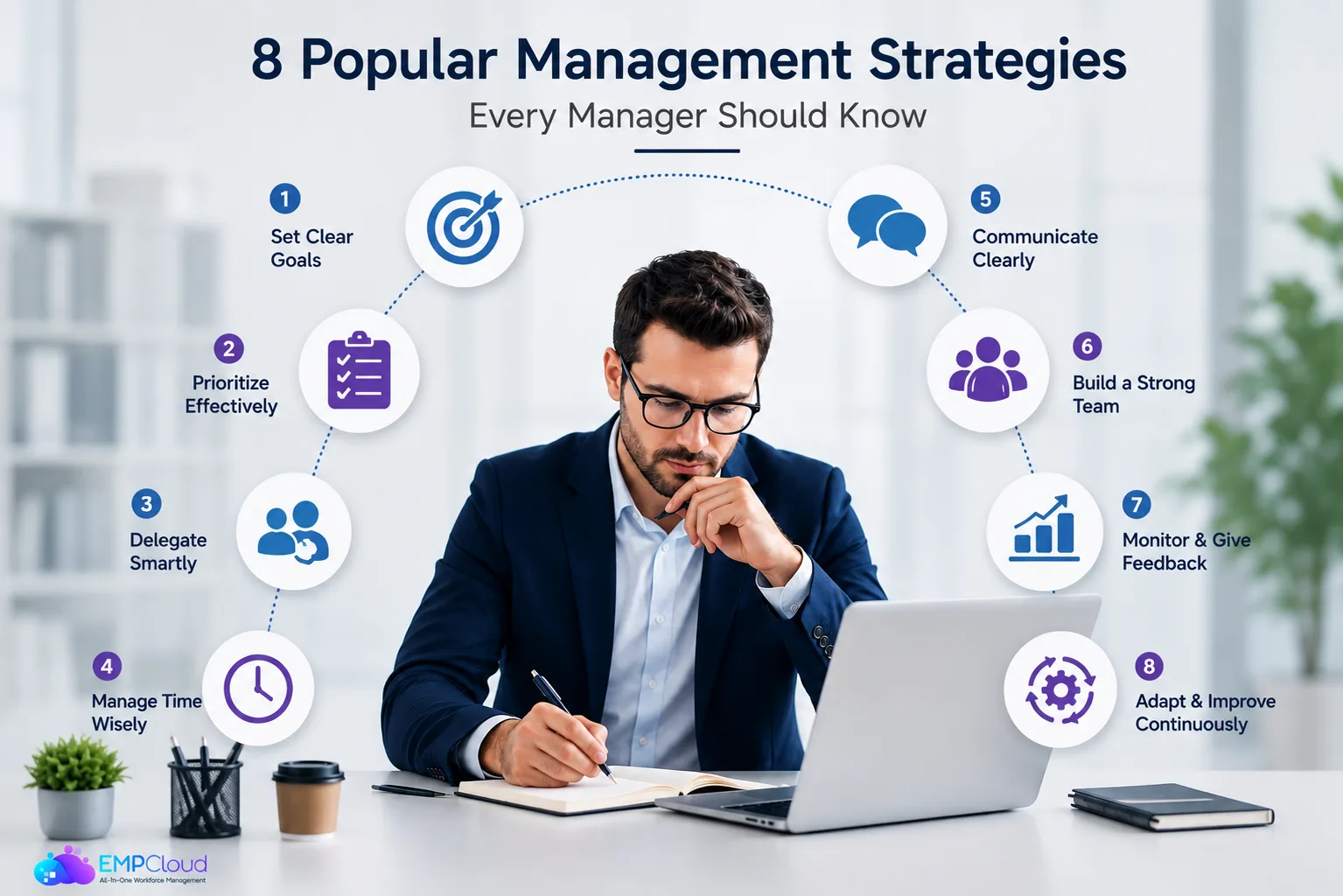
As a manager, your time is one of the most valuable resources you have and also one of the easiest to lose. Between back-to-back meetings, unplanned tasks, and constant team coordination, the day slips away faster than it should.
That means having the right management strategies in place makes all the difference. Effective time management is not just about working harder; it is about working smarter.
When managers take control of how they spend their hours, the entire team performs better. In this blog, we will walk through the most practical and proven management strategies that every manager can implement to lead more productively and efficiently.
Listen To The Podcast Now!
What Are Time Management Strategies?
Simply put, they are structured approaches that help individuals and teams plan, prioritize, and execute tasks within available time.
For managers, these strategies go beyond personal productivity; they shape how work flows across an entire team. Strong management strategy for time involves setting clear goals, reducing waste, delegating smartly, and using systems that give everyone visibility into what needs to happen and when. When done right, they transform a reactive workday into a proactive one.
8 Popular Time Management Strategies
Time management helps individuals and organizations improve productivity, reduce stress, and achieve goals more efficiently. It also helps you in planning what you’re trying to get done, what you typically struggle with, and how you like to work.
1. Prioritize Tasks Using the Eisenhower Matrix
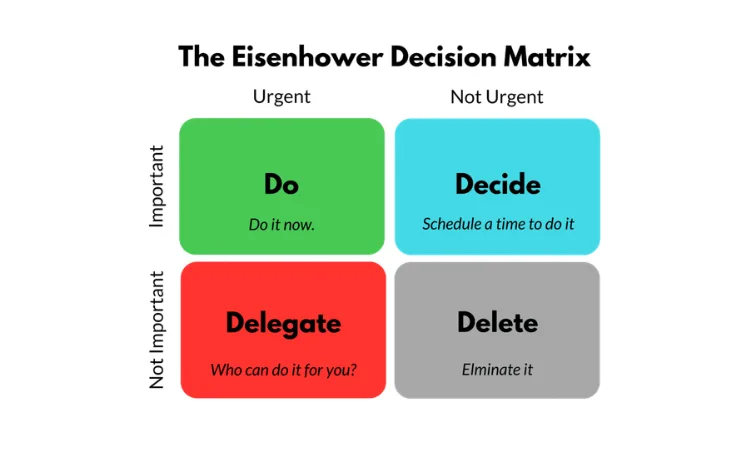
One of the most effective management strategies is learning to separate what is urgent from what is truly important. The Eisenhower Matrix divides tasks into four quadrants:
Most managers spend too much time in the “urgent but not important” zone, putting out fires instead of building systems. By consciously placing tasks into these quadrants each morning, you make better decisions about where your attention goes. This simple habit can shift a manager’s entire approach from reactive to strategic, freeing up mental bandwidth for work that actually drives results.
2. Time Blocking for Deep Focus
Time blocking might feel overly prescriptive or rigid. Instead of reacting to whatever comes up, managers should carve out dedicated blocks in their calendar for specific types of work, such as strategic planning, team check-ins, administrative tasks, and deep-focus work. When your calendar reflects your priorities, distractions lose their power.
For example, blocking the first 90 minutes of your morning for critical thinking work before emails and messages take over can significantly increase output quality. Communicating these blocks to your team also sets healthy boundaries while modeling disciplined time management skills for everyone around you.
3. Delegate Effectively and Track Accountability
Delegation is not just a leadership skill; it is one of the most powerful management strategies for time. Many managers hold onto tasks they could pass down, either out of habit or lack of trust in the system. Effective delegation means assigning the right task to the right person, communicating expectations clearly, and then tracking progress without micromanaging.
The key is having a reliable system for visibility. When managers delegate well, they free up hours for higher-value work while simultaneously building team capability. Tracking accountability through a structured platform or EOS software for business operations ensures nothing falls through the cracks and deadlines are always front and center.
4. Run Structured, Time-Bound Meetings
Meetings are one of the biggest time drains managers face, and yet most teams run them without proper structure. Improving the way meetings are planned and conducted can help teams save valuable hours each week.
Start by questioning whether a meeting is even necessary; could it be an email or a quick message?
If a meeting is needed, set a clear agenda, assign a timekeeper, and stick to the schedule. Limiting most meetings to 25 or 45 minutes instead of the default 30 or 60 creates natural buffers and encourages sharper discussion. Time management strategies like these create a culture of respect for everyone’s time at every level of the organization.
5. Use the Two-Minute Rule to Clear Small Tasks
The two-minute rule is a simple but powerful addition to any set of management strategies. If a task takes two minutes or less to complete, do it immediately rather than scheduling it for later.
Emails that need a quick reply, approvals that require a single click, and short confirmations pile up and create mental clutter when deferred. Clearing them as they arrive (during designated windows, not constantly throughout the day) keeps your task list lean and prevents small items from becoming urgent later. This rule pairs well with time blocking, using a short window each day to power through micro-tasks in one focused session.
6. Set Weekly Goals and Do a Friday Review
One of the most overlooked strategies for time management is the weekly review. Most managers operate day-to-day without stepping back to assess whether the week’s effort aligned with bigger goals. Setting three to five key outcomes at the start of every week gives your time management structure and direction.
At the end of the week, ideally on Friday afternoon, spend 20 minutes reviewing what got done, what did not, and why. This habit, when done consistently, improves planning accuracy over time, reduces repeat bottlenecks, and helps managers develop sharper management strategies tailored to their own team’s rhythm.
7. Limit Multitasking and Protect Focus Time
Research consistently shows that multitasking reduces quality and slows completion. Despite this, many managers wear their ability to juggle tasks as a badge of honor. Shifting to single-tasking is one of the most evidence-based management strategies available.
When you focus on one task at a time, you complete it faster and with fewer errors. Protect this focus time by silencing non-critical notifications, closing unnecessary browser tabs, and communicating to your team that you are in a deep-work block.
Over time, your team will begin to adopt these management strategies themselves, creating a culture where focused work is respected and interruptions are minimized.
8. Build a Culture of Time Awareness in Your Team
The best management strategies are contagious. When a manager consistently models good time habits, respecting meeting schedules, honoring deadlines, and communicating priorities clearly, the team picks it up too.
Building a culture of time awareness means recognizing and rewarding team members who manage their time well, using retrospectives to discuss time-related friction, and continuously refining workflows based on what the data shows.
It is not about rigid control; it is about creating an environment where time is treated as a shared resource that everyone is responsible for protecting. This cultural shift is what separates high-performing teams from constantly overwhelmed ones.
Read More :
How to Implement Workforce Management Solutions Effectively
How Do Time Management Methods Improve Productivity Today?
How EmpCloud Helps Managers Master Time Management
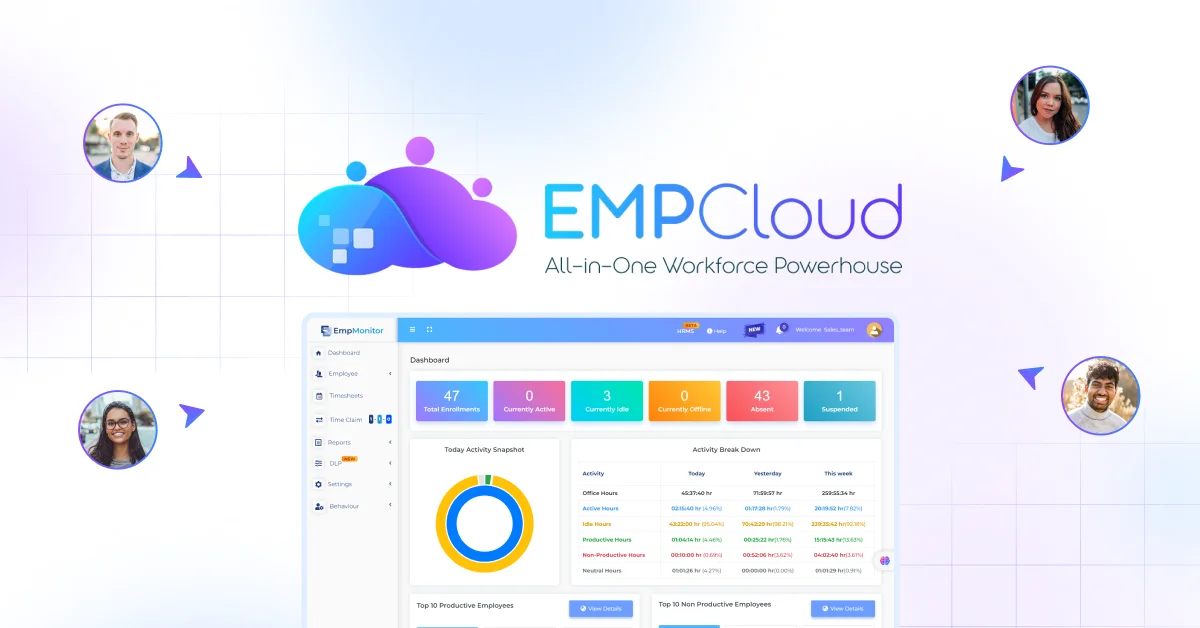
Knowing the right time management strategy is only half the battle; you also need the right tools to put it into practice. EmpCloud is a complete workforce management suite designed to help managers do exactly that. It brings together everything from attendance and project tracking to performance management and payroll, all in one platform.
Here is how EmpCloud directly supports better time management for managers:
- Project Management with Gantt Charts & Kanban Boards: Visualize task timelines, assign deadlines, and monitor team progress in real time, so no project ever goes off track silently.
- EmpMonitor (Productivity Tracking): Get real-time insights into employee productivity and internet activity, helping managers identify where time is being spent and where it is being wasted.
- Time & Attendance Tracking: Automate work hour monitoring with accurate attendance records, reducing the manual effort managers spend chasing timesheets.
- Leave Management: Instantly see who is available and who is on leave, making it effortless to plan workloads without overburdening any team member.
- AI-Powered HR Agent: EmpCloud’s AI agent spans 41 tools across 15 modules, answering questions and generating reports through natural language, saving managers hours of manual data digging.
- Alerts & Notifications: Proactive alerts for deadlines, attendance anomalies, and project milestones keep managers informed without them needing to chase updates.
- Performance & Career Management: Track team goals, OKR progress, and review cycles so performance stays aligned with priorities throughout the year.
- Cloud-Based Biometric Sync: EmpCloud now offers advanced face recognition in real time through a centralized dashboard, making it easier to monitor late arrivals, absences, absentees, and shift schedules instantly.
Conclusion
Effective management strategies around time are not optional; they are essential for any manager who wants to lead well and sustain high performance. From prioritizing tasks and blocking time to delegating smartly and using the right tools, every strategy discussed here is actionable starting today.
The key is consistency. Pick two or three of these approaches, apply them for a week, and build from there. When paired with a powerful platform like EmpCloud, these habits become even easier to sustain at scale. Time is finite; the way you manage it defines the kind of leader you become.
Frequently Asked Questions (FAQs)
Q1. Why is task prioritization important in time management for managers?
Task prioritization helps managers focus on high-impact responsibilities instead of spending time on less important activities. By organizing tasks based on urgency and importance, managers can make better decisions, improve workflow efficiency, and ensure critical deadlines are met without overwhelming their teams.
Q2. How do time management skills differ from general productivity tips?
Time management skills are consistent habits and systems a person develops over time, such as planning, prioritizing, and protecting focus time. Productivity tips are often one-off techniques. Strong time management skills form the foundation that makes those tips actually work.
Q3. Can software help managers with time management?
Absolutely. Tools like EmpCloud give managers real-time visibility into attendance, project timelines, team productivity, and performance, all of which directly support better management and save significant hours each week.
Q4. How many hours a week can a better time management strategy save a manager?
Studies suggest that managers can reclaim anywhere from 5 to 15 hours per week by implementing a structured management strategy, time that can then be invested in strategic thinking, team development, and higher-impact work.
Quick Search Our Blogs
Type in keywords and get instant access to related blog posts.