In today’s fiercely competitive job market, talent acquisition has become one of the most critical functions within any organization. Companies that fail to attract and retain the right people often find themselves falling behind—not because of poor products or weak strategies, but simply because they lack the human capital to execute.
That is why building a thoughtful, structured approach to hiring is no longer optional. It is a business imperative.
Whether you are a growing startup or an established enterprise, understanding the full scope of this function will help you build stronger teams, reduce hiring costs, and future-proof your workforce.
Listen To The Podcast Now!
What Is Talent Acquisition?

Talent acquisition refers to the strategic, end-to-end process of identifying, attracting, evaluating, and onboarding candidates to meet an organization’s current and future workforce needs. Unlike traditional hiring, which is often reactive and role-specific, this approach takes a long-term, proactive view of building a strong and sustainable workforce.
It goes beyond simply filling open positions and includes activities such as employer branding, workforce planning, candidate experience, and succession planning. As a result, it sits at the intersection of human resources, marketing, and data-driven decision-making, making it a critical function for organizational growth and competitiveness.
Talent Acquisition Vs. Recruitment: Understanding The Difference
Many people use recruitment and talent acquisition interchangeably, but they are not the same.
Recruitment is primarily a short-term, reactive process focused on filling immediate job openings. It begins when a vacancy arises and concentrates on sourcing, screening, interviewing, and hiring candidates as efficiently as possible. The main objective is speed and cost-effectiveness, ensuring that open roles are filled quickly to maintain business continuity.
Talent acquisition, on the other hand, is a long-term, strategic function that goes far beyond simply filling positions. It involves workforce planning, employer branding, building talent pipelines, succession planning, and improving the overall candidate experience.
Instead of reacting to open roles, this approach anticipates future hiring needs and prepares in advance to secure high-quality talent aligned with the organization’s long-term goals.
In essence, recruitment addresses immediate staffing needs, while the broader, strategic approach focuses on building a sustainable workforce that drives long-term business growth. Organizations that understand this distinction invest more thoughtfully in hiring and achieve stronger, more lasting outcomes.
The Role Of A Talent Acquisition Manager

At the heart of every successful hiring function is a skilled talent acquisition manager. This professional oversees the entire hiring process, from workforce planning and sourcing strategy to offer negotiation and onboarding. They do not just fill roles; they build a hiring engine that aligns with the company’s values, culture, and growth trajectory.
A strong manager in this role brings data fluency, relationship-building skills, and a deep understanding of labor market dynamics. They collaborate closely with department heads to anticipate future hiring needs and ensure that the organization always has the right people in the right seats at the right time.
How Do You Build A Winning Talent Acquisition Strategy That Drives Business Growth?
A well-crafted talent acquisition strategy is the foundation of effective hiring. It defines how your organization will attract, assess, and hire talent in a way that supports broader business objectives. Without a clear strategy, hiring becomes reactive, inconsistent, and expensive.
Here are the core pillars of a strong hiring strategy:
Employer Branding:
Candidates research companies before they apply. A compelling employer brand built through culture, values, and authentic storytelling attracts higher-quality applicants organically.
Talent Pipeline Development:
Rather than starting from scratch with every opening, leading organizations maintain warm pipelines of qualified candidates. This significantly reduces time-to-fill and improves quality of hire.
Structured Interview Processes:
Consistency in interviews reduces bias and improves hiring decisions. Your strategy should include defined competency frameworks and standardized evaluation criteria.
Data-Driven Decision Making:
Metrics like time-to-hire, cost-per-hire, offer acceptance rate, and quality of hire help teams continuously refine their talent acquisition approach.
Candidate Experience:
How candidates feel during the hiring process directly impacts whether they accept your offer, and what they say about your brand afterward. Every touchpoint matters.
When Should You Use Talent Acquisition Services For External Hiring Support?
Not every organization has the internal resources to manage talent acquisition at scale. That is where specialized hiring services come in. These are offerings provided by staffing agencies, HR consultancies, or RPO (Recruitment Process Outsourcing) firms that help companies manage part or all of their hiring functions.
These services can range from sourcing and screening candidates to full end-to-end management of the recruitment lifecycle. They are particularly valuable for companies experiencing rapid growth, entering new markets, or looking to fill highly specialized roles that require deep niche expertise.
Engaging external support can also help organizations benchmark their internal hiring practices against industry standards and introduce new technologies or methodologies they may not have considered.
How Is AI Transforming Talent Acquisition Today?
Artificial intelligence is transforming talent acquisition by making hiring processes faster, more efficient, and increasingly data-driven. AI-powered tools can automatically screen resumes, match candidates to job requirements, and analyze large volumes of applications in seconds.
This significantly reduces manual effort and shortens time-to-hire while helping organizations identify high-potential candidates more accurately.
Beyond screening, AI also enhances candidate engagement through chatbots and predictive analytics, enabling better communication and smarter decision-making. However, AI is most effective when used alongside human judgment. Rather than replacing recruiters, it supports them by handling repetitive tasks, allowing hiring teams to focus on strategic thinking, relationship-building, and long-term workforce planning.
What Are The Best Talent Acquisition Solutions For The Modern Workforce?

Modern hiring requires more than traditional methods. Today’s talent acquisition solutions combine technology and data to streamline every stage of the recruitment lifecycle, improve decision-making, and enhance the overall candidate experience.
Applicant Tracking Systems (ATS):
An ATS centralizes job postings, applications, and candidate data in one platform. It simplifies resume screening, tracks candidate progress, and keeps the hiring process organized and efficient.
Video Interviewing Platforms:
These tools enable remote and flexible interviews, reducing scheduling challenges and expanding access to global talent. They also allow structured evaluations and easier collaboration among hiring teams.
Skills Assessment Tools:
Assessment platforms measure candidates’ technical and soft skills through structured tests or simulations. This supports skills-based hiring and improves the accuracy of hiring decisions.
Workforce Analytics Dashboards:
Analytics tools track key hiring metrics such as time-to-hire, cost-per-hire, and quality of hire. They help organizations identify gaps and refine their talent acquisition strategy with data-driven insights.
Integrated Hiring Platforms:
Unified platforms combine sourcing, screening, interviewing, and onboarding in a single system. This reduces administrative complexity, improves visibility, and creates a seamless experience for both candidates and internal teams.
Also Read:
Diversity, Equity, And Inclusion In Talent Acquisition
No modern hiring strategy is complete without a serious commitment to diversity, equity, and inclusion. Research consistently shows that diverse teams outperform homogeneous ones; they make better decisions, are more innovative, and are better positioned to serve diverse customer bases.
Building DEI into talent acquisition means more than writing inclusive job descriptions. It requires auditing sourcing channels for diversity, training interviewers to recognize and reduce bias, tracking demographic data at each stage of the funnel, and holding leaders accountable for outcomes.
Organizations that treat DEI as a core pillar of their hiring function, rather than a checkbox exercise, attract a wider range of qualified candidates and build genuinely inclusive cultures.
Why Is Onboarding The Often-Overlooked Final Step In Hiring?
Great hiring does not end when a candidate signs the offer letter. Onboarding is the critical bridge between hiring and retention. Research shows that employees who experience a structured onboarding process are significantly more likely to stay beyond their first year.
A strong onboarding program helps new hires understand the culture, build relationships, clarify their role, and gain the tools they need to contribute quickly. It signals to new employees that the organization cares about their success, and that impression carries significant weight in long-term retention.
This is also where having the right workforce management infrastructure in place becomes essential. As talent acquisition teams work to bring in great people, the systems behind onboarding need to be just as polished as the hiring process itself, and this is precisely where a platform like EmpCloud steps in.
How Does EmpCloud Bridge The Gap Between Talent Acquisition And Workforce Management?
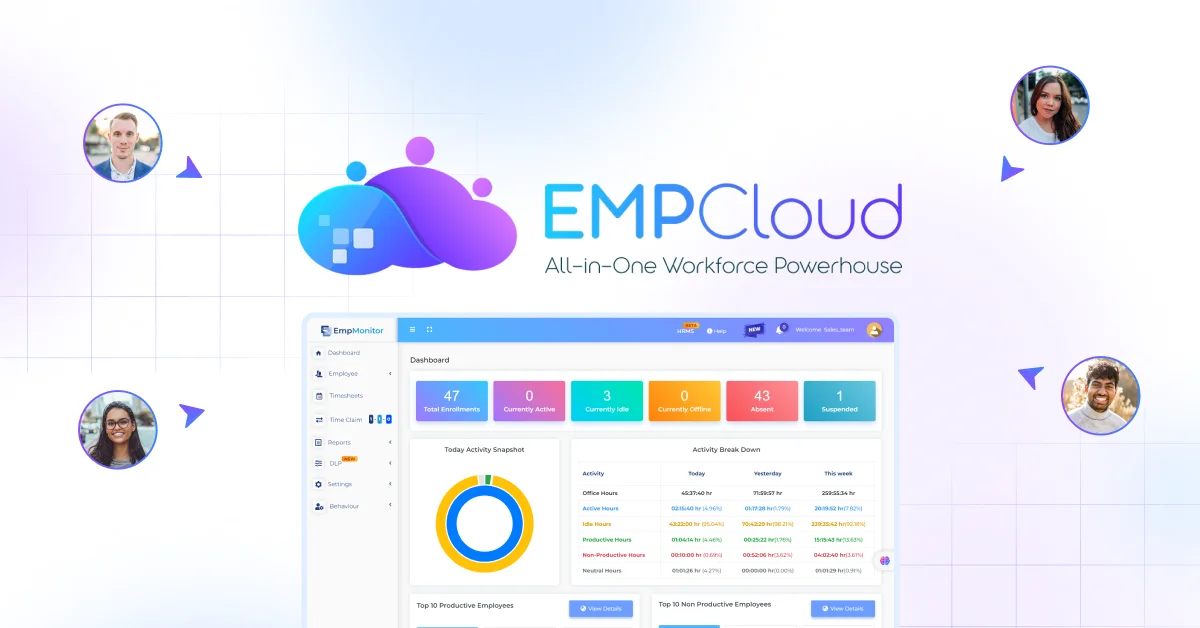
Attracting great people is only half the challenge. While AI-powered hiring helps organizations recruit smarter and faster, managing and retaining that talent effectively is equally important.
EmpCloud is a unified workforce management platform trusted by 1,500+ industry leaders, designed to seamlessly continue the journey after hiring. It equips organizations with the tools needed to manage, develop, and retain employees, ensuring every new hire is set up for long-term success.
EmpCloud Features: Everything Your Team Needs In One Place
EmpCloud is built around two powerful solution sets, one for managers and one for HR teams.
Manager-Centric Solutions:
EmpCloud gives managers complete control over workforce performance with minimal effort:
- Task and Opportunity Management: Assign tasks to team members, set priorities, and track progress in real time. Managers can see what work is in progress, completed, or delayed, making it easier to coordinate teams and ensure nothing falls through the cracks.
- Productivity Tracking: Analyze employee performance through measurable data such as task completion rates, time spent on activities, and overall output. This helps identify top performers, uncover bottlenecks, and support data-driven performance improvements.
- Project Management: Plan, execute, and monitor projects from start to finish within a single platform. Teams can set timelines, allocate resources, track milestones, and ensure projects stay on schedule and within scope.
- Data Loss Prevention: Protect sensitive business data by controlling access, monitoring usage, and preventing unauthorized sharing or leaks. This ensures that critical company information remains secure across devices and teams.
- Report Generation: Generate detailed reports on aspects such as productivity, attendance, task progress, and overall performance. These insights help leaders make informed decisions and continuously improve operations.
HR-Centric Solutions:
On the HR side, EmpCloud delivers a robust set of features that make post-hire management seamless:
- Face Recognition Attendance System: Enable secure, contactless attendance marking using facial recognition technology. This reduces manual errors, prevents buddy punching, and ensures accurate tracking of employee presence.
- Leave and Attendance Tracking: Maintain accurate records of employee attendance, leaves, and absences in one place. This simplifies compliance, reduces administrative effort, and ensures transparency across teams.
- Policy and Document Management: Upload, store, and share company policies, contracts, and important documents in a centralized system. Employees can easily access the latest information, improving communication and compliance.
- Automated Timesheets: Capture and generate timesheets automatically based on actual work hours and activities. This improves scheduling, enhances resource planning, and eliminates the need for manual entries.
- Employee Access History: Track and maintain detailed logs of employee entry and exit across different locations. This helps improve security, monitor movement, and maintain accountability.
- Employee Requests Management: Manage requests such as attendance corrections, compensatory days off, and work-from-home approvals through a structured workflow. This ensures faster processing and better visibility for both employees and managers.
- Exit Management: Streamline the offboarding process with structured workflows for clearances, documentation, and final settlements. This ensures a smooth and organized exit experience.
- Employee Payroll Management: Automate payroll processing to ensure accurate salary calculations, deductions, and compliance with regulations. This reduces errors and saves significant administrative time.
- Applicant Tracking Systems (ATS): An applicant tracking system (ATS) centralizes job postings, applications, and candidate data in one platform. It simplifies resume screening, tracks candidate progress, and keeps the hiring process organized and efficient.
At the center of it all is a unified dashboard that brings together timesheets, live location tracking, contactless attendance, and task allocation in one complete view. For organizations that invest seriously in talent acquisition, EmpCloud ensures every hire delivers maximum long-term value.
What Trends Are Shaping Talent Acquisition Going Forward?
Several macro trends are reshaping how organizations approach talent acquisition in the years ahead.
Remote and hybrid work have dramatically expanded the geographic talent pool, giving companies access to candidates they could never have reached before, but also intensifying competition for top talent across borders.
Skills-based hiring is gaining momentum as organizations shift focus from credentials and job titles to demonstrable competencies. This approach broadens the candidate pool and reduces structural bias in hiring.
Internal mobility is also emerging as a key component of strategy. Rather than always looking externally, smart organizations invest in identifying and developing high-potential employees for new roles reducing attrition and lowering hiring costs.
Finally, the candidate experience will continue to be a major differentiator. Organizations that offer a fast, transparent, and respectful hiring process will win more offers and build stronger employer brands.
Final Thoughts
Talent acquisition is not just a hiring function; it is a strategic capability that shapes the trajectory of your entire organization. Companies that take it seriously, invest in the right tools and processes, and stay ahead of emerging trends will build workforces that are more capable, more engaged, and more resilient.
From defining a clear strategy to leveraging AI-powered tools and integrated platforms like EmpCloud, the path to hiring excellence is clear. It requires intention, consistency, and a willingness to treat every candidate and every new hire as a long-term investment in your organization’s future.
The talent landscape will keep evolving. Organizations that commit to evolving alongside it through smarter hiring practices and more effective workforce management will be the ones that lead their industries for years to come.
FAQs
- What is talent acquisition?
Talent acquisition is the strategic, long-term process of identifying, attracting, evaluating, and onboarding candidates to meet an organization’s current and future workforce needs. Unlike traditional hiring, it focuses on building a strong talent pipeline and aligning hiring efforts with overall business goals. - What is the difference between hiring and recruitment?
Recruitment is a short-term, reactive effort focused on filling open positions quickly. In contrast, a broader hiring approach is ongoing and strategic, covering workforce planning, employer branding, succession planning, and long-term workforce optimization. - What does a hiring manager in this function do?
A professional in this role oversees workforce planning, sourcing strategies, candidate evaluation, interview processes, offer negotiation, and onboarding coordination. They ensure hiring efforts align with company culture, growth plans, and long-term objectives. - What is a hiring strategy?
A hiring strategy is a structured plan that outlines how an organization attracts, assesses, hires, and retains talent. It typically includes employer branding, structured interviews, talent pipeline development, data-driven metrics, and continuous improvement of the candidate experience.
Quick Search Our Blogs
Type in keywords and get instant access to related blog posts.