
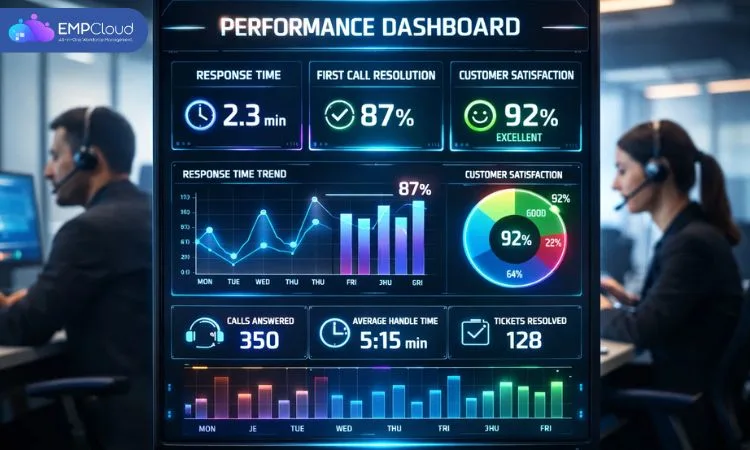
Performance monitoring plays a crucial role in call centers, directly affecting employee productivity, customer satisfaction, and overall business success. Proper monitoring ensures that agents are meeting targets, customer issues are resolved efficiently, and the organization’s goals are consistently achieved.
Without effective tracking, managers often face challenges such as inconsistent service quality, low employee engagement, and difficulty in measuring success against key metrics. Understanding how to monitor call center performance effectively in 2026 helps businesses address these challenges and improve operational efficiency.
This blog will cover essential performance metrics, key performance indicators, common challenges, and best practices for call center monitoring. Additionally, we’ll explore how tools like EmpCloud can make employee performance monitoring easier, providing real-time insights and actionable data for managers.
You can listen to this blog here.
What Is Performance Monitoring?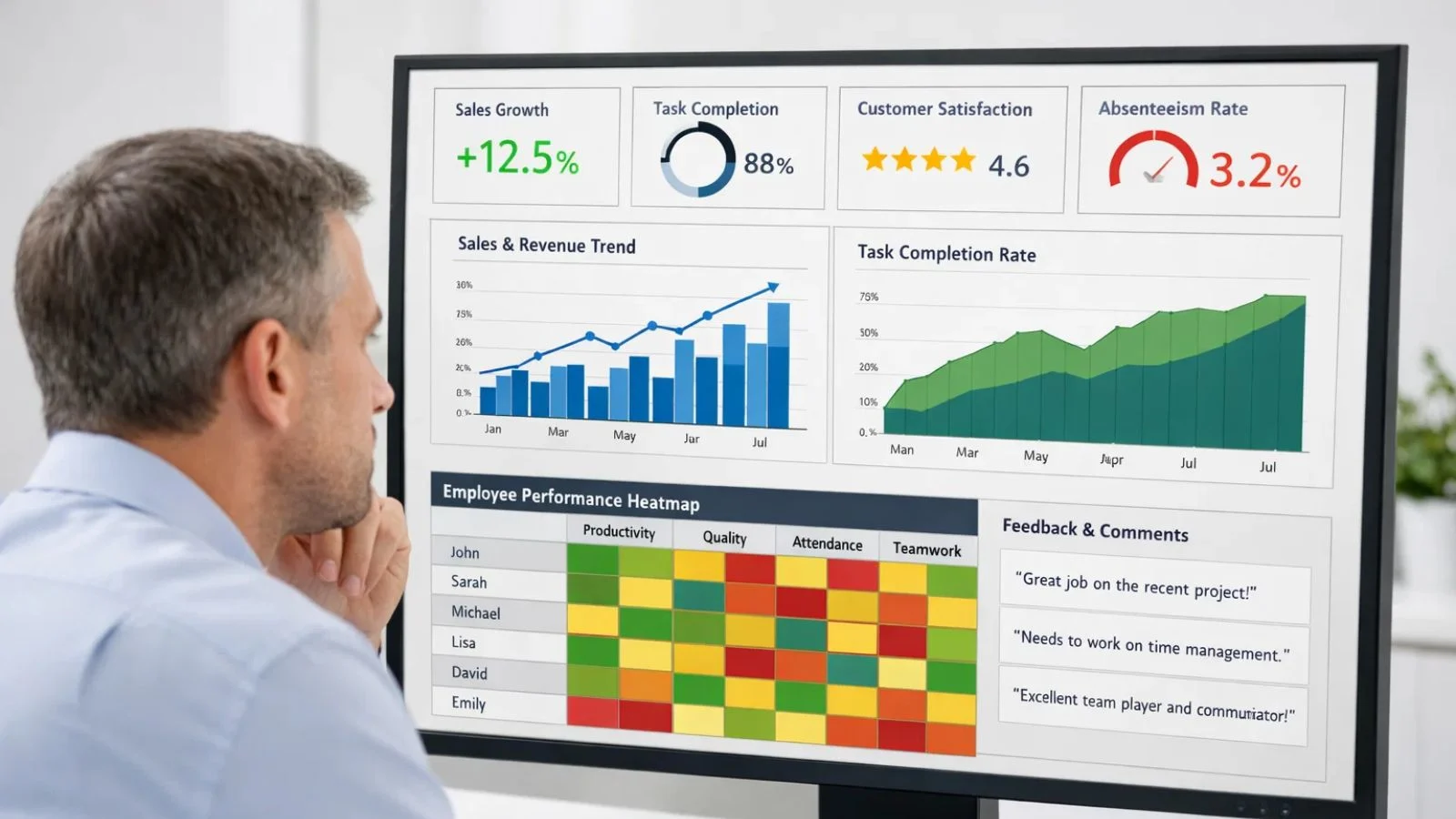
Performance monitoring is the process of tracking, measuring, and analyzing the efficiency and effectiveness of employees and processes within an organization. In the context of a call center, it focuses on evaluating how well agents handle customer interactions, meet targets, and maintain service quality.
Unlike casual oversight, employee performance monitoring involves systematic data collection, analysis, and reporting. It helps managers identify strengths, pinpoint areas that need improvement, and make informed decisions to boost productivity.
Effective performance monitoring is not limited to numbers. While quantitative metrics like call handling time and resolution rates are crucial, qualitative factors such as customer satisfaction, communication skills, and problem-solving abilities also play a key role. Combining both approaches ensures a holistic understanding of employee contributions and overall call center efficiency.
By implementing a structured performance monitoring system, businesses can enhance service delivery, maintain consistency, and create a motivated workforce that aligns with organizational goals.
Key Performance Indicators (KPIs) for Call Centers
To monitor call center performance effectively, it’s essential to track the right key performance indicators (KPIs). KPIs act as measurable values that reflect how well agents and the overall call center are achieving business objectives.
Important KPIs in 2026:
- Average Handling Time (AHT) – Measures the average duration an agent spends on a call. Shorter times can indicate efficiency, but quality should not be compromised.
- First Call Resolution (FCR) – Tracks how many issues are resolved on the first call. A higher FCR boosts customer satisfaction and reduces follow-up work.
- Customer Satisfaction (CSAT) – Often measured through surveys, CSAT reflects the quality of service from the customer’s perspective.
- Service Level – Percentage of calls answered within a specific time frame, ensuring responsiveness.
- Call Abandonment Rate – Monitors the number of calls disconnected before an agent answers, highlighting potential staffing or process issues.
- Agent Utilization Rate – Tracks how effectively agents spend their time handling calls versus idle periods.
These KPIs provide actionable insights into employee performance and call center efficiency. Monitoring them regularly allows managers to identify trends, implement improvements, and recognize high-performing employees.
Incorporating the right KPIs ensures that performance monitoring is data-driven and aligned with organizational goals, making it easier to enhance productivity and service quality.
Performance Metrics and How to Use Them
While KPIs provide a high-level view of call center efficiency, performance metrics give detailed insights into day-to-day operations. Understanding these performance metrics helps managers evaluate both individual and team productivity accurately.
Types of Performance Metrics:
- Quantitative Metrics – Include measurable data such as call volume, average handling time, resolution rates, and adherence to schedules. These metrics help identify trends and benchmark performance.
- Qualitative Metrics – Assess factors like communication skills, problem-solving abilities, and customer feedback. These insights ensure that service quality is not sacrificed for speed.
- Agent-Specific Metrics – Focus on individual performance, including average calls handled, quality scores, and training needs.
- Team-Level Metrics – Evaluate the overall efficiency of the call center, highlighting workflow issues or bottlenecks.
How to Use Performance Metrics:
- Track Regularly: Monitor daily, weekly, or monthly to spot trends.
- Compare Against Benchmarks: Use historical data or industry standards to assess performance.
- Identify Gaps: Metrics help pinpoint weak areas, enabling targeted training or process improvements.
- Reward Excellence: Recognize high performers to motivate staff and reinforce best practices.
By combining KPIs with detailed performance metrics, managers gain a comprehensive view of call center operations. This approach ensures that employee performance monitoring is accurate, actionable, and aligned with business objectives.
How to Monitor Call Center Performance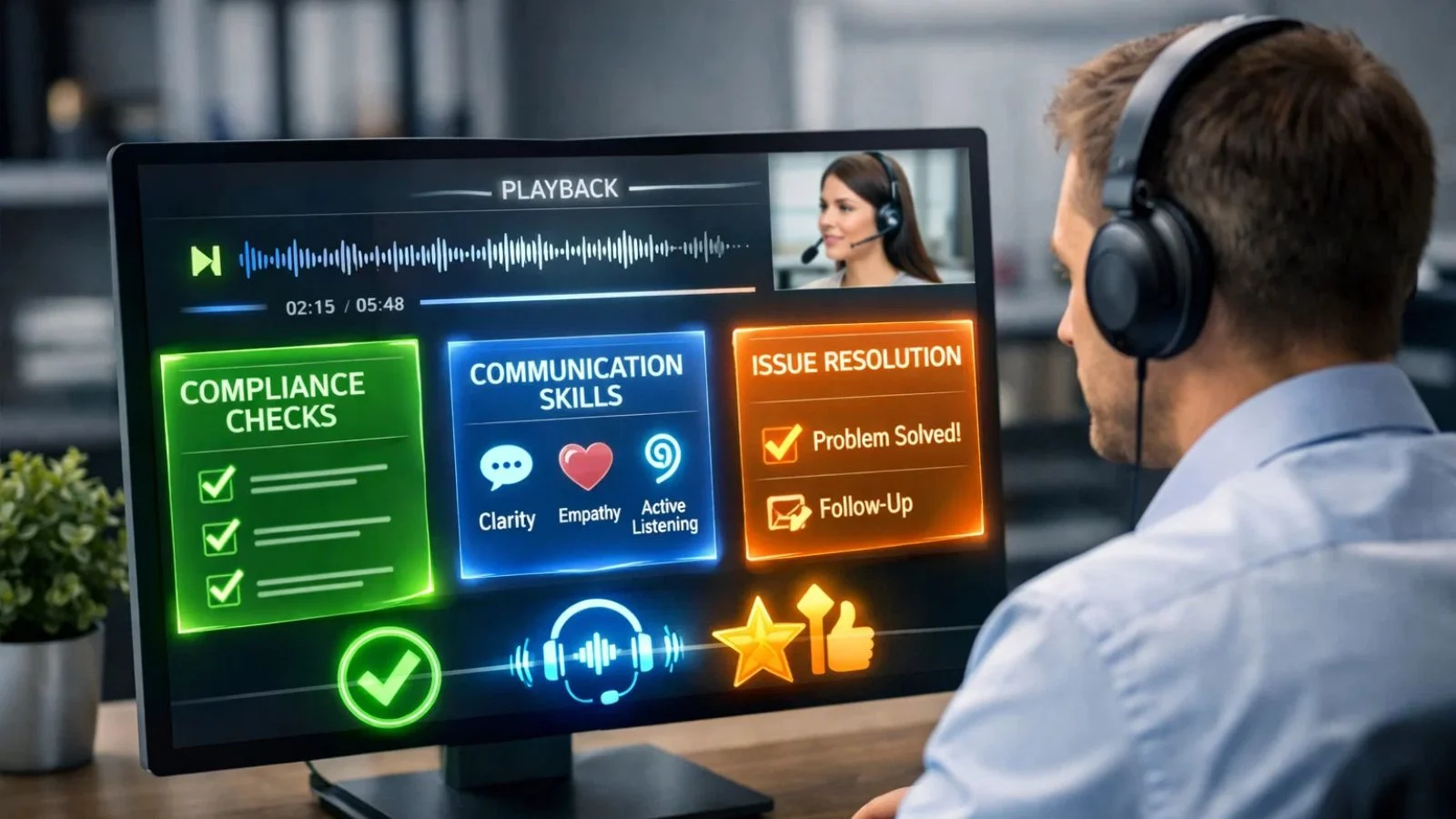
Effectively monitoring a call center requires a combination of the right tools, processes, and strategies. Employee performance monitoring should be both systematic and actionable, ensuring that managers can track productivity without creating unnecessary stress for agents.
Methods to Monitor Call Center Performance:
- Real-Time Dashboards:
- Track live call data, agent availability, and queue status.
- Identify bottlenecks immediately and reallocate resources as needed.
- Call Recordings and Quality Monitoring:
- Listen to calls for compliance, communication skills, and issue resolution.
- Provides qualitative insights to complement numeric performance metrics.
- Regular Reports and Analytics:
- Generate daily, weekly, and monthly reports on KPIs like AHT, FCR, and CSAT.
- Use trend analysis to forecast staffing needs or identify process improvements.
- Employee Feedback and Self-Evaluation:
- Encourage agents to review their own performance.
- Helps identify challenges and areas where training is needed.
- Integration with CRM Tools:
- Connect call center data with customer relationship management systems to track outcomes and follow-ups.
By combining these methods, managers can ensure that performance monitoring is comprehensive, transparent, and effective. Using the right approach not only improves efficiency but also enhances the overall employee experience and customer satisfaction.
Common Challenges in Performance Monitoring
Even with the best intentions, performance monitoring in call centers comes with its set of challenges. Recognizing these obstacles helps managers implement strategies that make monitoring more effective and less stressful for employees.
1. Employee Resistance:
- Some agents may feel that constant monitoring creates pressure or distrust.
- Lack of communication about the purpose of monitoring can lead to disengagement.
2. Data Overload:
- With multiple performance metrics and KPIs, managers can get overwhelmed by too much data.
- Without proper analysis, this can lead to misinformed decisions or wasted resources.
3. Balancing Productivity and Quality:
- Focusing only on numeric targets like call duration can compromise service quality.
- It’s crucial to monitor both efficiency and customer satisfaction.
4. Inconsistent Measurement Standards:
- Different teams or supervisors may use varied methods to assess performance.
- Standardizing metrics and evaluation processes ensures fairness and accuracy.
5. Technical Limitations:
- Outdated systems or a lack of integration with tools like CRMs can hinder real-time monitoring.
- Investing in modern platforms helps overcome technical barriers.
By understanding these challenges, managers can create a more balanced employee performance monitoring system, one that supports improvement without demotivating agents.
Best Practices for Effective Monitoring
To ensure call center performance monitoring is effective and constructive, managers should follow a set of best practices. These approaches help track productivity, maintain service quality, and keep employees motivated.
1. Set Clear Goals and Expectations:
- Define KPIs and performance metrics for every agent.
- Make sure employees understand targets and quality standards.
2. Use Real-Time Analytics:
- Leverage dashboards and monitoring tools to track ongoing performance.
- Quickly identify issues like long wait times or repeated call transfers.
3. Provide Regular Feedback:
- Conduct weekly or monthly reviews to discuss achievements and areas of improvement.
- Positive reinforcement motivates high performers, while constructive feedback helps underperformers.
4. Combine Quantitative and Qualitative Metrics:
- Measure both call statistics and customer experience.
- This ensures that speed doesn’t come at the cost of service quality.
5. Encourage Employee Involvement:
- Allow agents to self-monitor and participate in goal-setting.
- Increases accountability and reduces resistance to monitoring.
6. Use the Right Tools:
- Implement platforms like EmpCloud to automate tracking, generate reports, and provide actionable insights.
- Accurate, real-time data makes performance evaluation more objective.
Following these best practices ensures that employee performance monitoring becomes a tool for growth rather than a source of stress.
Role of EmpCloud in Performance Monitoring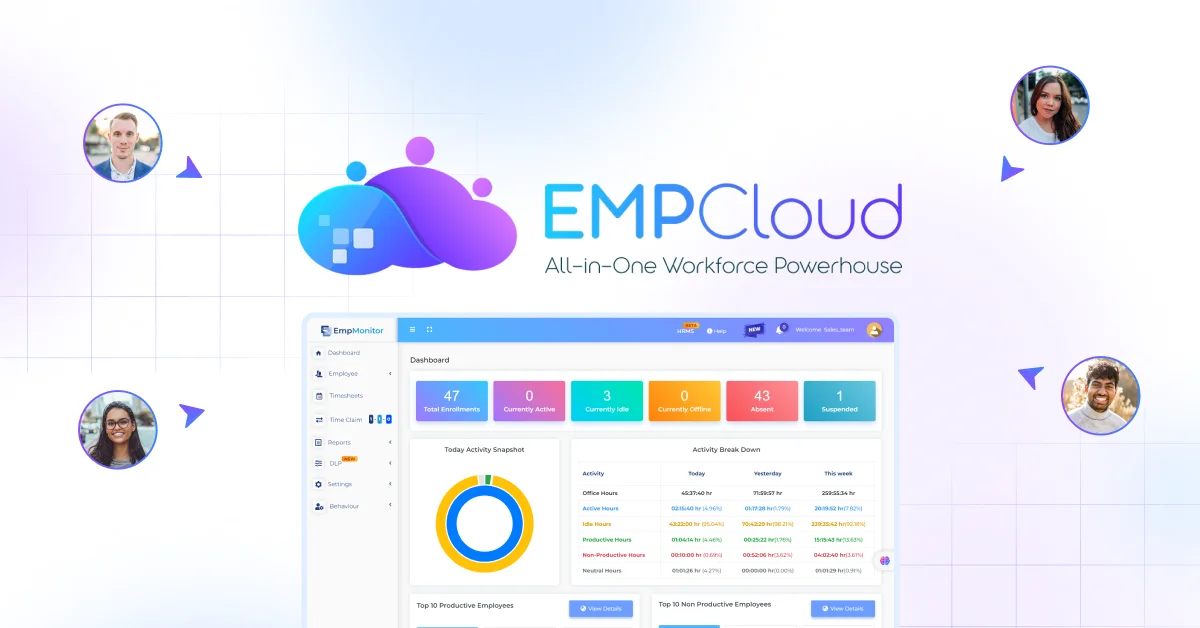
Modern call centers rely heavily on technology for accurate performance monitoring, and EmpCloud provides a comprehensive suite of tools that can be highly effective in this space. It combines EmpMonitor’s productivity tracking features with capabilities like attendance management, rewards and recognition, and performance and career development.
Bringing all these elements together into one unified platform, EmpCloud offers a complete solution that enables managers to track efficiency, support employee growth, and make more informed decisions without juggling multiple tools.
How EmpCloud Supports Monitoring:
- Productivity & Activity Tracking (EmpMonitor):
Track how employees spend their work hours with detailed insights into app usage, active time, idle time, and overall productivity. This helps managers identify work patterns, improve efficiency, and reduce time wastage. - Attendance & Workforce Management:
Manage attendance, shifts, and work hours from a centralized dashboard. Features like automated time tracking and leave management help streamline workforce operations and reduce manual errors. - Performance & Career Management:
Set clear goals, monitor progress, and evaluate employee performance over time. This enables structured appraisals, supports career growth, and aligns individual contributions with business objectives. - Rewards & Recognition:
Encourage a high-performance culture by recognizing achievements and rewarding top performers. This boosts employee motivation, engagement, and retention. - Screenshots & Activity Monitoring:
Capture periodic screenshots and track on-screen activity to ensure transparency and accountability. This is especially useful for remote or hybrid teams. - Project & Task Tracking:
Monitor time spent on specific projects and tasks to understand workload distribution and improve project efficiency. Managers can ensure that resources are being used effectively. - Reports & Analytics:
Generate detailed reports on productivity, attendance, and performance. These insights help managers make informed decisions and identify trends over time. - Remote Team Management:
Effectively manage distributed teams with real-time visibility into employee activity and performance, ensuring consistency regardless of location.
By integrating EmpCloud into your call center operations, performance monitoring becomes more efficient, accurate, and actionable. It ensures that managers can focus on improving service quality while employees receive clear guidance on expectations and growth opportunities.
Measuring Employee Performance Beyond Metrics
While numbers and KPIs provide valuable insights, effective employee performance monitoring also requires evaluating qualitative aspects of work. Focusing solely on metrics like call duration or resolution rates can overlook critical factors such as communication skills, problem-solving, and customer experience.
Key Aspects to Consider:
- Soft Skills:
- Evaluate how agents handle customer interactions, tone of voice, empathy, and patience.
- Strong soft skills often lead to higher customer satisfaction.
- Attitude and Engagement:
- Monitor teamwork, willingness to learn, and responsiveness to feedback.
- Motivated employees are more productive and deliver better service.
- Customer Experience Feedback:
- Gather customer surveys and reviews to assess satisfaction beyond numeric KPIs.
- Helps identify gaps in service quality that metrics alone may not reveal.
- Holistic Performance Reviews:
- Combine quantitative data from dashboards with qualitative insights from managers and peers.
- Provides a complete picture of each employee’s contribution.
By measuring both metrics and behavioral aspects, managers can create a balanced and comprehensive performance monitoring system that improves productivity while enhancing employee growth and customer satisfaction.
Future Trends in Call Center Performance Monitoring
As call centers evolve, performance monitoring is also adapting to new technologies and business needs. Staying ahead of trends ensures that monitoring remains effective, actionable, and aligned with organizational goals.
1. AI and Predictive Analytics:
- Artificial intelligence analyzes historical data to predict call volumes, agent performance, and potential bottlenecks.
- Helps managers proactively adjust staffing and improve service quality.
2. Real-Time Gamification:
- Many call centers use gamification to motivate agents.
- Real-time leaderboards and achievement badges encourage productivity while making monitoring more engaging.
3. Integration with CRM Systems:
- Monitoring tools integrated with customer relationship management (CRM) platforms provide a full view of customer interactions and outcomes.
- Ensures agents’ efforts are aligned with business goals and customer needs.
4. Automated Insights and Alerts:
- Tools like EmpCloud generate automated alerts for underperformance or operational issues.
- Managers can act immediately, ensuring minimal disruption and faster resolution.
5. Remote and Hybrid Workforce Monitoring:
- With more agents working remotely, workforce monitoring now includes remote dashboards, call analytics, and virtual coaching.
- Ensures consistency and productivity regardless of physical location.
By embracing these trends, call centers in 2026 can ensure employee performance monitoring is more intelligent, proactive, and capable of improving both agent productivity and customer experience.
Also Read,
Conclusion
Effective performance monitoring is critical for call centers aiming to maintain high service quality, improve productivity, and enhance employee growth. By tracking the right key performance indicators and performance metrics, managers can make informed decisions, identify areas for improvement, and reward high-performing employees.
Tools like EmpCloud simplify this process by providing real-time dashboards, automated reports, and actionable insights. Combining quantitative data with qualitative evaluation ensures a holistic view of employee performance, resulting in better customer experiences and a more motivated workforce.
In 2026, adopting structured monitoring practices and modern tools will be essential for call centers to stay competitive, efficient, and customer-focused.
FAQs
- What is employee performance monitoring?
- It is the systematic process of tracking, measuring, and evaluating the efficiency, productivity, and quality of work of call center agents.
- How do I monitor call center performance effectively?
- Use a combination of KPIs, performance metrics, real-time dashboards, call recordings, and employee feedback for a comprehensive view.
- What are the top performance metrics for call centers?
- Average Handling Time, First Call Resolution, Customer Satisfaction, Call Abandonment Rate, and Agent Utilization Rate.
Quick Search Our Blogs
Type in keywords and get instant access to related blog posts.