
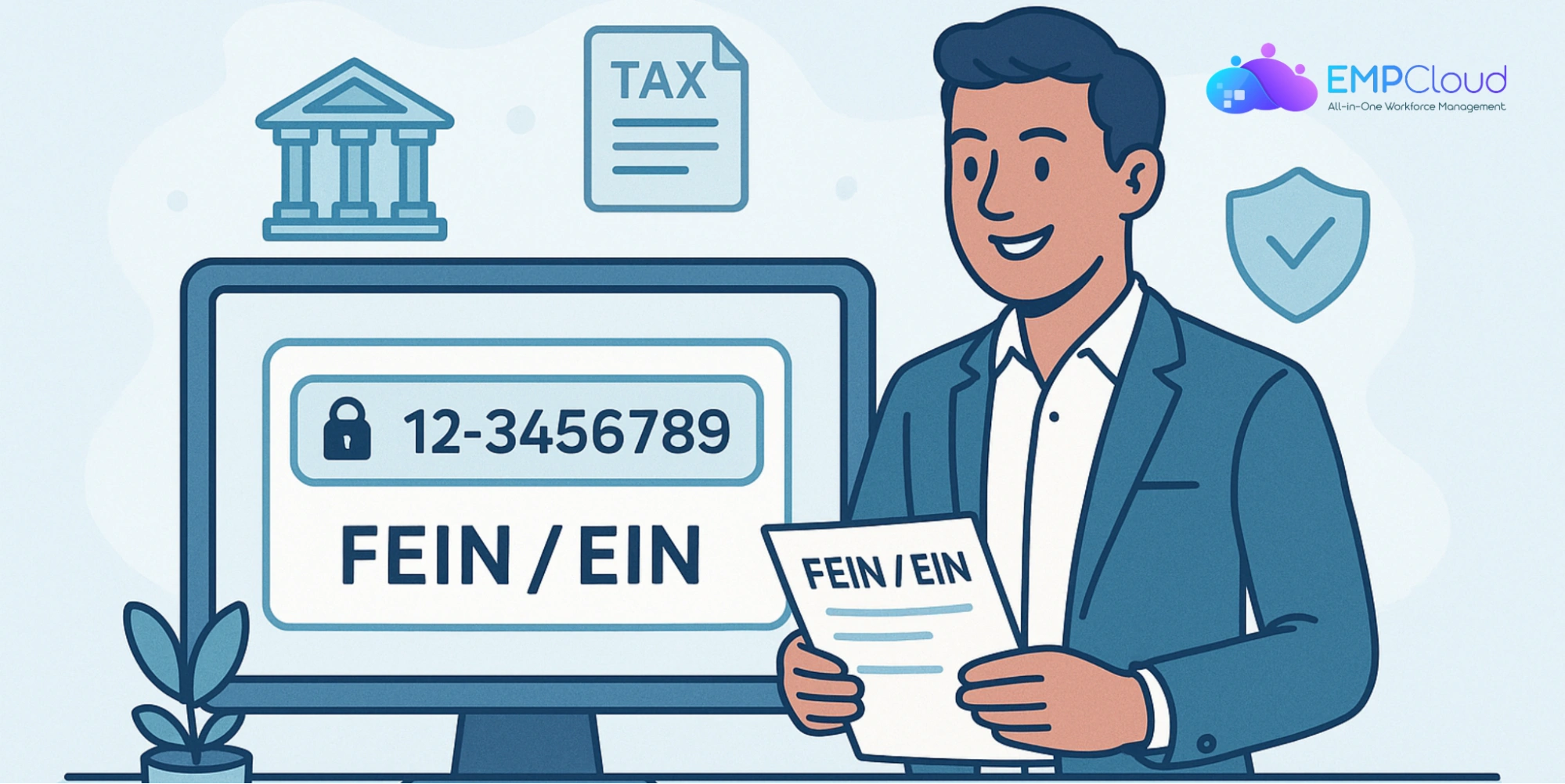
If you are starting a business, hiring your first employee, opening a business bank account, or simply filling out a tax form, you will eventually come across the term FEIN definition.
For many new business owners, the term is confusing, especially when they hear similar names like EIN, Federal Employer Identification Number, or even the commonly mistaken federal employee identification number.
The FEIN definition is very simple and straightforward. A FEIN is a unique number the IRS uses to identify your business, similar to how your PAN or Aadhaar identifies you as an individual. Knowing what an FEIN is, why you need it, and how to use it will make many business and tax processes much easier.
In this blog, we will understand what a FEIN is, why it is important, and how to obtain one. Let us keep it simple and start with the basics.
Listen to the blog.
What Is FEIN?
Just as individuals use a Social Security Number for government records, businesses use an FEIN to handle anything related to taxes, payroll, or legal compliance. A Federal Employer Identification Number is a unique nine-digit number that is issued by the IRS to identify a business for tax and reporting purposes. Consider it the official ID for your business.
When people ask, “What is FEIN?” The answer is simple: if your business needs to file taxes, hire employees, open a business bank account, or work with certain clients, you need a FEIN.
The FEIN may also hear the FEIN referred to as:
- EIN (Employer Identification Number)
- Federal Tax ID Number
- Business Tax Identification Number
These terms generally refer to the same number and are used for the same purpose. The IRS uses it to keep track of business activities, and other institutions, such as banks or licensing authorities, rely on it to legally validate businesses.
In short, the FEIN definition is straightforward: it is your business’s official identity in the eyes of the federal government.
FEIN vs EIN: Are They the Same?
Many people wonder whether the FEIN and EIN are two different numbers. The answer is simple: they are the same. The IRS uses the term EIN (Employer Identification Number), whereas businesses, banks, and some agencies often refer to it as FEIN.
Different names, one number, and one purpose.
You might also see it called a “Federal Tax ID.” This is just another label for the same identification number used in business and tax paperwork. The terminology refers to who is referring to it, but the function remains the same
Whether a form asks for an EIN, FEIN, or Federal Tax ID, you provide the same nine-digit business number.
FEIN vs Federal Employee Identification Number
A phrase that often appears online is “Federal Employee Identification Number.” This looks almost correct, but it is actually a common mistake. The correct term is Federal Employer Identification Number, not Employee.
This mix-up usually occurs because people assume that the number is linked to employees. In reality, the number identifies the business rather than individual workers. If you ever see a form, article, or website using “federal employee identification number,” they are almost always referring to the FEIN/EIN.
The key point:
If you come across this incorrect phrase, treat it as a reference to the same business identification number that you already know.
FEIN vs Employee Identification Number (Business vs HR Term)
FEIN / EIN
- It is used to identify a business.
- It is required for taxes, banking, hiring, and compliance.
- Issued by the IRS. This applies to the company, not individual workers.
Employee Identification Number (Employee ID)
- It is used to identify an employee within a company.
- Helps HR manage payroll, attendance, and internal records of employees.
- This was assigned by the employer, not the IRS.
- It works only within that specific organization.
Simple way to remember
- FEIN = business ID
- Employee ID = worker’s internal ID
Why A FEIN Is Important For Your Business
The FEIN definition plays a central role in the operation of a business. Even if you are just starting, you will find that many essential processes require this number. The key areas where an FEIN definition is important are as follows:
1. Filing Business Taxes
Most federal tax forms require an FEIN. This ensures that your business is correctly recorded in the IRS system.
2. Hiring Employees
If you plan to build a team, you will need an FEIN definition to report payroll taxes and complete employment-related paperwork.
3. Opening a Business Bank Account
Banks usually require an FEIN definition before allowing you to open an account under your business name.
4. Applying for Licenses and Permits
Many industries require local or state registrations, and an FEIN is often part of the application process.
5. Working With Vendors and Clients
Forms such as W-9 and payment onboarding documents typically require an FEIN definition to verify your business identity.
6. Building Business Credibility
Having an FEIN separates your personal identity from your business, which improves professionalism and adds a layer of protection.
A FEIN definition is not just paperwork; it is a foundation that allows your business to operate smoothly and legally.
Who Needs A FEIN?
Not every business is required to have an FEIN, but many will need one based on how they operate. The following are the most common situations in which obtaining an FEIN becomes necessary:
1. Partnerships and Corporations
Any partnership, corporation, or S corporation must have an FEIN definition, regardless of its size or daily activity.
2. LLCs
An LLC typically requires an FEIN definition, especially if it has more than one member or plans to hire employees.
3. Sole Proprietors (in specific cases)
A sole proprietor may need a FEIN if they
- hire employees,
- operate certain types of businesses, or
- want to avoid using their personal information on forms.
4. Nonprofit Organizations
Nonprofits use FEIN for donations, tax filings, banking, and compliance records.
5. Trusts, Estates, and Certain Financial Accounts
Some financial structures require an FEIN to manage assets or file annual statements.
6. Anyone Required to File Excise, Employment, or Specific Tax Returns
These tax categories typically cannot be filed without an FEIN.
In most cases, if a business interacts with the government, banks, or employees in any formal capacity, having an FEIN is essential.
More Helpful Guides
Work Life Balance Tips: A Practical Guide To Reclaiming Your Time
FEIN Format Explained
A FEIN follows a simple and fixed structure that makes it easy to recognize. It is always a nine-digit number formatted as follows:
XX-XXXXXXX
The first two digits appear before the hyphen, and the remaining seven follow. While the digits themselves do not hold meaning for most business owners, this format helps banks, agencies, and tax systems quickly identify the number as an official business ID.
You will use this format consistently for forms, banking documents, tax filings, and vendor records. As long as your number matches this pattern, it will be accepted wherever an FEIN definition is required.
How To Apply For A FEIN (Step-by-Step Guide)
Applying for a FEIN is straightforward, and the IRS offers several methods to simplify the process. Here is a clear step-by-step guide:
1. Gather Basic Business Information
You will need details such as:
- Legal name of the business
- Type of entity (LLC, corporation, sole proprietorship, etc.)
- Responsible party’s name and identification
- Business address and contact information
Having this ready makes the application process quick.
2. Use the IRS Online Application (Fastest Method)
The IRS provides a secure online portal through which most applicants can receive their FEIN immediately after completing the form.
3. Complete Form SS-4 (If Not Applying Online)
If the online option is not available for your situation, you can fill out Form SS-4 and submit it by:
- Fax
- Phone (for international applicants)
4. Submit the Application
Once submitted, the IRS processes this request.
- Online applicants receive the number instantly.
- Fax or mail submissions take longer, depending on IRS processing times.
5. Save Your Confirmation Notice
After receiving your FEIN, store the confirmation document safely and securely. It is required for tax filings, banking, licensing, and payroll setup.
Applying is completely free, and once issued, your FEIN definition will remain with your business permanently.
Where To Use Your FEIN
Once you receive your FEIN, you will use it in many parts of your business operations. The most common places where this number is required are as follows:
1. Tax Forms and Filings
Whenever you submit federal business tax returns or payroll filings, the FEIN is used to identify your business in the IRS records.
2. Banking and Financial Accounts
Banks typically ask for an FEIN when you open a business checking account, apply for a loan, or set up merchant services.
3. Payroll and Employee Records
If you pay employees, the FEIN is required for reporting wages, submitting payroll taxes, and completing employment forms.
4. Business Licenses and Registrations
Many state and local agencies require FEIN when issuing business licenses, permits, or renewals.
5. Vendor and Client Documentation
Forms such as W-9, onboarding paperwork, and payment verification requests often require your FEIN to confirm your business identity.
6. Insurance and Compliance Requirements
Business insurance carriers and compliance platforms may request your FEIN for verification and policy setup purposes.
In short, your FEIN becomes part of almost all official paperwork related to your business.
FEIN Best Practices & Security Tips
Once you have an FEIN definition, it is important to manage it carefully. Although it is not as sensitive as a personal ID number, it still requires proper protection. The following are some practical guidelines:
1. Share It Only When Necessary
Provide your FEIN only to trusted parties, such as banks, government agencies, verified vendors, and payroll providers.
2. Store It Securely
Digital and physical copies should be kept in safe locations. Avoid leaving the number visible on shared computers or documents.
3. Use Encrypted Channels When Possible
If you are sending your FEIN through email or uploading it to a platform, use secure and encrypted systems to reduce the risk of misuse.
4. Keep Your Business Records Updated
If your business changes ownership, address, or structure, update your information with the IRS to keep your FEIN accurate.
5. Watch for Suspicious Requests
If someone asks for your FEIN without a clear reason, verify their identity and purpose before sharing it with them.
6. Avoid Posting It Publicly
Do not place your FEIN on websites, social media, or publicly accessible documents. This helps to prevent fraud or impersonation.
Following these simple habits will protect your business and ensure that your FEIN is used responsibly.
How To Find Or Recover A Lost FEIN?
If you misplace your FEIN, do not worry; there are several reliable ways to retrieve it. Since the number stays with your business permanently, the IRS and your existing records make recovery simple.
1. Check Previous Business Documents
Look through:
- Past tax returns
- Bank account paperwork
- Licenses or permits
- Payroll records
- These often include the FEIN.
2. Review IRS Confirmation Notices
When you first receive your FEIN, the IRS issues a confirmation letter. If you saved a digital or printed copy, the number will be included.
3. Contact Your Bank or Accountant
Banks and accountants commonly store your FEIN for financial and tax-related activities, so they may be able to provide it if necessary.
4. Call the IRS Business & Specialty Tax Line
If you cannot locate the number, you can call the IRS.
They will verify your identity and then share the FEIN with an authorized person for the business.
5. Keep a Secure Backup for the Future
Once you recover the number, store it safely in both digital and physical formats to avoid losing it again in the future.
Recovering your FEIN definition is usually straightforward, as long as you can verify your connection to the business.
Try EMP Cloud For Dynamic Workforce Management
If your business is expanding and you are looking for a smarter way to manage people, workflows, and daily operations, EMPCloud can help simplify everything in one location. It is an all-in-one workforce management suite designed to support organizations at every stage of the employee engagement journey.
From onboarding new hires to managing the complete employee lifecycle and handling offboarding, it provides the tools needed to manage your workforce efficiently and consistently. It is designed for teams that require clear visibility into scheduling, attendance, productivity, and overall workforce performance management.
With a platform like EMPCloud, tasks that normally require multiple tools can be handled, saving time, reducing errors, and improving team coordination. If you manage a small team or a large workforce, a central system makes it easier to maintain compliance, track activities, and keep your business running smoothly.
Conclusion
Understanding the FEIN definition is one of the simplest yet most important steps in running a business. This single number becomes the foundation for taxes, banking, hiring, registrations, and overall credibility. Whether you are starting a new venture or expanding an existing one, having a clear idea of what a FEIN is, how it works, and when you need it ensures that your business stays compliant and organized from the outset.
With the right knowledge and tools, managing your business becomes much easier, and securing a FEIN is one of those small but essential tasks that sets everything else in motion. As your business grows, using platforms such as EMP Cloud can further streamline your operations and help you remain efficient.
A FEIN definition might seem like just a number, but it plays a significant role in ensuring that your business runs smoothly, professionally, and securely.
Frequently Asked Questions (FAQ)
Can a business have more than one FEIN?
Yes, but only in specific cases. A business normally has one FEIN for its entire lifetime, but if the ownership or legal structure changes, such as converting a sole proprietorship into a corporation, the IRS may require a new FEIN.
Does a FEIN expire or require renewal?
No. Once an FEIN is issued, it never expires and does not require renewal, even if the business becomes inactive. It remains permanently assigned unless the IRS instructs otherwise during major restructuring.
Can two different businesses accidentally have the same FEIN?
No. The FEIN definition is unique. The IRS never assigns the same number to more than one business entity.
Can I cancel my FEIN if I close my business?
You cannot cancel an FEIN, but you can notify the IRS that your business has closed. The number becomes inactive but remains in IRS records permanently and will not be reused.
Quick Search Our Blogs
Type in keywords and get instant access to related blog posts.