
Getting a new apartment, securing a bank loan, or switching jobs, all of these moments have one thing in common. At some point, someone will ask for an employment verification letter. This official document confirms that a person holds or has held a position at a company, along with details such as job title, tenure, and, in some cases, salary.
It sounds simple, but the impact it carries is enormous. Both employees and employers deal with this document more often than they expect, and not knowing how to handle it correctly leads to unnecessary delays and rejections. Understanding what goes into an employment verification letter, how to write one, and when to use it makes the entire process far smoother for everyone involved.
Listen To The Podcast Now!
What Is an Employment Verification Letter?
An employment verification letter is a formal document that an employer issues to confirm details about a current or former employee’s work history. Also known as a verification of employment letter, it typically covers the employee’s full name, job designation, date of joining, employment status, and salary, if the requesting party specifically asks for it.
Banks, landlords, immigration offices, and background check agencies are among the most common parties that ask for this document. They need it to confirm that the person is genuinely employed and financially stable before making any decisions. A missing or poorly written letter can stall the entire process for the employee, sometimes for weeks.
Having a clear and accurate Fein Definition is critical, as this ensures the employment verification letter is both credible and legally compliant, which speeds up the process.
When Do You Need an Employment Verification Letter?
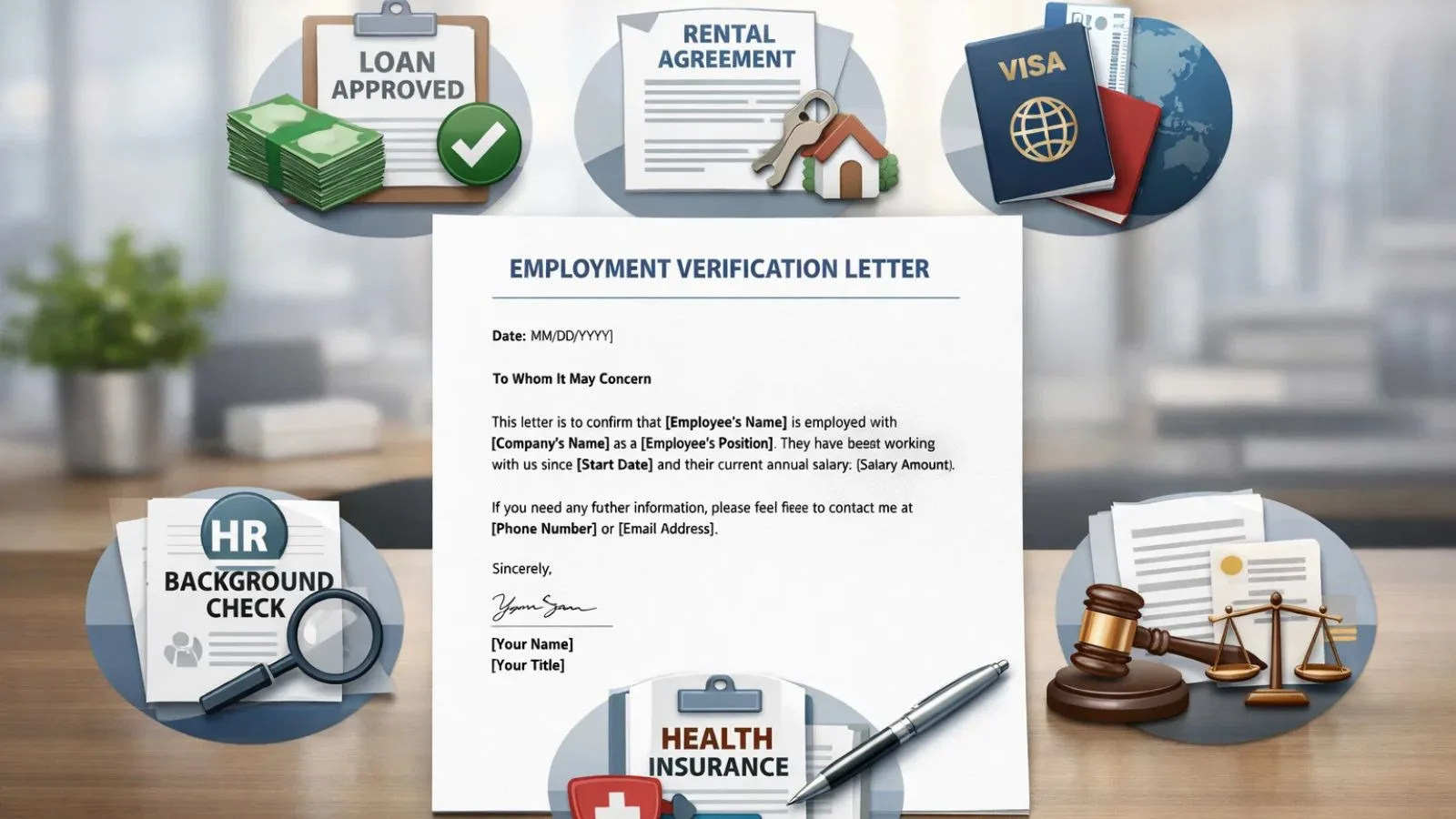
People often underestimate how many everyday situations call for a letter of employment verification. It is not just something that comes up during a job change. Here are the most common scenarios:
1. Applying for a home loan or personal loan at a bank or financial institution
2. Renting an apartment where the landlord wants to confirm stable income before signing a lease
3. Processing a visa or immigration application that requires official proof of employment
4. New employer background checks during the hiring and screening process
5. Government documentation, tax-related filings, or applications for social benefits
6. Enrolling dependents in health insurance or accessing company benefit programs
7. Legal or court proceedings that require an official record of employment history
Each of these situations demands a document that is accurate, professionally presented, and issued promptly. A delayed or incomplete letter can push back important timelines that the employee simply cannot afford to miss. HR teams that have a clear process in place for handling these requests make life significantly easier for everyone.
What Should an Employment Verification Letter Include?
A strong employment verification letter does not need to be lengthy; it just needs to be complete and accurate. Here are the essential components every such letter must contain:
- Official company letterhead with the logo, company name, and registered address
- Date of issuance is clearly stated at the top of the document
- Full legal name of the employee, along with their official job title
- Date of joining and current employment status: full-time, part-time, or contractual
- Salary details, monthly or annual, only when the requesting party specifically asks for them
- Name, designation, and authorized signature of the HR representative issuing the letter
- Company contact details, including email and phone number, for independent follow-up verification
Leaving out even one of these details can result in the letter being flagged or outright rejected. HR professionals should always treat this document with the same level of care they would give any other official company communication.
Employment Verification Letter Template:
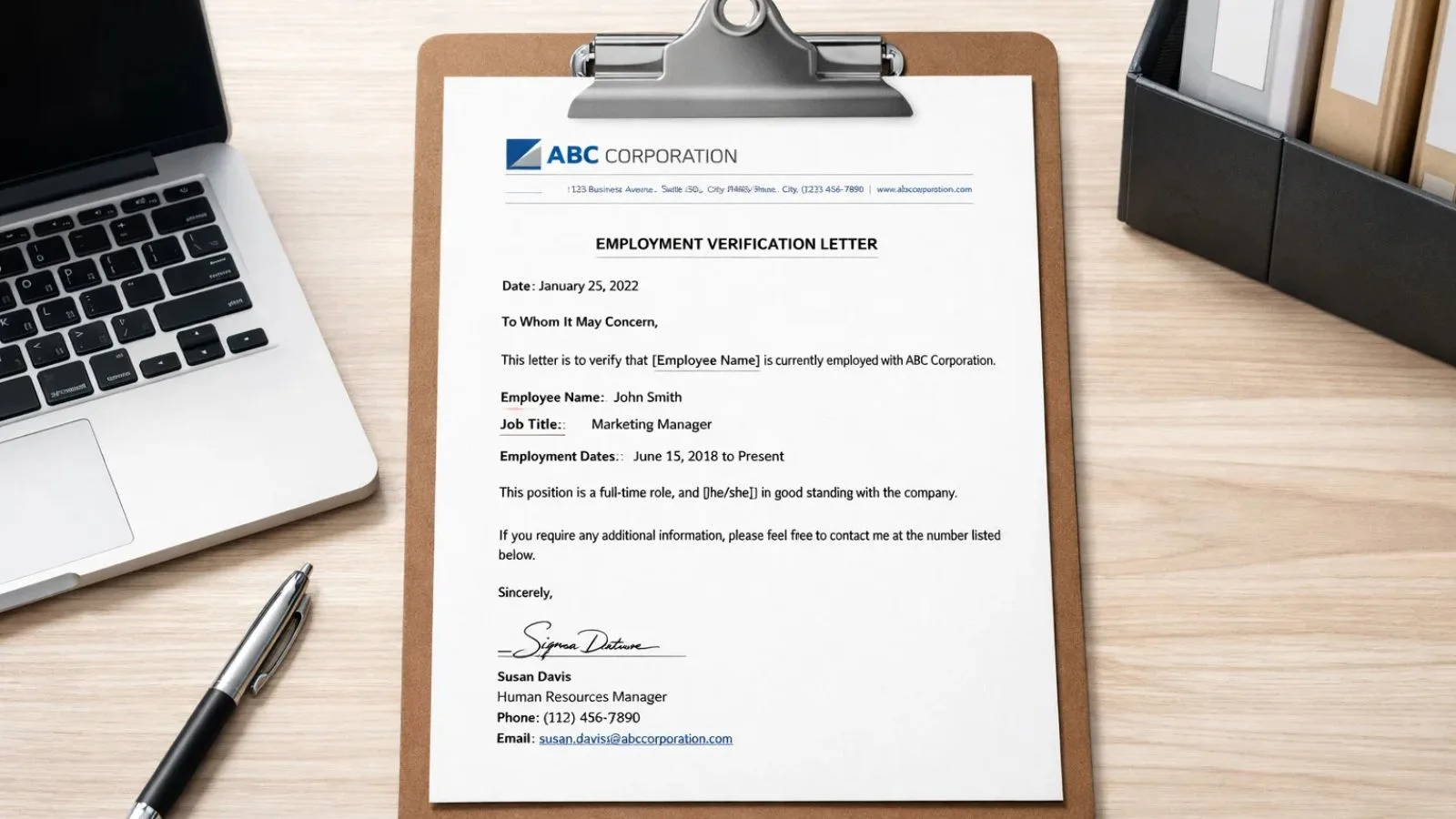
Here is a clean and professional employment verification letter template that HR teams can adapt based on their company’s requirements and the specific needs of the requesting party. This format is accepted across banks, rental offices, visa authorities, and government departments.
[Company Letterhead]
Date: [DD/MM/YYYY]
To Whom It May Concern,
This is to certify that [Employee Full Name] is currently employed with [Company Name] as [Job Title] since [Date of Joining]. They hold a [full-time/part-time] position, and their current annual salary is [Salary Amount] (if applicable).
This employment verification letter has been issued at the request of the employee for [purpose, e.g., loan application/visa processing / rental agreement].
For any further queries, feel free to reach out to us at [Company Email / Phone Number].
Sincerely, [HR Manager Name] [Designation] [Company Name] [Signature]
The tone and structure can be adjusted slightly depending on how formal the requesting institution expects the document to be. That said, the core details must always stay accurate, consistent, and easy to verify.
Employment Verification Letter Sample in Action:
Seeing a completed example makes it much easier to understand how the final document should look. Here is an employment verification letter sample filled with dummy data to give you a clear picture.
Sarah Thompson has been working at TechNova Solutions as a Senior Software Engineer since March 2021, earning an annual salary of $85,000. Her HR manager, David Lee, prepares the letter on the company’s official letterhead, signs it with his full designation, and includes the company’s phone number and email for any follow-up verification.
This employment verification letter sample illustrates that the document does not need to be elaborate; it just needs to be precise and credible. Authenticity is everything here. The letter must come from official company stationery, be signed by someone with proper authority, and carry only information that can be verified. A well-prepared document builds immediate trust with banks, landlords, and government officials and helps the employee move forward without unnecessary hurdles.
How to Request an Employment Verification Letter?
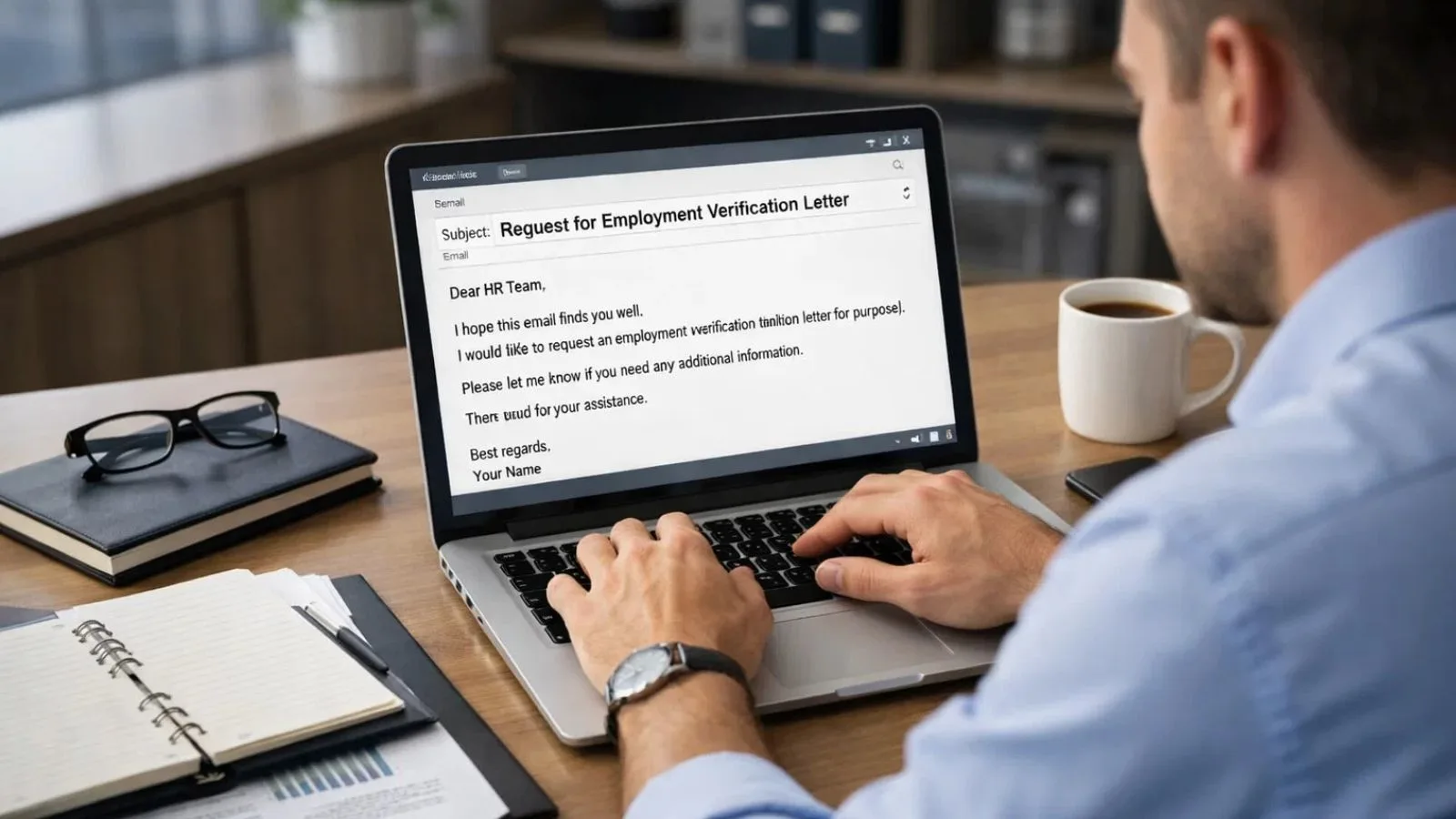
From an employee’s side, asking the HR department for an employment verification letter is straightforward, as long as the request is made clearly and with enough lead time. Here is a practical approach:
- Send the request through your official work email to the HR manager or the People Operations team
- Specify exactly why you need the document, loan application, visa, rental, or employer background check
- Mention any specific details the receiving party has asked for, such as salary, employment type, or exact dates
- Ask for the letter to be issued on official company letterhead with either a physical or digital authorized signature
- Set a clear deadline for when you need it and follow up politely if you have not heard back within two working days
- Keep a copy of every letter issued to you, as the same document often comes in handy for future purposes
On the employer’s side, having a standardized internal process for handling these requests is just as important. A clear workflow ensures the letter goes out correctly every time, protects the company from errors, and keeps the employee’s trust intact throughout the process.
Also Read:
Simplify HR Documentation with EmpCloud:
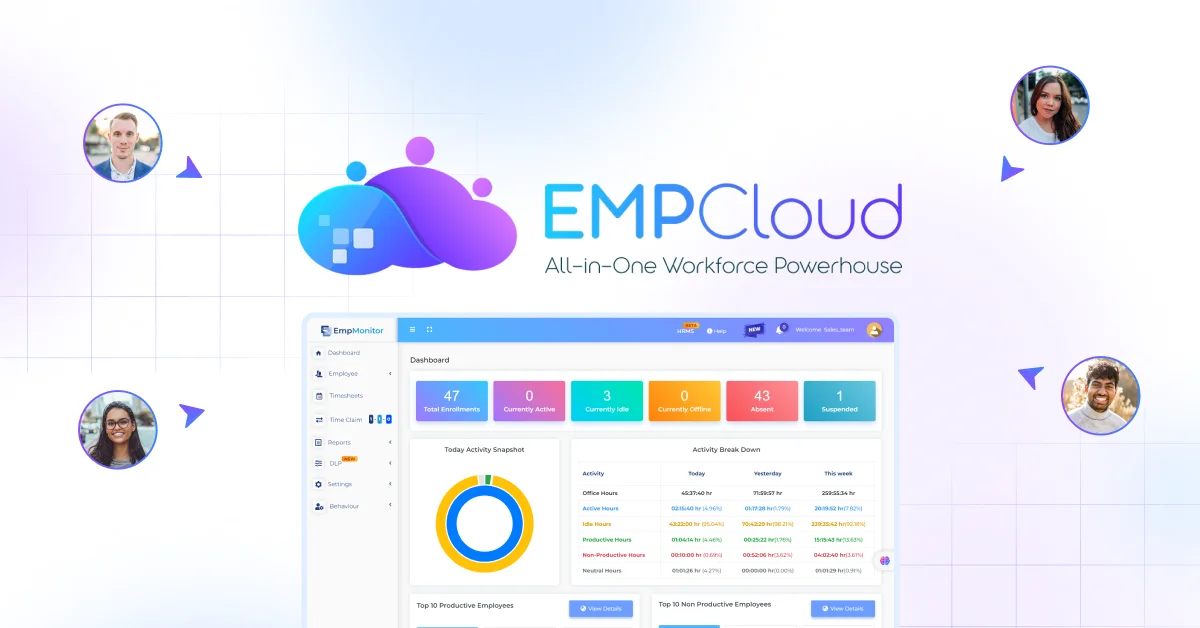
Handling employee documents manually is overwhelming, especially for growing teams managing dozens of requests at once. Errors creep in, timelines get missed, and HR teams end up spending hours on tasks that should take minutes. EmpCloud was built to change exactly that.
EmpCloud is a complete workforce management suite trusted by companies, from early-stage startups to large enterprises. Its HRMS module brings all employee data, documentation, and compliance tracking into one centralized platform, making the entire HR workflow faster, cleaner, and far more reliable.
Here is how EmpCloud helps HR teams stay on top of documentation:
1. Recruitment & Onboarding: Streamlined hiring process with job platform integration, virtual interviews, and seamless onboarding.
2. EmpMonitor: Real-time insights into employee productivity and internet activities for improved performance.
3. Field Force Management: Geo-location tracking and activity monitoring for mobile workforce efficiency.
4. Payroll Management: A robust system for seamless employee pay, account management, and taxation.
5. HRMS: Efficient HR operations with accurate attendance, leave management, and compliant documentation.
6. Performance Management: Skill enhancement, certifications, and performance-based appraisals.
7. Project Management: Task tracking with Gantt charts and Kanban boards for optimal project delivery.
HR teams that use EmpCloud spend less time chasing records and more time focusing on the people side of their work. Explore the full platform at empcloud.com.
Common Mistakes to Avoid:
Small errors in official documents cause big problems. Here are the most frequent mistakes HR professionals make and what to watch out for:
1. Incorrect or missing dates, the joining date, and the issuance date must all be double-checked before the letter goes out
2. No authorized signature. Any document that lacks a proper signature from an authorized person will be rejected immediately.y
3. Wrong job title, always use the official designation from the employment contract, not informal or abbreviated versions.
4. Unverified salary figures and salary details must be pulled directly from payroll records, never estimated or recalled from memory.y
5. No company contact information, third parties routinely follow up by phone or email to confirm the letter’s authenticity
6. Using unofficial paper or a personal email address raises serious doubts about the document’s legitimacy and can get the applicant disqualified
7. Skipping the proofreading step, grammatical errors and typos in a formal document reflect poorly on the company and reduce the letter’s credibility.ty.
A thorough review before the letter is sent out takes only a few minutes but can save both the employee and the HR team from significant back-and-forth down the line.
Conclusion:
An employment verification letter carries far more weight than its size suggests. For employees, it can be the difference between getting a loan approved and waiting another month. For HR teams, issuing it correctly and promptly reflects the professionalism of the organization as a whole.
Every request deserves careful attention, the right format, accurate details, and a quick turnaround. Platforms like EmpCloud make this process significantly easier by centralizing employee data and streamlining documentation from one place. The smoother this process runs internally, the better the experience for the employee on the other end.
FAQ’s:
Q1. What is the main purpose of an employment verification letter?
Ans: It serves as official confirmation that a person is currently or was previously employed at a company. Banks, landlords, visa offices, and new employers rely on it to verify a person’s employment status, job title, and tenure before processing applications or making decisions.
Q2. Who has the authority to issue an employment verification letter?
Ans: The HR department or a senior authorized representative, such as an HR manager or company director, is typically responsible for issuing it. In smaller companies, the direct reporting manager or business owner can issue it as long as the letter appears on official company letterhead with a proper signature.
Q3. What must be included in an employment verification letter?
Ans: The letter must include the employee’s full name, official job title, joining date, employment type, authorized signature, and company contact details, all on official letterhead. Salary information is added only when the requesting party specifically asks for it.
Q4. Can a former employee request an employment verification letter?
Ans: Absolutely. Former employees have every right to request a letter of employment verification from a previous employer. The letter will confirm the role held, duration of employment, and, in some cases, the reason for leaving, based on what the requesting party requires.
Q5. How long does it take to get an employment verification letter?
Ans: Most organizations issue it within 2 to 5 business days. Companies using a platform like EmpCloud can turn this around much faster since employee records and document generation are handled in one centralized and automated system.
Quick Search Our Blogs
Type in keywords and get instant access to related blog posts.