Let’s start with a moment of honesty.
Most leaders believe they know who their top performers are. They believe they know who’s struggling. They believe they know whether their team is productive.
But when you remove intuition and ask for evidence, things get quiet.
Because “I think they’re doing well” isn’t a strategy.
It’s a hope.
That’s why the smartest organizations are doubling down on employee KPI systems—not as a way to control people, but as a way to bring clarity, fairness, and direction into performance management.
A strong employee KPI approach does something rare in modern workplaces:
It replaces guesswork with visibility.
This isn’t about turning people into numbers. It’s about answering the questions that quietly shape every company’s future:
- Who is really moving the business forward?
- Who has potential that’s being underutilized?
- Where is productivity breaking down?
- What behaviors are actually driving results?
When designed thoughtfully, an effective employee KPI framework becomes less like a dashboard and more like a compass. It doesn’t just evaluate performance. It guides it.
In a hurry? Listen to the blog instead!
Why Employee KPI Systems Matter More Than Ever in 2026
Work has fundamentally changed. Teams are distributed. Roles evolve quickly. Skills expire faster. Expectations are higher on both sides of the employment relationship.
Yet many performance systems still look like they were designed for 2010.
The problem isn’t a lack of effort. The problem is a lack of structure.
Without a reliable employee KPI model, leaders tend to rely on the loudest voices, the most visible employees, or their own biases when assessing performance. That’s how strong contributors get overlooked, and mediocre output sometimes gets rewarded.
A well-built employee KPI strategy brings structure to performance conversations. It helps managers move from vague feedback like “You should be more proactive” to grounded dialogue like “Let’s look at how often you’re initiating solutions versus responding to problems.”
This shift matters because high performers don’t thrive on ambiguity. They thrive on clarity.
And when teams understand what’s being measured—and why—they don’t feel monitored. They feel aligned.
Understanding KPIs Without the Corporate Fluff
At its core, a KPI is just a signal. It tells you whether something important is moving in the right direction.
But here’s the nuance many frameworks miss: not every metric is a useful employee KPI.
Great KPIs don’t just track activity. They track impact.
For example, tracking hours worked tells you very little. Tracking outcomes achieved per hour tells you everything. That’s why the most effective organizations focus on performance signals that reflect contribution, not just presence.
If you’re building a performance system from scratch, this question matters deeply:
Are your metrics helping you truly understand performance—or just giving you more data to stare at?
Strong employee KPI design always prioritizes relevance over volume.
How to Design Meaningful KPIs (Without Overcomplicating It)
If you’ve ever wondered how to measure kpi for employees without turning your company into a bureaucracy, the answer lies in simplicity.
Start with outcomes.
Then work backwards.
Instead of asking, “What should we track?” ask:
- What does success look like in this role?
- What behaviors consistently lead to that success?
- How can we observe those behaviors objectively?
That’s how real kpi to measure employee performance emerge—not from templates, but from intent.
This approach also supports fairer ways to measure employee productivity, because employees are evaluated on meaningful contribution, not surface-level activity.
When KPIs reflect reality, employees don’t resist them. They rely on them.
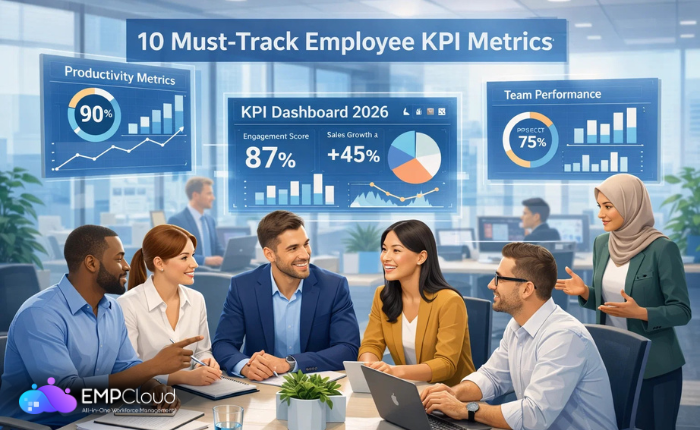
The 10 Must-Track Employee KPI Metrics for 2026
These are not theoretical constructs. These are practical, adaptable metrics used by organizations that care about performance, culture, and sustainability.
1. Task Completion Rate
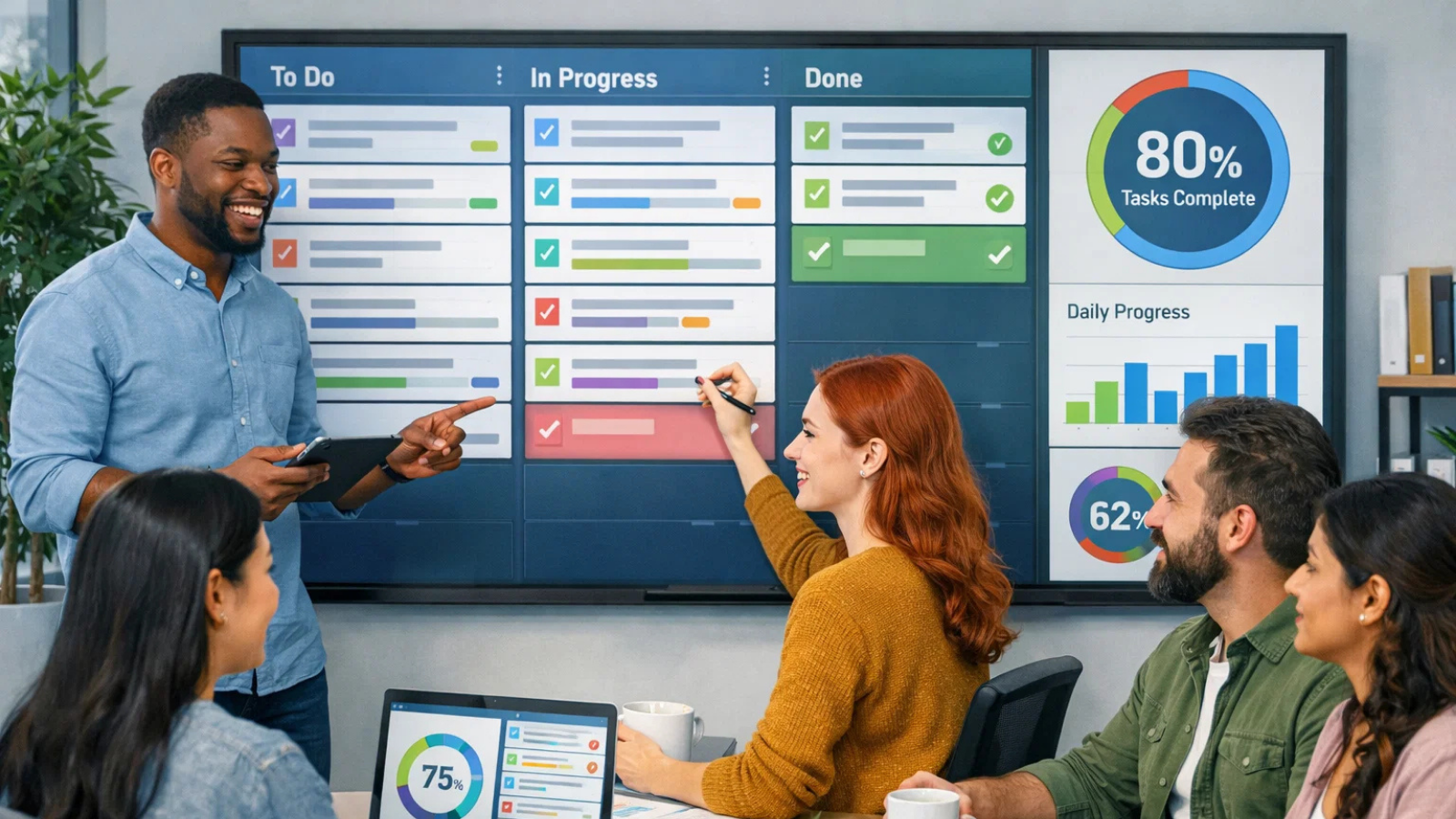
This is the baseline for almost any role. Are commitments turning into completed outcomes?
It’s one of the most straightforward ways to measure employee productivity, and it forms a foundation for a strong employee KPI structure.
However, smart teams don’t chase 100% blindly. They use this metric as context, not pressure. The purpose is insight, not perfection.
2. Quality of Work
Quantity without quality is expensive.
This is why high-performing organizations pair output metrics with quality signals: error rates, rework frequency, client satisfaction, and internal review scores. It’s one of the most essential KPIs for employee performance because it protects standards.
Without this, your KPI employee performance framework rewards speed over excellence—and that’s a long-term liability.
3. Deadline Reliability
You don’t need employees online at the same time every day. But you do need consistency.
This metric focuses on whether people deliver when they commit to delivering. It’s a powerful kpi for productivity because it reflects ownership, time management, and professional discipline all at once.
Strong teams aren’t built on heroic last-minute saves. They’re built on reliable execution.
4. Responsiveness and Availability
Modern work depends on collaboration. When someone consistently disappears, delays multiply.
This isn’t about surveillance. It’s about maintaining functional collaboration. Used properly, this becomes a balanced employee KPI that supports accountability without micromanagement.
It’s also one of the clearest ways to address breakdowns in coordination before they escalate into larger performance issues.
5. Initiative and Problem Ownership
Some employees wait for tasks. Others notice gaps and fill them.
This difference doesn’t always show up in output numbers—but it absolutely shows up in long-term impact. That’s why many organizations treat initiative as a qualitative employee KPI that complements quantitative metrics.
People who consistently take ownership don’t just complete work. They strengthen systems.
6. Collaboration and Feedback Effectiveness

Performance is no longer purely individual. Most outcomes today are shaped by how people communicate, share context, and resolve friction.
Modern KPIs for employee performance often include signals like peer feedback, cross-team collaboration ratings, and communication effectiveness. These aren’t soft metrics. They’re structural ones.
Teams with strong collaboration outperform technically stronger but fragmented teams every time.
7. Learning Velocity

The future belongs to adaptable teams.
Tracking learning progress—completed training, new certifications, applied skills—turns development into a strategic employee KPI instead of a vague HR initiative.
This also protects your organization against skill stagnation. The companies that thrive in 2026 won’t just hire smart people. They’ll measure how quickly those people grow.
8. Project Efficiency
This metric bridges individual effort and organizational outcomes.
It considers time estimates, resource use, milestone achievement, and final output quality. It’s one of the most comprehensive ways to understand KPI productivity, especially for senior contributors and managers.
Well-designed project metrics reveal not just who delivers but who delivers sustainably.
9. Delegation and Leadership Signals
Not everyone is a leader today. But many are becoming one tomorrow.
Tracking how employees distribute work, mentor others, and manage complexity becomes a forward-looking employee KPI that supports succession planning and talent development.
The strongest companies don’t promote based on tenure. They promote based on demonstrated leadership behaviors.
10. Absenteeism and Consistency
Every organization needs an early-warning system.
High unexplained absence, missed commitments, or disengagement patterns often signal deeper issues: burnout, misalignment, or disengagement. Treated thoughtfully, this metric protects both performance and well-being.
It’s not punitive. It’s diagnostic. And it’s an essential part of any balanced employee KPI ecosystem.
Also Read: –
Making KPIs Work Without Killing Culture
Here’s where many companies fail.
They introduce KPIs with good intentions, but poor communication. Employees feel monitored instead of supported. Metrics become weapons instead of tools.
To effectively measure staff productivity and bring your KPI framework to life, the right tools matter just as much as the right metrics. This is where workforce performance platforms such as EmpMonitor by EmpCloud become genuinely useful. EmpMonitor offers real-time productivity insights, automated time tracking, attendance visibility, and detailed performance reports—helping translate your employee KPI strategy into practical, actionable data across teams.
Turn Employee KPIs into Actionable Results with EmpMonitor
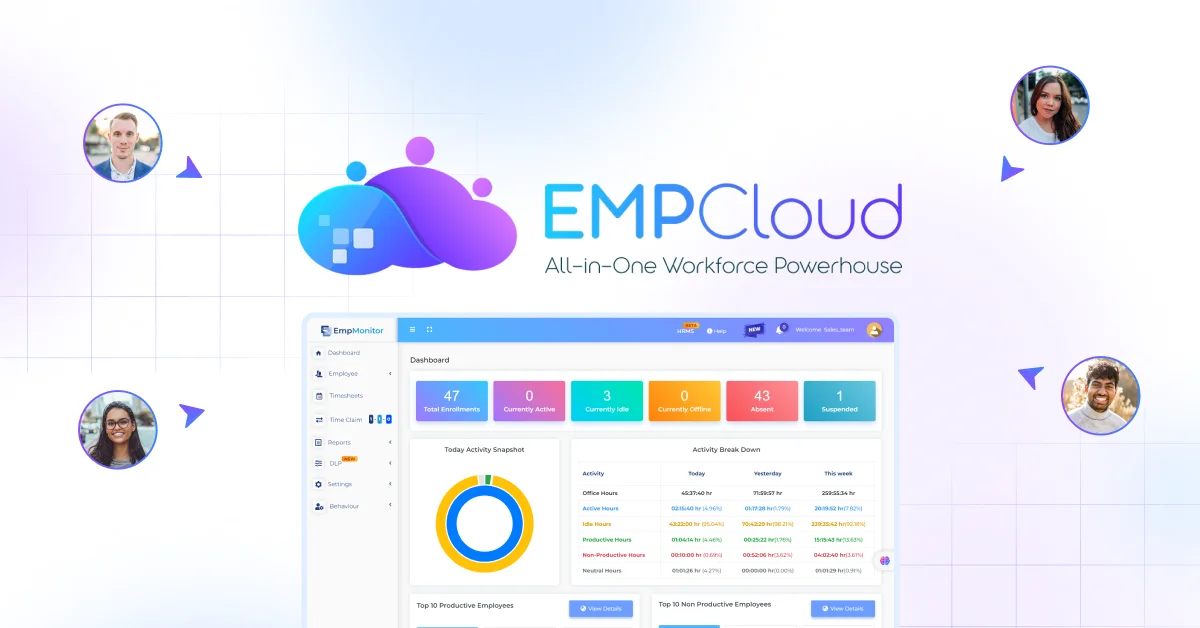
Struggling to make sense of your employee KPIs? Numbers alone won’t tell the full story. EmpMonitor by EmpCloud turns raw data into real insights — tracking productivity, attendance, task completion, and engagement in real time — so managers can act fast, and employees know exactly where they stand. It’s not just monitoring; it’s smart performance management for modern teams.
Why EmpMonitor Works:
-
Real-Time Productivity Tracking:
Get a clear view of how work unfolds throughout the day—track apps and websites used, time spent on each, and understand active vs idle time. Spot distractions early with live screen monitoring, validate actual work patterns, and take timely action to improve focus, productivity, and overall work quality without relying on assumptions..
-
Task & Project Management:
Plan work in a structured way—assign tasks, set priorities and deadlines, track progress, and close items faster. Everyone knows what they own, what’s pending, and what’s next—so follow-ups are easier, and execution stays smooth.
-
Powerful Dashboards & Reports:
Turn daily activity and task progress into insights you can act on. See who’s on track and where time is being lost. This also helps you discover the problems that employees may be facing so that they can be resolved sooner.
-
Hybrid Team Oversight:
Manage teams across remote, on-site, and hybrid setups with the same visibility and consistency. Keep attendance, activity, and task updates aligned—so leadership gets a single, reliable view of performance without micromanaging.
-
Secure & Reliable:
Keep productivity data protected with secure storage and access controls—so only authorized users can view what they need. Built for stability and trust, it therefore helps improve performance while maintaining confidence in how data is handled.
With EmpMonitor, tracking staff productivity becomes seamless, helping managers drive performance while creating transparency and trust for employees.
Take the next step: Explore how EmpMonitor can transform your KPI tracking — Explore EmpMonitor by EmpCloud
Now, let’s get back to our topic again,
A healthy employee KPI system operates on three principles:
Clarity – Everyone understands what’s measured and why
Fairness – Metrics align with role realities
Dialogue – KPIs support conversations, not judgments
When implemented correctly, KPIs don’t reduce trust. They increase it. Because people know expectations are consistent and performance recognition is grounded in reality.
That’s when kpi for productivity becomes motivational instead of stressful.
The Strategic Benefits of Measuring Performance Properly

Organizations that invest in strong performance systems don’t just become more efficient. They become more stable.
Clear employee KPI models lead to:
- Higher engagement, because expectations feel transparent
- Stronger retention, because growth feels visible
- Better leadership decisions, because promotion is evidence-based
- Reduced bias, because evaluation becomes more objective
- As a result, stronger culture emerges, because performance conversations feel fair.
Companies that excel in performance management don’t rely on inspirational speeches. They rely on clarity.
And clarity compounds.
Final Thoughts: The Companies That Win Will Be the Ones That Measure Wisely
There’s a quiet shift happening across industries.
The companies pulling ahead aren’t necessarily those with the flashiest perks or the loudest cultures. They’re the ones that understand performance deeply. They know what good work looks like. They know how to support it. They know how to measure it.
A mature employee KPI system isn’t about control. It’s about alignment.
It allows leaders to coach instead of guess.
It allows employees to grow instead of wonder.
It allows organizations to scale without losing visibility.
In 2026, competitive advantage won’t come from working harder. It will come from understanding performance better.
And the organizations that master that understanding will quietly, consistently outperform the rest.
FAQ: Employee KPI Metrics
Q1. What is an employee KPI?
An employee KPI is a measurable indicator that shows how effectively a team member contributes to company goals. It goes beyond intuition, offering clear, objective insights that help managers reward high performers and support growth where needed.
Q2. Which KPIs matter most for employee performance?
The most impactful KPIs include task completion rate, quality of work, deadline reliability, collaboration, initiative, and learning velocity. Tracking these gives leaders a complete view of performance and highlights areas for development.
Q3. How do I measure employee productivity accurately?
True productivity focuses on outcomes over hours. Metrics like project efficiency, task completion, and impact-driven results show real contribution. Using tools like EmpMonitor helps gather accurate data and visualize performance trends.
Q4. How often should employee KPIs be reviewed?
KPIs should be tracked continuously for real-time insight. Formal reviews monthly or quarterly ensure employees understand expectations, celebrate wins, and adjust strategies—keeping teams aligned and motivated.
Q5. Can KPIs affect company culture?
Yes—positively or negatively. Clear, fair, and relevant KPIs build trust, motivation, and engagement. Misaligned metrics, however, can create stress or resentment. Therefore, focus on supportive measurement that encourages growth.
Q6. What tools help track employee KPIs effectively?
Workforce platforms like EmpMonitor by EmpCloud make KPI tracking simple. They provide dashboards, task tracking, attendance logs, and performance reports—turning raw data into actionable insights that improve productivity and team alignment.

Quick Search Our Blogs
Type in keywords and get instant access to related blog posts.