
Employees who quit rarely lead with “I didn’t feel appreciated.” They cite the offer they couldn’t refuse, a commute, a title change. But the decision to stop looking for reasons to stay often begins much earlier in the accumulated experience of doing good work that nobody noticed.
Most retention conversations default to compensation benchmarking or benefits redesign, those matters. But the daily experience of being seen or not operates on a completely different track, and it’s cheaper to fix than almost anything else on the HR agenda.
This isn’t a roundup of gift ideas. It’s a framework for making appreciation structural rather than seasonal, and for understanding why most programs fail before they start.
Appreciation vs. Recognition: The Distinction That Changes Everything

Most HR teams use these words interchangeably. They shouldn’t.
Recognition celebrates performance, the closed deal, the shipped feature, and the quarter that exceeded target. Appreciation values the person, independent of output. A mediocre performer can still deserve appreciation for supporting teammates through a rough patch, even when their numbers didn’t move.
That distinction matters practically. A team that only recognizes top performers breeds quiet resentment in the people holding everything else together, the ones who de-escalate client calls, onboard new hires informally, and absorb extra work when a colleague goes on leave. Ignoring them isn’t neutral. It’s a slow leak.
EmpCloud’s research on engagement activities identifies three specific human needs that appreciation must address: recognition, belonging, and growth. A program that only touches one of those three will feel hollow to the other two-thirds of your workforce.
Why Most Appreciation Programs Fail: 5 Named Failure Modes

These appear consistently across organizations of every size, and they’re worth naming because they’re common enough to be the default:
- Generic rewards. The same gift card for everyone signals that no one thought about the individual. It’s a checkbox, not a gesture.
- Recognizing only top performers. Turns appreciation into a competition rather than a culture.
- Reserving it for annual events. When appreciation arrives alongside a salary conversation, it gets filtered through that lens and rarely lands as genuine. Workhuman research found that employees are more than 2x as likely to feel appreciated and engaged if they were thanked within the last month. A twelve-month gap doesn’t just delay the message; it poisons it.
- Public recognition that embarrasses. Not everyone wants a spotlight. Some people find public praise excruciating, and forcing it does the opposite of what you intended.
- Using appreciation as a substitute for fair pay. If someone is underpaid and you respond with a thank-you note, you haven’t solved the problem; you’ve made it more awkward.
These aren’t edge cases. They’re the norm at organizations that treat appreciation as a program to launch rather than a habit to build.
Practical Employee Appreciation Ideas That Actually Land
Zero-Budget, High-Signal Moves
The specific thank-you. Name the exact action. “Thank you for catching that data error before the client presentation” will be remembered three weeks later. “Thanks for all you do” won’t survive the commute home.
Public acknowledgment before the agenda. Mention a specific contribution in the first two minutes of your weekly team call. Forty-five seconds. Means a lot. This maps directly to the Peer Praise Huddle workflow: two minutes of peer-led, behavior-specific recognition at the top of every meeting. It works because the praise names what someone actually did, not just that they’re “a great team player.”
Recognize effort, not just outcomes. If someone worked hard on a pitch that didn’t win, say so out loud. “I saw how much you put into that,” matters even when the result didn’t go their way.
Forward praise in writing. When a client sends a complimentary email about someone, forward it to them with their manager CC’d. Creates a paper trail of recognition that lives beyond a single conversation.
Low-Cost, High-Impact
A flexible Friday afternoon. Let someone leave early after a brutal stretch. No form, no PTO to burn, just “you’ve earned this.” The signal it sends about trust is worth more than the time itself.
Fund the course they mentioned once. This is the single most underused form of appreciation in mid-sized teams. When a manager acts on something an employee mentioned months earlier, a course, a certification, a book on a skill they’re trying to build, it signals genuine attention. The Personal Growth Budget workflow formalizes exactly this: a per-employee learning allocation usable for courses, books, or certifications, chosen by the employee. Autonomy is the point. A top-down “here’s a training module” isn’t the same thing. An employee who mentions wanting to understand data visualization and receives a relevant course two weeks later knows someone was actually listening and that knowledge is more retention-protective than most formal programs.
Lunch with a leader, zero agenda. Not a review, not a structured check-in. Just conversation. Most employees never get unstructured time with senior leadership, and it’s memorable precisely because it’s so rare.
Employee Appreciation Gifts Worth Giving
The best gifts are chosen, not bulk-ordered. A local coffee shop card, a book tied to a project someone just finished, a charitable donation in their name, these land because they’re personal. The mechanism that makes them work isn’t the gift itself; it’s the proof that you paid attention.
For formal programs, structured employee appreciation frameworks recommend building a record of what each team member has said they value in 1:1s, in onboarding conversations, and in casual team interactions. That record turns a gift from a category decision (“everyone gets a voucher”) into a personal one. The difference in how it lands is not subtle.
Building a Recognition Culture, Not a Calendar Event
The first 90 days of employment set the tone for everything that follows. What’s true for onboarding is equally true for appreciation: the habits you establish in the first quarter tend to stick. Or not.
Organizations that get this right treat appreciation as infrastructure. That means:
- Managers are explicitly trained on recognition specifics, not “appreciate your team,” but frequency, specificity, and whether the format matches how each individual prefers to be seen. A one-size approach fails here. Some people want praise in the group channel; others find it mortifying and respond better to a direct message or a private conversation.
- Recognition frequency is tracked not to game a metric, but to surface who’s being systematically overlooked. With EmpCloud‘s Cross-Module Data Access spanning attendance, leave, payroll, and performance data in a single conversation, an HR team can ask plain-English questions like “which managers have had zero documented recognition interactions in the last 30 days?” and get an answer immediately before that gap shows up in attrition numbers. Quite high performers are the most common blind spot, and they’re also the most expensive to replace.
- The feedback loop is closed in real time, not annually. Replacing long annual reviews with short monthly check-ins, what EmpCloud’s engagement research calls “rapid feedback loops,” eliminates the lag that makes most recognition feel performative. When employees know their contributions are seen and responded to within a week rather than at a year-end ceremony, the appreciation lands differently.
Track recognition frequency per team. Monitor whether certain groups are recognized less often. Correlate recognition rates with voluntary turnover data. The signal tends to be clear, and recognition habits change before turnover numbers do. That lead time is where intervention is actually possible.
On manager quality: the research on what drives voluntary turnover frames it plainly, employees don’t leave organizations, they leave managers. One-on-one meetings that surface dissatisfaction early cost almost nothing. Exit interviews that surface twelve months too late cost considerably more.
How EmpCloud Makes Appreciation Scalable
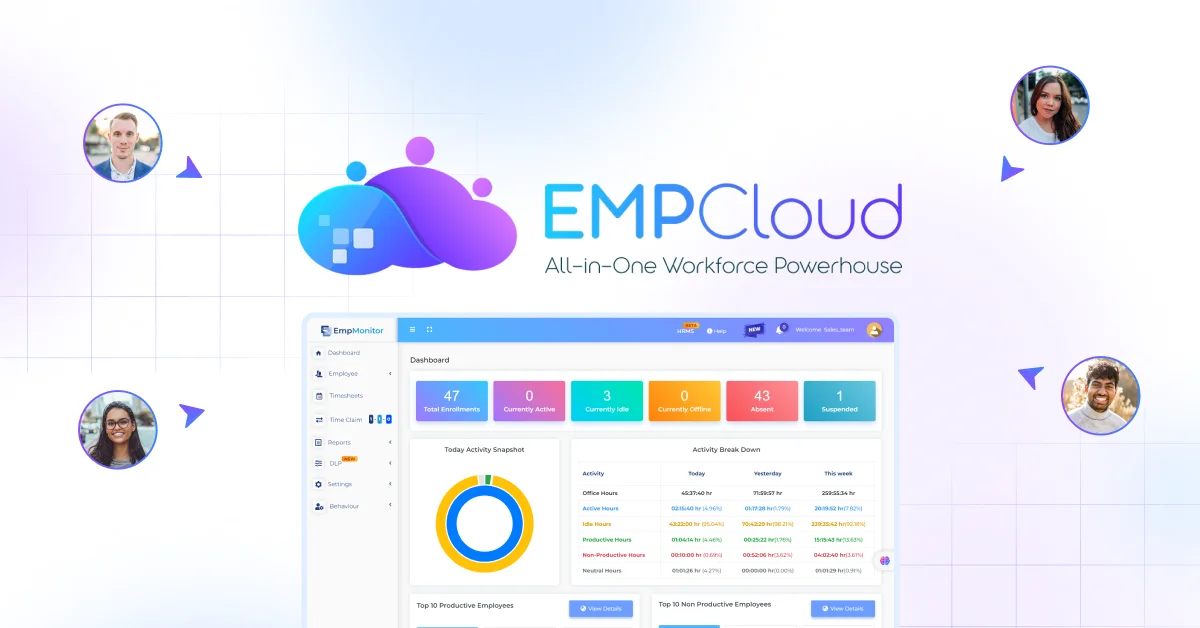
At a certain team size, keeping track of who’s been recognized, who hasn’t, and which forms of appreciation are resonating becomes genuinely hard to manage manually. EmpCloud is built for exactly that scale with performance tracking, goal management, HR analytics, team productivity reports, and centralized workforce management that surface the data you need before a high performer becomes an exit-interview statistic.
The platform currently supports more than 50,000 employees across 200+ companies in 15+ countries, which means the recognition and engagement infrastructure has been stress-tested at real scale across diverse workforce contexts. Across industries, from IT teams managing distributed engineers to NBFCs navigating compliance-heavy environments, structured appreciation tools within an HRMS catch what managers miss.
See how EmpCloud surfaces recognition gaps before they become attrition risks → Explore EmpCloud’s HR analytics and workforce tools.
AI adoption in HR nearly doubled in a single year, jumping from 26% of organizations in 2024 to 43% in 2025, according to Wisq’s 2025 HR AI survey. EmpCloud’s 41 AI tools across 7 providers, including Cross-Module Data Access spanning attendance, leave, payroll, and performance, mean HR teams can ask plain-English questions about recognition gaps and get answers without running a single report manually. That’s the operational difference between appreciation as a habit and appreciation as a forgotten item on a quarterly agenda.
For remote and hybrid teams, informal recognition moments are fewer and harder to engineer. Data visibility of this kind isn’t a nice-to-have; it’s the only way to know what’s actually happening at the team level before someone starts updating their CV.
If your team is ready to move from ad-hoc appreciation to a system that holds, start your free 15-day EmpCloud trial and see what scalable recognition looks like inside a platform your HR team already lives in.
Frequently Asked Questions
What is the most effective form of employee appreciation?
Specific, timely recognition consistently outperforms gifts or monetary rewards in long-term impact. Naming the exact behavior and doing it promptly, not weeks later, is what makes it land. Workhuman’s research puts a number on it: employees thanked within the last month are more than twice as likely to feel engaged. Appreciation that feels observed rather than scheduled is the standard to aim for.
When is Employee Appreciation Day?
Employee Appreciation Day falls on the first Friday of March each year. The most effective organizations treat it as a prompt to audit their year-round habits, not as an annual substitute for them.
How do you build an appreciation culture without a big budget?
Start with specificity, not spending. The single highest-ROI change most managers can make is replacing “great work” with a sentence that names the exact contribution and its impact. That costs nothing and lasts longer than most formal programs. From there, build frequency into the team’s operating rhythm not as an event, but as a default.
Quick Search Our Blogs
Type in keywords and get instant access to related blog posts.