

Many teams struggle not because people lack talent, but because communication breaks down or trust never fully develops. Skilled professionals may work on the same projects yet still feel disconnected from one another. Team building activities help to close that gap. When used thoughtfully, they support how people collaborate every day.
This guide contains 40 practical team building activities for various situations: in-person sessions, remote teams, quick meeting warm-ups, and large company events. If you’re an HR professional planning an offsite or a manager looking to reset team dynamics, here you’ll find ideas that fit.
In a hurry? Listen to the blog instead!
What Are Team Building Activities?

Team building activities are structured exercises designed to help groups work better together. They can take many forms, including games, discussions, or collaborative challenges. While they are often fun, their real purpose is to improve communication, build trust, and encourage collaboration.
In the workplace, these activities might last five minutes before a meeting or take up an entire day during a retreat. What makes them different from simple entertainment is the purpose behind them. Each activity is meant to support a specific goal, such as helping new employees connect, improving communication after a difficult project, or strengthening relationships across departments.
Why Companies Use Team Building Exercises
Collaboration does not happen automatically just because people share tasks or tools. Teams need familiarity, psychological safety, and open communication to work effectively.
Organizations use team building activities to support these foundations. They help create shared experiences, improve communication habits, and encourage employees to trust one another. When teams work in environments where people feel comfortable sharing ideas and asking questions, decisions become stronger and work moves faster.
These outcomes are not just cultural benefits. High-trust teams often experience lower turnover, stronger engagement, and better results during challenging periods.
When Teams Should Use Team Building Activities
Timing plays an important role in how well team building activities work.
They are particularly effective during onboarding, when new employees are still forming relationships. Early connections help people settle into the team more quickly.
Another important moment is when remote teams expand. When colleagues work across locations and rarely meet, structured activities help bridge that distance.
Project kickoffs also benefit from team building. When people understand each other’s working styles early, collaboration tends to go more smoothly. These activities are also useful after disruptions such as organizational changes or difficult quarters, when teams may need to rebuild cohesion.
Benefits of Team Building Activities in the Workplace
Improves Communication
Many workplace communication problems are not about missing information. They occur because people assume others understand their context or hesitate to speak openly.
Team building exercises place people in situations where they must explain ideas clearly or listen carefully. For example, in a drawing exercise where one person describes an image while another draws it, misunderstandings become obvious. Teams often realize that the same confusion happens during project discussions.
These moments make people more aware of how they communicate during daily work.
Builds Trust Among Employees
Trust develops slowly in most workplaces. Shared experiences help speed up that process.
When colleagues interact outside normal work roles, they begin to see each other differently. A quiet developer might show a great sense of humor during a game, or a senior manager might struggle with a trivia question like everyone else.
These small moments make people feel more comfortable around each other. Over time, that familiarity makes it easier to discuss challenges, share ideas, and resolve disagreements.
Encourages Collaboration
Working on the same project does not automatically mean people are collaborating. Real collaboration requires people to combine ideas, adjust their approach, and support one another.
Activities that involve problem-solving naturally encourage these behaviors. Challenges like building a structure or solving puzzles together allow teams to practice collaboration in a low-pressure setting.
The lessons learned during these exercises often carry into everyday work.
Boosts Employee Engagement
When employees feel disconnected, they may stop contributing fully even if they remain in their roles.
Team building helps create a sense of belonging and improve employee engagement. When people feel included and recognized as part of a group, they are more likely to stay engaged with their work.
Simple shared experiences can make a big difference in how employees view their workplace.
Helps Resolve Workplace Tension
Not every workplace conflict is serious. Many tensions develop because people misunderstand each other’s intentions or communication style.
Team building activities cannot replace formal conflict resolution, but they can reduce everyday friction. Working together on a challenge often helps people see common ground they did not notice before.
This shift can make future collaboration easier.
Quick Team Building Activities (5–10 Minutes)

Sometimes a quick activity is enough to energize a meeting or help people connect before a discussion begins.
Two Truths and a Lie
Objective: Help team members learn something new about each other
Team size: 4–20 people
Time: 5–10 minutes
Each participant shares three statements about themselves. Two statements will be true, and one false. The rest of the group guesses which statement is the lie.
This simple activity often leads to surprising discoveries and casual conversation.
One Word Check-In
Objective: Quickly understand how the team is feeling
Team size: Any
Time: 3–5 minutes
At the beginning of a meeting, each person shares a single word describing their mood or current focus.
It takes only a few minutes but helps everyone become more aware of the team’s overall energy.
Office Trivia
Objective: Reinforce shared knowledge and culture
Team size: 6–30 people
Time: 10 minutes
Prepare a short set of questions about company history, team members, or workplace traditions. Divide participants into small teams and keep score.
This activity adds energy to meetings and often sparks friendly competition.
Rapid Fire Questions
Objective: Encourage quick interaction
Team size: 4–15 people
Time: 5–8 minutes
Ask participants simple either-or questions such as coffee or tea, beach or mountains, early bird or night owl. Everyone answers quickly without overthinking.
It reveals small personality traits and helps break the ice.
Emoji Story Challenge
Objective: Encourage creativity
Team size: 4–20 people
Time: 5–8 minutes
Participants describe their week or tell a short story using only emojis in a group chat. Others try to interpret the meaning.
This activity works especially well for remote teams.
Communication Team Building Activities
These exercises focus on developing communication skills that teams use daily.
Blind Drawing
One participant describes an image while a partner tries to draw it using only verbal instructions.
The result often looks very different from the original picture, which leads to interesting discussions about clarity and assumptions.
Back-to-Back Communication
Two participants sit back-to-back. One person builds a structure using blocks or Lego pieces while describing it step by step. The other person attempts to recreate it without seeing the original.
This activity highlights how much communication relies on shared context.
Story Chain
Participants create a story together, adding one sentence at a time.
Because each person must build on what the previous speaker said, the exercise encourages careful listening.
Listening Circle
One person shares a thought or challenge while the group listens without interrupting. Afterward, participants reflect on what they heard.
This activity strengthens one of the most valuable workplace skills: listening with attention.
Role Reversal Exercise
Participants briefly explain a situation from someone else’s perspective, such as a customer or colleague in a different role.
It helps people understand viewpoints they might normally overlook.
Problem-Solving Team Building Activities
These activities encourage teamwork under pressure and reveal how teams make decisions.
Escape Room Challenge
In this challenge, a team works together to solve a puzzle and escape a themed room within a time limit. The activity requires communication, strategy, and cooperation.
A short discussion afterward helps teams reflect on how they approached the challenge.
Marshmallow Tower
Teams receive spaghetti sticks, tape, and a marshmallow. Their task is to build the tallest structure possible with the marshmallow on top.
The challenge highlights creativity and quick experimentation.
Puzzle Race
Teams compete to finish a jigsaw puzzle first. Halfway through the race, puzzle pieces are swapped between groups, forcing teams to adjust their strategy.
This twist tests adaptability.
Desert Survival Scenario
Participants imagine they are stranded in the desert and must rank a list of items by survival importance. They first rank items individually, then discuss them as a group.
The exercise reveals how teams negotiate decisions.
Innovation Workshop
Small teams receive a business challenge and develop a short proposal or solution within a set time.
The activity works especially well for cross-department groups.
Fun Team Building Games for the Workplace
Some activities focus primarily on boosting morale and helping colleagues connect.
Human Knot
Participants stand in a circle, grab two different hands, and try to untangle themselves without letting go.
The activity usually leads to laughter and lots of communication.
Scavenger Hunt
Teams search for specific items or complete tasks around the office or a nearby location.
Remote teams can adapt this format using photos or online clues.
Office Bingo
Create bingo cards featuring interesting traits or experiences, such as owning a unique pet or speaking multiple languages.
Participants mingle and collect signatures from colleagues who match the descriptions.
Guess the Desk
Share photos of employees’ desks or home office setups. Participants guess which workspace belongs to which person.
It reveals fun details about colleagues’ personalities.
Talent Show
Team members present a skill unrelated to their job, such as playing music or solving a puzzle.
When leaders participate, it makes the atmosphere more relaxed.
Virtual Team Building Activities for Remote Teams
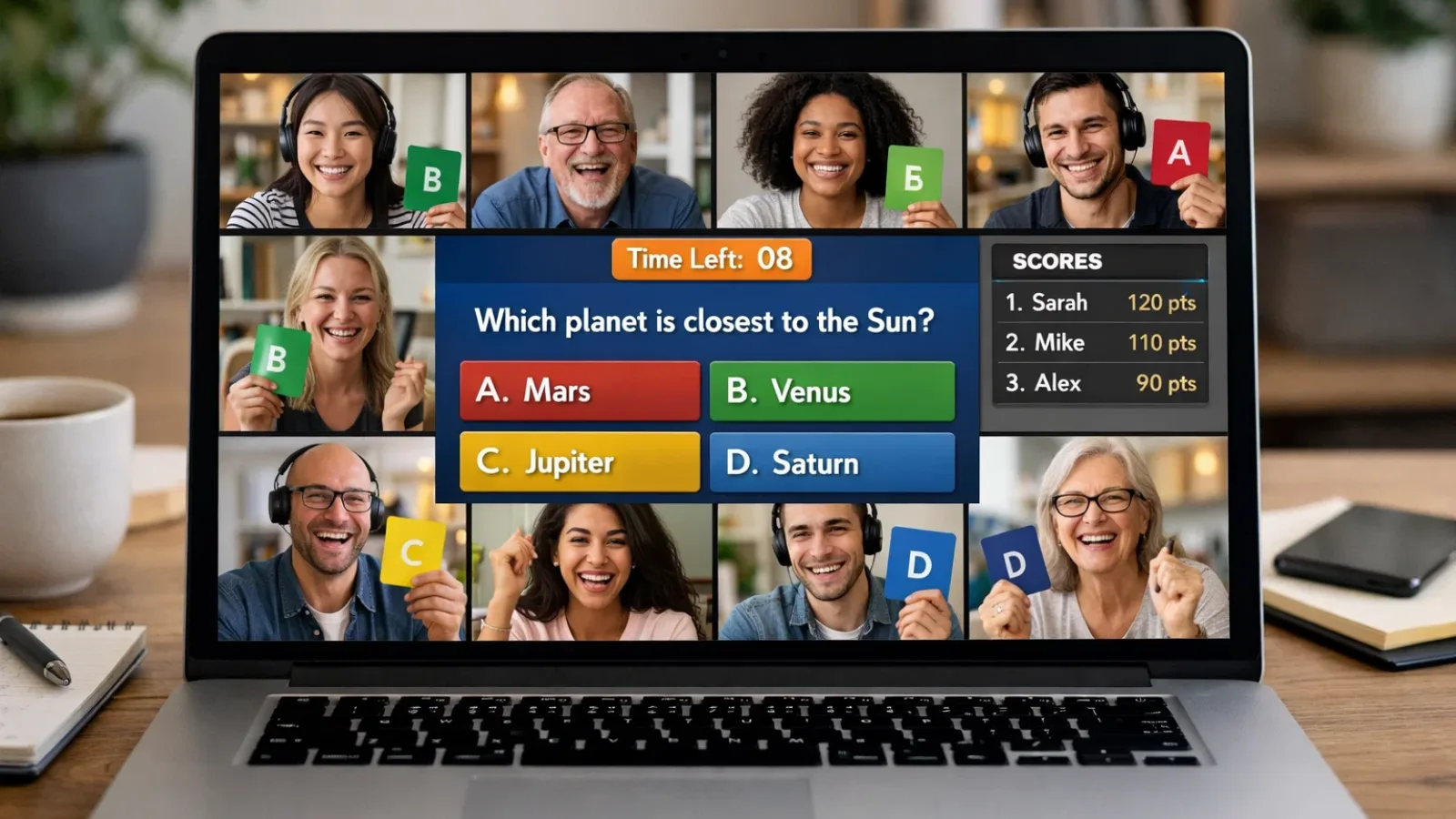
Remote teams miss many informal interactions that happen naturally in offices. Structured activities can help replace those moments.
Virtual Coffee Break
Pair employees randomly for short informal video calls. The goal is simply to chat and get to know each other.
Regular sessions gradually strengthen relationships across teams.
Online Trivia
Using platforms like Kahoot or Mentimeter, teams can compete in trivia games during video calls.
These sessions are easy to organize and keep participants engaged.
Digital Escape Room
Virtual escape rooms allow remote teams to solve puzzles together through shared screens and online clues.
Everyone participates equally, which often improves collaboration.
Remote Show and Tell
Participants briefly share an object from their home workspace and explain why it matters to them.
The activity creates personal connections in a remote environment.
Online Pictionary
Drawing games played through platforms like skribbl.io encourage creativity and laughter during remote sessions.
Large Group Team Building Activities
Large organizations often need activities that keep many people engaged at once.
Team Olympics
Employees are divided into cross-department teams and compete in several short challenges, including trivia, creative tasks, and physical games.
Charity Build Challenge
Teams collaborate to build items such as bicycles or care packages that are later donated.
This format combines team building with community impact.
Company Quiz Tournament
Multiple quiz rounds create a friendly competition while reinforcing company culture.
Innovation Hackathon
Teams work on business ideas or process improvements within a limited time frame and present their solutions.
Outdoor Team Building Activities
Outdoor environments often make people feel more relaxed and open to collaboration.
Treasure Hunt
Teams follow clues across a park or neighborhood to reach different checkpoints.
Obstacle Course
Participants navigate physical challenges that require teamwork and support.
Outdoor Problem-Solving Games
Activities such as building a raft or completing a blindfolded navigation challenge encourage cooperation.
Group Adventure Activities
Experiences like kayaking or ropes courses allow teams to rely on each other in new ways.
How EmpCloud Supports Team Building at Scale
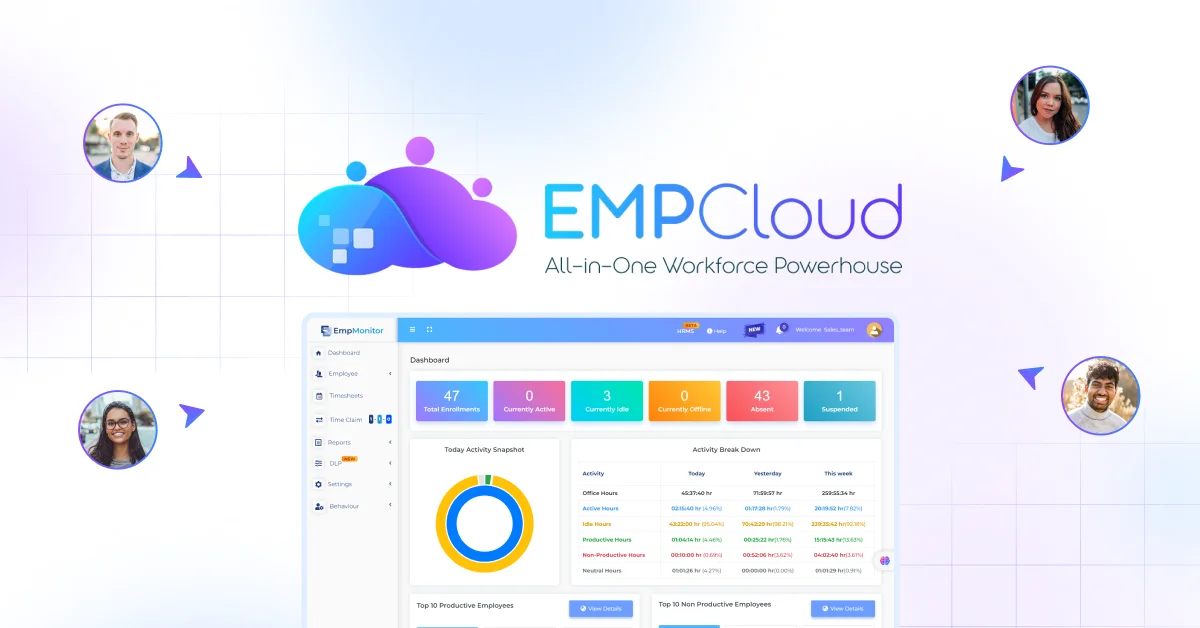
Team building activities can spark connection, but real impact comes from what happens afterward. To sustain collaboration, teams need systems that reinforce positive behaviors every day. That’s where a platform like EmpCloud supports ongoing engagement, turning one-time activities into long-term cultural habits.
Key features that support team building:
- Employee Recognition Tools
Make appreciation visible and consistent by enabling team members and managers to acknowledge contributions in real time. - Project Visibility & Collaboration
Give teams clarity on tasks, ownership, and progress so collaboration becomes structured instead of reactive. - Performance Tracking
Help managers identify strengths, gaps, and team dynamics, ensuring issues surfaced during activities are addressed continuously. - Learning & Development Support
Encourage growth through skill tracking and development plans that align individual progress with team goals. - Streamlined Onboarding
Create stronger first impressions by simplifying admin work and allowing HR to focus on relationship-building and integration. - Centralized Communication
Keep conversations, updates, and feedback in one place, reducing confusion and improving team alignment. - Support for Remote & Hybrid Teams
Maintain engagement and accountability across distributed teams with tools designed for visibility and connection.
Together, these features help teams move beyond occasional bonding exercises and build a culture where collaboration becomes part of everyday work.
How to Choose the Right Team Building Activity
Selecting an activity becomes easier when you start with a clear goal.
Define the Objective
First, decide what the team needs most. Communication exercises help when misunderstandings are common. Creativity-focused activities can energize teams that feel stuck. Trust-building exercises are ideal for new or recently reorganized teams.
Consider Team Size
Some activities work best in small groups, while others require larger participation to feel engaging. Always match the activity to the number of participants.
Consider Available Time
Short activities can still be effective. A well-planned 15-minute exercise often delivers more value than a long session that loses momentum.
Remote vs In-Person Format
If team members work remotely, choose activities that allow everyone to participate equally. Hybrid formats often leave remote participants feeling disconnected.
Common Mistakes When Planning Team Building Activities
One common mistake is choosing activities without a clear goal. Without knowing what you want to improve, it becomes difficult to measure success.
Another issue is forcing participation. Activities work best when employees feel comfortable joining voluntarily.
Team size also matters. Exercises designed for small groups can become chaotic when too many people participate.
Long activities can also reduce engagement. Ending a session while energy is still high usually leaves a better impression.
Finally, scheduling matters. Planning team building during busy deadlines or stressful periods can reduce its impact.
Also Read
20 Powerful Team Bonding Activities To Strengthen Teams In 2026
How To Motivate Staff Through Employee Engagement Ideas?
Tips for Running Successful Team Building Sessions
Start by explaining the purpose of the activity so participants understand why it matters.
Keep instructions simple and easy to follow. Complicated rules can reduce enthusiasm.
Encourage participation while respecting personal comfort levels. Everyone doesn’t enjoy being the center of attention.
Always allow a few minutes to reflect afterward. Discuss what participants noticed and what they learned.
Finally, leadership should actively participate. When managers engage fully, employees take the activity more seriously.
Final Thoughts
Strong teams rarely form by accident. They grow through shared experiences, honest communication, and consistent collaboration.
Team building activities create opportunities for those experiences. They help colleagues move beyond formal roles and develop genuine working relationships.
The most effective approach does not require elaborate planning. Start with a simple activity during your next team meeting, observe how people respond, and build from there. Over time, these small moments can make a meaningful difference in how a team works together.
FAQs
What are the best team building activities for work?
The most effective activities depend on your team’s needs. Communication exercises like Blind Drawing help clarify instructions, while games like Two Truths and a Lie encourage informal bonding.
What are quick team building activities?
Short activities include One Word Check-Ins, Rapid Fire Questions, and Office Trivia. These are ideal as meeting warm-ups.
What are virtual team building activities?
Popular options include Online Trivia, Digital Escape Rooms, Remote Show and Tell, and Virtual Coffee Breaks.
How long should team building activities last?
Quick activities take five to ten minutes, while focused workshops usually last 30 to 45 minutes. Larger events may run several hours.
Do team building activities actually work?
Yes, when they are planned thoughtfully. Activities with clear goals and brief discussions afterward often improve communication and trust within teams.
Quick Search Our Blogs
Type in keywords and get instant access to related blog posts.