**Start your free trial today →
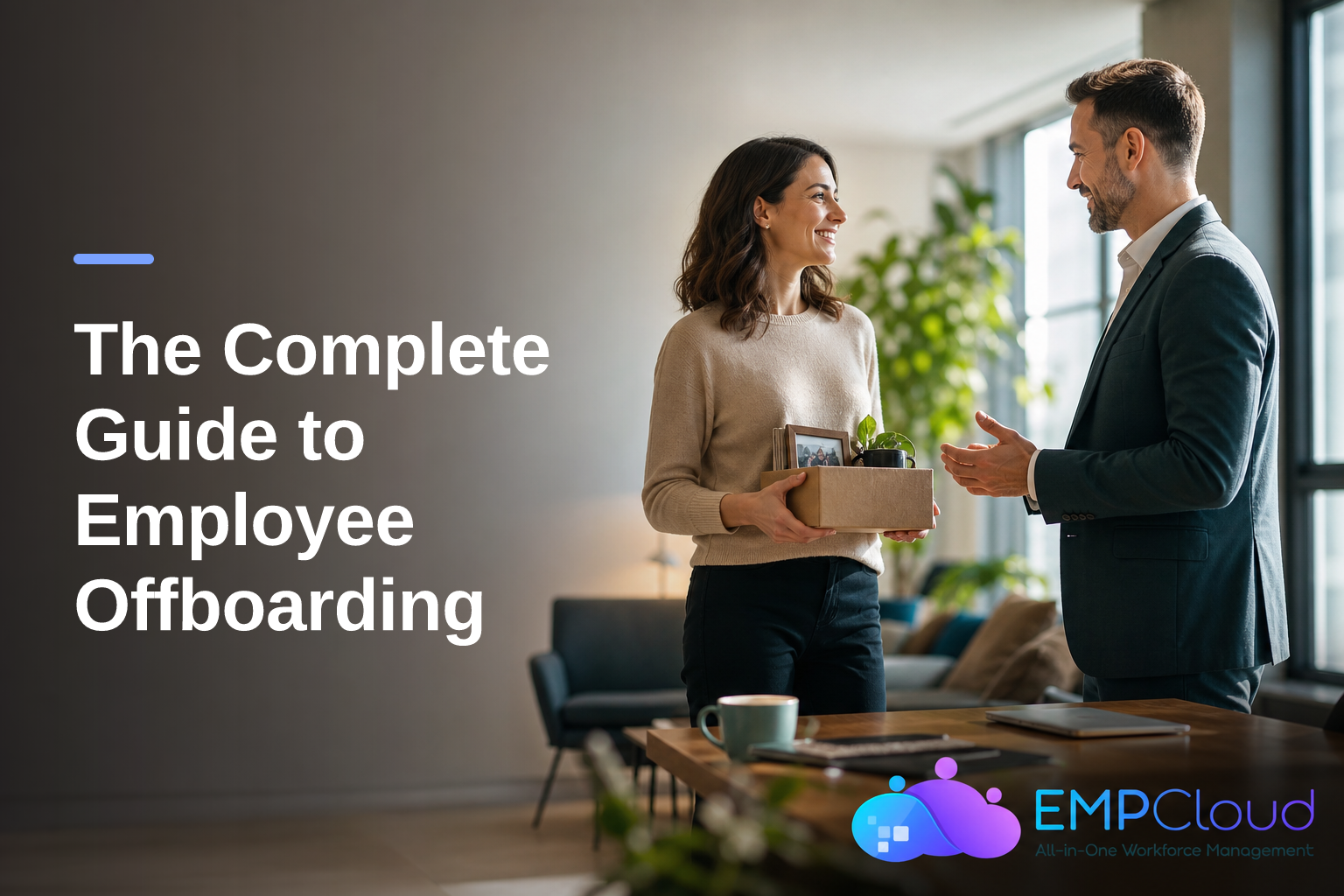
Offboarding is a repeatable process that protects access, preserves knowledge, pays what’s owed, and ends the working relationship with respect. This complete guide employee offboarding shows you how to build a simple, safe process in 2026 that you can run every time, even when emotions run high.
At 9:03 a.m., Mia resigned. By noon, her email still worked, and two clients had already messaged her old inbox.
You may be new to formal offboarding. That’s okay. Departures can feel personal, and the to‑do list can scatter across HR, IT, payroll, and managers. However, a clear checklist reduces stress for the leaver and your team. Moreover, it lowers security risk, meets legal duties, and keeps doors open for boomerang hires and referrals.
By the end, you’ll have a step‑by‑step plan, tools to consider, and a first draft checklist you can start this week. You’ll also see where to add access cuts, record handling, and handovers so nothing slips.

What Is Employee Offboarding and Why Does It Matter?
Employee offboarding is everything that happens from “I’m leaving” to the moment access ends, pay is settled, and records are archived. It is not just paperwork. It is a shared workflow that touches HR, IT, finance, legal, managers, and the departing employee.
First, security. Departures create real risk if accounts stay active. For example, former staff can still reach email, cloud drives, or VPNs if access is not cut on time. Researchers describe the insider threat as a known source of misuse and data loss, and exits are a common trigger. Therefore, your plan should include access revocation with automatic integration across the tools your team uses, so accounts close on schedule without manual hunting.
Second, knowledge. Work lives in brains, notebooks, shared drives, and chat. Without a planned handover, you lose context, files, and the “why” behind choices. As a result, projects stall, customers wait, and new hires spend weeks rediscovering details. A good offboarding plan sets clear handover goals, owners, and dates, then tracks progress to “done.
Third, legal and money. Final pay must be accurate and on time, and benefits must be updated. In addition, contracts, NDAs, non‑competes, and tax forms need proper handling. Protected record management with centralized storage and encryption helps ensure that personal data is kept safe and retrievable for audits.
Finally, people. Offboarding shapes how your brand feels to the person leaving and those who stay. A kind exit leaves the door open for referrals and rehires. Moreover, alumni can be advocates or future customers. Treat them well.
- It matters because:
- Security gaps grow fast without timely account cuts.
- Knowledge loss slows teams and hurts customers.
- Pay and records errors create fines and rework.
- A respectful exit builds a healthy alumni network.
Specifically, you need a plan that closes access, captures know‑how, pays what’s due, and stores records safely. This complete guide employee offboarding will help you build it from scratch.
A Step-by-Step Employee Offboarding Process
You can start small. Then, refine. The steps below work for both resignations and terminations. Add timing notes and owners next to each step so nothing gets stuck.
Before the last day
- Notify stakeholders
- Tell HR, the manager, IT, payroll, and legal. Set a target last day. Write down who owns each task and when it is due.
- Initiate knowledge transfer
- Map the key duties, projects, accounts, and contacts. Assign a receiver. In addition, create a short plan with dates and a checklist in a shared doc. Use a tool that shows progress on each handover item.
- Revoke system access
- Schedule access cuts: email, SSO, SaaS apps, VPN, code repos, and building access. For higher risk roles, remove access the same day. Tools that support access revocation with automatic integration reduce mistakes and late removals.
- Calculate final pay and benefits
- Confirm salary through last day, unused PTO payout (if applicable), reimbursements, bonuses, and clawbacks. Moreover, update benefits, health coverage, and retirement plans. Use a clear final pay calculation flow that HR and payroll can review together.

On the last day
- Collect company assets
- Gather laptop, phone, keys, ID cards, credit cards, tokens, and any loaned equipment. Record serial numbers and condition. Asset return management with solid record‑keeping prevents disputes later.
- Conduct an exit interview
- Thank them for their work. Ask what helped and what hurt. However, focus on facts you can change, not personal drama. Summarize themes and share improvements with the team.
Right after departure
- Archive records
- Store the final signed documents, exit notes, device check‑in logs, and pay statements in one place. Use document handling that keeps the process paperless, with encryption at rest. In addition, set retention periods based on your policy and local law.
- Maintain the alumni connection
- Invite them to a non‑work email group or alumni page. Share a way to recommend hires, refer business, or return. Therefore, you turn a hard moment into a future win.
For deeper tool comparisons while you build this flow, you can review the roundup for HR teams here: Best Employee Offboarding Software for HR Managers in 2026. This step list is the backbone of your complete guide employee offboarding, and you can tailor it by role and location.
Also Read!
How to Reduce Employee Turnover: A Complete Guide for Every Organization
How to Reduce Employee Attrition: A Complete Guide for Every Organization
5 Common Offboarding Mistakes That Create Risk
You do not need a big team to avoid big risks. You need a clear list and timely follow‑through. Here are five traps to avoid, plus what they can cause.
-
Delayed access cuts
-
Consequence: Old email, Slack, or cloud access stays open. As a result, sensitive docs can be viewed or shared. Automated reminders and notifications help you act on time.
-
Skipping knowledge transfer
-
Consequence: Projects stall. New hires spend weeks finding files and context. Moreover, customers repeat the same issues because notes were personal, not shared.
-
No exit interview
-
Consequence: You miss repeatable fixes. Turnover drivers stay hidden. Therefore, the same pain pushes out the next hire, too.
-
Ignoring compliance docs
-
Consequence: Missing NDAs, tax forms, or policy acknowledgments make audits hard. In addition, they can lead to legal fees and fines. Generate detailed offboarding reports so you can prove each step was done.
-
Treating offboarding as an afterthought
-
Consequence: Managers handle exits differently, which creates errors, bias claims, and broken trust. A standard checklist protects people and the business.
If you support remote or hybrid roles, the risk surface is wider. Devices are shipped, and access lives in dozens of apps. For a practical take on tools that help distributed teams, read: Best Employee Offboarding Software for Remote Teams in 2026. Add one improvement from that list to your complete guide employee offboarding this quarter.
Tools and Resources for Structured Offboarding
You do not need to buy a full suite on day one. However, it helps to know what each category covers so you can plan a small start and a clean upgrade path.
-
HRIS platforms
-
Examples: BambooHR and Rippling (names only, no links). These track people data, PTO, and payroll. In addition, they often include basic offboarding checklists and final pay support. They may rely on IT for access cuts.
-
IT access management
-
Examples: SSO and identity tools. These remove app and VPN access from one place. Moreover, they reduce late removals and errors by tying accounts to roles and groups.
-
Document and records management
-
Tools here collect signatures, store exit files with encryption, and set retention periods. Specifically, look for protected record management with centralized storage and clear access controls.
-
Dedicated exit management platforms
-
These bring HR, IT, payroll, and managers into one checklist with due dates, check‑ins, and reports. They may include access revocation with automatic integration, asset tracking, and knowledge handover progress.
| Option | Where It Fits | Risks to Watch |
|---|---|---|
| Spreadsheet + email | First 10–20 exits | Version drift, missed reminders |
| HRIS with basic offboarding | Small to mid teams with simple stacks | Gaps in SSO/app removals |
| Dedicated exit tool | Teams with 20+ exits or higher data risk | Overkill if you don’t use checklists |
As one option, EmpCloud offers an integrated suite covering recruitment, onboarding, payroll, performance, and exit management. It is SOC 2 compliant, is trusted by 1500+ businesses, and operates in 15+ countries. In addition, a free tier is available, which makes it easy to pilot without budget stress. Use it only if it fits your process; your plan comes first.
If you run a smaller company, this quick read can help you pick a simple setup: employee offboarding and exit management 2026 smb guide. Whichever tools you choose, keep your complete guide employee offboarding tool‑agnostic so you can switch later if needs change.
What to Do Next: Building Your Offboarding Framework
You do not need to fix everything. You need a first draft that works for your next exit. Start with an audit. Then, write a one‑page checklist. Finally, test it on a mock case.
First, audit your current flow. List exits from the last year. For each, note what went well, what broke, and where access stayed open too long. Moreover, write which apps the leaver had, who cut access, and when.
Second, assign an owner. One person should own the checklist, due dates, and reminders. However, each task still has a doer: HR for pay, IT for access, manager for handover.
Third, build your first 8‑step list from this article. Add owners and time targets. In addition, create two or three role‑based variants (for sales, engineering, and operations).
First 7 Days Plan
-
Draft your 8‑step list and owners. 2) Inventory your top 20 apps and who can remove access. 3) Create a simple handover template with 5 prompts.
-
Decide where to store exit files with encryption. 5) Pilot the list on a mock exit. 6) Book a 30‑minute review to fix gaps.
As you iterate, add automated reminders for due dates and cut‑over moments. Therefore, you reduce last‑minute scrambles. This approach will keep your complete guide employee offboarding alive and useful.
**See pricing and free tier →

Key Takeaways
- Offboarding protects access, preserves know‑how, pays what’s owed, and ends the relationship with care.
- Timely access cuts and protected record storage reduce security and audit risk.
- An 8‑step checklist, owners, and reminders beat ad‑hoc exits every time.
- Start with spreadsheets if you must, then add tools for access cuts, document storage, and progress tracking.
- Treat alumni as partners; the last mile of the journey matters to teams who stay.
What to Do This Week
Block 90 minutes. Write your 8 steps. Add owners and due dates. Then, run a table‑top drill with a recent role.
Fix what breaks. Finally, pick one tool that you will try for access cuts or encrypted record storage, and schedule a quick pilot in 2026. If you want curated picks for small teams and HR leaders, these roundups can help: Best Employee Offboarding Software for Small Businesses in 2026 and employee experience.
Quick Search Our Blogs
Type in keywords and get instant access to related blog posts.