
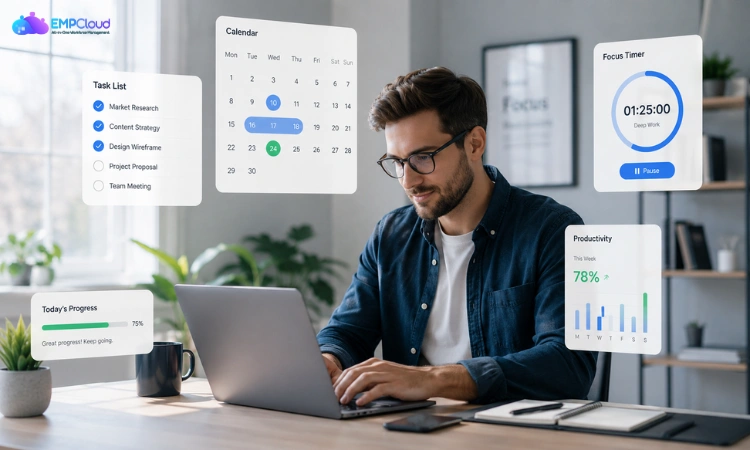
Ever finish a busy day and wonder what you actually accomplished?
Many people want to improve productivity, yet they spend most of their time reacting to emails, messages, and unexpected requests. The result is a packed schedule with very little meaningful progress.
The good news is that productivity is not about working longer hours. It’s about focusing your attention on the activities that create the greatest results. This guide explores practical strategies that help you work smarter, reduce stress, and build sustainable habits that last.
Read Aloud!
Why You’re Busy But Not Productive (The Real Problem)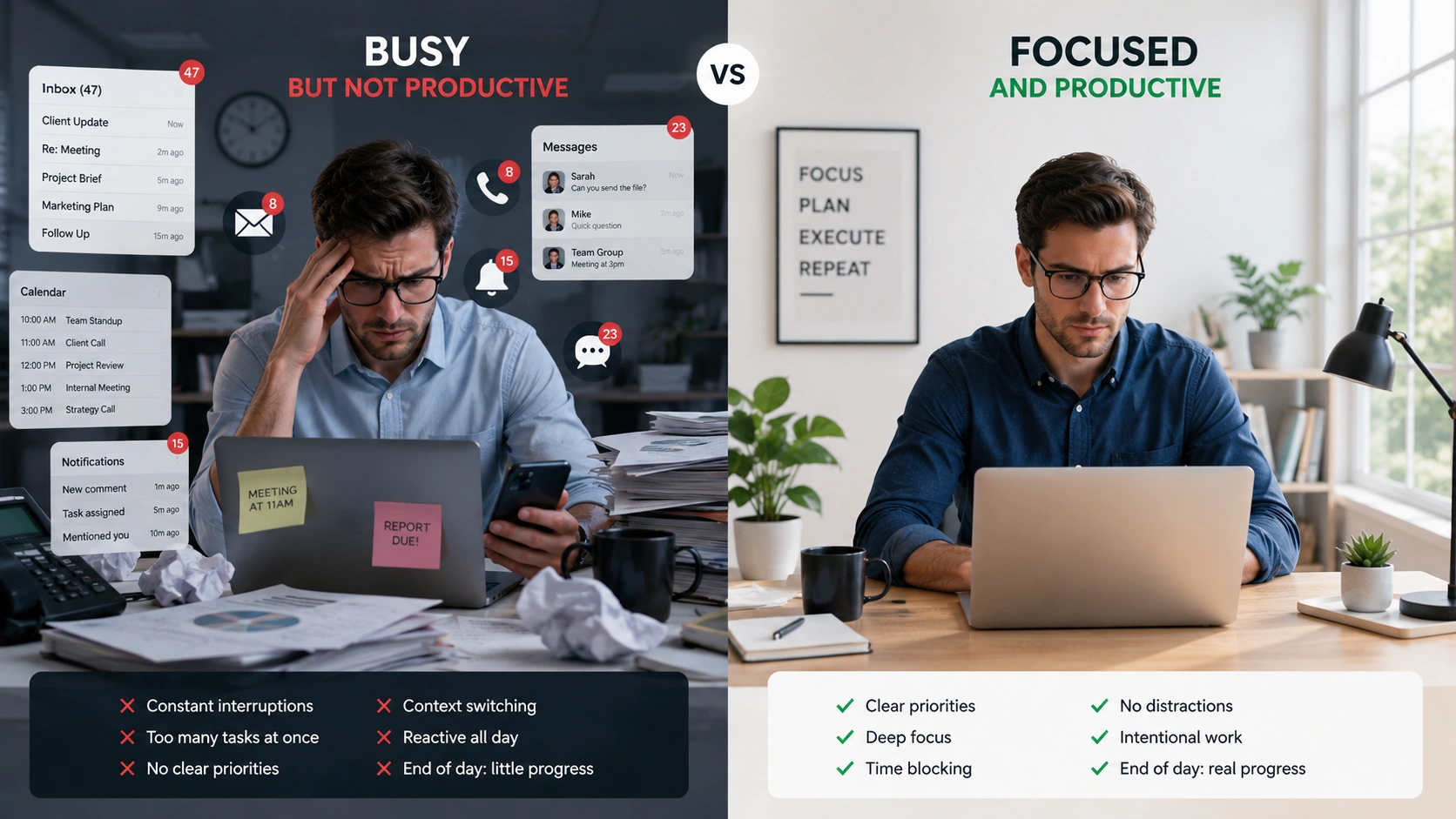
Before you can improve productivity, you need to understand what is getting in the way.
One of the biggest misconceptions is that multitasking makes you more efficient. In reality, constantly switching between tasks forces your brain to repeatedly refocus. Each switch carries a hidden cost.
Distractions create a similar problem. A quick glance at a notification may seem harmless, but research shows that interruptions can significantly reduce concentration and increase the time needed to return to deep work.
Another common issue is relying on willpower. Motivation fluctuates throughout the day. Systems and routines are far more reliable than hoping you’ll feel productive every morning.
The biggest productivity killers at work are often simple: constant interruptions, unclear priorities, and too many low-value tasks competing for attention.
Quick Answer: How to Improve Productivity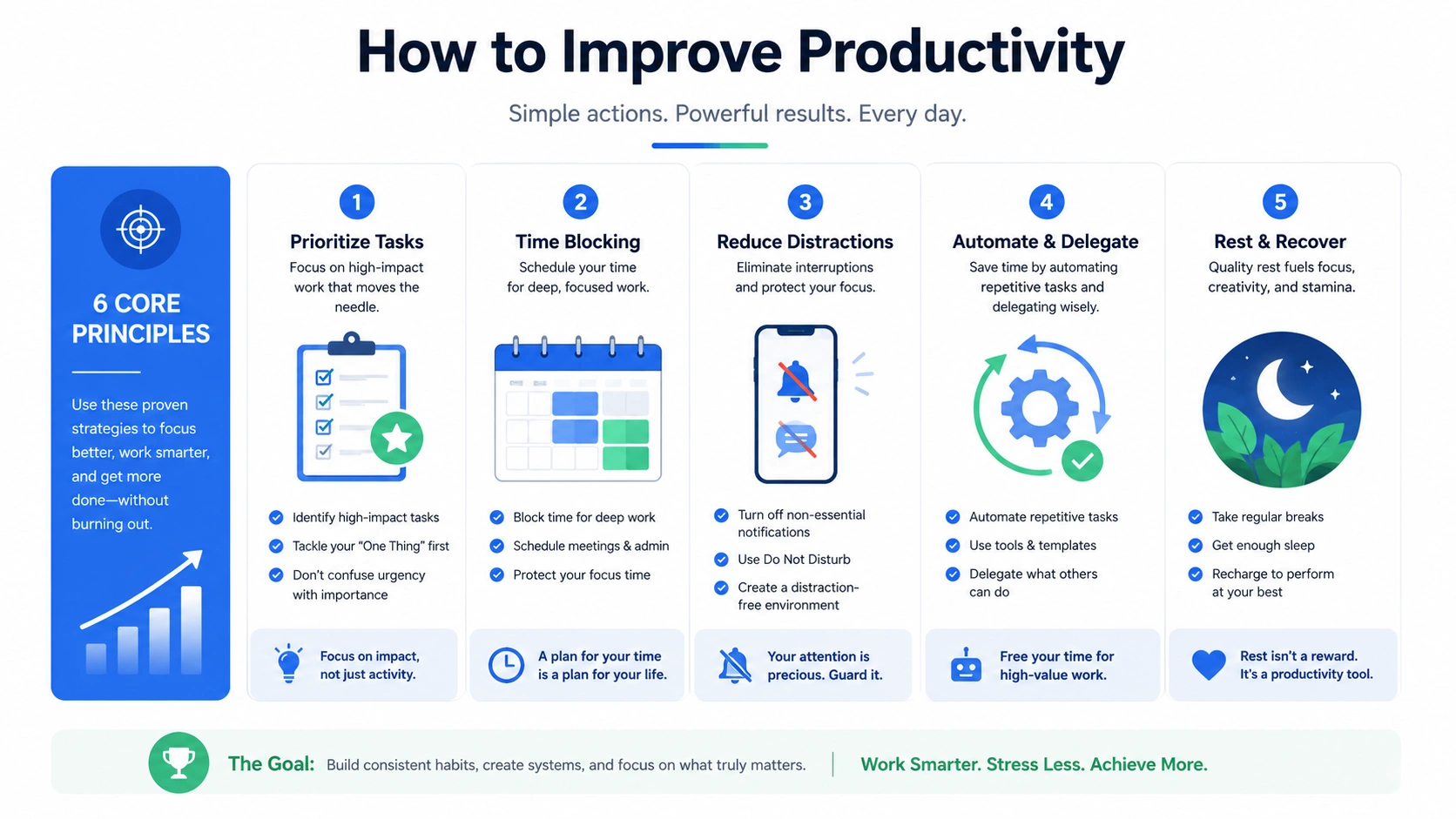
If you’re looking for the fastest way to improve productivity, start here:
- Prioritize tasks based on impact, not urgency.
- Schedule focused work sessions on your calendar.
- Reduce unnecessary decisions during the day.
- Automate repetitive tasks whenever possible.
- Limit distractions and notifications.
- Treat rest as a productivity tool, not a reward.
These principles form the foundation of every high-performing workflow.
Productivity Tips That Actually Move the Needle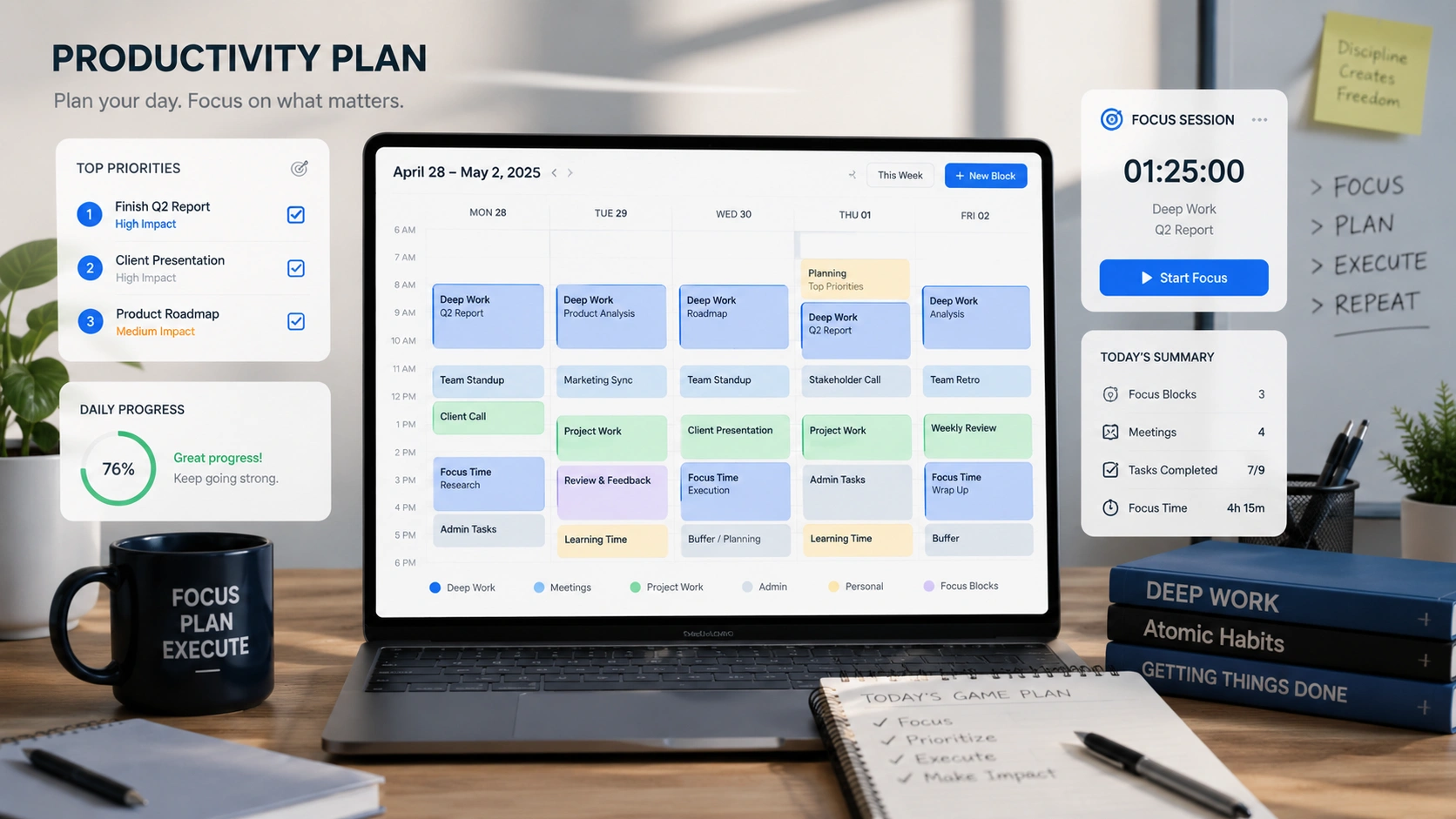
1. Start With Your “One Thing,” Not Your Inbox
Many people begin the day by checking email. It feels productive, but it often pushes important work aside.
Instead, identify your most important task before opening any communication tools. Completing one meaningful task early creates momentum and helps improve productivity throughout the day.
This approach is one of the most effective productivity tips because it shifts your focus from reacting to creating.
2. Time Blocking Isn’t Just for CEOs
Time blocking is simply assigning specific periods of your day to specific types of work.
For example:
- 9:00 AM to 11:00 AM: Deep work
- 11:00 AM to 12:00 PM: Meetings
- 1:00 PM to 2:00 PM: Administrative tasks
- 2:00 PM to 4:00 PM: Project execution
Creating protected focus periods can dramatically improve productivity at work because it reduces constant context switching.
The goal is not perfection. The goal is intentional use of your time.
3. The 2-Minute Rule for Instant Momentum
If a task takes less than two minutes, complete it immediately.
Quick approvals, simple replies, and small updates often occupy more mental space than actual time. Removing them prevents clutter from building up.
However, avoid applying this rule during deep work sessions. Interrupting important work for minor tasks defeats the purpose.
4. Kill Notifications Before They Kill Your Focus
Every notification competes for attention.
Many professionals underestimate how disruptive frequent interruptions can be. Even brief distractions can break concentration and make it harder to regain momentum.
If you want to consistently improve productivity, create designated focus periods where notifications are muted, and communication tools remain closed.
Your attention is one of your most valuable resources. Protect it.
5. Batch Similar Tasks Together
Grouping related work reduces mental switching costs.
Instead of answering emails throughout the day, process them during scheduled blocks. The same principle applies to meetings, calls, reporting, and administrative tasks.
When similar activities are completed together, your brain maintains context longer. That efficiency helps improve productivity without requiring additional effort.
6. Learn to Say No Strategically
Not every request deserves an immediate yes.
Many professionals struggle because their calendars become filled with low-priority commitments. Every new obligation consumes time that could be spent on more valuable work.
A simple response such as, “I can’t commit to that right now, but I can revisit it next week,” protects your schedule while maintaining positive relationships.
Sometimes the fastest way to improve productivity is to stop doing things that don’t matter.
How to Improve Team Productivity Without Micromanaging
Individual habits matter, but team performance often depends on systems.
When discussing how to improve team productivity, many leaders focus on oversight. The better approach is clarity.
People perform best when expectations are clear, and outcomes are well defined. Unclear priorities create confusion, duplicate work, and unnecessary delays.
Communication also plays a major role. Teams that rely heavily on meetings often spend more time discussing work than doing it. Asynchronous updates can reduce interruptions and keep projects moving.
Shared workflows, documented processes, and transparent progress tracking help improve productivity across the entire organization without increasing management overhead.
The Productivity Mistakes You Don’t Know You’re Making
Some habits feel productive but create the opposite effect.
Over-planning is one example. Building the perfect task list means little if execution never follows.
Another mistake is treating every task as equally important. High-value work should always receive more attention than routine activities.
Energy management is often overlooked as well. Most people focus on managing time, yet energy levels influence performance just as much.
Skipping breaks creates similar problems. Rest allows the brain to recover and maintain focus throughout the day.
Many professionals also use too many disconnected tools. Constant switching between platforms can make it harder to improve productivity and maintain concentration.
How Empcloud Helps You Turn Productivity Habits Into Systems
Good habits are valuable. Sustainable systems are even better.
Many people successfully implement new routines for a few weeks before old patterns return. That’s because behavior change is easier when supported by the right infrastructure.
EmpCloud helps centralize tasks, workflows, communication, and progress tracking in one environment. Instead of juggling multiple platforms, teams can manage work through a shared system.
Key features that support productivity include:
- Task and workflow management to organize work, assign responsibilities, and track progress.
- Attendance and time tracking for better visibility into employee schedules and work hours.
- Leave management that simplifies requests, approvals, and record keeping.
- Employee self-service portal that reduces administrative back-and-forth.
- Performance tracking and reporting to monitor goals, productivity, and team outcomes.
- Document management for secure access to important files and employee records.
- Automated HR workflows that reduce repetitive administrative tasks.
- Team collaboration tools that keep communication organized and work-related discussions centralized.
- Custom reports and dashboards that provide real-time insights for better decision-making.
These capabilities support many of the strategies discussed earlier, including task prioritization, workload visibility, batching, accountability, and automation.
The result is a more consistent way to improve productivity without relying entirely on personal discipline.
The Psychology Behind Sustainable Productivity
Long-term success depends less on motivation and more on design.
Habit researchers often describe behavior as a response to environment. Small adjustments to your workspace can make desired actions easier and distractions harder.
This is where the concept of productivity improve becomes interesting. Lasting improvement rarely comes from dramatic changes. Small, repeated actions often create larger results over time.
Identity also matters. People who view themselves as organized, focused, and reliable are more likely to act consistently with those beliefs.
Workplace trends are evolving as well. Many organizations are adopting asynchronous communication and outcome-based performance measures. Productivity is increasingly judged by results rather than visible activity.
That shift encourages healthier and more effective ways to improve productivity.
Read More!
How To Build A Performance Management Culture Employees Actually Value
Why Project Time Tracking Software Is Better For Productivity?
The Takeaway: Work Smarter, Not Just Harder
The ability to improve productivity is not determined by personality, talent, or motivation alone.
Most productive people rely on systems. They prioritize important work, protect their focus, and reduce unnecessary decisions throughout the day.
Start small. Choose one strategy from this guide and apply it consistently for the next week.
Over time, those small improvements compound. And when supported by structured workflows and tools like EmpCloud, productivity becomes less about working harder and more about making better choices every day.
FAQ: Your Productivity Questions, Answered
What is the fastest way to improve productivity at work?
Start each day with one high-priority task before checking emails, messages, or notifications. This creates momentum and protects your most productive hours.
How can I improve my productivity when I feel unmotivated?
Focus on your environment first. Remove distractions, simplify the next action, and start small. Motivation often appears after action begins.
What are the best productivity tips for remote workers?
Time blocking, clear work boundaries, asynchronous communication, and daily shutdown routines are among the most effective strategies.
How do you improve team productivity without more meetings?
Use shared dashboards, written updates, and clearly defined outcomes. Teams often need better communication systems, not more meetings.
Does productivity improve with fewer tools or more tools?
In most cases, fewer integrated tools produce better results. Too many platforms create unnecessary complexity and distraction.
How long does it take to build a productive routine?
Research suggests habits can take anywhere from 21 to 66 days to become more automatic. Consistency matters more than speed.
What’s the difference between being busy and being productive?
Being busy means staying active. Being productive means making meaningful progress toward important goals.
Can productivity be improved sustainably without burnout?
Yes. Strategic rest, realistic workloads, and effective systems make it possible to achieve strong performance without constant exhaustion.
Quick Search Our Blogs
Type in keywords and get instant access to related blog posts.