Modern workplaces have never been more demanding. Employees juggle overflowing inboxes, back-to-back meetings, repetitive administrative tasks, and the constant pressure to perform. As burnout rates climb and talent retention becomes a top priority, businesses are searching for smarter solutions. Increasingly, they’re turning to artificial intelligence to reshape how work actually feels from the inside out.
AI is no longer just a productivity buzzword. It’s becoming the backbone of modern workplace systems, transforming everything from onboarding to performance management. This is where Employee Life Cycle Management becomes important, helping organizations manage every stage of an employee’s journey in a more structured and efficient way. And at the center of this shift is a concept that forward-thinking companies are investing in more than ever.
Read Aloud!
What Is Employee Experience and Why Does It Matter?
It refers to how employees interact with a company’s culture, technology, communication, and work environment throughout their journey with the organization. It’s the sum of every touchpoint, from the moment someone applies for a role to the day they exit the company.
It’s easy to confuse this with employee satisfaction, but the two are not the same. Satisfaction is a snapshot-a measure of how happy someone feels at a given moment. Employee experience is the full journey: how supported employees feel, how well the tools they use serve them, and whether the culture they work within matches the promises made during hiring.
Workplace culture alone is no longer enough to define that journey. As digital tools have become central to how work gets done, technology has become a defining factor in whether employees feel empowered or frustrated. A clunky HR portal or a slow approval process shapes someone’s day just as much as their relationship with their manager.
Why Traditional Employee Management Often Fails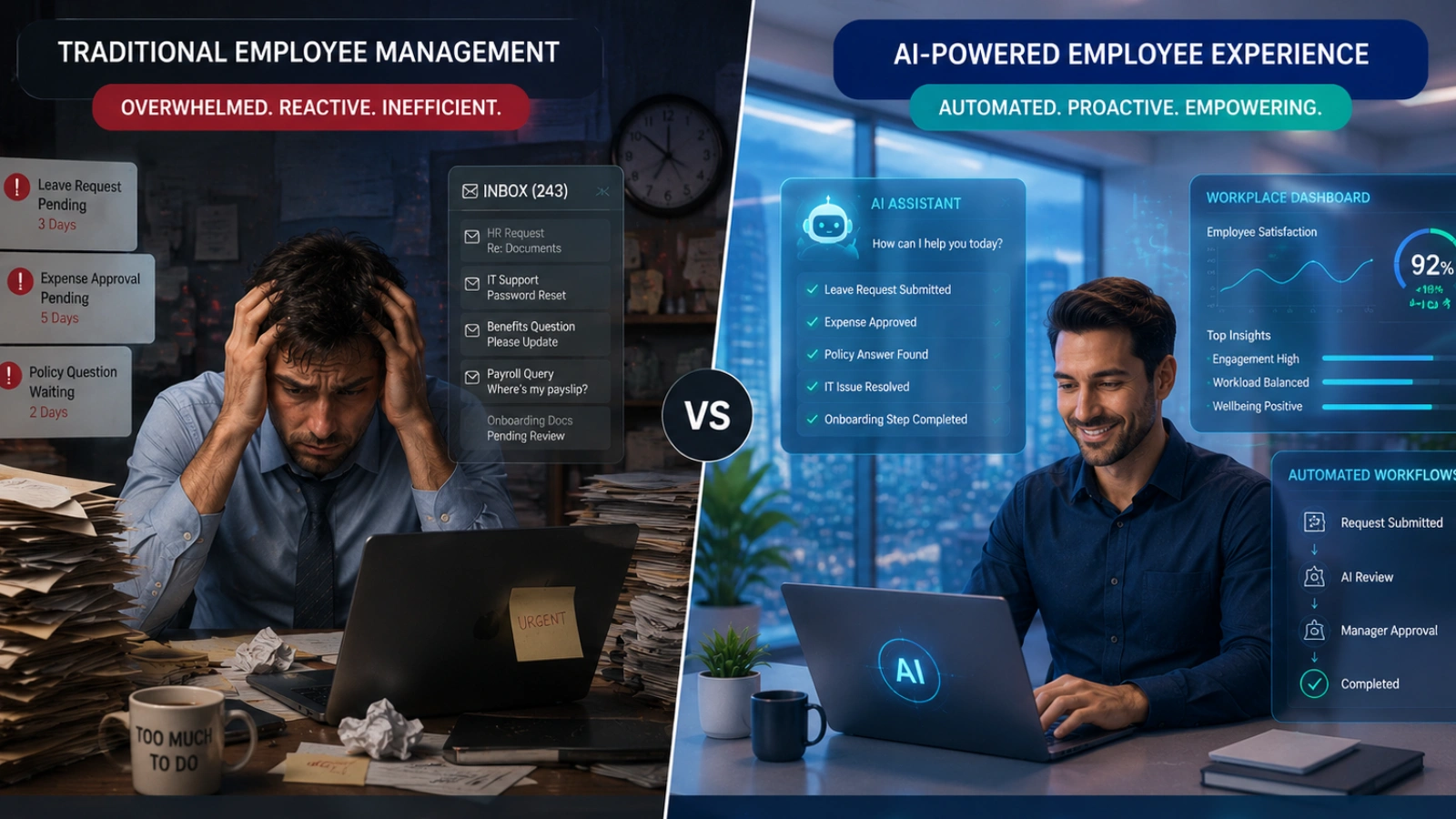
Traditional approaches to staff experience management were built for a different era. HR teams relied on annual surveys, manual processes, and reactive problem-solving. By the time an issue was identified, it had often already cost the company a valued team member. In many cases, the lack of Employee Engagement Metrics meant organizations were making decisions without real visibility into how employees were actually feeling or performing.
Slow HR workflows drain time and patience. Submitting a leave request, chasing an expense reimbursement, or waiting days for a simple policy question to be answered creates friction that quietly erodes morale. Meanwhile, poor communication between teams leads to duplicated work, missed deadlines, and a sense of disconnection, especially in hybrid and remote environments.
Perhaps most damaging is the lack of personalized support. Traditional systems treat all employees the same, ignoring the fact that different roles, career stages, and individual needs require different kinds of help. When employees feel like a number rather than a person, engagement drops and burnout follows.
This is where AI steps in, not to replace human leadership, but to fix the inefficiencies that hold great workplaces back.
How AI Tools Improve Employee Experience
AI Reduces Repetitive Work
One of the most immediate ways AI improves the workplace experience is by eliminating the tedious, repetitive tasks that eat into productive hours. Scheduling meetings, routing approvals, generating reports, and drafting routine emails can all be automated. When employees spend less time on low-value work, they have more capacity for the creative, strategic, and relational work that actually energizes them.
AI Improves Workplace Communication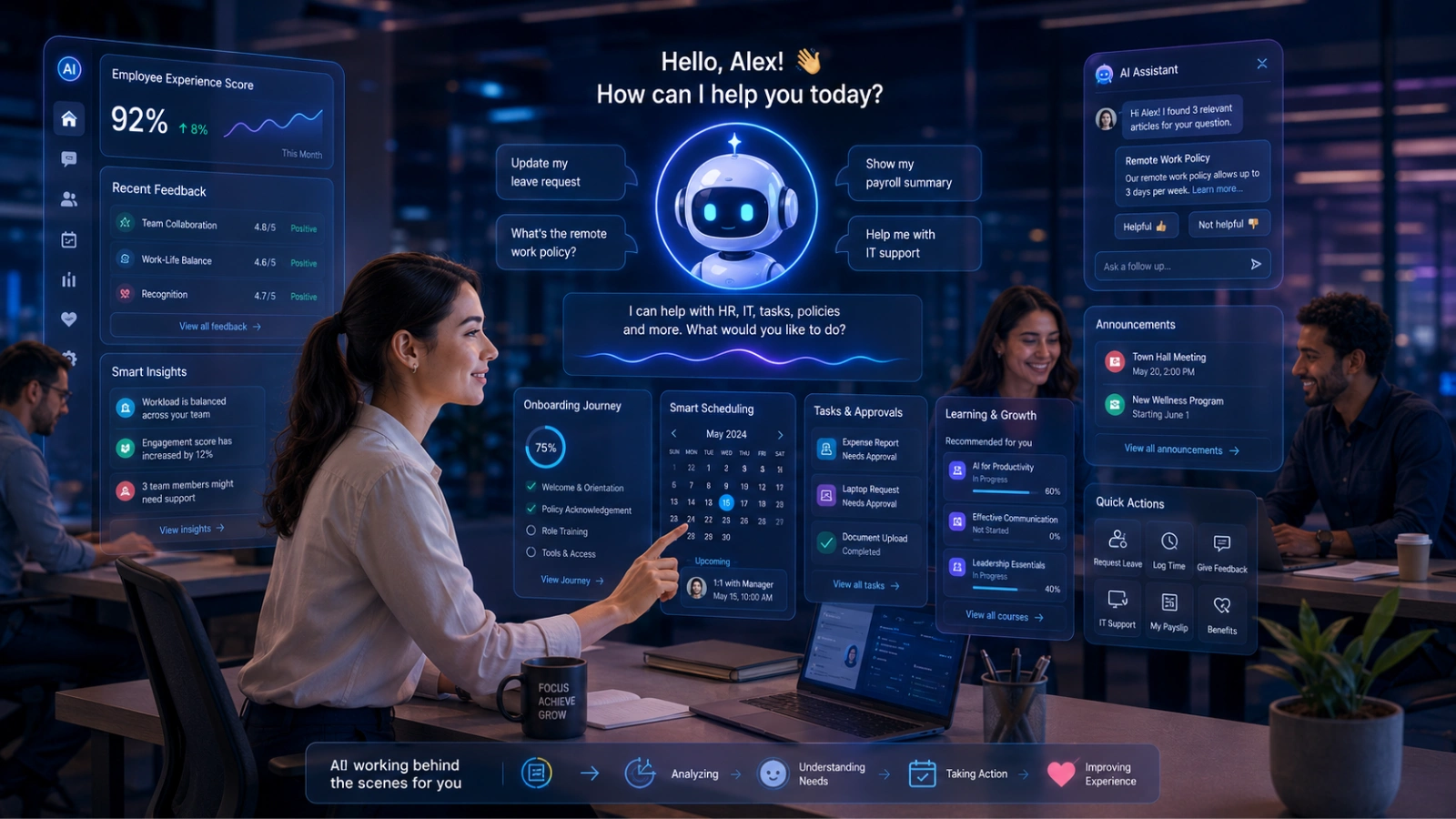
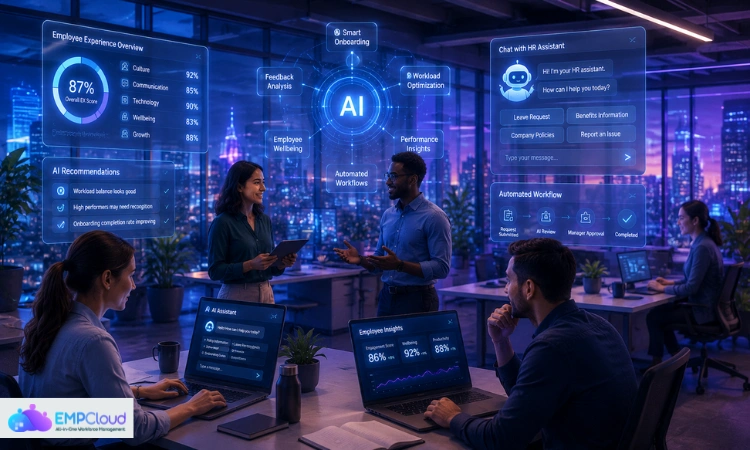
AI-powered chat assistants and support systems have transformed how employees get information. Instead of waiting for an HR representative to respond to a query, employees can get instant answers around the clock. These tools handle everything from policy questions to IT troubleshooting, reducing wait times and freeing up human teams to focus on more complex issues.
AI Makes Onboarding Easier
The first few weeks at a new job shape how an employee feels about a company for years. AI-guided onboarding creates a structured, personalized experience that ensures new hires get the right information at the right time. Automated training flows adapt to an individual’s role and learning pace, making the process less overwhelming and far more effective than a stack of handbooks ever could be. An AI presentation maker can help employees quickly create clear onboarding presentations for training sessions, making the process more efficient and engaging.
AI Supports Employee Well-Being
Burnout is one of the biggest threats to employee experience today. AI tools can analyze workload patterns, flag employees who are consistently working excessive hours, and surface recommendations for better workload distribution. Smart scheduling tools factor in focus time and recovery, helping managers build more sustainable team rhythms before problems escalate.
AI Helps Managers Understand Employee Feedback
Traditional surveys often go unread or yield data that’s too vague to act on. AI-powered sentiment analysis tools can process feedback at scale, identifying trends and emotional signals that human reviewers might miss. Predictive engagement tracking allows managers to spot disengagement early and intervene before a valuable team member starts looking elsewhere.
How AI Is Transforming Employee Experience Management
The most significant shift AI brings to employee experience management is the move from reactive to proactive. Instead of waiting for an exit interview to reveal why someone left, AI gives organizations the data to act in real time.
Real-time workforce analytics surface patterns across teams and departments, helping HR leaders identify what’s working and what isn’t before small issues become systemic ones. Automated HR support handles routine requests instantly, while AI-driven performance tracking creates a more continuous, nuanced picture of how employees are growing, rather than relying on high-stakes annual reviews.
Retention risk prediction is becoming one of the most powerful capabilities in modern employee experience management. By analyzing patterns like declining engagement scores, reduced participation, or changes in work habits, AI can flag employees who may be at risk of leaving, giving managers a window to reconnect and respond with meaningful support.
Best AI-Powered Employee Experience Solutions
The market for employee experience solutions has grown rapidly, with several platforms leading the way in AI-driven workplace tools.
- Microsoft Viva integrates directly into Teams to surface insights, personalized learning, and wellbeing tools without employees needing to switch platforms.
- Slack AI enhances team communication with AI-powered search, summaries, and workflow automation that keep distributed teams aligned.
- Workday uses AI to power HR processes from recruiting to compensation, giving both employees and managers deeper visibility into workforce data.
- ServiceNow automates IT and HR service delivery, dramatically reducing the time employees spend waiting for approvals or support.
- Moveworks serves as an AI-powered enterprise assistant, resolving employee requests across IT, HR, and finance instantly through natural conversation.
The right experience solution depends on company size, industry, and existing tech stack, but each of these platforms shares a commitment to reducing friction and putting better tools directly in employees’ hands.
Read More!
How to Choose the Best Remote Collaboration Tools (Without Drowning in Options)
Benefits of AI for Employee Experience
The case for investing in AI-powered employee experience tools is backed by measurable outcomes. Organizations that deploy these solutions consistently report:
- Faster, more consistent onboarding that gets new hires productive sooner
- Clearer, faster communication across remote and hybrid teams
- Reduced burnout through smarter workload management
- Increased productivity as administrative friction decreases
- Improved employee engagement driven by personalized, timely support
- Better collaboration for remote teams through AI-assisted scheduling and knowledge management
Challenges of Using AI in Employee Experience
AI is not a silver bullet, and implementing it in a workplace context comes with real challenges that organizations must address thoughtfully.
Privacy is perhaps the most pressing concern. When AI tools monitor workload patterns, communication frequency, or engagement levels, employees may rightfully question where their data goes and who has access to it. Organizations must be transparent about what is being tracked and why.
Over-monitoring is a related risk. There’s a fine line between using data to support employees and using it to surveil them. If workers feel watched rather than helped, AI tools can damage trust rather than build it.
AI bias in HR systems is another serious concern. Algorithms trained on historical data can perpetuate existing inequalities in hiring, promotion, or performance evaluation. Employee experience management teams need to audit AI systems regularly to ensure they’re delivering fair outcomes.
Finally, no AI tool can replace the value of human connection in the workplace. Technology should amplify a manager’s ability to support their team, not substitute for the conversations, mentorship, and genuine care that make a great workplace.
Where EmpCloud Fits Into Employee Experience Management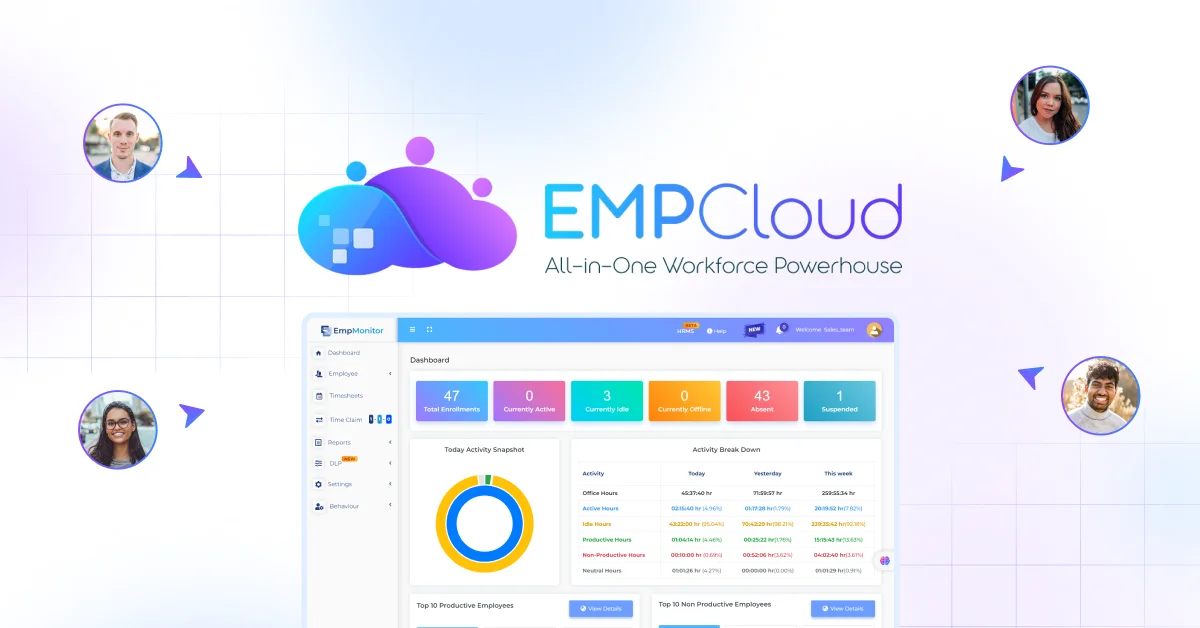
Improving employee experience is not only about communication and workplace culture. Companies also need systems that simplify HR operations, reduce repetitive work, and help employees manage daily tasks more efficiently.
EmpCloud supports businesses by combining workforce management and employee operations into one centralized platform. Instead of relying on disconnected HR tools, teams can manage attendance, payroll, onboarding, and employee records in a more organized way.
Key EmpCloud features include:
- Attendance and leave management
- Payroll processing and salary management
- Employee self-service portal
- Shift scheduling and workforce tracking
- Employee onboarding and document management
- Performance and appraisal tracking
- Real-time reports and analytics
- Mobile access for employees and HR teams
- Workflow automation and centralized employee records
This makes EmpCloud useful for HR teams, growing businesses, remote companies, and organizations looking to improve employee experience management while reducing operational complexity.
The Future of AI in Employee Experience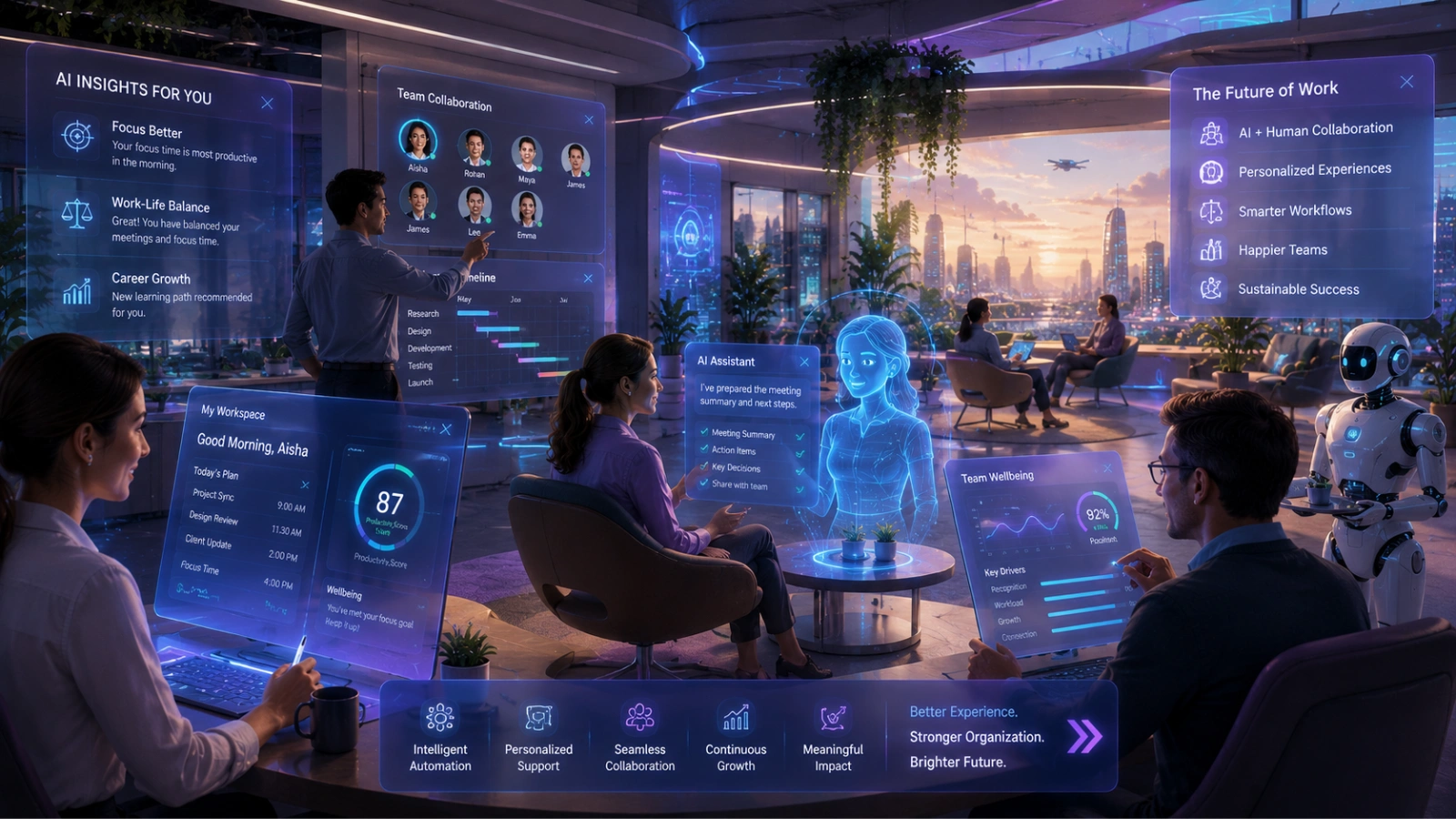
The next generation of AI-powered employee experience solutions will be even more deeply personalized. As organizations continue adopting AI, an AI builder can help them rapidly develop custom AI applications that support automation, personalized employee experiences, and evolving business needs. Predictive workplace analytics will move beyond retention risk to forecast team dynamics, skill gaps, and even career trajectories. AI career coaching tools will offer employees individualized guidance on development paths based on their goals, strengths, and market trends.
Hyper-personalized work environments will adapt in real time to how individual employees work best, adjusting communication norms, meeting cadences, and task delivery to match each person’s style. Smarter collaboration tools will make hybrid work feel more cohesive, reducing the friction between remote and in-office team members.
As AI continues to evolve, employee experience will become one of its most important application areas. The organizations that invest in these tools now, thoughtfully and with a commitment to human-centered design, will have a significant advantage in attracting and retaining the talent they need to compete.
Conclusion
AI is fundamentally changing what it means to work well. From streamlining onboarding to predicting burnout to personalizing career development, the tools now available to HR and business leaders are more powerful than anything that came before.
But technology is only part of the equation. The organizations seeing the greatest returns on their AI investments are those that treat it as a complement to strong human leadership, not a replacement for it. AI can surface data, automate tasks, and flag risks. What it can’t do is build trust, inspire purpose, or make someone feel genuinely valued at work. That still takes people.
The future of employee experience is one where smart systems and compassionate leaders work side by side. Companies that get that balance right won’t just retain their best talent-they’ll give them a reason to bring their best every day.
Frequently Asked Questions
What is employee experience?
Employee experience is the overall perception employees develop during their time at a company. It is influenced by workplace culture, leadership, communication, environment, and the tools they use every day. Unlike short-term job satisfaction, it reflects the entire journey from hiring to exit.
How do AI tools improve workplace experience?
AI tools improve workplace operations by automating repetitive tasks, offering faster support, leveraging AI Personalized learning software to personalize onboarding and training, analyzing engagement trends, and helping managers detect burnout early. This creates a more efficient and responsive work environment for employees.
What are workplace solutions for employees?
Modern workplace platforms are designed to improve communication, productivity, support, and daily operations inside organizations. These tools can include AI HR assistants, onboarding software, wellness platforms, collaboration systems, and performance tracking tools. Popular examples include Microsoft Viva, Workday, ServiceNow, and Moveworks.
What is workforce management in modern workplaces?
Workforce management involves monitoring, analyzing, and improving how people interact with their jobs, teams, and workplace systems throughout their time at a company. AI-powered tools now help organizations analyze feedback, identify operational issues early, and make faster decisions using real-time insights instead of relying only on periodic surveys.
Can AI improve employee engagement?
Yes. AI improves employee engagement by making work feel more manageable and supported. When administrative friction drops, communication improves, and employees receive personalized development opportunities, they naturally become more invested in their work. AI also helps managers spot disengagement early so they can reconnect with team members before the situation worsens.
Quick Search Our Blogs
Type in keywords and get instant access to related blog posts.