
Work hasn’t become easier. It has become quieter.
Not quieter in deadlines or expectations, but quieter in how employees respond to them. Fewer ideas in meetings. Less enthusiasm in discussions. Minimal effort beyond what’s required.
There’s no confrontation. No resignation email. No dramatic exit.
Just a slow, steady pullback.
This is silent quitting.
And in 2026, it’s not just a trend, it’s becoming a defining workplace behavior.
Organizations are still hiring. Employees are still showing up. Work is still getting done.
But something important is missing.
Energy.
Ownership.
Care.
In this blog, we’ll break down what is silent quitting, why it’s rising despite better policies and benefits, the most important signs of silent quitting, and what companies can realistically do to fix it, before disengagement turns into actual exits.
Listen To The Podcast Now!
What Is Silent Quitting?

At its simplest, silent quitting is when employees do only what their role requires and nothing more.
They:
- Complete tasks
- Meet deadlines
- Follow instructions
But they don’t:
- Take initiative
- Contribute beyond expectations
- Feel emotionally invested in the work
This is why silent quitting is often compared to employee quiet quitting, both describe a state where employees remain in their jobs but mentally disconnect from them.
However, it’s important to understand what silent quitting is not.
This isn’t laziness.
Nor is it incompetence.
It’s not even poor performance.
Many silently quitting employees still deliver acceptable work.
What changes is their willingness to stretch, contribute, or care.
Instead of actively engaging, they shift into maintenance mode.
Why Employees Choose Silent Quitting Over Leaving
If someone is unhappy, why don’t they just quit?
The answer is more practical than emotional.
Leaving a job comes with risk, financial instability, uncertainty, and the pressure of finding something better.
So instead, many employees choose a safer alternative:
Stay but disengage.
This allows them to:
- Maintain income
- Reduce stress
- Avoid confrontation
- Protect their energy
In many ways, silent quitting is a compromise between staying and leaving.
It’s not commitment.
It’s survival.
Silent Quitting vs Healthy Work Boundaries
One of the biggest misconceptions around silent quitting is that it’s just “people setting boundaries.”
But the two are not the same.
Healthy boundaries look like:
- Logging off on time
- Taking breaks without guilt
- Saying no to unreasonable demands
- Protecting personal time
Silent quitting looks like:
- Avoiding responsibility beyond the basics
- Withdrawing from collaboration
- Losing interest in outcomes
- Mentally checking out
The difference lies in intent.
Boundaries are proactive and healthy.
Silent quitting is reactive and often a sign that something is wrong.
Why Silent Quitting Is Rising in 2026
Despite flexible work models, mental health initiatives, and better tools, silent quitting continues to grow.
That’s because most organizations are treating symptoms, not causes.
Let’s look at what’s really driving this shift.
1. Burnout Has Become the Baseline
Burnout is no longer an occasional phase.
For many employees, it’s the default state.
Long hours, constant notifications, blurred work-life boundaries, these have created a cycle where employees feel perpetually drained.
Instead of quitting jobs, they quit effort.
2. Recognition Is Still Inconsistent
Employees don’t need constant praise but they do need acknowledgment.
When effort repeatedly goes unnoticed, motivation slowly fades.
Over time, employees stop asking:
“How can I contribute more?”
And start thinking:
“What’s the point?”
3. Leadership Quality Varies Widely
The manager experience defines the employee experience.
Poor leadership, whether through lack of communication, unclear expectations, or micromanagement, creates frustration.
And frustrated employees rarely stay engaged.
They withdraw.
4. Career Growth Feels Uncertain
Ambitious employees need direction.
When there’s no clear path forward, effort feels wasted.
Employees begin to disengage not because they don’t care but because they don’t see progress.
5. Workplace Culture Feels Superficial
Many organizations talk about:
- Employee well-being
- Flexibility
- Work-life balance
But when daily experiences don’t reflect these values, trust breaks.
Employees notice the gap between what’s said and what’s done.
And once trust is gone, engagement follows.
Signs of Silent Quitting You Shouldn’t Ignore

Silent quitting doesn’t happen overnight. It builds gradually.
The earlier you spot it, the easier it is to address.
Here are the most common signs of silent quitting:
1. Reduced Participation
Employees attend meetings but rarely contribute.
They listen but don’t engage.
2. No Initiative
They stop volunteering for tasks or projects outside their core responsibilities.
3. Transactional Work Approach
Work becomes purely task-based.
“If it’s assigned, I’ll do it. If not, I won’t.”
4. Slower and Minimal Communication
Replies become delayed, short, and less collaborative.
5. Emotional Detachment
There’s a visible lack of enthusiasm, curiosity, or ownership.
6. Disinterest in Growth
Training sessions, feedback discussions, and development opportunities are ignored.
7. Withdrawal From Team Culture
They avoid informal conversations, team bonding, or optional meetings or simply withdraw from team culture.
8. Consistent Low Energy
Even if output is stable, energy levels drop significantly.
These signs may seem minor individually.
But together, they indicate a deeper issue.
The Real Cost of Silent Quitting
Silent quitting doesn’t disrupt operations immediately but its long-term impact is serious.
1. Innovation Slows Down
When employees stop sharing ideas, creativity disappears.
Teams become reactive instead of proactive.
2. Productivity Becomes Average
Work gets done but rarely exceeds expectations.
The extra effort that drives growth disappears.
3. Team Morale Drops
Disengagement spreads quickly.
One disengaged employee can influence an entire team.
4. High Performers Pull Back
When effort isn’t recognized, even top performers reduce their contribution.
5. Hidden Attrition Risk Increases
Silent quitters may stay but they’re not committed.
Eventually, many of them leave.
And when they do, it often feels sudden.
Silent Quitting vs Other Workplace Behaviors
Quiet quitting is part of a broader shift in workplace dynamics.
Silent Quitting
Employees disengage while staying in their roles.
Quiet Firing
Organizations push employees out indirectly by limiting growth or support.
Resenteeism
Employees stay but with growing frustration and dissatisfaction.
Career Cushioning
Employees prepare for exit by exploring backup options.
These trends are interconnected.
They all point to the same underlying issue:
A disconnect between employee expectations and workplace reality.
How to Stop Silent Quitting (What Actually Works)

There’s no quick fix.
But there are practical steps to start quitting and increase employee engagement.
1. Focus on Managers First
Policies don’t drive engagement, people do.
Train managers to:
- Recognize behavioral changes
- Have meaningful conversations
- Listen actively
Regular one-on-one meetings should go beyond tasks.
Ask about:
- Challenges
- Motivation
- Career goals
2. Make Recognition Timely and Specific
Recognition doesn’t need to be grand.
It needs to be genuine.
Instead of generic praise:
- Highlight specific contributions
- Acknowledge effort in real time
- Be consistent
3. Reconnect Employees With Purpose
People want to feel their work matters.
Help them understand:
- The impact of their role
- How their work contributes to larger goals
Purpose creates motivation.
4. Build Psychological Safety
Employees should feel safe to:
- Speak honestly
- Share concerns
- Ask for help
Without fear of judgment.
Silence often exists where honesty feels unsafe.
5. Provide Clear Growth Opportunities
Growth shouldn’t feel vague.
Offer:
- Defined career paths
- Learning opportunities
- Mentorship
Progress keeps employees engaged.
6. Respect Work-Life Boundaries
Encourage employees to:
- Log off on time
- Take breaks
- Disconnect after work
But ensure ambition isn’t punished or discouraged.
7. Fix Culture at Its Core
Perks don’t build culture.
Consistency does.
Focus on:
- Transparency
- Trust
- Fairness
That’s what employees remember.
While culture, leadership, and communication matter, they only work when backed by the right visibility.
The real challenge with silent quitting isn’t fixing it, it’s spotting it early.
Disengagement builds gradually, and without clear insights into productivity and behavior, it’s easy to miss.
That’s where EmpCloud helps, by giving leaders the visibility to detect early signs and act before it escalates.
How EmpCloud Helps You Tackle Silent Quitting
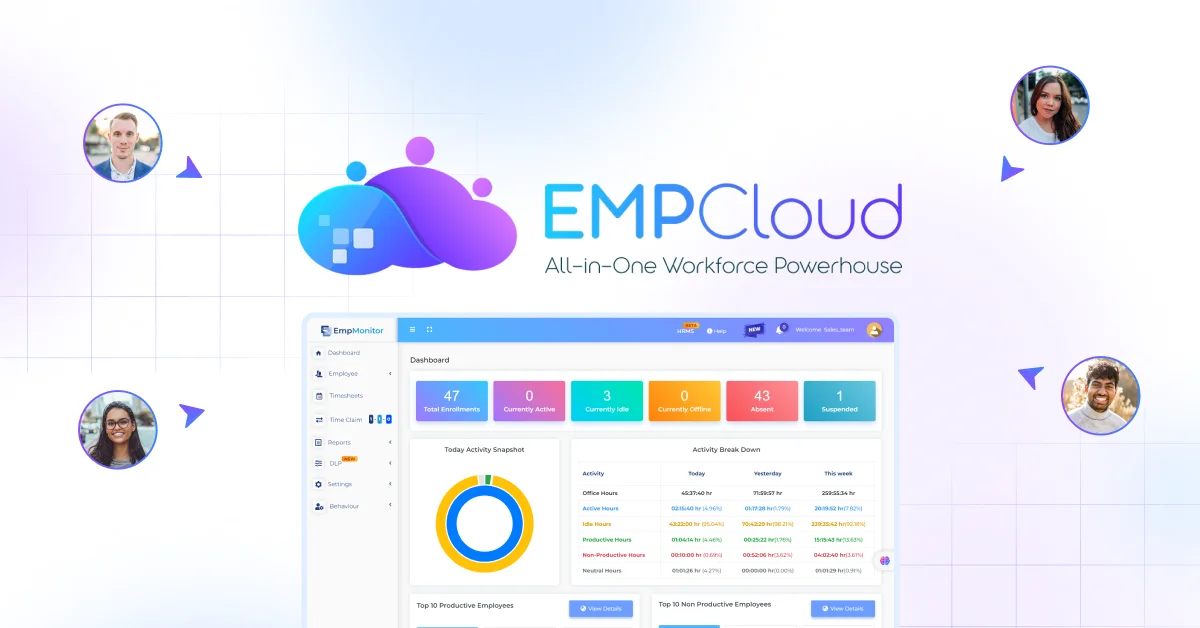
Silent quitting isn’t just an HR issue, it’s a workforce visibility problem.
EmpCloud is designed as a complete workforce management suite that connects productivity, performance, and employee experience in one place, helping organizations identify disengagement early and respond effectively.
Here’s how it directly helps:
1. Real-Time Productivity & Visibility (EmpMonitor)
Track work patterns, productivity, and time usage in real time—so managers can spot early signs of disengagement before they escalate.
2. Performance & Career Management
Set clear goals, track progress, and enable growth—keeping employees motivated and future-focused.
3. Project Management
Ensure clear task ownership, deadlines, and team alignment—reducing confusion and boosting accountability.
4. HRMS & Employee Experience
Streamline attendance, leave, and policies—removing daily friction that often leads to disengagement.
5. Field Force Management
Monitor remote and field teams with real-time tracking—ensuring visibility and accountability beyond the office.
6. Biometrics
Enable secure and accurate attendance tracking with biometric verification—reducing discrepancies and ensuring accountability.
Apart from these, EmpCloud also supports:
- Recruitment & onboarding for smoother hiring journeys
- Payroll management for accurate and compliant payouts
- Exit & portfolio management for structured offboarding
All of this comes together in one unified platform, eliminating silos and improving overall workforce efficiency.
👉 Want to take control of your workforce before disengagement spreads?
Explore EmpCloud, book a demo, or start a free trial to see how a connected workforce management system can transform the way you manage, engage, and grow your teams.
A Practical Example of Silent Quitting
Imagine an employee who once:
- Volunteered for new projects
- Shared ideas in meetings
- Helped teammates
Now they:
- Log off exactly on time
- Avoid extra tasks
- Speak only when required
Their performance hasn’t collapsed.
But their engagement has.
This is silent quitting in action.
Subtle. Gradual. Easy to miss.
A Leadership Reality Check
If you’re noticing employee quitting in your organization, don’t rush to blame employees.
Instead, ask:
- Are expectations clear?
- Is effort recognized?
- Do employees feel valued?
Because silent quitting rarely starts with employees.
It starts with experiences.
Read More: –
How To Improve Work Culture Using Smart Teamwork Tips?
The Ultimate List Of Team Building Activities For Work In 2026
The Future of Work: Engagement Over Control
The traditional model of work focused on control:
- Monitor performance
- Enforce rules
- Measure output
But that model is fading.
Today, engagement drives performance.
And engagement cannot be forced.
It has to be built.
Final Thoughts
Silent quitting doesn’t explode, it fades.
It shows up in quieter meetings, slower replies, and a noticeable drop in curiosity. Work still moves forward, but without the drive that once pushed it ahead.
That’s what makes it tricky. It’s easy to overlook until it becomes the norm.
The real shift for organizations in 2026 is this: engagement isn’t something you demand, it’s something you earn, every single day through leadership, clarity, and trust.
Because when people feel heard, valued, and supported, they don’t hold back.
They lean in.
And if you’re seeing signs of silent quitting, don’t treat it as a problem to control.
Treat it as a signal to listen.
FAQs: –
1. What is silent quitting in simple terms?
Silent quitting means employees do only the minimum required for their job without putting in extra effort or emotional involvement. They don’t leave the company but mentally disengage from their work.
2. What are the early signs of silent quitting?
Some common signs of silent quitting include low participation in meetings, lack of initiative, slower communication, reduced enthusiasm, and avoiding tasks beyond core responsibilities.
3. Why are employees silently quitting instead of leaving?
Many employees choose silent quitting over leaving due to job security, financial stability, and uncertainty in the job market. It allows them to stay employed while reducing stress and effort.
4. How does silent quitting affect business performance?
Silent quitting can lower productivity, reduce innovation, impact team morale, and increase long-term attrition risks. Even if work gets done, overall performance and growth suffer.
5. How can companies prevent silent quitting?
Companies can prevent silent quitting by improving leadership, recognizing employee efforts, offering growth opportunities, ensuring work-life balance, and using workforce management tools to track engagement and productivity.
Quick Search Our Blogs
Type in keywords and get instant access to related blog posts.