

When it comes to driving business growth and profitability, performance analytics has become the cornerstone of informed decision-making. Organizations that leverage data-driven insights consistently outperform their competitors.
Yet, many businesses continue to hemorrhage money due to preventable mistakes in how they collect, interpret, and act on their analytics data. The difference between thriving and merely surviving often comes down to how effectively you use Performance Analytics to guide your strategic decisions.
In this comprehensive guide, we’ll explore five critical mistakes that could be draining your resources and provide actionable solutions to transform your analytics approach into a profit-generating powerhouse.
Listen To The Podcast Now!
Mistake #1: Relying on Outdated or Delayed Data:

One of the most expensive mistakes organizations make is basing their decisions on stale data. In the fast-paced business environment we operate in, what was true last month, or even last week, might no longer be relevant.
When your performance analytics system only updates quarterly or monthly, you’re essentially driving a car while looking in the rearview mirror instead of through the windshield. The financial impact of delayed data can be staggering. Imagine discovering that your top-performing sales representative has been struggling for six weeks, but your performance analytics system only revealed this during the quarterly review.
That’s six weeks of lost revenue and missed opportunities for intervention. Similarly, if your customer service metrics show declining satisfaction rates only after the damage is done, you’ve already lost clients and tarnished your reputation in ways that take months to repair.
Real-time employee performance analytics solves this critical problem by providing immediate visibility into what’s happening across your organization. When you can see productivity trends as they develop, you can address issues before they become costly problems.
This immediacy allows managers to course-correct quickly, reward high performers promptly, and identify training needs before they impact your bottom line significantly. The solution is straightforward: invest in systems that offer real-time or near-real-time data processing.
Mistake #2: Tracking the Wrong Metrics:
Not all data is created equal, and one of the costliest mistakes is spending time and resources tracking metrics that don’t actually drive business outcomes. Many organizations fall into the trap of measuring what’s easy to measure rather than what’s meaningful. This leads to what experts call “vanity metrics”, numbers that look impressive on paper but don’t translate to real business value or competitive advantage.
For example, tracking total hours worked might seem like an important employee performance metric, but it tells you nothing about productivity or output quality. An employee could work 60 hours a week and produce less value than someone working 40 hours efficiently. Similarly, monitoring the number of emails sent or meetings attended doesn’t necessarily correlate with meaningful contributions to business objectives or customer satisfaction.
The financial cost of focusing on the wrong metrics extends beyond wasted analytical resources. When teams optimize for the wrong targets, they often work harder without producing better results.
This misalignment can lead to burnout, decreased morale, and ultimately, higher turnover costs that hit your budget hard. Additionally, when performance reviews and compensation decisions are based on irrelevant employee performance metrics, you risk losing your best talent while retaining underperformers who game the system.
To avoid this expensive mistake, align your metrics with clear business outcomes that matter to your organization’s success. Instead of measuring activity, measure results. Focus on indicators like revenue per employee, customer satisfaction scores, project completion rates, quality of deliverables, and innovation contributions.
Mistake #3: Ignoring the Human Element in Data Analysis:

Numbers alone never tell the complete story, and treating performance analytics as purely mathematical exercises can lead to expensive misinterpretations. Behind every data point is a human being with context, challenges, and circumstances that numbers alone cannot capture.
When organizations make decisions based solely on quantitative data without considering qualitative factors, they often arrive at flawed conclusions that cost them dearly in both money and talent. Consider a scenario where your performance analytics shows that employee performance has dropped by 30 percent over the past month.
The data is clear, and the numbers don’t lie, but without context, you might make the wrong decision. Perhaps this employee took on a mentoring role for three new team members, trading their individual output for multiplied long-term team capacity.
Maybe they’re working on a complex problem that will yield significant breakthroughs once complete. Or perhaps they’re dealing with a personal crisis that temporary support could help them navigate successfully.
Making hasty decisions based on incomplete information can result in losing valuable employees, damaging team morale, or missing opportunities to address underlying systemic issues. The cost of replacing a skilled employee can range from 50 to 200 percent of their annual salary, making premature terminations based on misunderstood data incredibly expensive and disruptive to operations.
Effective performance analytics must combine quantitative metrics with qualitative insights to create a complete picture. Implement regular one-on-one conversations where managers can provide context for the numbers they’re seeing in their dashboards.
Mistake #4: Failing to Act on Insights Discovered:
Perhaps the most frustrating waste of money occurs when organizations invest in sophisticated performance analytics systems, collect valuable data, generate meaningful insights, and then do absolutely nothing with the information they’ve gathered.
This phenomenon, often called “analysis paralysis,” is more common than you might think and represents a double financial loss, both the cost of the analytics investment and the opportunity cost of not acting on valuable insights that could improve operations.
Many businesses fall into this trap because they lack clear processes for translating data into action. They produce beautiful dashboards, comprehensive reports, and detailed analyses that get filed away or briefly discussed in meetings before everyone returns to business as usual.
The insights might clearly show that specific processes are inefficient, certain teams need additional resources, or particular strategies aren’t working, yet nothing changes because nobody takes ownership of implementing solutions.
The financial impact compounds over time in ways that can devastate profitability. If your performance analytics reveal that 40 percent of your customer service team’s time is wasted on a clunky internal system, every day you delay fixing that system costs you money in reduced productivity.
If data shows that remote workers in certain roles outperform office-based colleagues, maintaining expensive office space for those positions represents ongoing waste that accumulates month after month.
To extract value from your investment, establish clear action protocols that everyone understands and follows. When analysis reveals problems, assign specific ownership for developing solutions with concrete timelines and checkpoints.
Mistake #5: Using Disparate Systems That Don’t Communicate:
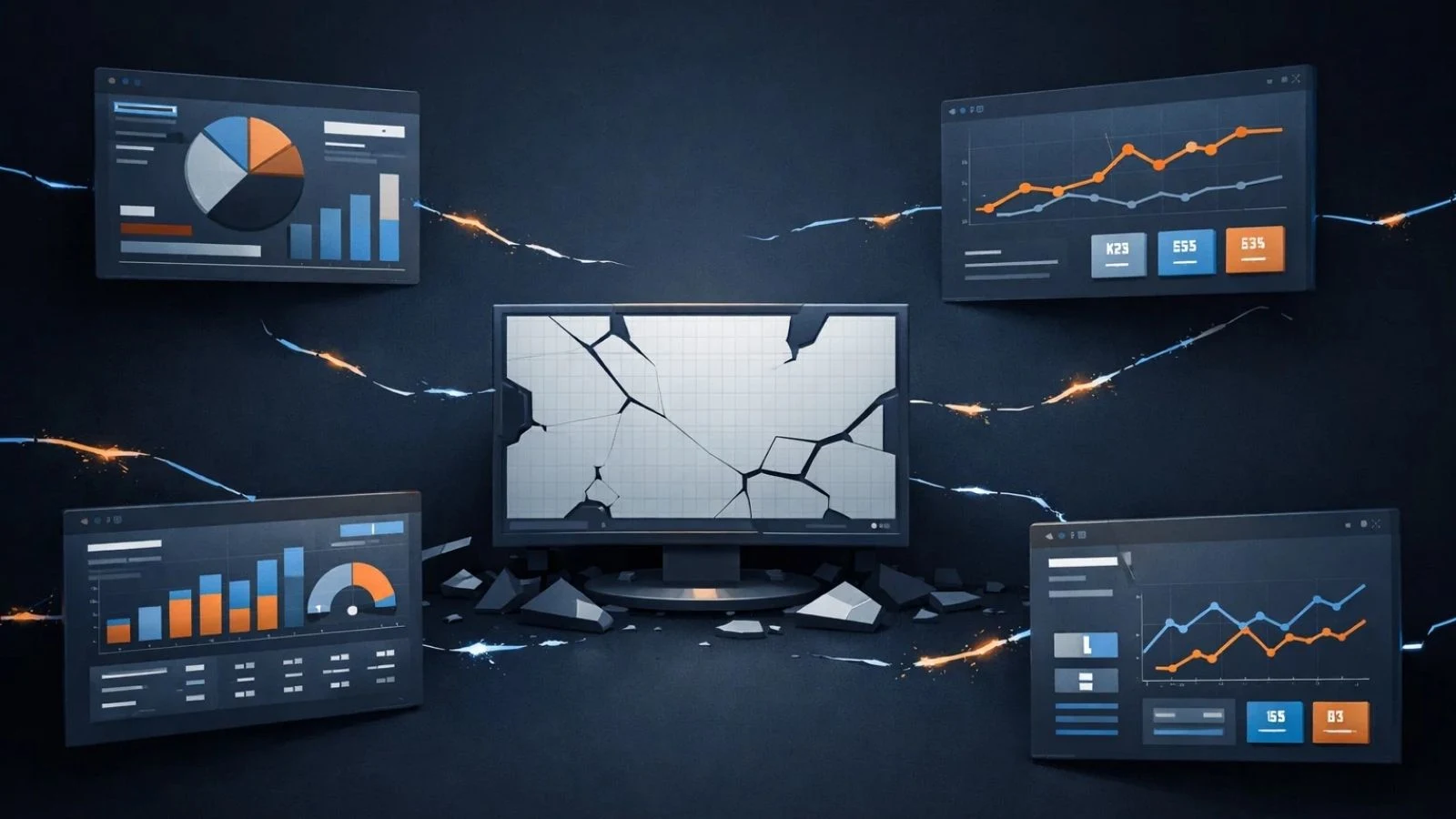
In many organizations, data exists in silos across multiple disconnected systems. HR has one database, project management uses another tool, time tracking lives in a third application, and sales metrics sit in yet another platform. This fragmentation creates a high hidden cost that many businesses underestimate until they attempt to generate comprehensive performance analytics across the organization.
The expense manifests in several ways that drain resources. First, there’s the direct cost of manual data consolidation. Someone, or more likely, several people, must regularly export data from various systems, clean it, reconcile discrepancies, and compile it into usable reports.
This labor-intensive process consumes hours that could be spent on value-adding activities that generate revenue. Second, the likelihood of errors increases dramatically when humans manually transfer data between systems, potentially leading to decisions based on incorrect information that steers the company in the wrong direction.
Beyond inefficiency, disconnected systems create blind spots that cost money in ways you might not immediately recognize. You might be able to see that productivity is declining, but without integrated data, you cannot easily correlate that decline with recent changes in project assignments, team composition, or workload distribution.
These connections often hold the key to understanding and solving problems, but discovering them requires cross-referencing multiple data sources, a task so cumbersome that it’s often skipped entirely, leaving problems unresolved.
Also Read:
How EmpCloud Solves Your Performance Analytics Challenges:
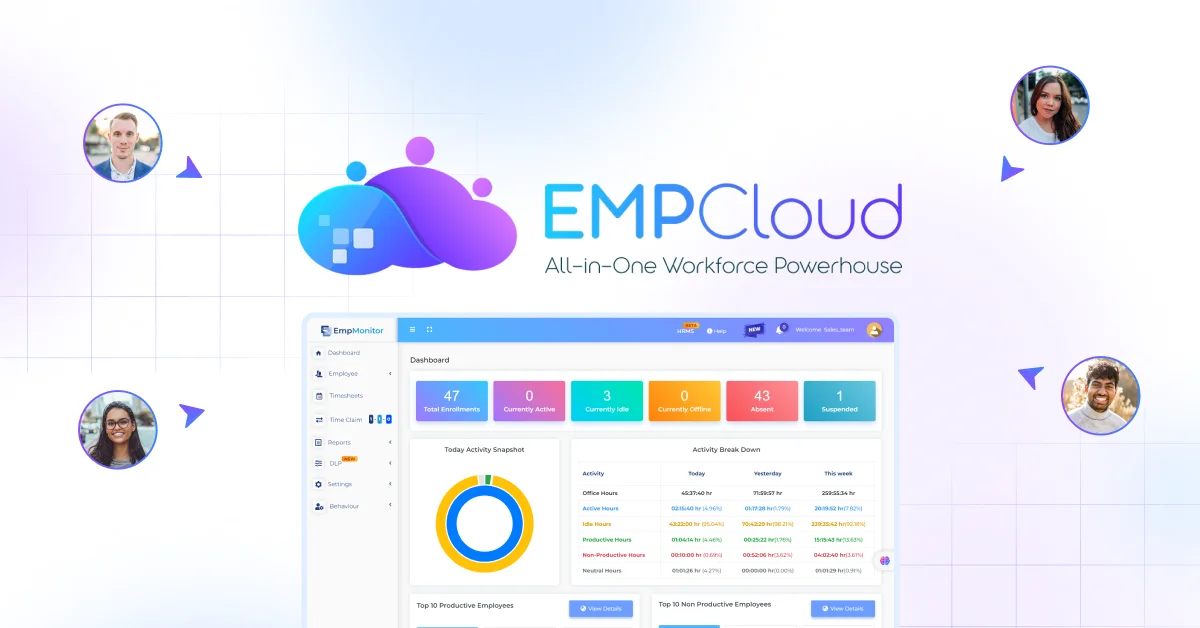
EmpCloud offers a comprehensive workforce management solution designed specifically to address the challenges that cost businesses money every single day. As an integrated platform, EmpCloud eliminates data silos by bringing together multiple aspects of workforce management into one centralized system.
The platform features real-time monitoring through EmpMonitor that provides immediate insights into productivity, ensuring you never make decisions based on outdated information that no longer reflects reality. Its comprehensive tracking combines quantitative metrics with qualitative assessments for a complete picture of what’s happening.
With integrated HRMS, project management, and time tracking, all your data works together seamlessly without manual exports or imports. The automated reporting and customizable dashboards transform raw data into actionable insights without manual compilation that wastes valuable time.
The Performance and Career Management tools help you act on insights by facilitating goal-setting, feedback, and development planning. By consolidating these capabilities into a single platform, EmpCloud helps organizations maximize their return on investment.
Turning Analytics Into Profit: Your Action Plan:

Now that you understand the costly mistakes to avoid, it’s time to develop a strategic approach to performance analytics that drives profitability rather than draining resources. Start by auditing your current analytics capabilities against the mistakes discussed above.
Are you working with delayed data that no longer reflects current conditions? Tracking meaningful metrics that drive results? Considering human context in your decisions? Acting on insights you discover? Using integrated systems that communicate effectively?
For each gap you identify, develop a specific improvement plan with timelines and accountability assigned to specific individuals. Prioritize changes based on potential financial impact. Which improvements will save the most money or generate the most value in the shortest time?
Remember that implementing effective performance analytics is not a one-time project but an ongoing process of refinement and optimization that continues indefinitely. Invest in training for managers and team leads who will be using data to make decisions that affect people’s careers.
The most sophisticated system in the world is worthless if the people using it don’t understand how to interpret the data or translate insights into action. Create a culture that values data-driven decision-making while maintaining empathy and understanding for the humans behind the numbers. Finally, regularly measure the impact of your initiatives themselves to ensure you’re getting value.
Conclusion:
Performance analytics should be an investment that multiplies returns, not a cost center that drains resources without providing value. By avoiding these five critical mistakes, relying on outdated data, tracking wrong metrics, ignoring human context, failing to act on insights, and using disconnected systems, you can transform your analytics approach from a necessary expense into a competitive advantage. The businesses that thrive in increasingly data-driven markets are those that master the art of turning information into action efficiently and effectively.
FAQ’s:
Q1: How often should we review our performance analytics metrics?
Ans: Conduct comprehensive reviews monthly with weekly check-ins for critical metrics. Fast-moving industries may require daily monitoring, while stable sectors can manage with bi-weekly assessments based on operational needs.
Q2: What’s the difference between employee performance metrics and performance analytics?
Ans: Employee performance metrics are individual data points like sales numbers or attendance records. Performance analytics analyzes these metrics collectively to identify patterns and trends that inform strategic decisions.
Q3: Can small businesses benefit from performance management tools?
Ans: Small businesses often gain more value from these tools as they help maximize limited resources, identify inefficiencies quickly, and compete effectively through data-driven decisions without large teams.
Q4: How do we balance automated analytics with manager oversight?
Ans: Use automated performance analytics for continuous tracking and pattern identification, but combine it with regular manager reviews, one-on-one conversations, and human judgment for context-aware decision-making.
Q5: What essential features should performance management tools have?
Ans: Look for real-time updates, customizable dashboards, system integration, automated reporting, goal-tracking, mobile access, and both quantitative and qualitative assessment capabilities that work together seamlessly.
Quick Search Our Blogs
Type in keywords and get instant access to related blog posts.