

Industries such as healthcare, logistics, sales, and other field-based services rely heavily on a mobile workforce to deliver consistent, high-quality results. However, managing distributed teams comes with a unique set of operational challenges, making effective field force management essential for coordinating schedules, tracking performance, and ensuring timely service delivery and customer satisfaction.
FFM provides a structured approach to addressing these challenges. When implemented effectively, it helps streamline task allocation, optimize resource utilization, and maintain service excellence across locations. By improving visibility into field activities, organizations can enhance productivity while strengthening customer relationships.
That said, deploying FFM successfully is not without complexity. Factors such as workforce coordination, real-time tracking, communication gaps, and data accuracy can impact outcomes if not managed strategically. A clear understanding of field force management principles and best practices is essential to gain measurable value from your efforts.
Whether you oversee delivery personnel, healthcare professionals, sales representatives, or technical service teams, mastering FFM can help you maintain operational efficiency and a competitive edge.
In this blog, we explore field force management in depth and outline practical strategies to optimize your field operations for sustainable success.
What Is Field Force Management?
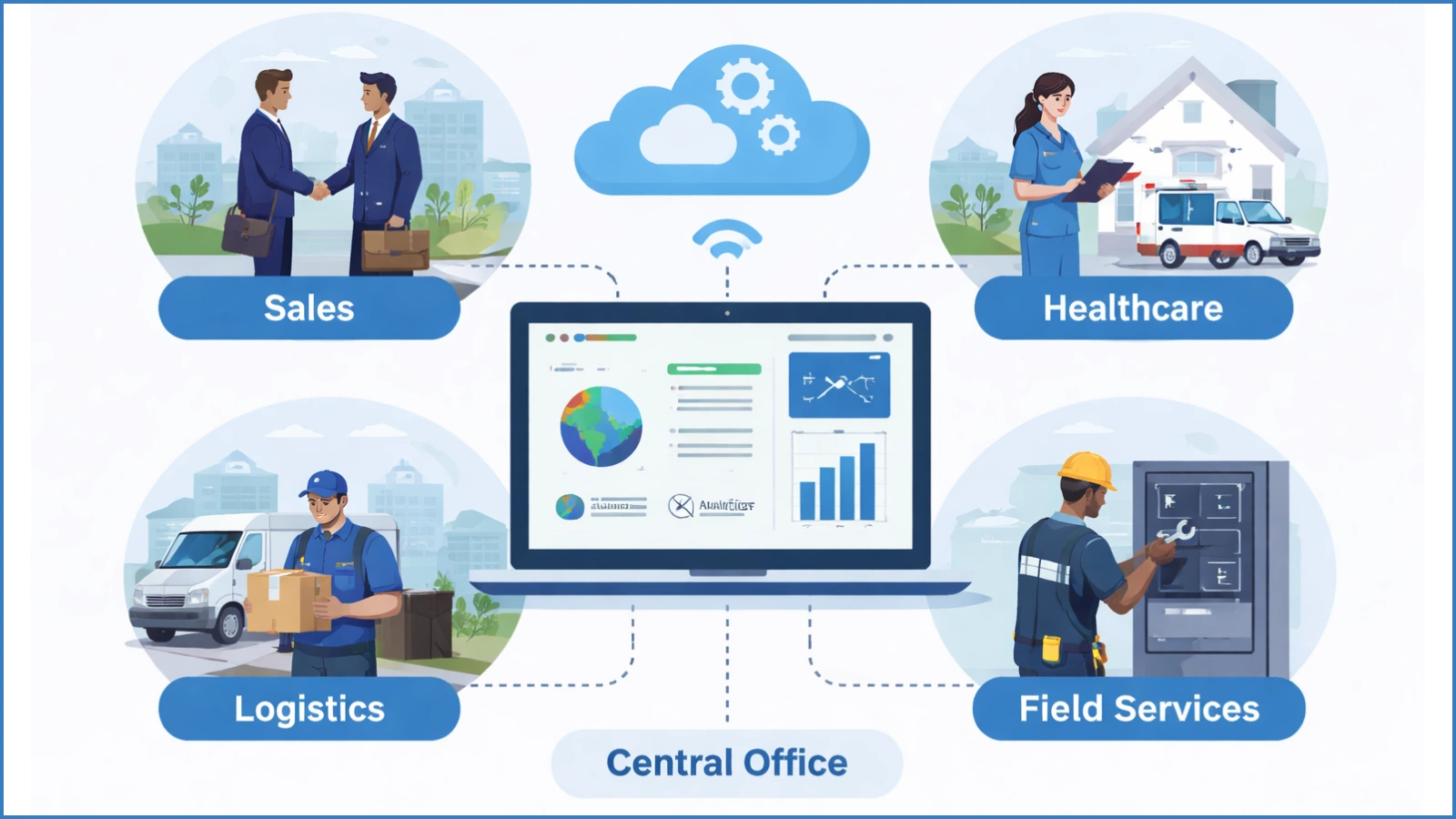
FFM refers to the structured management of employees and resources operating outside company premises across multiple locations. It focuses on ensuring that field-based activities are executed efficiently, safely, and in alignment with organizational objectives.
A comprehensive FFM approach typically includes vehicle tracking, field sales monitoring, workforce scheduling and dispatch, compliance with safety protocols, and real-time oversight of on-ground activities. By centralizing visibility into these moving parts, organizations can improve accountability, reduce delays, and enhance service delivery.
In a hurry? Listen to the blog instead!
Given the complexity and number of variables involved, many organizations now rely on cloud-based field force management software to streamline operations. Modern FFM systems generally consist of a centralized back-end platform integrated with mobile applications and desktop interfaces. This setup enables seamless communication between field personnel and office teams, supports real-time data sharing, and facilitates informed decision-making.

Field force management is particularly critical across industries such as:
Sales: Managing representatives who visit clients, attend events, and track leads or orders in real time.
Healthcare: Coordinating home visits, patient care services, and timely delivery of medications while maintaining compliance standards.
Logistics: Optimizing route planning, monitoring driver locations, and tracking delivery status to ensure operational efficiency.
Field Services: Scheduling technicians for installation, maintenance, or repair tasks while ensuring timely service and quality assurance.
Field force management revolves around three main components:
Scheduling And Dispatching Of Workforce
It is important to assign the right job to the right person, depending on the skills, availability, and location, in order to ensure positive results.
Tracking And Communication In Real-Time
GPS and mobile apps are used to monitor field workers, their locations, and their progress. Also, there are a lot of last-minute changes or emergencies that are accommodated through dynamic scheduling.
Reporting And Analyzing Performance
It is necessary to monitor KPIs like job completion rates and customer feedback.
Difficulties in Field Force Management

Managing a distributed workforce presents a unique set of operational complexities. Organizations often encounter recurring challenges that, if not addressed strategically, can impact productivity, cost efficiency, and customer satisfaction. Understanding these obstacles is the first step toward building a more resilient and efficient field service framework.
1. Communication and Coordination Gaps
Field teams frequently operate independently across multiple locations. Without a well-structured communication system, miscommunication, delayed updates, and fragmented information can disrupt workflows.
Managers may also struggle with efficient task allocation, leading to missed deadlines and service delays. When centralized communication channels are poorly configured or inconsistently used, confusion and operational errors become more likely.
2. Inefficient Route Planning
Without intelligent routing tools and proper guidance, field personnel may waste valuable time and resources. Poorly optimized routes increase travel time, fuel costs, and fatigue.
External variables such as traffic conditions, weather disruptions, and unexpected delays further complicate operations. The result is reduced efficiency, higher operational expenses, and additional strain on business performance.
3. Limited Real-Time Visibility
A lack of real-time insights makes it difficult for managers to monitor progress, identify bottlenecks, or respond proactively to issues. Without accurate, live data, decision-making becomes reactive rather than strategic.
This limited visibility can lead to missed opportunities, inefficiencies, and rushed decisions that negatively affect overall productivity and service quality.
4. Reduced Productivity and Accountability
Inadequate monitoring and oversight may result in inconsistent performance among field personnel. Tasks may be delayed, incomplete, or inaccurately reported.
Manual reporting processes further compound the problem, as they are time-consuming and prone to human error. Over time, this lack of accountability can lead to uneven service standards and diminished operational outcomes.
5. Customer Dissatisfaction
Operational inefficiencies ultimately impact the customer experience. Delays, poor coordination, and communication gaps can create frustration and erode trust.
Even a single failed service interaction can result in negative feedback, reputational damage, and long-term brand impact. In competitive markets, maintaining consistent and reliable service delivery is essential to sustaining customer loyalty.
How Technology Is Changing Field Force Management?

Technology plays an important role for businesses in field force management. Modern tools are changing FFM by enhancing visibility and improving efficiency. Here are some points explaining this:
Cloud-Based FFM Software
These systems provide centralized systems that allow real-time updates, remote access, and smooth data sharing. Monitoring field operations from anywhere becomes achievable for managers, ensuring transparency and efficiency.
This eliminates the delays and chances of failures. Using cloud computing for field force management allows companies to automatically back up their data and update their software continually, so they no longer have an excuse not to have all the newest features and security measures without having to pay extra for it.
AI And Machine Learning
Artificial intelligence and machine learning play a pivotal role in optimizing field operations and workforce management. By leveraging advanced algorithms, organizations can streamline scheduling, accurately forecast travel delays, reduce downtime, and minimize human error.
These technologies enable predictive and proactive analysis of operational data, allowing businesses to identify inefficiencies before they escalate into larger issues. Through data-driven insights, managers can make informed decisions, allocate resources more effectively, and respond swiftly to changing conditions. Ultimately, AI and ML enhance operational agility, improve accuracy, and support smarter, more strategic decision-making across the organization.
Mobile Apps
Mobile apps enable field teams to access assigned tasks, update job statuses, capture notes, and communicate with managers from virtually any location.
In areas with limited or unstable connectivity, modern field force management apps offer offline functionality. This means essential data, such as assigned tasks, customer details, checklists, and forms, is stored locally on the device. Field agents can continue recording updates, collecting signatures, capturing images, and completing reports even without an active internet connection.
Once connectivity is restored, the app automatically syncs the stored data with the central system, ensuring records remain accurate and up to date.
It is important to note that real-time tracking and live communication require network access. Offline mode ensures operational continuity, while synchronization maintains visibility and control for managers once the device reconnects.
Wearable Devices
Smart devices provide real-time data on vehicle health and worker safety. These tools include GPS trackers and wearable sensors.
IoT tools enhance transparency into operations and reduce downtime, improving overall efficiency.
Tips For Mastering Field Force Management
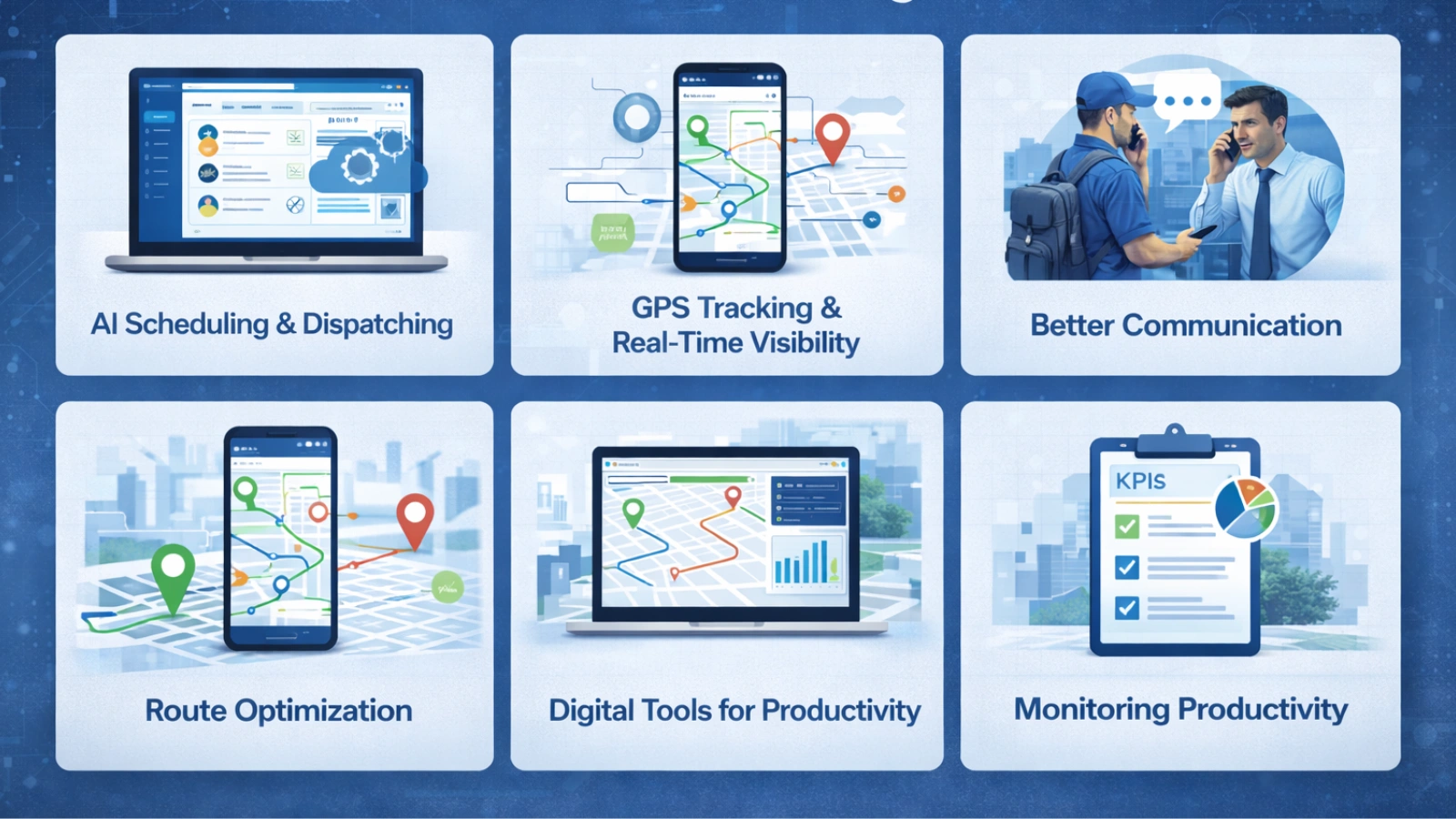
To optimize Field Force Management (FFM), organizations can establish the proper strategies to optimize the productivity of mobile workforces that provide services, maintain equipment, or perform field operations. The following is a list of key strategies for optimizing field force management:
Optimize Your Workforce Scheduling And Dispatching
The success of any company’s operations in the field relies heavily on the effectiveness of scheduling. Scheduling tasks automatically using AI solutions creates efficiencies by analyzing multiple factors with little human intervention.
Allowing real-time changes to scheduled workers for emergencies, cancellations, and unforeseen delays also ensures that your technicians are dispatched correctly.
Leverage Real-Time Tracking And GPS Systems
To improve efficiency, it is critical that you can see your field operations in real time. By using GPS-based mobile applications, line managers can monitor where their field workers are, how they are progressing and the best routes to take when visiting multiple locations.
Additional alert systems can notify supervisors of any diversions from an assigned route, ensuring compliance and workplace safety.
Communicate And Work Together Better
With field force management, field workers will have fewer delays and less chance of making mistakes if field and office employees can communicate with each other easily and effectively.
Once they have service again, field workers can update all their data and send and receive new data seamlessly.
Route Planning And Navigation Automation
Route planning is a very tedious and slow process. Manually routing a vehicle can be improved using route optimization powered by AI that delivers the quickest, most fuel-efficient routes.
Better route planning will reduce travel times, reduce fuel expenses, and reduce the time your customers wait for service.
Using Digital Tools To Enhance Productivity
Field crews in field force management can improve their productivity by using digital task management dashboards that allow them to instantly access all the information they need to complete their jobs.
Additionally, the use of digital forms and electronic signatures removes the need for paper documents. This speeds up the document process and reduces the likelihood of error in documenting the work done.
EmpCloud For Field Force Management
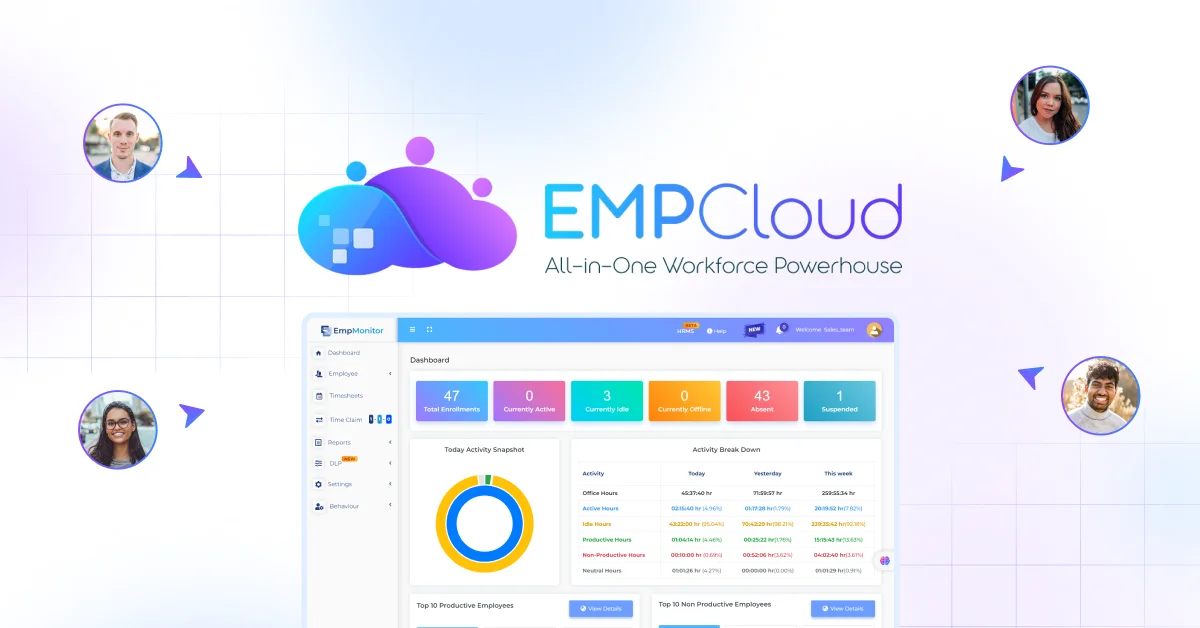
Within its comprehensive suite of workforce management tools, EmpCloud also offers a robust Field Force Management solution designed to streamline on-ground operations and improve real-time visibility. By integrating field activities with back-office workflows through a unified cloud-based platform, EmpCloud enables seamless coordination between managers and field teams while ensuring operational transparency and control.
Its field force management capabilities include:
Live Location Tracking
Monitor your field team’s real-time location and movement to maintain complete visibility and improve operational responsiveness.
Distance Tracking
Access accurate, real-time data on the distance traveled by field personnel to evaluate efficiency and optimize resource utilization.
Advanced Geofencing
Create geo-boundaries around designated areas and receive instant notifications when team members enter or exit specified zones.
Leave Management
Simplify leave requests and approvals through a structured system that ensures accurate tracking and minimal administrative burden.
Manage Tasks and Opportunities
Assign tasks, track progress in real time, and ensure every opportunity is monitored and executed effectively.
Attendance Management
Automate attendance tracking with remote logins and digital timesheets, reducing manual errors and improving accountability.
Centralized Dashboard
Access all critical data, insights, and tools from a single dashboard that provides a comprehensive overview of field operations.
Performance Reports
Generate detailed performance analytics to support data-driven decision-making and continuous operational improvement.
Geo-Verified Client Visits
Confirm the authenticity of client visits with geo-verified check-ins, ensuring field teams are present at the correct location.
Detailed Timeline Review
Analyze historical location and activity data to identify trends, improve planning, and enhance productivity.
Client Management
Organize and manage client information efficiently while tracking interactions to strengthen communication and business relationships.
Task Document Upload
Attach relevant documents to tasks to ensure clarity, reduce errors, and streamline execution.
Snap Task Pictures
Capture and upload images as proof of task completion, maintain accurate records, and ensure accountability. Together, these features empower organizations to enhance productivity, maintain compliance, and drive measurable improvements across their mobile workforce operations.
Read More!
How To Choose The Best Field Service Management Software?
Compliance Monitoring: A Shield for Enterprise Security
Conclusion
Field force management is essential for optimizing mobile workforce operations, improving visibility, and enhancing service delivery. By leveraging structured processes and modern technology, organizations can increase productivity, reduce delays, strengthen coordination, and consistently meet rising customer expectations while maintaining operational control and efficiency.
FAQs
How is field force management important for business?
Field force management helps businesses in reducing operational costs (such as fuel and overtime expenses). It improves workforce productivity through better scheduling and real-time tracking. Field force management also enhances customer satisfaction by providing faster response times and accurate ETAs.
What are some of the advantages of using real-time GPS tracking for field teams?
It enables you to track employees’ daily journeys to provide you with necessary data that will help guide your management decision-making process and improve operational efficiency.
The information collected from this GPS tracking can also help provide an accurate record of mileage for federal and state tax purposes, as well as provide a basis for making future hiring decisions on the basis of employees’ historical travel patterns within your company.
What are KPIs, and which ones should be tracked by businesses in field force management?
Key Performance Indicators (KPIs) are referred to as the critical and significant measures towards a desired result. Businesses should track KPIs such as the first-time fix rate. The first-time fix rate is measured in the percentage of jobs completed in one visit; the average length of time taken to complete a job measure how efficiently a company operates.
And also, travel time vs. service time helps determine if routes can be improved. Customer satisfaction scores are determined by feedback ratings and fuel and maintenance costs can be analyzed to determine where savings may occur.
Is there any way businesses can ensure field worker safety?
Implementing GPS tracking and SOS alerts for emergency notifications can help ensure the safety of field-based workers. Having digital safety checklists for compliance verification will assist in ensuring their safety while using wearable devices to allow monitoring of both health and environmental risks.
Ensuring real-time communication allows a field-based employee to receive immediate support from their manager when needed.
How Do Businesses Begin Using Field Force Management?
First, businesses should identify the current challenges of scheduling and communicating and then find the appropriate type of field management software that fits the business’s specific needs. Then train the employees on how to utilize mobile applications, GPS systems, and reporting capabilities.
Track key performance indicators (KPI) to monitor and optimize operations. Businesses should continually adjust their strategy accordingly.
Quick Search Our Blogs
Type in keywords and get instant access to related blog posts.