

Managing a 24/7 operation is no small task. Whether you run a manufacturing plant, a hospital, a security firm, or any facility that never closes, keeping the right people in the right place at the right time is one of the hardest challenges in workforce management. That is exactly where the dupont schedule comes in.
This scheduling system has been widely adopted across industries for decades, and for good reason. It balances productivity, rest, and fairness in a way that few other frameworks can match.
If you are exploring options for round-the-clock staffing or simply trying to understand how the dupont shift schedule works, this guide covers everything from the basics to real-world implementation.
In a hurry? Listen to the blog instead!
What Is A DuPont Schedule?
It is a rotating 12-hour shift pattern designed to provide continuous coverage across all seven days of the week. It was originally developed by the DuPont Corporation, one of the world’s largest chemical companies, to handle the demands of non-stop industrial operations.
Under this system, employees work in rotating blocks of day and night shifts spread across a four-week cycle. The dupont shift schedule uses four teams to maintain constant coverage. Two teams handle day shifts while two teams cover night shifts, rotating in a structured sequence that gives each employee a long weekend off every other cycle.
What makes the dupont schedule stand out is the built-in seven-day rest period that employees receive once every four weeks. This extended break is a major reason why many workers actually prefer this system over a traditional five-day workweek.
The 28-Day Rotation Breakdown
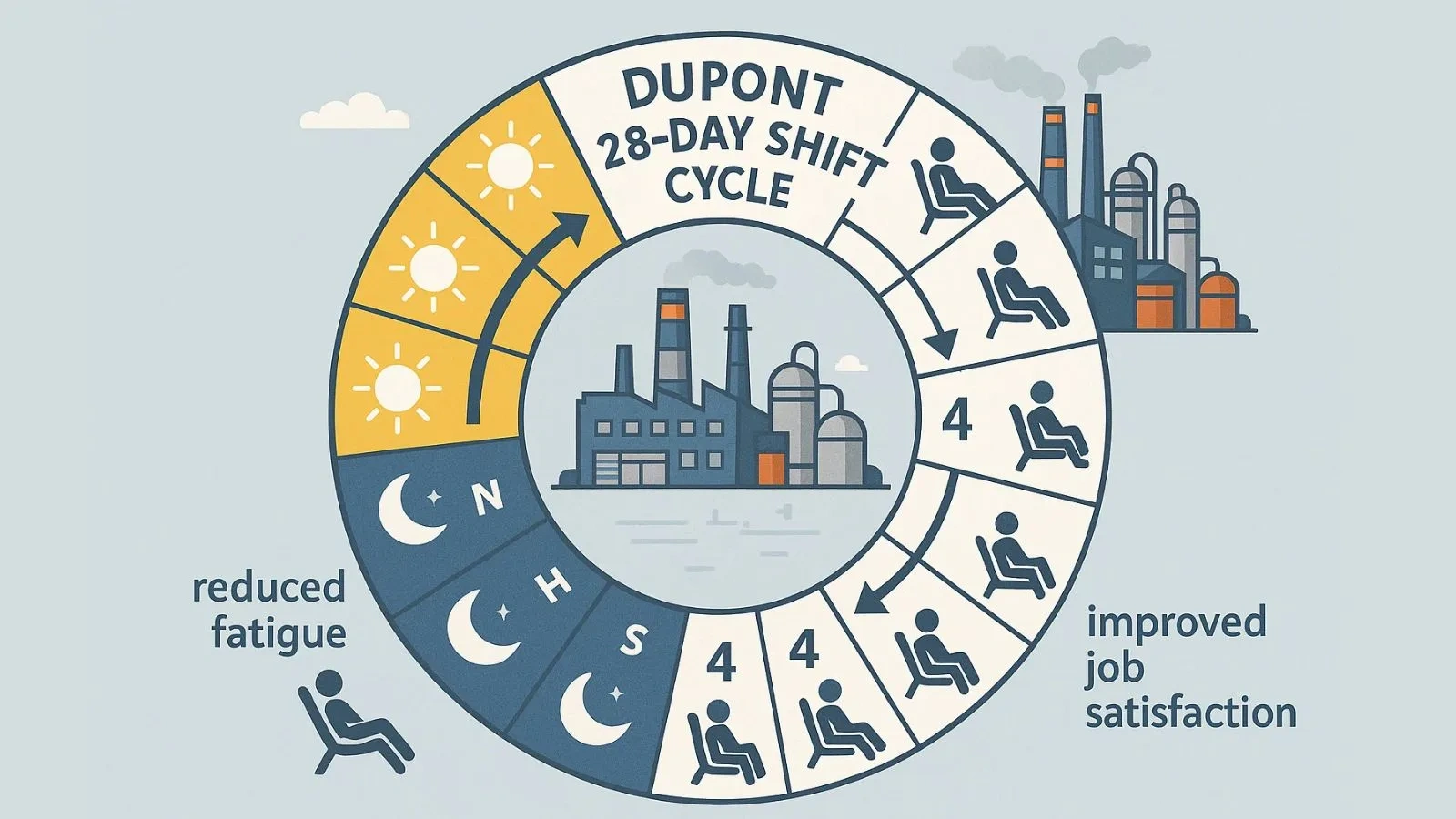
The dupont schedule runs on a 28-day cycle. Here is how the pattern typically looks for one team across a full rotation:
1: Four consecutive night shifts, then three days off
2: Three night shifts, one day off, then three day shifts
3: One day off, four-day shifts, then three days off
4: Seven consecutive days off
This pattern repeats with all four teams staggered so that at least two teams are always working. Employees under a DuPont shift schedule typically average 42 hours of work per week, which is slightly above the standard 40 hours. The additional hours are often compensated through the seven-day break and premium shift rates.
Also Read:
How To Use Panama Schedule To Boost Productivity & Coverage?
How The Dupont Schedule Differs From Other Shift Schedules?
When comparing shift schedules, the Dupont shift schedule has some clear distinctions. Most traditional systems operate on a fixed pattern, employees always work days or always work nights. The DuPont schedule introduces rotation, which means workers alternate between day and night shifts over time.
This rotating nature makes it different from fixed-shift models, where workers stay permanently on one schedule. It also differs from the Panama schedule, which follows a 2-2-3 pattern, and the Pitman schedule, which uses alternating 3-4 day blocks. This system is more complex but rewards workers with a full week off, something the other models rarely offer.
Understanding rotating shift work schedules is essential before adopting any such model. A rotating shift system is one where employees cycle through different shifts, days, evenings, or nights, instead of staying fixed on one. It is one of the most structured and widely respected examples of this approach.
Industries That Rely On The Dupont Schedule
The DuPont schedule was built for environments that simply cannot afford a gap in operations. Here are the industries where it is most commonly used.
Manufacturing and Production:
Factories that run assembly lines 24 hours a day need a structured shift system to keep machines running and output consistent. Downtime in production translates directly into financial loss.
Healthcare:
Hospitals operate every hour of every day. Nurses, technicians, and support staff need predictable yet fair scheduling, and the DuPont schedule provides exactly that, consistent coverage without burning out any single team.
Emergency Services and Security:
Police departments, fire stations, and security companies depend on a structured shift system to ensure that staffing levels remain stable at all times. A gap in coverage is never an option in these fields.
Oil, Gas, and Energy:
Refineries and power plants are prime examples of where this shift system thrives. These facilities cannot be shut down safely without extensive planning, so round-the-clock staffing is not a preference, it is a necessity.
What Are The Advantages Of The Dupont Schedule?
The DuPont schedule has earned its reputation through proven results. Here are the key benefits it delivers.
Extended Consecutive Days Off:
One of the biggest draws of this shift system is the seven-day break that comes around once every four weeks. Employees can use this time for travel, personal commitments, or simply deep rest, which helps balance the intense work periods.
Consistent Coverage for Employers:
From a management perspective, this shift system eliminates the guesswork. With four teams rotating in a fixed pattern, supervisors always know who is working and who is off. The structure reduces scheduling conflicts and last-minute staffing emergencies.
Reduced Overtime Expenses:
When this shift system is implemented correctly, the need for unplanned overtime drops significantly. Because coverage is built into the rotation, managers are less likely to call in workers on their days off, which reduces both cost and worker fatigue.
Fairness in Shift Distribution:
The DuPont schedule rotates all four teams through both day and night shifts. No single group is permanently stuck working nights, which creates a more equitable experience across the workforce. Employees tend to view this system as fair, which has a positive effect on morale and retention.
What Are The Challenges Of The Dupont Schedule?

No scheduling system is without trade-offs. The dupont schedule comes with its own set of challenges that employers and employees should understand before adoption.
Sleep Disruption from Rotating Shifts:
Switching between day and night shifts within the same month is tough on the human body. This shift system requires employees to adjust their sleep patterns repeatedly, which can affect alertness, health, and long-term wellbeing if not managed carefully.
Complex Planning for Managers:
A DuPont shift work schedule involves tracking four teams across a 28-day rolling cycle. For managers without the right tools, this complexity can become a real operational burden, especially when handling leave requests, shift swaps, or unexpected absences.
Social and Family Impact:
Working nights and rotating shifts can make it difficult for employees to maintain consistent social routines or family commitments. This shift system helps by offering longer rest blocks, but the irregular pattern can still create friction in personal life, particularly for workers with young children.
Tips For Managing The Dupont Schedule Effectively

Getting the most out of the DuPont schedule requires proactive management. Here are some practical tips that help organizations make this system work smoothly.
Communicate the schedule well in advance so employees can plan their personal lives around the rotation. This system works best when workers are not caught off guard by upcoming night shifts or rest periods.
Train supervisors to monitor signs of fatigue, especially during periods when employees transition from night to day shifts. A well-managed system focuses on both productivity and employee well-being.
Keep accurate attendance and leave records so the structure does not break down when someone calls in sick. Backup coverage plans are essential to maintain consistency.
Use digital tools to automate and track scheduling. Manual spreadsheets are error-prone and time-consuming. Workforce management platforms designed for shift-based environments can significantly reduce administrative effort while keeping everyone aligned.
Also Read:
How Many Work Hours In A Month? A Powerful Guide
The Role Of Technology In Simplifying The DuPont Schedule
As organizations grow and teams expand, managing a rotating shift system manually becomes increasingly difficult. The 28-day rotation involves dozens of moving parts, shift assignments, attendance tracking, leave approvals, and real-time coverage monitoring. Any gap in this process can disrupt operations and affect employee trust, especially when calculating total work hours in a month for each employee accurately.
This is where modern workforce management platforms make a meaningful difference. One such platform is EmpCloud, a unified solution designed to help organizations manage everything from employee scheduling and attendance to payroll and performance tracking within a single system. For companies running this type of shift structure, having all this capability in one place is not just convenient; it is transformative.
With EmpCloud, HR teams and managers can eliminate the guesswork that comes with rotating shift management. The platform’s automated timesheets, leave tracking, and real-time dashboards ensure that the system runs exactly as planned, while also providing clear insights into employee work hours in a month without the need for constant manual intervention.
How EmpCloud Supports DuPont Schedule Management?
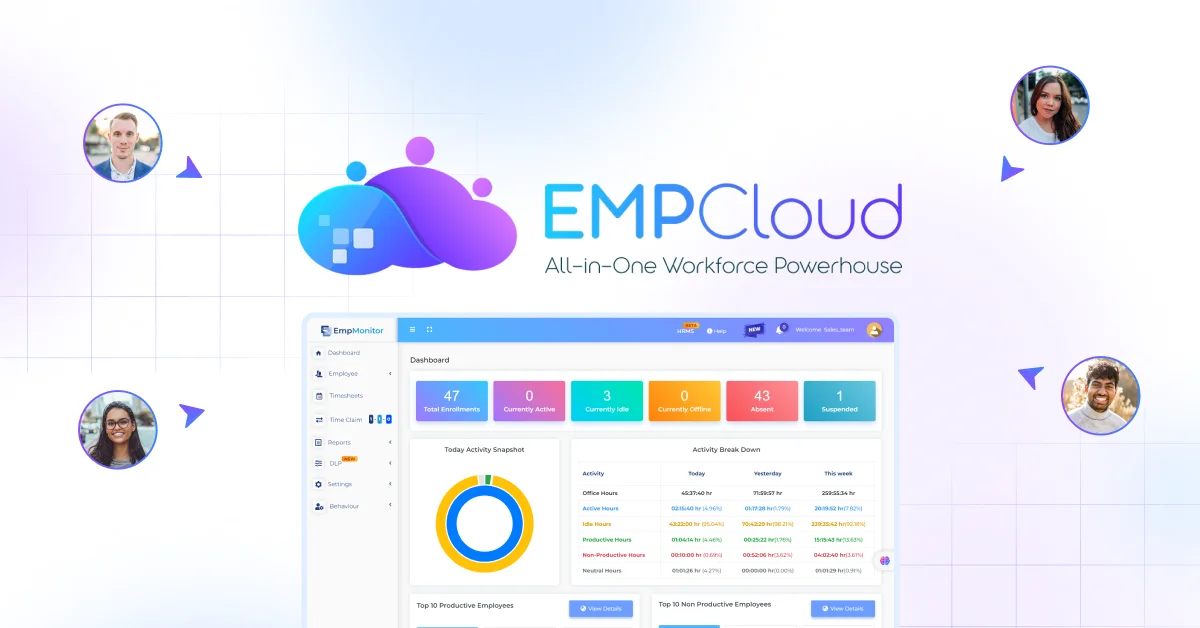
EmpCloud is built around two core pillars: manager-centric tools and HR-centric features. Together, these capabilities address the most common pain points that arise when running a Dupont schedule at scale.
Automated Timesheets and Attendance Tracking:
Manually logging shift hours across a 28-day cycle is tedious and error-prone. EmpCloud automates timesheet generation, ensuring that every hour worked is captured accurately. Leave and attendance records are updated in real time, giving managers a clear picture of workforce availability at any moment.
Face Recognition Attendance System:
For facilities that operate around the clock, validating who is actually on-site at any given hour is critical. EmpCloud’s contactless face recognition attendance system removes the need for manual check-ins and eliminates the risk of buddy punching, a common problem in shift-heavy environments.
Geo-Location and Field Team Tracking:
Organizations with field teams working across multiple locations under a DuPont schedule need visibility beyond the office. EmpCloud’s geo-location tracking keeps managers informed of where field employees are throughout their shifts, supporting both safety and accountability.
Employee Payroll Management:
This shift system often involves shift differentials, overtime calculations, and complex pay structures. EmpCloud handles payroll management automatically, ensuring that employees are paid accurately based on actual hours worked, shift types, and applicable rates. Errors in payroll can damage trust, and EmpCloud’s automation minimizes that risk.
Employee Requests and Leave Management:
Managing shift swap requests, compensatory-off approvals, and work-from-home requests in a rotating shift environment requires a streamlined process. EmpCloud’s employee request management module handles all of these effortlessly, reducing back-and-forth communication and keeping records organized.
Centralized Workforce Dashboard:
EmpCloud brings together all workforce data, timesheet records, live location tracking, contactless attendance, and task allocation into one unified dashboard. This single source of truth is invaluable for operations running a rotating shift system, where managers need instant access to accurate data without toggling between multiple tools.
Trusted by more than 1,500 industry leaders, EmpCloud is designed for organizations that take workforce management seriously. It does not just track hours; it empowers teams to operate more efficiently, communicate more clearly, and make better decisions every single day.
Is The Dupont Schedule Right For Your Organization?
This shift system is a strong fit for businesses that operate 24/7 and have stable, predictable staffing needs. If your organization regularly deals with unplanned overtime, coverage gaps, or high employee turnover due to unfair shift distribution, this approach may be the structure you have been missing.
However, it is important to evaluate your workforce’s readiness for rotating shifts. Workers who struggle with sleep disruption or who have demanding personal commitments may find the transition challenging. Before rolling it out, gather input from your team and ensure you have the right management tools in place to support the change.
A phased rollout, starting with one department or location, is often the smartest way to test this system before expanding organization-wide. Use that period to collect data, address concerns, and fine-tune your approach.
Final Thoughts
This shift system has stood the test of time for a reason. It solves one of the most persistent challenges in workforce management, maintaining 24/7 coverage while keeping employees engaged, rested, and fairly treated. When implemented thoughtfully, it improves consistency, reduces unplanned overtime, and creates a sense of predictability that employees genuinely value.
The key to making this system work is preparation. That means clear communication, supportive management practices, and the right technology to keep everything running smoothly behind the scenes. Platforms like EmpCloud make it far easier to manage the complexities of rotating shift work by centralizing data, automating routine tasks, and giving managers the visibility they need to stay in control.
If your organization is ready to step up its scheduling game, this approach, backed by the right tools, is a proven path forward.
FAQs
1. How many teams are required to run a DuPont schedule effectively?
A standard DuPont schedule requires four teams to maintain continuous 24/7 coverage. This structure ensures that while some teams are working day or night shifts, others are resting or on extended time off.
2. Is the DuPont schedule suitable for small businesses?
It can be, but only if the business has enough staff to form four rotating teams. Smaller organizations may find it difficult to implement without overloading employees or compromising coverage.
3.How does the DuPont schedule impact employee productivity over time?
Productivity can remain high if fatigue is managed properly. The long rest period helps recovery, but frequent shift changes can reduce focus if employees are not supported with proper scheduling practices.
4. Can employees swap shifts in a DuPont schedule?
Yes, but it requires careful coordination. Because the schedule is tightly structured, any swap must ensure that coverage is not disrupted and that working hour limits are still respected.
Quick Search Our Blogs
Type in keywords and get instant access to related blog posts.