
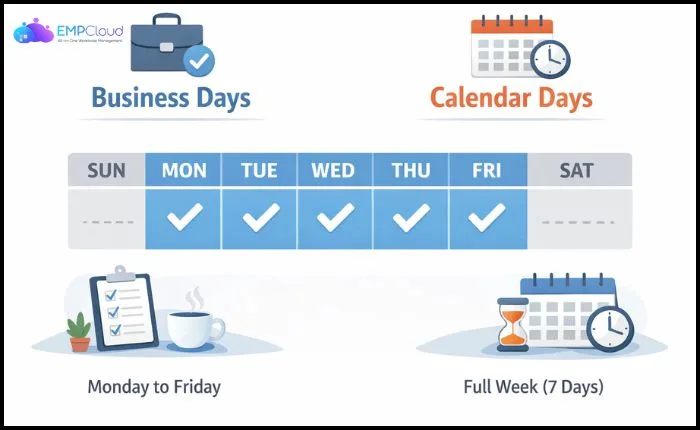
Understanding what does business days mean is essential for anyone dealing with shipping, deadlines, or work schedules. While the term seems straightforward, it often confuses people who mix up business days with calendar days. Knowing the difference can prevent delays, missed deadlines, and miscommunication in both personal and professional contexts.
A business day generally refers to the standard working days in a week, typically Monday through Friday, excluding public holidays. Many industries, from logistics to finance, rely on business days to calculate timelines for shipments, payments, and project deadlines.
Misinterpreting business days can lead to frustration—for example, expecting a package in three “days” without realizing they are business days rather than calendar days. Tools like EmpCloud can help track tasks and deadlines according to business days, ensuring smoother workflow management and accurate planning.
You can listen to this Blog here.
Definition of a Business Day
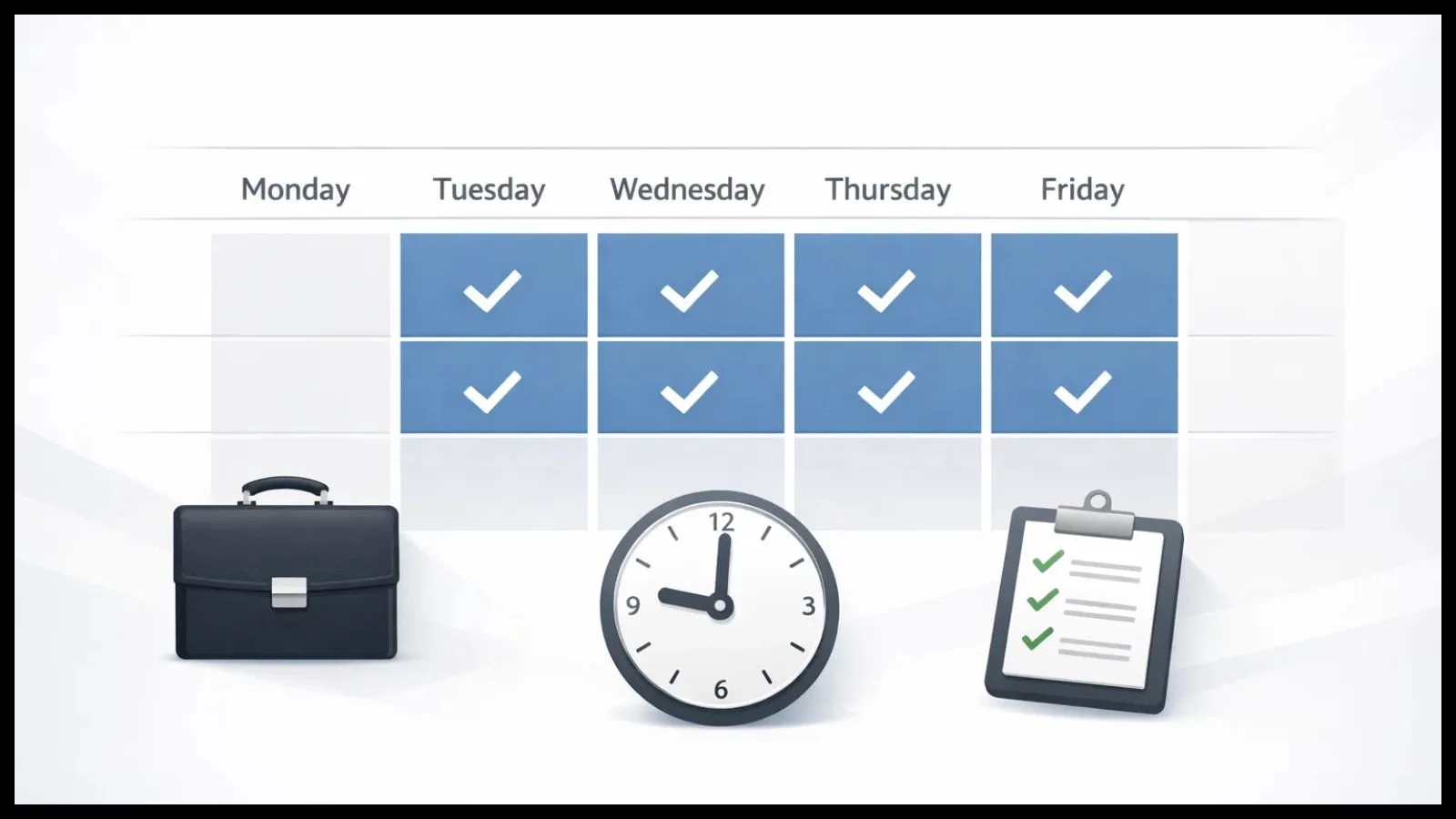
A business day is a standard unit of time used by companies and organizations to schedule work, deliveries, and deadlines. Typically, business days include Monday through Friday and exclude weekends (Saturday and Sunday) as well as public holidays.
Understanding what’s a business day is important because it determines how tasks and timelines are calculated. For example, if a shipment is expected in 3 business days and it is sent on a Friday, the delivery will usually be scheduled for the following Wednesday, assuming no holidays intervene.
Many people confuse business days with calendar days. Calendar days include all days of the week, while business days focus solely on the days when regular work operations occur. This distinction is crucial for project planning, contracts, and shipping schedules.
Why Business Days Matter?
Understanding what does business days mean becomes especially important when timelines affect money, commitments, or customer expectations. Businesses across industries use business days as a standard way to set clear and realistic deadlines.
In shipping and delivery, companies rely on business days to manage logistics and warehouse operations. When customers see timelines like 1–3 business days or 3–5 business days, those estimates help providers account for processing time, staffing, and transportation schedules.
In workplaces, business days are used for payroll processing, approvals, onboarding, and project milestones. Legal documents and contracts also depend heavily on business days to define response times, notice periods, and compliance deadlines. Misunderstanding these timelines can lead to missed obligations or disputes.
For teams managing multiple tasks and deadlines, tracking work by business days brings consistency. Platforms like EmpCloud help organizations plan workloads, monitor progress, and manage deadlines accurately by aligning tasks with real working days rather than calendar assumptions.
Understanding why business days matter enables individuals and businesses to plan more effectively, communicate clearly, and avoid unnecessary delays.
Common Business Day Timeframes Explained
When businesses communicate timelines, they often use specific business day ranges. Understanding what does business days mean in these common timeframes helps set the right expectations and avoid confusion.
1–3 Business Days
When a company says something will take 1–3 business days, it usually means the task or delivery will be completed within one to three working days, excluding weekends and holidays. For example, if a request is made on a Thursday, completion may happen anytime between Friday and the following Tuesday.
3–5 Business Days
Many services quote 3–5 business days for processing or delivery. This range gives businesses flexibility while still providing a reasonable timeline. If an order is placed on a Monday, delivery could occur between Thursday and the following Monday, depending on weekends and holidays. This also helps clarify what does 3–5 business days mean in real-world terms.
How Long Is 6 Business Days?
Six business days refer to six working days, typically Monday through Friday, excluding weekends and public holidays. This means that six business days usually extend beyond a single calendar week. For example, if you start counting on a Monday, the sixth business day falls on the following Monday (unless there is a holiday). In simple terms, six business days generally equal about one week and one additional working day.
How Much Is 10 Business Days?
Another common question is how much is 10 business days. Ten business days generally equal two full workweeks. If you begin counting on a Monday, the tenth business day would fall on the second Friday, excluding any public holidays.
Understanding these timeframes helps individuals and businesses plan deliveries, payments, and project deadlines more accurately.
How to Calculate Business Days?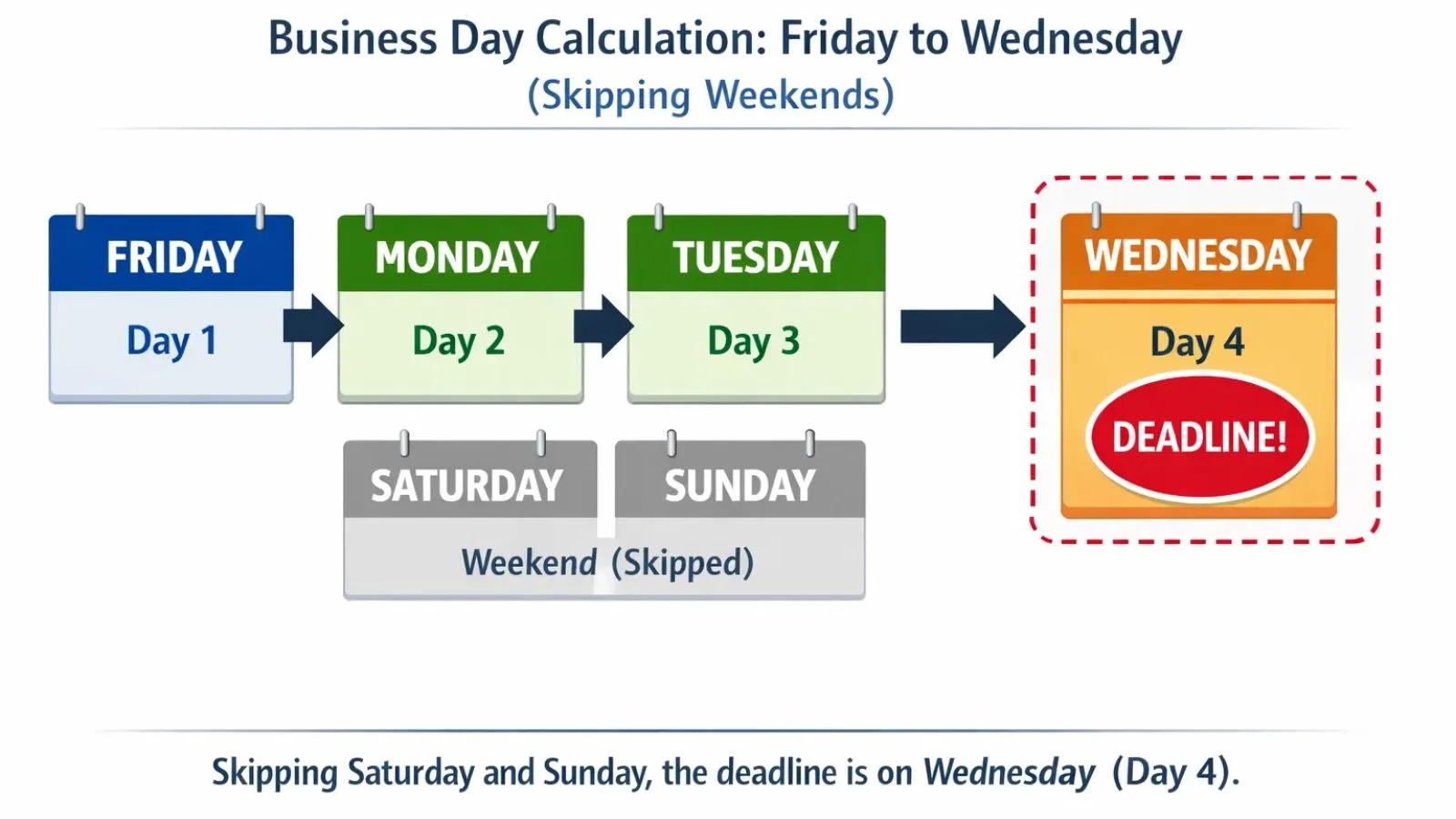
To clearly understand what does business days mean, it’s important to know how to calculate them correctly. Small mistakes—such as counting weekends or ignoring public holidays—are the most common reasons for confusion.
Here’s a simple step-by-step way to calculate business days:
- Start with the correct date
In most cases, counting begins on the next working day unless the timeline specifically includes the start date. - Count only working weekdays
Business days usually run from Monday to Friday. Weekends are excluded, which helps clarify how long are business days in real-world use. - Exclude public holidays
Any holiday that falls on a weekday does not count as a business day. This is especially important for banking, legal, and government timelines. - Stop once the required number is reached
When the specified number of business days is complete, that date becomes the deadline or expected delivery date.
For example, if a service promises delivery in 1–3 business days and the order is placed on a Friday, the count usually starts on Monday, with completion expected by Wednesday.
Business Days vs Calendar Days
Understanding the difference between business days and calendar days is key to avoiding missed deadlines. Many people misunderstand what does business days mean because they assume all days are counted the same way.
Calendar days include every day of the week—Monday through Sunday—without exception. If a deadline is set for 5 calendar days, weekends and holidays are included in the count.
Business days, on the other hand, only include standard working days, usually Monday through Friday, and exclude weekends and public holidays. This means a task scheduled for 5 business days will often take longer than 5 calendar days.
For example, if a company promises a response in 3–5 business days and the request is made on a Thursday, the timeline may extend into the following week because the weekend is not counted. This explains what does 3-5 business days mean in practical situations.
Knowing the difference helps individuals plan better, communicate timelines clearly, and set realistic expectations in work and personal commitments.
Tips for Planning Around Business Days
Planning effectively becomes much easier once you clearly understand what does business days mean and how those days impact timelines. Whether you’re managing work tasks, client commitments, or deliveries, a few simple practices can help avoid confusion and delays.
Set clear expectations upfront
Always clarify whether a timeline is based on business days or calendar days. This reduces misunderstandings, especially when sharing deadlines like 1–3 business days or 3–5 business days with clients or teams.
Account for weekends and holidays early
When planning projects or deliveries, check the calendar for weekends and public holidays in advance. This is particularly useful when calculating longer periods such as how much is 10 business days.
Build buffer time into deadlines
Unexpected delays can happen. Adding a small buffer when planning around business days helps ensure commitments are still met even if something shifts.
Use a centralized planning tool
Managing multiple timelines manually can be challenging, especially for growing teams. Tools like EmpCloud help businesses track tasks, approvals, and deadlines based on actual working days. By aligning projects with business-day schedules, teams can plan more accurately, stay organized, and improve overall productivity.
Planning around business days isn’t just about counting dates—it’s about setting realistic timelines and maintaining clear communication.
Smarter Time Management with empCloud
Effective time management becomes increasingly complex as teams grow and projects overlap. Relying on spreadsheets or manual tracking often leads to missed deadlines, unclear responsibilities, and inefficient use of working hours. This is where a centralized planning tool like empCloud makes a measurable difference.
empCloud brings all tasks, timelines, approvals, and dependencies into one unified platform. Instead of juggling multiple calendars and communication channels, teams gain a single source of truth that reflects real business operations. By planning schedules around actual working days—excluding weekends, holidays, and non-working hours—empCloud helps organizations create timelines that are realistic and achievable.
With empCloud, managers can:
- Assign tasks with clear ownership and priority
- Track progress in real time across teams and departments
- Manage approvals without bottlenecks or endless follow-ups
- Automatically align deadlines with business-day schedules
This structured approach reduces last-minute rushes and improves accountability. Team members know exactly what needs to be done and by when, allowing them to focus on execution rather than coordination. Managers, in turn, gain better visibility into workloads, helping them balance resources and prevent burnout.
Common Misunderstandings About Business Days
Even though the concept seems simple, many people still misunderstand what does business days mean, leading to delays and frustration. Clearing up these common misconceptions can help set accurate expectations.
Business days are not universal: Many people assume every business follows the Monday–Friday schedule, but industries like retail, logistics, or hospitality may operate on weekends, and public holidays differ by country or region.
Business days are confused with business hours: A common mistake is thinking a business day equals a fixed number of hours. In reality, a business day represents a full working day, so a “1 business day” response can arrive anytime within the next working day.
Weekends are mistakenly included in counts: When calculating timelines—such as how long 6 business days are—people often add Saturdays and Sundays, which leads to incorrect deadlines and delays.
Timelines are assumed to start immediately: Many users expect processing to begin the same day a request is made, but in industries like shipping, banking, or customer support, business days are usually counted starting from the next working day.
Business Days in Different Industries
While the general idea of business days remains the same, how they are applied can vary by industry. Understanding these differences adds more clarity to what does business days mean in real-life situations.
Banking and Finance
In banking, business days usually exclude weekends and public holidays. Transactions like fund transfers, loan approvals, and refunds often follow strict business-day timelines.
E-commerce and Shipping
Online retailers commonly use business days for processing orders and deliveries. When you see timelines like 1–3 business days or 3–5 business days, it usually refers to processing time before shipping begins.
Corporate and HR Operations
Notice periods, payroll processing, onboarding, and approvals are almost always calculated in business days. Missing this detail can lead to compliance or communication issues.
Government and Legal Services
Government offices and courts strictly follow business days, excluding weekends and official holidays. Deadlines here are often non-negotiable.
Understanding industry-specific usage helps prevent incorrect assumptions and missed deadlines.
Business Days Across Countries and Regions
Business days are not universal. What counts as a working day can vary depending on geography, which often adds to confusion around how long are business days.
Different Weekend Structures
- In many countries, weekends fall on Saturday and Sunday
- In some regions, weekends may be Friday–Saturday or Thursday–Friday
Public Holidays Vary by Location
A business day in one country may be a public holiday in another. This directly impacts timelines for international shipping, payments, and customer support.
Global Businesses and Remote Teams
For companies operating across borders, defining business days clearly is essential. Misalignment can easily delay approvals, deliveries, or responses.
Always confirm which country’s business calendar applies when dealing with international timelines.
Also read,
Conclusion
Understanding what does business days mean plays a crucial role in managing expectations, deadlines, and communication. Whether it’s shipping a product, waiting for a payment, or planning a project milestone, business days provide a standardized way for organizations to estimate timelines realistically.
By knowing how business days differ from calendar days, how to calculate them correctly, and what common ranges like 1–3 business days or 3–5 business days actually represent, individuals can avoid unnecessary delays and confusion. This clarity becomes even more important for longer timelines, such as understanding how long are business days in extended work or delivery schedules.
For businesses and teams handling multiple tasks and approvals, aligning work with business-day timelines leads to better planning and smoother operations. With the right understanding and proper tools, managing deadlines becomes far more predictable and stress-free.
FAQ’s
- What’s a business day for shipping and deliveries?
In shipping, a business day is a day when the courier or company operates. If a delivery takes 3–5 business days, weekends and holidays are not counted. - How long is 6 business days?
Six business days typically extend beyond a calendar week. For example, starting on a Monday, six business days would end on the following Tuesday, assuming no holidays. - What does 3–5 business days mean?
It means the task or delivery will be completed within three to five working days. The exact date depends on weekends, holidays, and when the count begins.
Quick Search Our Blogs
Type in keywords and get instant access to related blog posts.