

Remote work Policy has become a core part of how modern teams operate, and more companies now rely on distributed talent than ever before. To keep everything running smoothly, every organisation needs a clear and practical Policy. Without one, teams often face confusion around availability, communication, performance expectations, and security, all of which can affect productivity.
A well-written remote work policy gives structure to flexibility. It helps employees understand what’s expected of them, supports managers in coordinating work, and creates a consistent framework everyone can follow. As remote and hybrid setups continue to grow, having a smart policy isn’t just helpful; it’s essential.
This guide breaks down what a good policy includes, offers real-world examples, and shares steps to help you build one that suits your organization. You’ll also see how tools like EmpCloud make remote team management much easier.
You can Listen to this Blog here.
What Is a Remote Work Policy?
A remote work policy is a formal set of rules and expectations that explains how employees should work when they are not in the office. It outlines everything from communication standards to performance expectations so teams can stay aligned regardless of where they work. Think of it as a roadmap that helps both employees and managers operate smoothly in a distributed environment.
A good policy defines who can work remotely, how work hours are structured, what tools should be used, and how team members should collaborate. It also sets clear boundaries around cybersecurity, attendance, and availability, which are essential for maintaining consistency and trust within distributed teams.
Companies often add remote work guidelines to help employees make daily decisions such as how often to check in, how to document work, and how to handle urgent tasks. These guidelines, along with formal rules, reduce confusion and make remote work feel organized rather than chaotic.
A modern remote work policy not only supports productivity but also protects the company legally. It ensures everyone knows their responsibilities and reduces misunderstandings about work expectations, data usage, or confidentiality.
Why Every Company Needs a Remote Work Policy?
As remote and hybrid setups continue to grow, every organization needs a clear remote work policy to avoid confusion and ensure smooth day-to-day operations. Many teams face issues like inconsistent communication, unclear working hours, and uneven performance standards — and most of these problems come from not having documented expectations.
A good policy removes guesswork. Employees know when they should be available, which communication tools to use, and how their work will be evaluated. Managers benefit as well, because they have a structured way to track progress, assign tasks, and handle accountability without micromanaging.
Another important reason to create a strong policy is compliance. Remote work changes how companies deal with data security, privacy, and employee rights. Having rules written down protects the organization and ensures employees understand their responsibilities, especially when handling sensitive information.
A well-built remote work policy also supports long-term growth. It helps establish a strong remote culture, improves collaboration across time zones, and makes onboarding easier for new hires. When expectations are clear, remote work becomes an advantage instead of a challenge.
Key Components Your Remote Work Policy Must Include
Creating a strong remote work policy isn’t just about listing rules; it’s about giving your team a structure that supports productivity, trust, and smooth collaboration. The following components form the foundation of an effective, modern remote work framework.
4.1 Eligibility & Role Requirements
Not every role in a company functions well remotely, so it’s important to define who is eligible. This section explains how your organization decides which positions, departments, or tasks can be handled outside the office.
Eligibility criteria may include:
- Nature of the job
- Level of independence required
- Access to confidential or sensitive data
- Customer-facing responsibilities
- Team coordination requirements
Clear guidelines like these help prevent confusion and ensure fairness. You can also include a few references to remote workforce policy structures used by other organizations to give employees a better context.
4.2 Work Hours, Availability & Time Zones
One of the biggest challenges in remote setups is misaligned availability. Your policy should outline:
- Defined working hours or core overlapping hours
- Expectations for responsiveness (e.g., replying to messages within a reasonable time)
- How to manage time-zone differences
- When employees should be reachable for meetings or urgent tasks
This creates consistency across teams and supports smooth collaboration, especially for organizations working across multiple regions.
4.3 Communication Expectations
Strong communication is the backbone of any distributed team. In this part of the remote work policy, companies should specify:
- Which communication tools to use (email, chat, project management tools, video calls)
- How often employees should check in with their team
- Meeting etiquette, such as turning cameras on or maintaining meeting notes
- Documentation standards to ensure information is accessible to everyone
When employees know the communication rules, remote teamwork becomes more predictable and efficient.
4.4 Cybersecurity & Data Protection Rules
Security risks increase when employees work outside the office. To protect company data, your policy should include guidelines about:
- VPN usage
- Secure internet connections
- Password management
- Device protection and approved hardware
- Handling of sensitive or confidential documents
- Use of approved remote work software and tools
These safeguards help minimize risks and ensure compliance with industry standards.
4.5 Performance Expectations & Deliverables
Remote teams thrive when performance is measured by outcomes, not hours spent online. This section should explain:
- How managers track progress
- What metrics or KPIs will employees be evaluated against
- How often will performance conversations happen
- Expectations for reporting weekly or monthly updates
Outcome-based evaluation makes performance more transparent and reduces micromanagement, making remote work healthier for everyone involved.
4.6 Work Environment & Equipment Support
To stay productive, employees need a comfortable and reliable workspace. Your remote work policy can clarify:
- Minimum workspace requirements (quiet space, proper lighting, ergonomic setup)
- Internet speed recommendations
- Company-provided equipment (laptop, accessories, software)
- Reimbursement guidelines for home-office expenses, if applicable
This shows employees that the company supports their remote setup and wants them to work comfortably and safely.
4.7 Legalities, Compliance & Agreements
Every organization must ensure legal compliance for remote employees. This section should include:
- Confidentiality obligations
- Local labor law considerations
- Data protection responsibilities
- Health and safety requirements for home offices
It’s also helpful to reference supporting documents, such as a work from home agreement, a remote work agreement, or a remote work agreement template. These documents formalize expectations and protect both the employee and the company.
Remote Work Policy Examples You Can Learn From
Seeing how other companies structure their policies can make it much easier to create your own. While every organization has unique needs, certain patterns appear across effective remote work policy frameworks. Here are a few remote work policy examples that demonstrate what works well and why.
Example 1: A Flexible, Trust-Based Policy (Tech Companies)
Many modern tech companies follow a trust-first approach. Their policy focuses heavily on outcomes instead of hours. Employees can choose when to work, as long as they deliver results on time and stay aligned with their team.
Why it works:
- Encourages autonomy and creativity
- Supports global talent operating across time zones
- Reduces unnecessary micromanagement
This example is great for companies that rely on skilled, self-managed employees who need freedom to do their best work.
Example 2: A Structured Hybrid Policy (Mid-Sized Firms)
Some organizations prefer a structured approach where employees split time between home and the office. Their remote workforce policy clarifies which days are remote, required in-office hours, and the rules for switching schedules when needed.
Why it works:
- Gives stability to teams that depend on in-person collaboration
- Offers flexibility without sacrificing coordination
- Ensures everyone knows exactly when to be available
This is ideal for companies transitioning from a traditional setup to a more hybrid model.
Example 3: A Fully Remote Policy (Distributed Startups)
Fully remote organizations keep their policies detailed and heavily documentation-focused. Their guidelines highlight communication standards, core hours, meeting rules, cybersecurity expectations, and team bonding practices — all written clearly so employees never feel lost.
Why it works:
- Ensures consistency across geographically dispersed teams
- Helps new hires onboard smoothly
- Makes remote work scalable as the company grows
This example suits global teams operating without physical offices.
Across all these remote work policy examples, one thing stands out: clarity. When employees understand what is expected of them, remote work becomes smoother, communication becomes clearer, and productivity stays steady.
How to Build a Remote Work Policy for Your Organization?
Designing a strong remote work policy doesn’t have to feel overwhelming. The key is to approach it like any other important business process, break it down into clear steps, involve the right people, and align it with how your organization actually works. Here’s a practical step-by-step method to help you build a policy that fits your team’s needs.
Step 1: Identify Your Business Needs
Start by listing why your company needs a policy in the first place.
Some organizations focus on flexibility, others on compliance, and some on productivity tracking. Understanding your priorities helps shape the rules you create.
Ask yourself:
- Are we fully remote, hybrid, or flexible?
- Do we operate across multiple time zones?
- Are there security or industry compliance requirements?
Clear answers here ensure the policy supports your real challenges.
Step 2: Assess Roles and Remote Readiness
Not every role functions smoothly outside the office. Some require in-person communication, equipment, or sensitive data handling.
Evaluate each position based on:
- Independence needed
- Necessary tools or equipment
- Customer-facing responsibilities
- Data security needs
This helps you define eligibility rules in your remote work policy and maintain fairness across the organization.
Step 3: Draft Communication and Collaboration Standards
Communication is the heart of remote work. Without clarity, things fall apart quickly.
Your draft should address:
- Primary communication tools
- Meeting frequency
- Core availability hours
- Documentation habits
- Response time expectations
This gives employees structure and removes the stress of guessing how often they need to check in.
Step 4: Set Clear Performance Expectations
Remote work requires a shift from hours-based evaluation to outcome-based evaluation.
In this step, define:
- KPIs or measurable goals
- How managers track progress
- Reporting structure
- How often will reviews take place
This helps build trust on both sides and ensures employees know exactly how success is measured.
Step 5: Establish Cybersecurity and Data Rules
Security cannot be an afterthought in a remote work policy. You need to outline:
- Approved devices
- Data handling practices
- Encryption or VPN requirements
- Password and access rules
- How to report suspicious activity
This step protects confidential information and keeps your organization compliant with regulations.
Step 6: Create the Legal and Documentation Framework
To formalize everything, your HR or legal team should help prepare supporting documents like:
- A work from home agreement
- A remote work agreement
- A remote work agreement template for new hires
These documents protect both the employer and the employee and ensure everyone understands their responsibilities clearly.
Step 7: Share the Policy and Train Your Team
A policy only works when everyone understands it.
Share it with your employees and walk them through:
- Key rules
- Communication expectations
- Work hours and availability
- Security practices
Training sessions help eliminate confusion and boost confidence among remote workers.
Step 8: Collect Feedback and Refine the Policy
Remote work is dynamic. Once your policy is implemented, gather feedback from employees and managers.
Ask:
- What parts feel unclear?
- Are any rules too restrictive?
- What tools are working well?
- Where do employees need more support?
Use this feedback to continually update and refine your remote work policy.
The Role of Technology in Strengthening Your Remote Work Policy
Technology is what brings a remote work policy to life. Without the right tools, even a well-written policy becomes difficult to follow. Modern teams rely on simple, reliable systems to stay connected, secure, and productive.
Project management and communication tools help employees track tasks, share updates, and collaborate without confusion. Video calls, chat apps, and shared documents facilitate a seamless workflow, ensuring everyone stays aligned, regardless of their location.
Tech also plays a major role in cybersecurity. VPNs, encrypted storage, and secure login methods protect company data when employees work outside the office. These safeguards support the rules defined in your remote work policy.
Some organizations also use remote employee monitoring software to maintain visibility and understand productivity patterns. When used responsibly, these tools help managers support teams better without unnecessary micromanagement.
Simply put, technology makes remote work possible and helps employees follow your remote work policy with confidence.
Why EmpCloud Is Essential for Managing Remote Teams?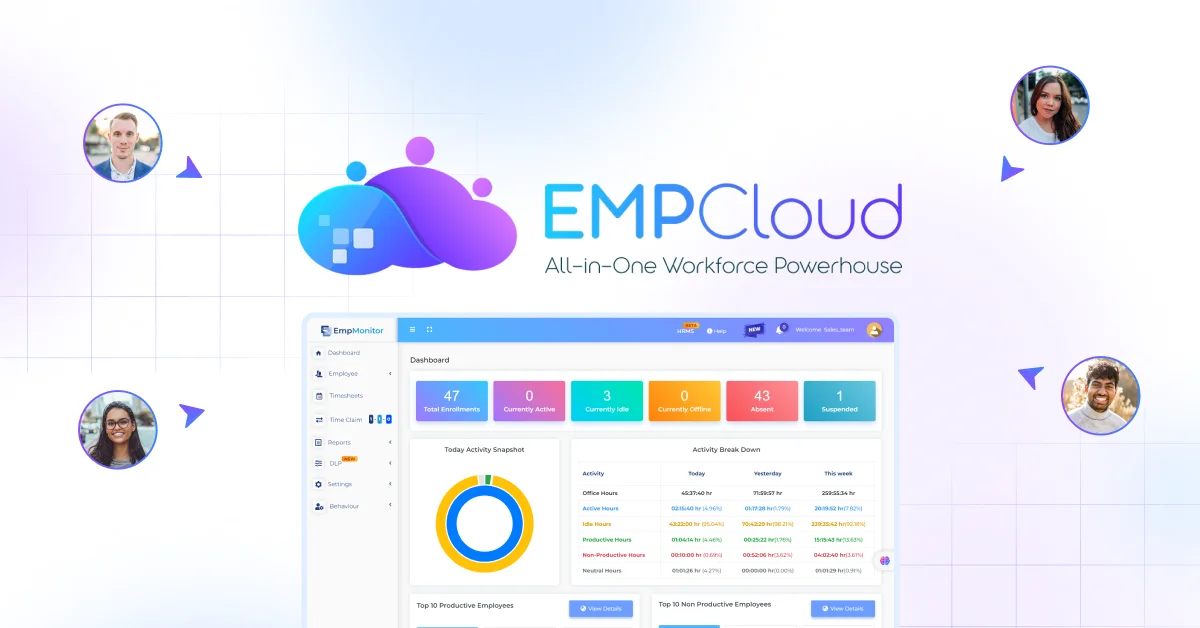
As more organizations shift toward distributed work, having the right platform to support your remote work policy becomes essential. This is where EmpCloud makes a real difference. It’s designed to help companies manage remote teams with structure, clarity, and transparency—without adding unnecessary complexity.
EmpCloud gives managers real-time visibility into work patterns, project progress, attendance, and team availability. Instead of relying on scattered tools, everything stays organized in one place. This helps make your remote work policy easier for employees to follow and simpler for HR or team leads to manage.
Some of EmpCloud’s most useful features include:
- Accurate work tracking – See how tasks and hours are being distributed across teams.
- Productivity insights – Identify workflow gaps, understand bottlenecks, and support employees more effectively.
- Easy attendance and scheduling – Track shifts, log hours, and manage time zones without confusion.
- Activity monitoring (ethical and transparent) – Helps teams stay aligned without micromanagement.
- Secure cloud storage – Keeps company data protected across remote devices.
These features make EmpCloud a perfect companion for any organization building or scaling a remote work policy. It creates a structured system that improves accountability, encourages transparency, and gives managers the clarity they need to run a productive remote workforce.
In short, EmpCloud gives companies the foundation to support remote work smoothly and professionally, while helping employees feel more organized and empowered.
Common Mistakes Companies Make With Remote Work Policies
Many companies create a remote work policy but miss a few simple details that affect its effectiveness. The most common issues include unclear availability rules, vague communication standards, and outdated security practices. Some policies also become too restrictive, making remote work feel stressful instead of flexible. Others forget to define performance expectations or skip manager training, which leads to inconsistent leadership. Finally, companies often fail to update their policies as remote work evolves. Avoiding these mistakes keeps your policy practical and easy for teams to follow.
Conclusion
A strong remote work policy is no longer optional, it’s a practical necessity for today’s workforce. When expectations around communication, performance, cybersecurity, and availability are clearly defined, teams can work confidently and consistently from anywhere. The right tools and a supportive culture make the policy even more effective, helping managers stay organized and employees feel empowered. By focusing on clarity and simplicity, and updating the policy regularly, organizations can create a remote work environment that is productive, secure, and aligned with modern work trends.
Also Read,
How To Implement Remote Employee Monitoring Without Micromanaging
FAQs
- How often should a company update its remote work policy?
It’s best to review your remote work policy at least once a year or whenever major changes occur in tools, workflows, or compliance requirements. - Should remote employees sign a separate agreement?
Yes. Many organizations use a remote work agreement or work from home agreement to formally document expectations and protect both sides. - What tools help make a remote work policy easier to follow?
Centralized platforms like EmpCloud, secure communication tools, and collaboration apps help employees stay aligned with the policy.
Quick Search Our Blogs
Type in keywords and get instant access to related blog posts.