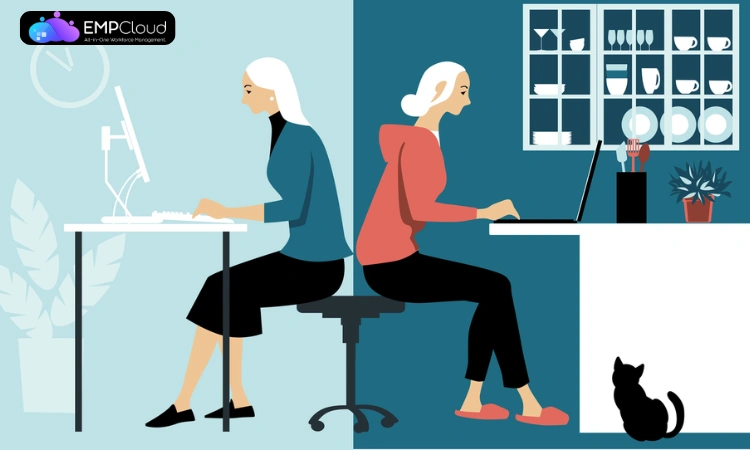
The debate is still very much alive. Walk into any leadership meeting today, and you will likely hear the same question being asked in different ways: should we bring people back, keep them remote, or find some middle ground? The remote vs office work comparison has moved from a pandemic-era survival strategy to a full-blown organizational philosophy discussion.
This blog breaks down both sides with honesty, covering productivity, culture, cost, performance, and what the data is actually telling us right now.
Hit ‘Play’ Button & Tune Into The Blog!
Why The Remote Vs Office Work Comparison Still Matters?
Let us be clear about one thing: this is not a 2020 conversation anymore. Companies have had years to experiment, measure, and iterate. The remote vs office work comparison 2026 is backed by real performance data, employee retention figures, and operational cost reports, not just anecdotal experience.
Organizations that are still making decisions based on gut feeling are leaving value on the table. Whether you lean toward full remote, hybrid, or in-office, the decision should be data-driven, context-sensitive, and aligned with your team’s actual needs.
The Case For Remote Work

Remote work, when done right, delivers real advantages. Let us look at what the numbers and the experience consistently support.
Flexibility Drives Output:
The most cited benefit of remote work is flexibility, but flexibility is often misunderstood. It is not just about working from the couch. It is about giving employees control over their environment, schedule, and focus time. For deep, individual work, writing, coding, analysis, creative work, remote setups often outperform open offices.
In the remote vs office work comparison, employees working remotely report fewer interruptions, which directly improves the quality of focused work. When people can structure their day around their peak energy hours, productivity tends to follow.
Access to a Wider Talent Pool:
Remote hiring removes geography as a constraint. A company based in a tier-one city no longer has to limit itself to candidates who can commute. This matters enormously in a competitive talent market. For specialized roles, engineering, data science, design, the ability to hire globally is a significant competitive advantage.
The remote vs office work comparison shifts meaningfully here. Companies that went remote-first often report hiring better-fit candidates faster and at a lower cost per hire.
Lower Overhead Costs:
Office space is expensive. Rent, utilities, maintenance, furniture, and facilities management add up quickly. For growing teams, eliminating or reducing physical space is a direct saving that can be reinvested into people, tools, or growth.
The Case For In-Office Work

The office is not dead. For many teams and business types, in-person work creates conditions that remote setups genuinely struggle to replicate.
Collaboration and Spontaneous Problem-Solving:
Some of the best ideas do not come from scheduled Zoom calls. They come from two engineers talking at a whiteboard, a designer walking over to a PM’s desk, or a casual lunch conversation that turns into a product pivot. In the remote vs office work comparison, in-person environments still win when it comes to unstructured, spontaneous collaboration.
This is not nostalgia, it is a functional reality for teams whose work is deeply interdependent, iterative, and creative. Brainstorming, design sprints, onboarding, and culture-building tend to go better in person.
Stronger Team Culture and Social Connection:
Remote work can be lonely. Not for everyone, but for many. Teams that only interact through screens over time can lose the human glue that makes them resilient when things get hard. Shared physical space builds trust faster and allows informal mentorship to happen naturally.
In the remote vs office work comparison, employee belonging scores tend to be higher in in-person environments, especially for newer employees who have not yet built their internal networks.
Easier Management and Real-Time Oversight:
For managers, in-office work provides something valuable: real-time visibility. You can see who is stuck, who needs support, and who is quietly disengaged. For industries with compliance requirements, sensitive data, or high coordination needs, finance, healthcare, manufacturing, legal, in-office work also makes oversight and accountability more straightforward.
This is where the remote vs office work comparison gets practical. Managing a distributed team requires different skills, different tools, and significantly more intentionality.
Also Read:
How Does Remote Work Vs Office Work Productivity Compare According To Data?
This is the question that every executive wants answered, and the honest answer is: it depends.
The remote work vs office work comparison on productivity is not a clean line. Here is what research consistently shows:
Individual contributor roles where the work is focused and asynchronous, software development, content creation, financial analysis, tend to show equal or higher productivity when remote. Roles that require constant coordination, real-time decisions, or hands-on work, operations, sales, customer support, manufacturing, often perform better in or near an office.
The remote work vs office productivity comparison also shifts based on employee experience level. Senior professionals who already know how to manage their time, prioritize tasks, and communicate proactively tend to thrive remotely. Newer employees who are still learning the ropes benefit more from in-person access to mentors and managers.
The takeaway: productivity is not a property of location. It is a property of structure, tools, trust, and individual working style.
How Does In-Office Vs Remote Work Performance Comparison Impact Management?
Let us zoom in on the management side specifically. The in-office vs remote work performance comparison reveals a gap that many leaders overlook.
In-office performance management benefits from natural feedback loops. Managers notice issues early, course-correct through informal conversation, and build relationships that make difficult conversations easier. Performance data is supplemented by observation.
Remote performance management requires intentional infrastructure. Without the right tools and habits, managers either micromanage out of anxiety or under-manage and miss problems until they become serious.
This is where technology becomes critical. Companies that have succeeded with remote or hybrid models share one common trait: they invested in systems that give both managers and employees clarity, visibility, and accountability, without sacrificing trust.
Where The Hybrid Model Fits?
Most companies today are not choosing between full remote and full in-office. They are building hybrid models, and the quality of execution varies enormously.
A hybrid model done well takes the best of both worlds: focused individual work happens remotely, while collaboration, planning, and culture-building happens in person. A hybrid model done poorly creates the worst of both: employees feel neither fully trusted to work remotely nor fully supported when in-office.
The remote vs office work comparison in 2026 is really a conversation about hybrid design. And getting hybrid right requires real-time data on attendance, productivity, team coordination, and employee sentiment.
How Empcloud Bridges The Remote Vs Office Gap?
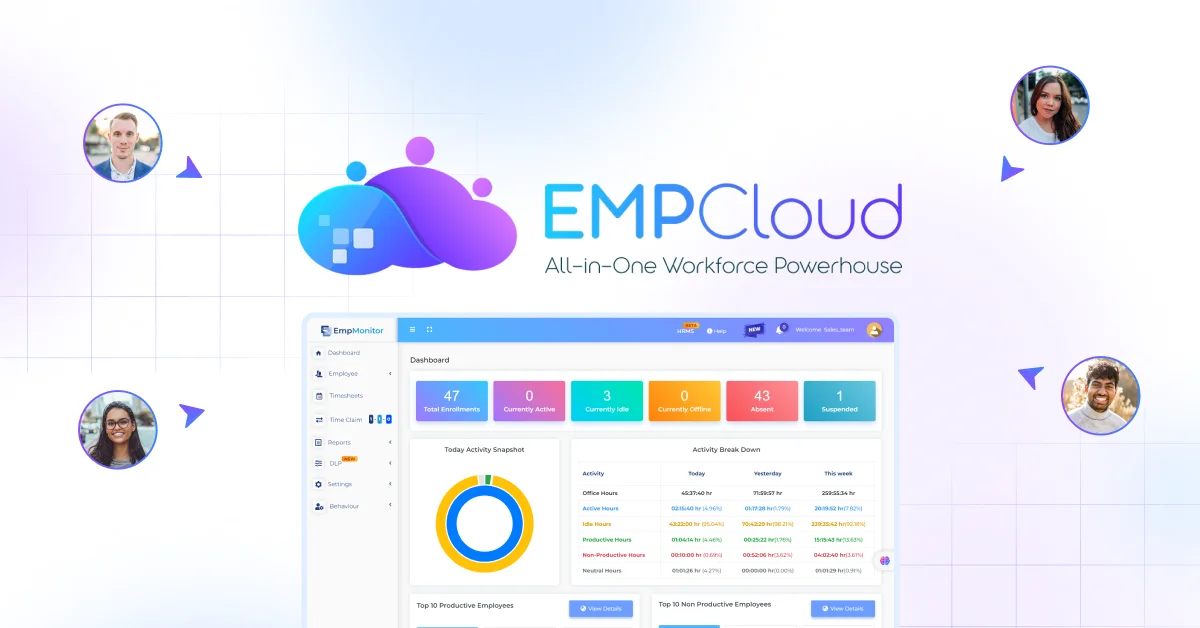
This is where purpose-built workforce management platforms become non-negotiable. Managing a distributed or hybrid team with spreadsheets and disconnected tools is not a scalable strategy.
EmpCloud is a unified workforce management platform and remote work software solution built to give managers, HR teams, and employees the infrastructure they need to perform efficiently, regardless of where they work.
Here is how EmpCloud directly addresses the challenges that surface in the remote vs office work comparison:
Real-Time Visibility for Managers:
One of the biggest concerns about remote work is the loss of visibility. EmpCloud addresses this with productivity tracking and time tracking features that give managers actionable insights into employee performance in real time. You can identify top performers, spot disengagement early, and make decisions based on data, not assumption.
For field teams, EmpCloud’s geo-location tracking lets managers see where team members are operating in real time, enabling smarter resource allocation and faster response to on-ground needs.
Seamless Attendance and Leave Management — Anywhere:
Whether your team is in the office, working from home, or on the field, EmpCloud’s face recognition attendance system and automated timesheet tracking ensure that attendance records are accurate, contactless, and always up to date.
Leave and attendance tracking is fully automated, with approval workflows that eliminate manual back-and-forth. For HR teams managing a mix of in-office and remote employees, this alone removes hours of administrative overhead every week.
Task Management for Distributed Teams:
Keeping remote and hybrid teams aligned on priorities is one of the hardest operational challenges. EmpCloud’s task and opportunity management features allow managers to assign tasks to field or remote team members, set priorities, and monitor real-time progress, all from a single dashboard.
This directly addresses the accountability gap that often surfaces in the remote vs office work comparison: remote employees can now have clear task ownership and real-time progress visibility, giving managers confidence without micromanagement.
HR Workflows That Work for Hybrid Teams:
EmpCloud streamlines the entire employee lifecycle, from onboarding and policy management to payroll and offboarding, in one unified platform. Employee request management handles attendance corrections, comp-offs, and work-from-home requests with clean approval flows. Policy and document management ensures that remote employees have access to the same resources as those in the office.
Automated payroll with tax calculations and direct deposit support means that HR teams are not bogged down in manual processing, regardless of how complex the employment mix is.
AI-Powered Intelligence for Smarter Workforce Decisions:
EmpCloud’s latest capabilities bring AI support into HR workflows, helping teams access useful insights across attendance, leave, payroll, and performance data from one place.
Managers and HR teams can use natural language prompts to generate reports, identify trends, and review workforce patterns without switching between multiple dashboards.
Need to compare remote team productivity with in-office attendance trends? EmpCloud’s smart reporting tools make it easier to analyze workforce data quickly and make informed decisions.
For organizations navigating the remote vs office work comparison in real time, this kind of connected intelligence can offer a valuable operational advantage.
The Cost Equation: Remote Vs Office In 2026
Let us talk numbers, because the financial dimension of the remote vs office work comparison is significant.
Remote work reduces real estate costs, commuting subsidies, and in-office amenities. But it introduces costs of its own: home office stipends, collaboration tools, cybersecurity infrastructure, and the management overhead of running distributed teams.
In-office work involves rent, utilities, and facilities, but it also concentrates your people in a way that makes coordination cheaper and faster for certain types of work.
The net cost comparison is company-specific. A 500-person software company will run very different numbers from a 100-person financial services firm. What matters is knowing your actual numbers, which requires the kind of centralized data that platforms like EmpCloud make possible.
How Does Remote vs Office Work Impact Employee Wellbeing?

Employee wellbeing is an important part of any remote vs office work comparison. Both work models offer benefits and challenges, and the right choice often depends on individual needs, work style, and company support systems.
- Remote work saves commute time, giving employees more time for rest, family, exercise, or personal growth.
- Flexible schedules can reduce stress linked to commuting and office distractions.
- Work-life boundaries may blur in remote setups, making it harder to switch off after work.
- Isolation can be a challenge for employees who value regular social interaction.
- In-office work offers routine and clearer separation between work and personal life.
- Face-to-face support is easier through real-time interaction with managers and colleagues.
- The best companies measure employee needs and adapt policies based on feedback and data.
What Winning Companies Are Actually Doing?
The organizations getting this right in 2026 are not picking a side in the remote vs office work comparison and sticking with it dogmatically. They are building adaptive frameworks, clear policies, strong tools, and cultures of accountability that work regardless of location.
They trust employees with flexibility while investing in infrastructure that makes performance measurable and management intentional. They recognize that the hybrid model is not a compromise, it is an upgrade, if executed well.
Final Thoughts
The remote vs office work comparison will not have a universal winner. Different teams, roles, industries, and individuals will always land in different places on this spectrum. What the data does tell us clearly is this: performance, productivity, and culture are not determined by where people sit. They are determined by the quality of your systems, your leadership, and your tools.
If your organization is still relying on disconnected tools and manual processes to manage a distributed workforce, the location debate is secondary. The priority is building an operational foundation, like what EmpCloud provides, that gives every employee and manager what they need to do great work, wherever they are.
The future of work is not remote. It is not in-office either. It is intentional.
FAQs
1. Which industries benefit most from remote work?
Industries such as software development, digital marketing, design, content creation, and consulting often benefit most from remote work because many tasks can be completed independently online.
2. Is hybrid work better than fully remote or fully in-office models?
Hybrid work can be effective because it combines flexibility with in-person collaboration. However, success depends on clear policies, scheduling, and strong management systems.
3. How can companies measure employee productivity in remote teams?
Companies can measure productivity through goal completion, project outcomes, task progress, response times, and performance metrics rather than focusing only on hours worked.
4. What are the biggest challenges of managing hybrid teams?
Common challenges include communication gaps, unequal access to opportunities, scheduling conflicts, maintaining culture, and tracking performance consistently.
Quick Search Our Blogs
Type in keywords and get instant access to related blog posts.