

Every successful project starts with clarity. Not clarity about tasks or tools but clarity about what the project is actually meant to achieve. That clarity comes from well-defined project objectives.
If you’re managing a small internal initiative or a multi-department rollout, project objectives shape decisions, guide teams, and determine whether a project is considered a success or a failure. Yet, they’re often misunderstood, loosely written, or confused with goals, deliverables, or milestones.
This guide breaks down what project objectives are, why they matter in project management, how to write them correctly, and how modern tools like EmpCloud help teams stay aligned and accountable throughout the project lifecycle.
Listen To The Podcast Now
What Are Project Objectives?
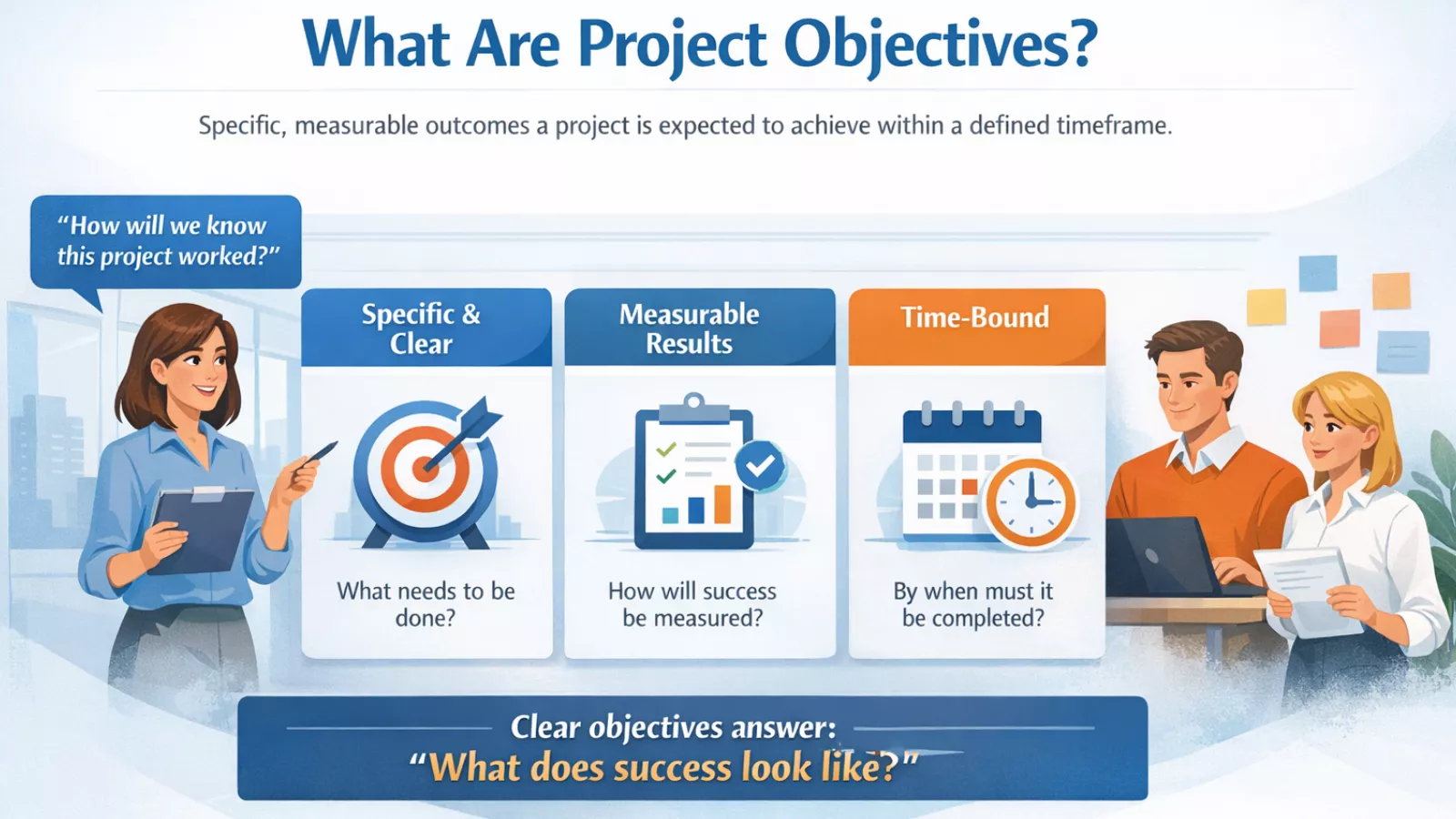
These are specific, measurable outcomes that a project is expected to achieve within a defined timeframe. They describe what success looks like at the end of the project.
Unlike broad intentions, project objectives are concrete. They tell teams exactly what needs to be accomplished, by when, and how success will be evaluated.
In simple terms, if someone asks, “How will we know this project worked?”—your project objectives should already have the answer.
What project objectives typically include:
- A clear outcome
- Measurable criteria (metrics, KPIs, benchmarks)
- A realistic timeframe
- Alignment with business priorities
Without these elements, projects risk drifting off track, even when everyone is working hard.
Also Read
How To Set And Achieve Project Milestones In 2026?
The Powerful Impact Of Project Management On Team Collaboration
Objective of Project Management: Why Objectives Matter So Much?
The core objective of project management is not just completing tasks—it’s delivering outcomes that matter to the business, with project objectives guiding every project milestone along the way.
When objectives are clearly defined:
- Teams understand priorities
- Stakeholders share the same expectations
- Progress becomes measurable
- Decisions are easier to justify
Without them, project management becomes reactive. Teams focus on activity instead of outcomes, deadlines slip, and success becomes subjective.
It act as a reference point throughout the project—during planning, execution, tracking, and evaluation.
Project Objectives vs Other Project Elements
Many teams struggle because project objectives are confused with other components of project management. Let’s clarify the differences.
Project objectives vs project goals
Project goals describe the bigger picture—the long-term impact or business outcome.
The project objective defines specific results needed to achieve that goal.
Example:
- Project goal: Improve customer feedback handling
- Project objective: Add five in-product feedback submission options within two months
Project objectives vs project scope
Project scope outlines the boundaries of a project by clearly stating which tasks are part of the work and which are not. Project objective define what the project must achieve.
Scope outlines effort. Objectives define success.
Project objectives vs milestones
Milestones are checkpoints along the timeline.
Objectives are end results.
You can hit milestones and still fail the objective if outcomes aren’t met.
Understanding these distinctions helps teams stay focused on results—not just progress.
Objectives of Project Management in Real-World Teams
In practical terms, the objectives of project management revolve around:
- Delivering projects on time
- Staying within budget
- Maintaining quality standards
- Aligning work with business needs
- Ensuring accountability across teams
Project objective translate these principles into clear, actionable outcomes that teams can rally around.
For managers overseeing hybrid or remote teams, objectives become even more critical. When people aren’t in the same room, clarity replaces supervision—and objectives provide that clarity.
Types of Project Objectives You Should Know
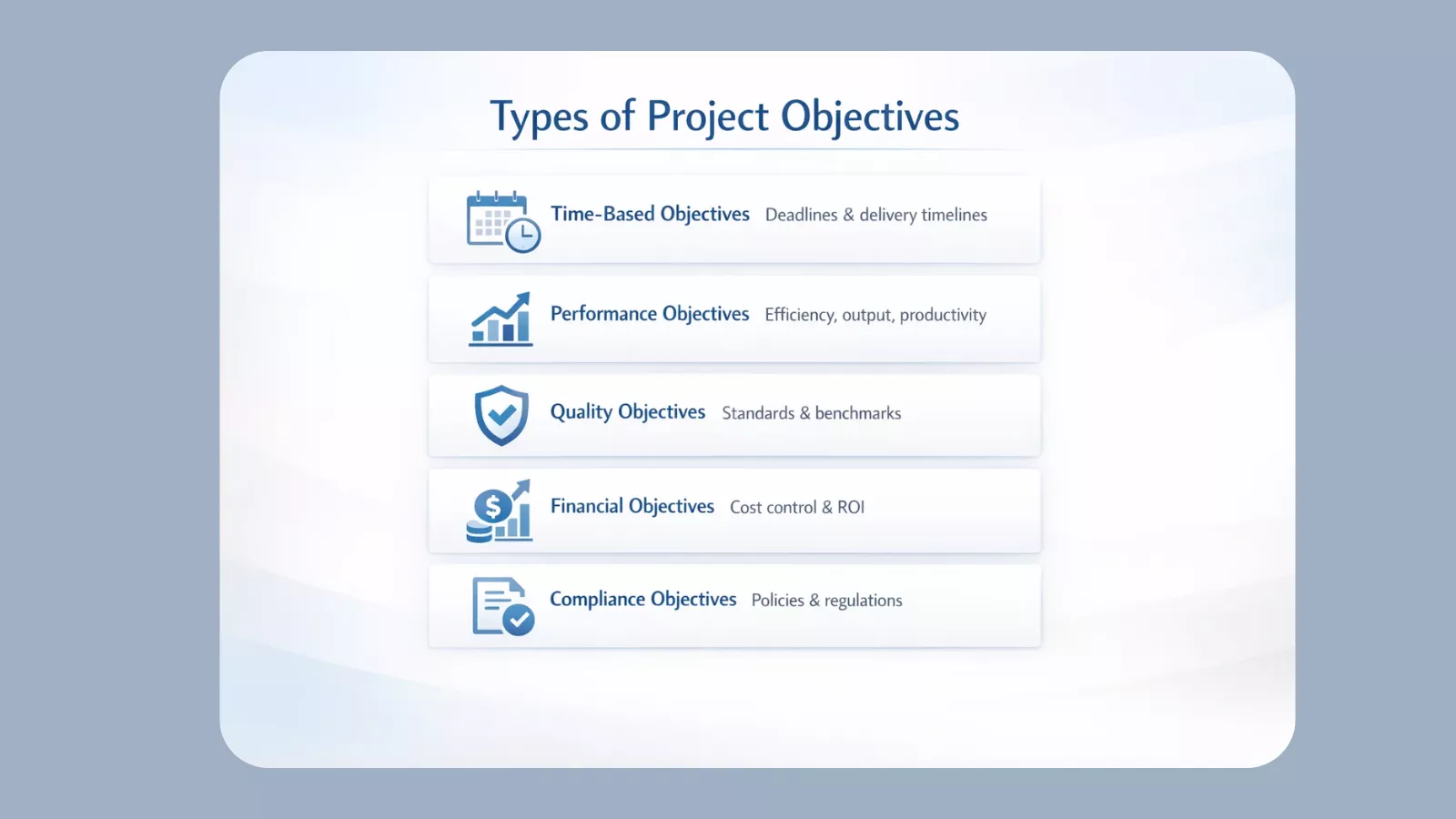
Not all project objectives focus on the same outcome. Depending on the project, objectives may fall into different categories:
Time-based objectives
Focus on deadlines and delivery timelines.
Performance objectives
Target improvements in efficiency, output, or productivity.
Quality objectives
Ensure deliverables meet defined standards or benchmarks.
Financial objectives
Control costs, improve ROI, or meet budget constraints.
Compliance objectives
Ensure adherence to regulations, policies, or industry standards.
Most projects include a combination of these. The key is ensuring each objective remains measurable and realistic.
How To Write Clear and Effective Project Objectives
Strong project objectives don’t happen by accident. They’re intentionally written—usually early in the planning phase—and refined with stakeholder input.
The most reliable framework for writing effective objectives is the SMART approach.
SMART project objectives explained
Specific
State exactly what needs to be achieved. Avoid vague language.
Measurable
Define how success will be evaluated—numbers, percentages, deadlines, or benchmarks.
Achievable
Ensure the objective can realistically be met with available resources.
Relevant
Align the objective with broader project goals and business priorities.
Time-bound
Set a clear deadline or timeframe.
When objectives meet these criteria, they become practical tools—not just statements.
Project Objectives Examples (Good vs Weak)
Seeing examples helps clarify what works—and what doesn’t.
Weak objective:
Improve team productivity.
This lacks clarity, metrics, and a timeframe.
Strong objective:
Increase team productivity by reducing task completion time by 15% within three months.
Now success can be measured, tracked, and evaluated.
Sample Project Objectives Across Use Cases
Here are a few sample project objectives across different scenarios:
- Launch a redesigned website with improved navigation and load speed by the end of Q3.
- Reduce customer onboarding time from seven days to three days within 60 days.
- Improve task completion accuracy by 20% through standardized workflows over the next quarter.
- Achieve 95% on-time task delivery for cross-functional projects within six months.
Each example clearly defines the outcome, measurement, and timeframe.
Common Mistakes Teams Make With Project Objectives
Even experienced teams struggle with objectives. Some common pitfalls include:
- Writing objectives that are too broad
- Setting targets outside team control
- Failing to review objectives during execution
- Treating objectives as static instead of evolving
Objectives should be living references, revisited as conditions change—not documents that disappear after planning.
Managing Project Objectives Effectively With EmpCloud
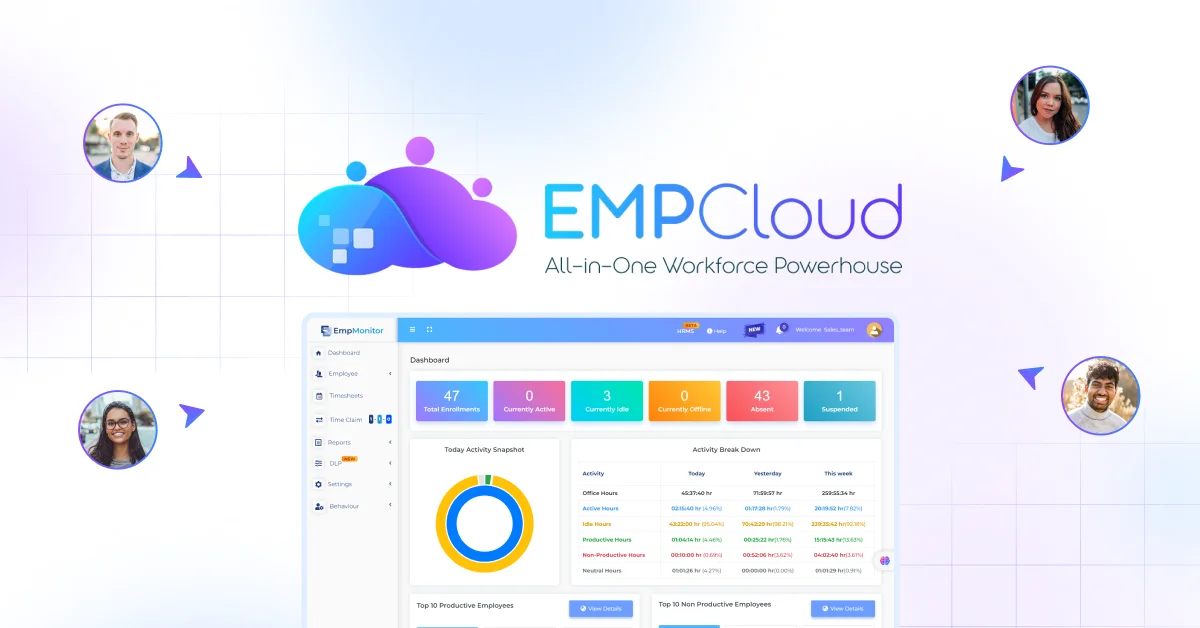
Project objectives don’t live in isolation. They depend on people showing up on time, work being tracked accurately, policies being followed, and managers having a clear view of what’s actually happening on the ground. That’s where many teams struggle—not with defining objectives, but with managing the day-to-day reality behind them.
EmpCloud is built for this exact gap.
Rather than treating HR, attendance, payroll, and employee data as separate systems, EmpCloud brings them together into a single, people-first platform—so project objectives stay connected to real work, real time, and real accountability.
HR-Centric Solutions That Support Project Success
EmpCloud is designed with HR and operations at the core. From recruitment to onboarding and compliance, the platform helps teams create structure without adding complexity. When HR processes run smoothly, project teams stay focused, aligned, and productive—without administrative friction slowing things down.
Face Recognition Attendance System
Attendance isn’t just about logging hours—it’s about trust and accuracy. EmpCloud’s face recognition attendance system enables secure, contactless check-ins that eliminate buddy punching and manual errors. Teams can track presence confidently, even across multiple locations, while maintaining a smooth employee experience.
Leave & Attendance Tracking
Unplanned absences can derail timelines if they’re not visible. EmpCloud simplifies leave and attendance tracking by keeping records accurate, updated, and easy to access. Managers can plan better, redistribute workloads when needed, and keep project objectives on track without last-minute surprises.
Policy & Document Management
Clear policies reduce confusion. EmpCloud allows organizations to upload, manage, and store policies and documents in one centralized space. Employees always know where to find the information they need, and HR teams maintain consistency and compliance without chasing paperwork.
Automated Timesheets
Manual timesheets often create more questions than answers. EmpCloud automates work-hour tracking, giving teams accurate insights into time spent across tasks and projects. This makes resource planning more reliable and helps managers assess whether effort aligns with project objectives.
Why Clear Project Objectives Drive Better Project Outcomes
Projects don’t fail because teams don’t work hard. They fail because teams work without clarity.
Clear project objectives:
- Reduce confusion
- Improve alignment
- Support better decisions
- Increase motivation
- Make success measurable
When paired with the right project and workforce management platform, objectives stop being theoretical and start driving real results.
Final Thoughts
Understanding what project objectives are, how they differ from other project elements, and how to write them effectively is foundational to strong project management.
But clarity alone isn’t enough. Objectives must be tracked, reviewed, and connected to daily work—especially in modern, fast-moving teams.
EmpCloud bridges that gap by helping organizations manage projects with visibility, accountability, and measurable outcomes—so objectives don’t just exist on paper but actually get achieved.
If your teams struggle with alignment, progress tracking, or objective follow-through, it may be time to rethink not just how you define project objectives but also how you manage them.
FAQs
How many project objectives should a project have?
There’s no fixed number, but most projects work best with three to seven well-defined objectives. Too few can oversimplify success, while too many can dilute focus and make tracking difficult.
Who is responsible for defining project objectives?
Project objectives are usually defined collaboratively. Senior stakeholders set direction, project managers translate expectations into measurable outcomes, and key team leads validate feasibility before final approval.
Can project objectives change after a project starts?
Yes. While objectives shouldn’t change frequently, they can be adjusted if business priorities shift, resources change, or new constraints emerge. Any revision should be documented and clearly communicated to all stakeholders.
How often should project objectives be reviewed?
Objectives should be revisited at major project checkpoints—such as phase completions, quarterly reviews, or significant scope changes—to ensure they still align with business needs and execution reality.
Quick Search Our Blogs
Type in keywords and get instant access to related blog posts.