Most companies don’t discover they have a payroll compliance problem until the penalty notice lands. By then, the mistake is weeks or months old, already compounded by missed deadlines, misclassified workers, and tax filings that don’t reconcile. Here’s what nobody tells HR teams scaling across borders: compliance isn’t a setup task. It’s a continuous operational discipline — and the gap between those two framings is where most payroll disasters are born.
In a hurry? Listen to the blog instead!
Why “We Configured It Once” Kills Cross-Border Payroll
Payroll teams at growing companies tend to treat a new country expansion as a project with a finish line. You engage a local advisor, configure the rates, run a test payroll, and close the ticket. Done.
Except it isn’t. Over 30 countries updated payroll, employment tax, or mandatory benefit rules between 2025 and 2026 — minimum wage adjustments, revised social contribution rates, new leave entitlements. None of these updates announce themselves in your payroll system. They require someone to be watching.
Most teams aren’t watching. They’re processing.
The consequences are not abstract. Errors in tax withholding or missed deadlines can result in financial penalties, while failure to follow local employment laws may trigger reputational damage or legal liability. And when your workforce spans multiple jurisdictions, errors stack. A misconfigured social contribution rate applied to 40 employees for six months isn’t one mistake — it’s 240 payroll runs that need to be audited and corrected.
The Three Specific Mistakes That Compound Fastest

1. Treating worker classification as a one-time decision
Classification of workers — employee versus contractor — is not static. Regulators revisit the rules. In the United States alone, the DOL suspended its 2024 Independent Contractor Rule mid-year in 2025, creating classification uncertainty for companies relying on that framework. Teams that had documented their rationale under the old rule were suddenly operating on shaky legal ground without knowing it.
Multiply that dynamic across five or ten countries and you have a classification audit risk that nobody owns. Payroll runs on whatever classification was entered at onboarding. No one rechecks it when the law shifts.
2. Disconnecting attendance data from payroll reconciliation
This one is more operational than regulatory, but it feeds compliance failures constantly. When attendance data lives in one system and payroll calculations happen somewhere else, the reconciliation step becomes manual. Manual steps get skipped under deadline pressure. Skipped reconciliations mean overtime, shift differentials, and leave deductions calculated on stale or incorrect inputs.
The failure mode is more common than teams expect, and it persists even in organizations that have otherwise mature HR processes.
3. Assuming your HR platform owns compliance so you don’t have to
This is the subtlest and most expensive mistake. Modern HRMS platforms do a lot. But no software can substitute for someone in your organization owning the question: “Did anything change in the jurisdictions where we run payroll this quarter?”
Platforms handle calculations based on rules you’ve configured. If the rules change and no one updates the configuration, the platform runs exactly what it was told to run — incorrectly, at scale, on time. The system’s reliability becomes your liability.
The Compliance Velocity Problem Is Getting Worse
Here’s a number worth sitting with: multi-state payroll errors in the US rose 38% year-over-year driven by remote work complexity. That’s a domestic figure. The same remote-work dispersion is happening globally — employees in countries their employers didn’t initially plan for, creating payroll obligations that weren’t anticipated when the HRMS was configured.
Meanwhile, enforcement is tightening. The Irish Data Protection Commission fined TikTok €345 million in early 2025 for undocumented data transfers — a signal that regulators across jurisdictions are moving from warnings to penalties. Payroll data crosses borders too. Your data handling obligations don’t end at the payroll calculation.
And in the US, the Social Security wage base increased from $168,600 to $176,100 in 2025 — a change that needs to be applied correctly to every affected employee from January 1. Small miscalculations here, applied to a large workforce, become material exposure quickly.
What an Operational Compliance Discipline Actually Looks Like

The companies that stay ahead of this aren’t doing anything exotic. They’re doing a few mundane things consistently.
- Quarterly jurisdiction reviews. Someone owns a calendar check: what changed in each country or state where we run payroll? This isn’t a full audit — it’s a 30-minute scan of official sources for rate changes, new mandatory contributions, or classification rule updates. The output is a list of configuration changes to make before the next payroll run.
- Attendance-to-payroll traceability. Every payroll run should be traceable back to the attendance and leave records that generated it. If you can’t answer “why did this employee’s gross pay change between these two periods” without a manual investigation, your reconciliation process has a gap.
- Exit record retention as a compliance asset. When employees leave — especially across borders — their records don’t stop mattering. Salary history, tax filings, performance records, and compliance documentation all have statutory retention requirements that vary by jurisdiction. Offboarding isn’t the end of the compliance obligation.
- A single source of truth for workforce data. When payroll, attendance, leave, and HR records live in the same system rather than being reconciled between separate tools, the surface area for errors shrinks materially. The reconciliation step doesn’t disappear — but it becomes auditable rather than manual.
Where Platform Architecture Actually Helps
Not all HRMS platforms are built to support this kind of operational discipline equally well. The relevant question isn’t “does it do payroll” — virtually every platform does. The question is whether HR teams can query across attendance, leave, payroll, and performance data together, without exporting to spreadsheets and joining manually.
EMPCloud is built specifically for this: the platform offers a Smart SQL natural-language analytics tool that, according to its product documentation, lets HR teams pull data across attendance, leave, payroll, and performance in a single plain-English conversation — no technical training required. For a compliance review workflow, that means an HR manager can ask a question like “show me employees where gross pay changed by more than 10% between last month and this month.” The answer comes back directly, without a data analyst or an IT ticket in the loop.
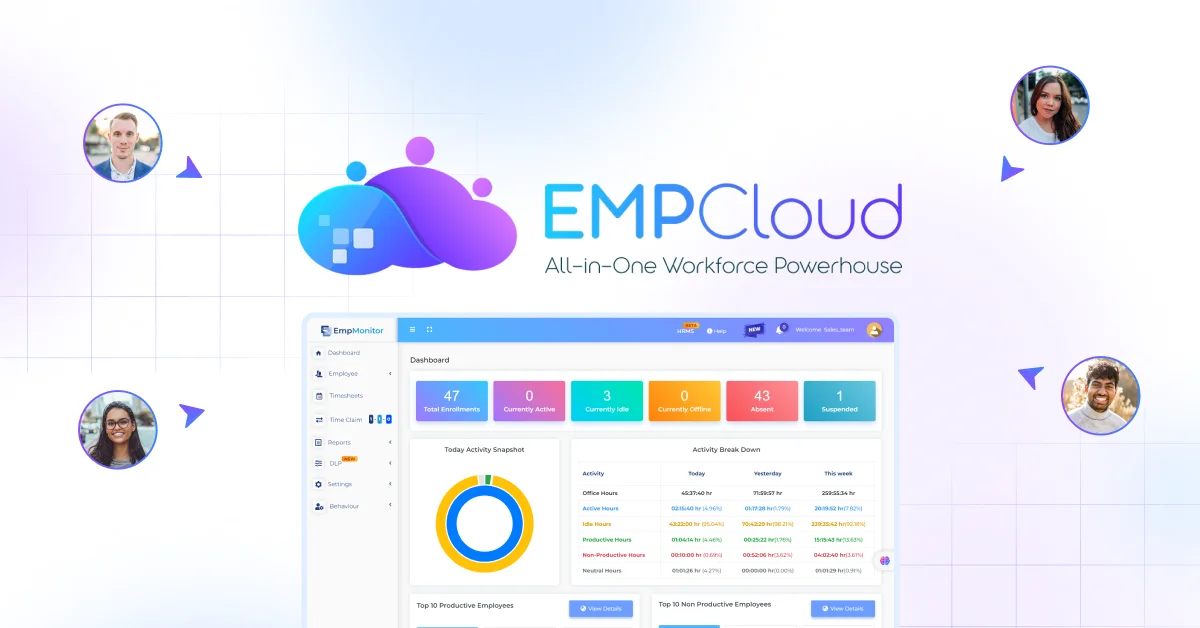
That capability doesn’t replace the compliance discipline described above. What it does is make the quarterly review feasible for HR teams that aren’t data engineers — the bottleneck shifts from “can we get this data” to “what do we do with it.” EMPCloud claims to manage 50,000+ employees across 200+ companies in 15+ countries, which means multi-jurisdictional payroll is not a theoretical use case for the product.
The platform’s face recognition biometric attendance tracking and geo-location tracking for field workforce also address the reconciliation gap described earlier — attendance data feeds payroll without a manual export-import step in between, which removes one of the most common sources of downstream calculation errors.
The Uncomfortable Truth About Compliance Ownership
HR software vendors — including the best ones — will tell you their platform handles compliance. What they mean is that their platform handles calculation compliance, given correct inputs and current configuration. That’s genuinely valuable. It’s not the same as owning the compliance outcome.
The regulatory environment is moving too fast for any static configuration to stay accurate. Thirty-plus country-level changes in a single year means that if you deployed your HRMS eighteen months ago and haven’t touched the compliance configuration since, you are almost certainly running payroll incorrectly in at least one jurisdiction. The question is only how material the error is.
Teams that understand this — that compliance is a process, not a feature — are the ones that don’t get surprised by penalty notices. The platform is a tool for executing that process efficiently. The discipline has to come from the HR organization.
Start with the basics: know your jurisdictions, own a review cadence, and make sure your system can show you the data trail. If it can’t, that’s the first thing to fix.
Start your free 15-day EMPCloud trial and see how unified payroll, attendance, and analytics data can support a real compliance review process — without the spreadsheet archaeology.
Frequently Asked Questions: –
1. What are the biggest payroll compliance risks for growing companies?
The biggest risks include outdated payroll rules, worker misclassification, missed tax or filing deadlines, and gaps between attendance and payroll data. This guide explains where these risks usually begin and how HR teams can reduce them.
2. How often should companies review their payroll compliance?
Payroll compliance should be reviewed regularly because tax rates, employment rules, benefits, and reporting requirements can change throughout the year. Learn how a practical compliance review cadence can help HR teams catch changes before they affect payroll.
3. What happens when payroll rules change after an HRMS is configured?
An HRMS will generally continue calculating payroll according to its configured rules unless someone updates them. Find out why treating payroll compliance as a one-time setup can create problems as regulations change.
4. How can HR teams prevent payroll errors caused by attendance data?
Connecting attendance, leave, and payroll data can reduce manual reconciliation and help HR teams trace payroll calculations back to their source records. See how this operational link can strengthen payroll accuracy and compliance.
5. Can an HRMS handle payroll compliance across multiple countries?
An HRMS can support payroll calculations and workforce data management across jurisdictions, but software alone does not replace compliance ownership. Learn what HR teams should review when managing payroll across multiple countries.
Quick Search Our Blogs
Type in keywords and get instant access to related blog posts.