Employee lifecycle management shapes every interaction a person has with your company, starting from the first job ad they see to the day they leave. Most organizations focus heavily on hiring, then treat everything after as separate, disconnected HR tasks.
That disconnect is expensive. A candidate who had a great interview experience can still quit within six months if onboarding feels chaotic or growth opportunities never materialize. The stages aren’t isolated events. They’re one continuous story, and how well you manage that story determines whether your best people stay or leave.
This guide breaks down what actually drives results at each stage, the metrics that prove progress, and where automation genuinely helps versus where it gets in the way.
Read Aloud!
Why Employee Lifecycle Management Matters More Than Ever
Talent markets shift fast, and employees now compare their workplace experience the same way they compare consumer products. A clunky onboarding process or a manager who never checks in sends a message louder than any perk.
Companies that manage the employee lifecycle deliberately see fewer surprises. Turnover drops because problems get caught in month two, not year two. Productivity rises because new hires know what’s expected instead of guessing. None of this happens by accident.
Employee Lifecycle Management in One Minute

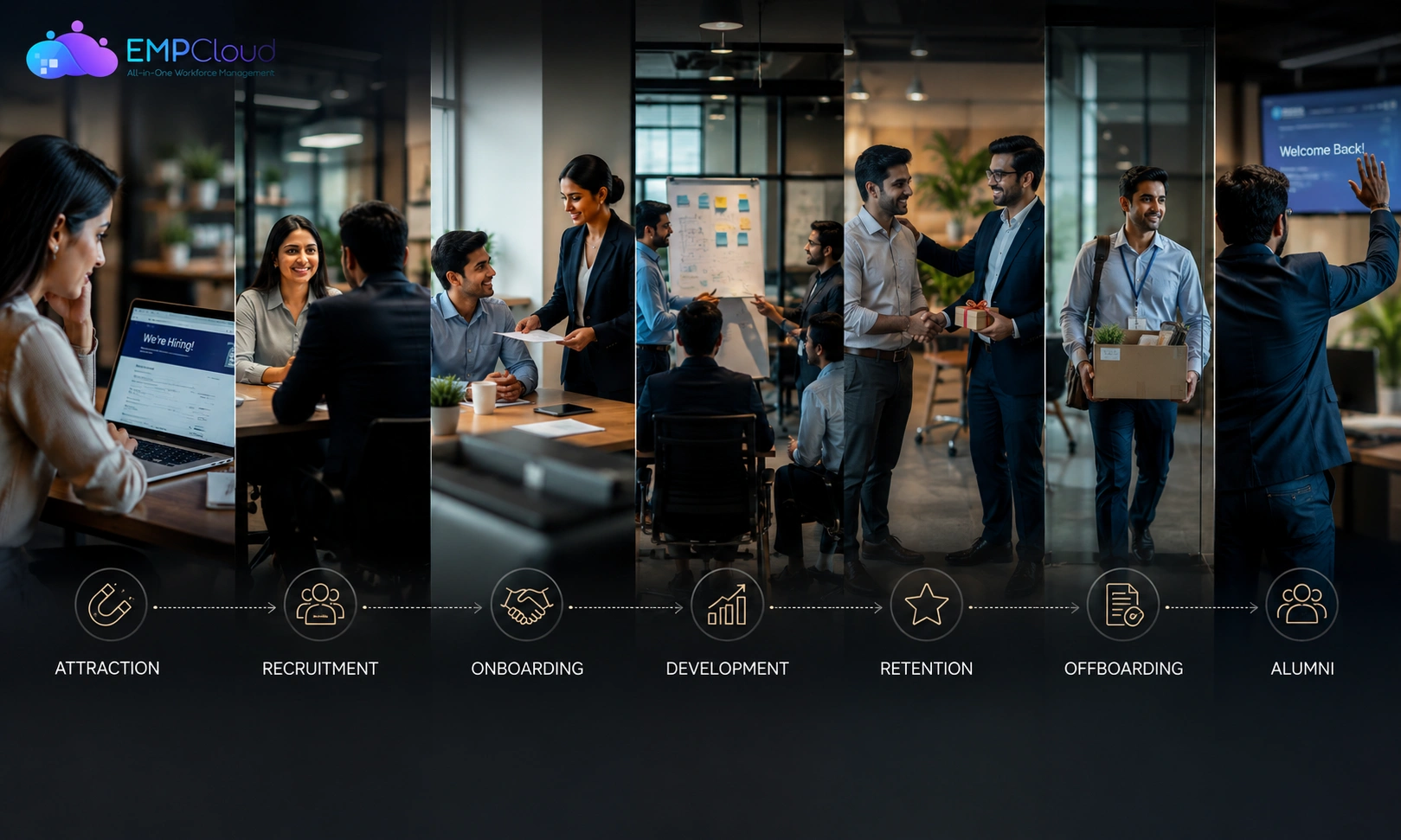
Employee lifecycle management is the structured approach HR teams use to guide employees through every stage of their time at a company: attraction, recruitment, onboarding, development, retention, offboarding, and alumni relations. Done well, it turns scattered HR activities into a connected, measurable system that improves engagement, retention, and business performance.
The Seven Stages of Employee Lifecycle Management
Before jumping into fixes, it helps to see the full journey laid out.
Attraction
This is your employer brand at work. Reviews, social presence, and word of mouth decide whether skilled candidates even apply.
Recruitment
Screening, interviewing, and offer negotiation. Slow or confusing processes cost you strong candidates to faster competitors.
Onboarding
The first 90 days set the tone. Poor onboarding is one of the biggest predictors of early attrition.
Development
Training, mentorship, and career pathing. Employees without a growth plan start looking elsewhere within a year or two.
Retention
Recognition, fair compensation, and manager relationships keep people engaged long after the new-job excitement fades.
Offboarding
How someone leaves matters. A rushed or impersonal exit damages morale for the team left behind.
Alumni
Former employees can become customers, referrers, or boomerang hires if the relationship ends on good terms.
How to Improve Employee Lifecycle Management at Every Stage

Improving it isn’t one big initiative. It’s a series of small, deliberate upgrades at each stage.
Strengthen employer branding. Publish honest content about your culture, not polished marketing copy that nobody recognizes once they’re hired.
Standardize recruitment. Build consistent interview scorecards so hiring decisions aren’t based on gut feeling alone. This is where organizations formalizing a hire to retire process see the clearest early wins.
Create personalized onboarding. A generic checklist isn’t enough. Tailor the first week to the role and assign a peer buddy.
Invest in continuous development. Skip-level check-ins and internal mobility programs give people a reason to grow with you instead of elsewhere.
Improve manager communication. Managers, not HR, are the biggest lever in retention. Train them to have real conversations, not just status updates.
Measure employee experience frequently. Quarterly pulse surveys catch problems long before annual engagement scores do.
Build a structured exit process. Exit interviews should feed directly into decisions, not sit in a folder unread.
Common Employee Lifecycle Challenges and How to Overcome Them
Most breakdowns trace back to a handful of recurring issues: disconnected HR systems that force manual data re-entry, inconsistent onboarding across departments, poor communication between HR and managers, low engagement that goes unnoticed until exit interviews, limited career growth paths, and offboarding that treats departing employees as an afterthought. Fixing even two or three of these tends to move retention numbers noticeably within a quarter.
KPIs That Show Whether Your Employee Lifecycle Is Improving
Numbers tell you what feelings alone can’t. Track these across the employee lifecycle:
- Time-to-hire
- Offer acceptance rate
- Onboarding completion rate
- Time to productivity
- Employee engagement score
- Internal mobility rate
- Retention rate
- Voluntary turnover
- Exit interview completion rate
Reviewing these quarterly, rather than once a year, lets HR teams catch dips while there’s still time to act.
Real-World Applications Across Different Business Sizes
Small businesses often manage lifecycle stages manually through spreadsheets, which works until headcount crosses 30 or 40 people, at which point gaps start showing.
Growing mid-sized companies usually hit friction first in onboarding and performance tracking, since informal processes stop scaling.
Enterprise organizations need standardization across regions and departments, where dedicated HR software becomes less a convenience and more a necessity for consistency.
How to Implement Employee Lifecycle Management Successfully
Start by auditing current processes to see where handoffs break down between recruiting, HR, and managers. Map the actual employee journey using real feedback, not assumptions. Identify which repetitive tasks, like document collection or leave approvals, are worth automating, and which conversations should stay human.
Assign clear ownership across departments so nothing falls through the cracks between HR, IT, and finance. Then review your KPIs every quarter instead of letting them sit untouched. Businesses researching a hire to retire employee lifecycle automation software India option usually reach this stage once manual tracking starts costing more time than it saves.
How EmpCloud Simplifies Employee Lifecycle Management
Centralized software doesn’t replace good HR judgment, but it removes the manual grind that slows everything down. EmpCloud brings together the tools teams need across every stage:
- Recruitment workflow management
- Digital onboarding
- Employee records
- Leave and attendance tracking
- Performance management
- Learning and development tracking
- Goal management
- Employee self-service
- Workflow automation
- Analytics dashboards
- Exit workflow management
Instead of switching between five disconnected tools, HR teams get one system that reflects the full employee journey.
Advanced Insight: Why Employee Lifecycle Management Is Shifting Toward AI
AI is starting to reshape how companies handle predictive retention, flagging flight risk before someone hands in notice. It’s also pushing organizations toward skills-based workforce planning rather than rigid job titles, alongside personalized learning paths and workflow automation that reduces administrative drag. HR analytics powered by AI can surface patterns human review would take months to spot, which is why forward-looking teams are watching this space closely.
Common Mistakes That Reduce Employee Retention
Treating each lifecycle stage as separate rather than connected is the biggest one. Others include ignoring manager accountability, measuring success only at the hiring stage, delaying feedback until annual reviews, running a careless exit management process, and skipping lifecycle analytics altogether. Each mistake compounds the others over time.
Conclusion
Improving employee lifecycle management isn’t a one-time HR project you finish and forget. It’s an ongoing habit of reviewing each stage, listening to what the data and the people are saying, and adjusting before small issues become resignation letters. Companies that treat it this way build a more consistent, more human employee experience, and that consistency is what turns good hires into long-term team members.
Frequently Asked Questions
What is employee lifecycle management?
It’s the structured process of managing an employee’s journey from attraction through alumni status, covering hiring, onboarding, development, retention, and offboarding.
Why is employee lifecycle management important?
It directly affects retention, productivity, and how consistent the employee experience feels across the company.
What are the seven stages of the employee lifecycle?
Attraction, recruitment, onboarding, development, retention, offboarding, and alumni.
How does employee lifecycle management improve retention?
By catching problems early at each stage instead of only reacting once someone resigns.
Which KPIs should HR teams track?
Time-to-hire, retention rate, engagement scores, time to productivity, and voluntary turnover, among others.
How does automation improve employee lifecycle management?
It removes repetitive manual work like document collection and leave tracking, freeing HR to focus on people, not paperwork.
What is the role of AI in employee lifecycle management?
AI supports predictive retention, personalized learning, and skills-based planning across the employee journey.
How can HR software simplify employee lifecycle management?
By centralizing records, workflows, and analytics into one system instead of scattered spreadsheets and tools.
Quick Search Our Blogs
Type in keywords and get instant access to related blog posts.