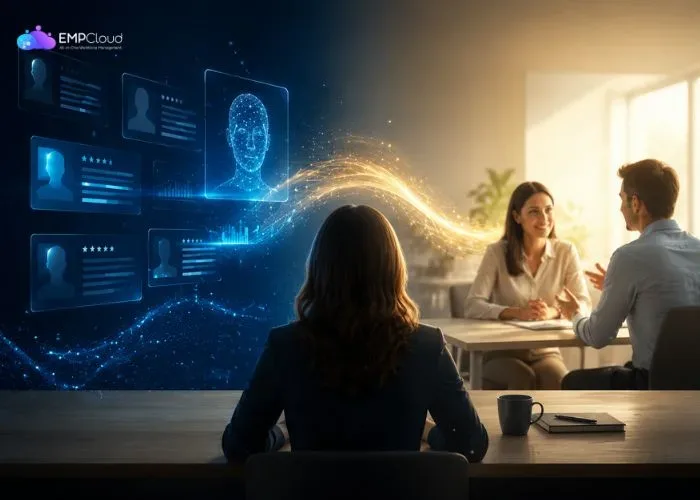
AI is becoming integral to hiring, with companies using it at some point in the recruitment process. According to Gartner’s 2025 survey, only 26% of candidates trust AI to evaluate them fairly. While AI helps analyze data faster and optimize decision-making, people can sense that an algorithm misjudges them in ways a human wouldn’t.
Why AI Can Misjudge Employees?
AI systems make predictions based on the data, rules, and patterns they are given. That can be useful for identifying trends, but workplace decisions often involve details that are difficult to quantify. An employee’s performance, for example, may be influenced by group interactions, changing responsibilities, project complexity, or circumstances that are not visible in a dataset.
An AI system may flag someone as underperforming because of a measurable pattern without understanding why that pattern exists. That’s why you should treat AI recommendations as just that — recommendations that you need to evaluate rather than an automatic conclusion.
AI Does Not See the Whole Employee:
HR decisions rarely depend on one data point. An employee’s contribution may include mentoring colleagues, solving unexpected problems, supporting customers, or taking on responsibilities outside their formal role.
AI can help organize this information, but it may not understand its significance. A manager who reviews the recommendation alongside actual performance records can give context that a system cannot.
The same principle applies to hiring, promotions, compensation, and disciplinary decisions.
Where AI Misjudgments Can Happen:

AI is increasingly being used across HR functions. Current HR use cases include resume parsing, interview scheduling, job-ad creation, candidate matching, employee feedback summaries, and learning recommendations.
The more significant the decision, the more carefully HR teams should review what the system is actually measuring. This can include:
- Recruiting and candidate screening.
- Performance reviews and employee evaluations.
- Promotion and compensation recommendations.
- Workforce planning and retention predictions.
- Employee engagement and sentiment analysis.
- Training and development recommendations.
What HR Should Do When AI Gets It Wrong:
An incorrect AI recommendation does not have to derail the entire decision-making process. The key is having a clear procedure for reviewing questionable outputs.
Start With the Underlying Data:
First, check what information the system used to make the decision it recommended. Was it based on attendance, productivity metrics, performance reviews, employee surveys, or was it another source?
Once you know the underlying data, check if the information the AI used is complete, current, and accurate. A recommendation can look convincing while being based on outdated information or a metric that does not accurately represent the employee’s work. Reviewing the source data gives HR a starting point for understanding what happened.
Ask What the System Was Designed to Measure:
HR teams need to know exactly why they’re using an AI tool. Just because a system tracks productivity trends doesn’t mean it should be the deciding factor for promotions. And if a tool pulls together employee feedback, that doesn’t mean it can sum up someone’s entire performance.
When HR gets clear about what the AI is meant to do, they can tell the difference between helpful insights and decisions that just don’t fit.
Keep Common Sense in the Decision:

It’s always important to have human oversight from start to finish. Give employees a chance to respond and offer relevant context when an AI-supported assessment affects them. For example, the AI may flag an employee for declining productivity after being moved to a more complex project. A manager may know that the employee is handling work that takes longer but creates greater value.
Allowing employees and managers to challenge a recommendation can surface information that the system did not have. It also creates a more transparent process for everyone involved.
The National Institute of Standards and Technology’s AI Risk Management Framework stresses the need to define human roles and responsibilities when organizations use and manage AI systems. For HR teams, this can mean assigning a specific person or group to review AI-supported recommendations before they influence significant employment decisions.
Pay Attention to Bias and Compliance:
AI does not automatically remove bias from HR processes. A system trained on or operating on data that contains or reflects existing patterns or gaps can reproduce those problems in its recommendations.
This is important because employment decisions are governed by existing law, regardless of whether the recommendation comes from a human or an automated system. The EEOC has also focused on the use of AI and automated systems in hiring and other employment decisions, including concerns of possible discrimination. HR teams should therefore be mindful of the use of their tools and review whether they could lead to unequal outcomes.
Document Important Decisions:
HR teams should document AI-influenced decisions to identify patterns and potential problems, which can include things like:
- What the AI system recommended.
- Information that informed the recommendation.
- Reviewer of the recommendation.
- The additional evidence that was considered.
- Whether the recommendation was accepted, modified, or rejected.
- The reason the final decision was made.
Build an AI-Aware HR Policy:
HR departments don’t need an elaborate policy to ensure the ethical use of AI, but clear guidelines on how employees and managers should use it.
The guidelines can include areas of work that can incorporate the use of AI, the decisions that cannot be made through AI, and the information that can be entered by employees in AI technologies, among other things.
Train Managers Alongside HR Teams:
Aside from the HR team, managers should also receive proper AI awareness training. They are often the ones who make decisions based on what the AI recommends, so they must understand the process behind it.
Training can help managers recognize that an AI score or recommendation is not the same thing as a complete assessment. They should know how to question unexpected results and identify missing context without relying on software.
As AI becomes more common at work, digital literacy is becoming part of effective management. Microsoft’s latest Work Trend Index highlights the growing role of AI skills and human-agent collaboration across organizations.
Protect the Information Behind AI Decisions:
The same care HR applies to AI recommendations should extend to the data behind them. Much of that information, like performance records or compensation details, is highly sensitive, and it can be accessed outside the office. An HR manager working from home or an employee uploading documents from a coworking space may be on a network no one has vetted.
Encrypting that outside traffic with a VPN keeps employee records private even on public or home Wi-Fi. Several providers offer no-commitment trials, such as a Windows VPN free trial, so teams can test the setup before rolling out a wider policy.
AI Should Support Better HR Decisions:
AI in HR is not meant to steer people away from the right decisions. It’s meant to help HR reach the correct decision more easily. When it doesn’t serve that purpose, the reason is often not in the AI itself. It’s in how the data was presented.
This is not bad; it’s a chance to review the data, understand the system’s limitations, and improve the process around it. By doing so, HR teams can create a workflow that supports the decision-making process while keeping accountability with people. You can make AI a practical part of modern workforce management without losing human reasoning.
Quick Search Our Blogs
Type in keywords and get instant access to related blog posts.