
A clear project charter sets the direction for every successful project. It works as a formal agreement between leaders and the project team. This document defines goals, scope, roles, risks, timeline, and authority. When a team starts work without a strong project charter, confusion rises, delays appear, and budgets stretch beyond limits. When a team uses a well-built project charter, clarity improves, pace rises, and results match expectations.
Many teams rush into tasks without a solid foundation. A Project Approval Form stops that mistake. It gives approval, direction, and structure. Every stakeholder sees the same vision. Every team member understands priorities. In this guide, you will learn exactly how to build a Project Approval Form that delivers real value.
In a hurry? Listen to the blog instead!
Why A Project Charter Matters So Much?
A project charter brings everyone onto the same page departments, managers, clients, and contributors. It explains why the project exists, outlines its objectives, identifies stakeholders, defines the scope, and clarifies the resources needed. It also establishes responsibility and decision-making flow, so every contributor knows their role from day one.
The project charter also acts as the foundation for formal project approval. Without this document, teams end up working on assumptions. One person imagines one outcome, another expects something totally different. Deadlines collide, budgets slip, and resource plans stay unclear. A well-defined project charter prevents this confusion by giving everyone a single, aligned, and approved direction before the work begins.
Here are the direct benefits of a strong project charter:
- Clear purpose and business reason.
- Defined scope with clear boundaries.
- Set goals with measurable outcomes.
- Assigned roles and authority levels.
- Identified risks and assumptions.
- Approved timeline and major milestones.
- Official sign-off from key stakeholders.
When these elements sit in one document, control and focus increase.
What Is A Project Charter?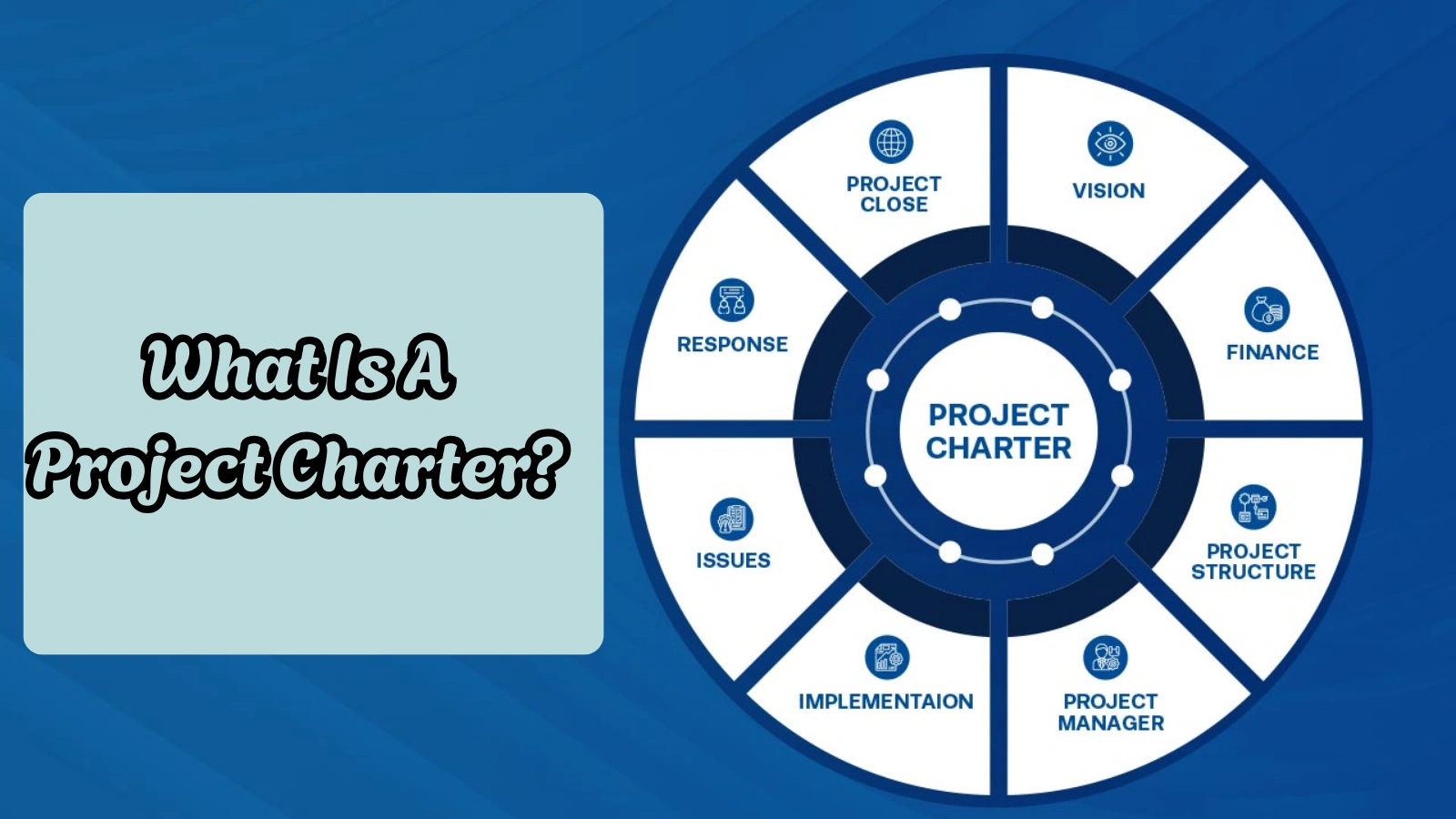
What is a project charter? It is a formal document that officially launches a project. A sponsor authorizes this document. The project manager uses it as a road map. The team follows it as a guide.
This document answers key questions:
- Why does this project exist?
- What does success mean?
- Who leads and who supports?
- What limits apply?
- When will the key phases finish?
- How much budget applies?
Every professional project begins with a project charter. It acts as a contract, a vision sheet, and a reference point. Teams return to it when doubt or conflict appears.
Core Elements Of A Strong Project Charter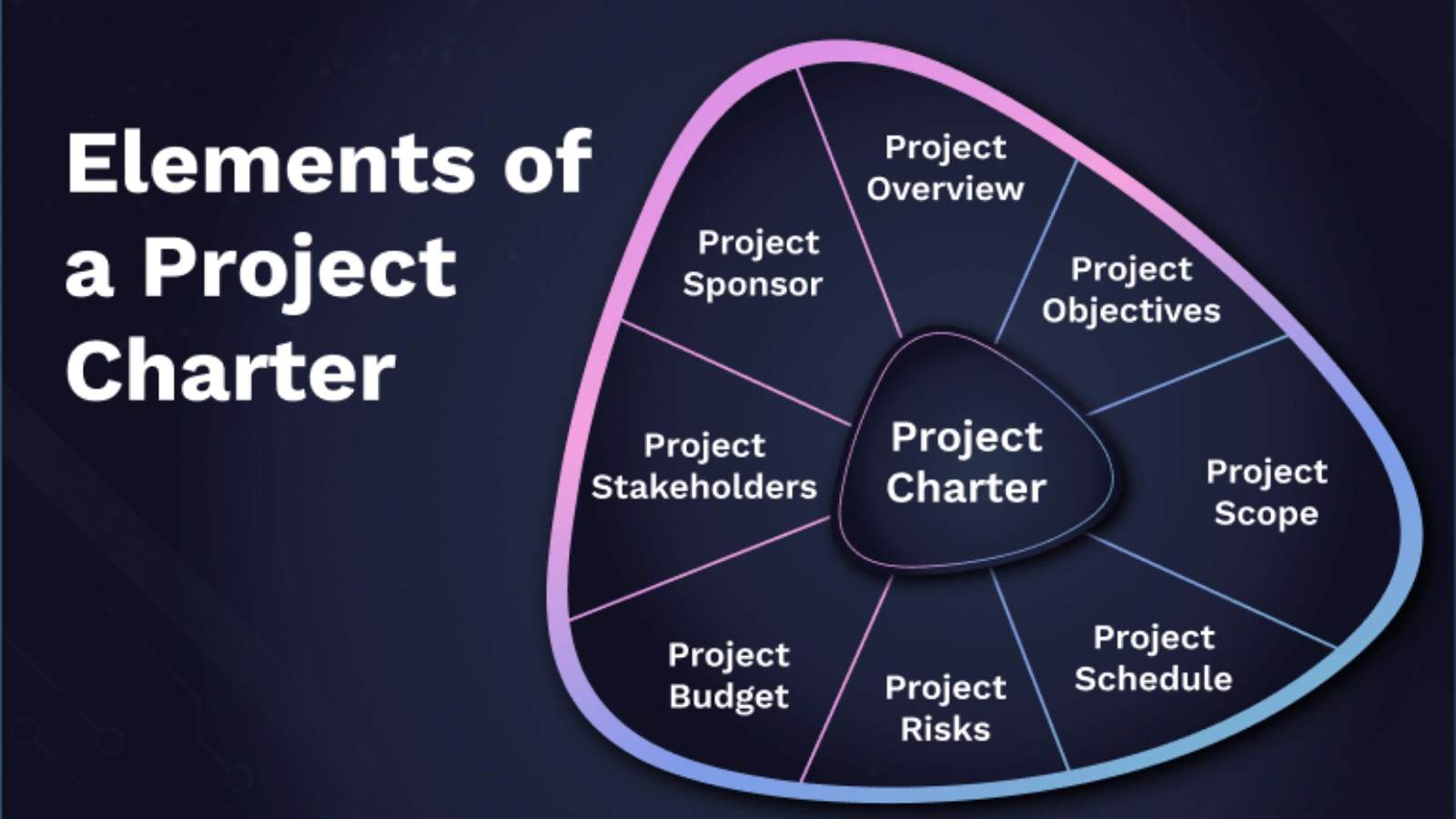
Every successful project begins with a well-defined project charter. This document acts as a foundation for planning, decision-making, and execution. Each section plays a specific role and gives clarity to everyone involved.
1. Project Purpose
This section explains why the project exists. It connects the project to a larger business goal or problem that needs a solution. When the purpose stays clear, the team understands the real reason behind every task.
For example, a company might aim to improve customer service speed by thirty percent through new workflow automation. This simple statement shows the reason, the target, and the value of the project.
A clear purpose removes confusion and keeps the team focused on one main goal.
2. Project Objectives
Project objectives describe what the project will achieve. These objectives must stay specific and measurable so that success can be tracked.
For example, launching a new system within six months and reaching a ninety percent satisfaction rate gives a clear target. Everyone can see what success looks like and when it must happen.
Defined objectives turn ideas into action. They give the project a measurable direction.
3. Scope Definition
This section clearly states what the project will include and what it will not include. It protects the project from unnecessary expansion and last-minute changes.
For example:
Design, testing, and deployment stay included. Long-term system support stays excluded.
This boundary keeps the project focused and prevents confusion. Team members avoid working on tasks that do not belong to the project.
4. Key Stakeholders
This part identifies everyone who plays a major role in the project. It usually includes the sponsor, project manager, team members, clients, or external partners.
When all stakeholders appear in the project charter, communication becomes clear. Everyone knows who makes decisions and who must receive updates.
This clarity reduces conflict and increases accountability.
5. Roles And Responsibilities
Each person involved must have a defined role. This section assigns ownership to specific individuals or teams. It also explains who holds decision-making power and who reports to whom.
When roles stay clear, work does not overlap, and tasks do not get ignored. Everyone knows exactly what they must do.
Clear roles increase productivity and reduce delays.
6. Milestones And Timeline
Milestones serve as major checkpoints within the project. This section lists the start date, key review points, and completion date.
Milestones help the team measure progress at each stage. They also help leaders catch problems early. A clear timeline keeps everyone on track and prevents rushed work at the end.
7. Budget Estimate
This part outlines the estimated cost of the entire project. It includes approved financial limits that the team must follow.
A defined budget supports better planning and prevents overspending. Leaders use this section to allocate resources wisely and keep financial control.
8. Risks And Assumptions
Every project faces uncertainty. This section identifies possible threats, such as delays, resource shortages, or technical failures. It also lists assumptions that the team accepts as true during planning.
By recognizing risks early, the team can prepare solutions in advance. This reduces surprises and strengthens project stability.
9. Final Approval
This is the most important step. The sponsor or senior authority signs off on the project charter. This approval gives official permission to begin work.
Once approved, the Project Approval Form becomes the main reference document throughout the project lifecycle. It confirms agreement, responsibility, and commitment.
Why These Elements Matter?
Each of these elements works together as one complete system. When one part remains weak, the entire project becomes vulnerable. When all parts stay clear and strong, the Project Approval Form transforms into a reliable map for success.
A strong Project Approval Form guides decisions, aligns teams, reduces conflict, and increases the chance of a successful outcome.
Example Of A Project Charter
Many teams look for a clear example of a project charter to understand the proper format, tone, and structure. A well-written project charter provides direction, defines responsibilities, and removes guesswork. By following a structured Project Approval Form example, teams reduce errors and create strong alignment across departments.
Below is a simplified example of a project charter that organizes key information effectively:
Project Name: CRM Upgrade Project
Project Sponsor: Head of Sales
Project Manager: Jane Smith
Start Date: 1st August
End Date: 31st December
Budget: $150,000
Purpose:
Enhance lead conversion rates and improve accuracy in customer tracking.
Objectives:
- Increase lead conversion by 20%
- Improve data accuracy by 35%
- Reduce response time by 50%
Scope Includes:
- CRM platform upgrade
- Employee training
- Customer data migration
Scope Excludes:
- Hardware replacement
- Long-term support contracts
Key Stakeholders:
- Sales team
- Marketing team
- IT team
- Senior management
Risks:
- Data loss during migration
- Employee resistance to new processes
This project charter example shows a concise, clear layout where every section is short and focused. Including the budget ensures financial clarity, while measurable objectives, defined responsibilities, and clear scope reduce confusion and improve project execution. Teams can adapt this framework depending on project size, industry, and internal processes, but maintaining this structured approach ensures clarity and control.
Also Read:
How Do Project Management Statistics Impact Your Bottom Line?
How To Write A Project Charter Example?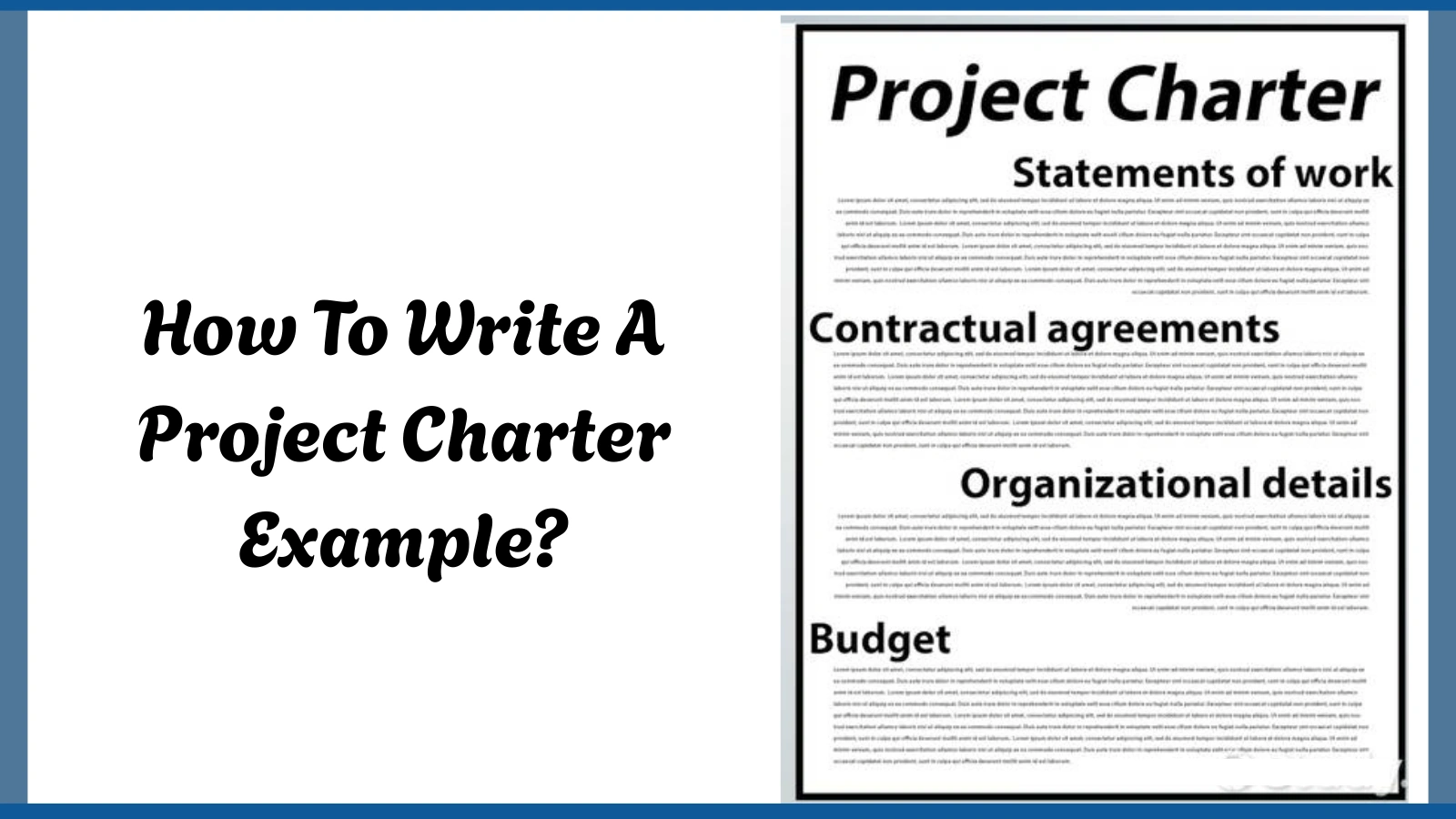
Many teams struggle because they start work without direction. A strong Project Approval Form fixes that problem. It gives clear goals, boundaries, roles, and approval before any real work begins. When you follow a structured project charter example, you remove misunderstandings, save time, and prevent conflict.
Below is a simple explanation of each step used in How to write a project charter example.
Step 1: State The Purpose
This step answers one question:
Why does this project exist?
You must connect the purpose to a real business result. Avoid broad or unclear statements.
Bad purpose:
“Improve company performance.”
This tells nothing specific.
Strong purpose:
“Raise website sales by 25% in four months.”
This works because it:
- Shows a clear target
- Includes a time frame
- Links to business growth
Every strong Project Approval Form starts with a specific purpose.
2: Define Success
Now you must explain how success will appear. Use numbers, clear results, or deadlines.
Strong success example:
“Reach 10,000 active users by January.”
This helps the team:
- Track progress
- Measure results
- Stay focused
A project charter example without clear success goals creates confusion. With defined success, every action points toward one outcome.
3: Set Project Boundaries
This step protects your time and your team.
You must clearly state:
- What the project includes
- What the project excludes
This prevents people from adding extra work later.
Example:
Includes: Website redesign, SEO setup
Excludes: Social media marketing, customer support
Strong boundaries make the Project Approval Form powerful. Weak boundaries cause stress and delays.
4: Name Key People
Projects fail when no one knows who decides or who owns tasks.
In this step, list:
- Project sponsor
- Project manager
- Core team members
Clear roles:
- Stop confusion
- Speed up decisions
- Build accountability
Every serious project charter example includes named people and responsibilities.
5: Add Timeline
A project without a timeline drifts with no direction.
Your timeline must include:
- Start date
- Key checkpoints
- Final date
This keeps the team on track and gives everyone a shared sense of urgency. A powerful Project Approval Form always runs on a defined timeline.
6: Outline Risks
Every project faces challenges. Ignoring them creates failure later.
This step identifies:
- Main threats
- Possible delays
- Resource issues
- Budget limits
By writing risks inside the Project Approval Form, the team prepares solutions before problems appear.
That is why smart planning always includes this section.
7: Secure Approval
This turns a plan into an official project.
Your sponsor must confirm the project charter with a signature or written approval. Without this step:
- Authority stays unclear
- Funding stays at risk.
- Goals lose strength
Approval shows commitment and support from the top.
Common Mistakes Teams Make With A Project Charter
Even strong teams make errors. Avoid these common issues:
- Too much technical detail
- No clear objective
- Vague timeline
- Missing stakeholder list
- No risk section
- No formal approval
- Overloaded language
A Project Approval Form must stay simple yet powerful. Long documents lose impact. Short, direct language wins.
When you write a Project Approval Form, focus on clarity more than style. Results matter more than decoration.
How EmpCloud Strengthens Project Charter Execution?
EmpCloud supports teams after a Project Approval Form receives approval and moves into action. It connects workforce management, task control, time tracking, and reporting in one centralized system. This connection ensures that each goal, timeline, and responsibility defined in the Project Approval Form turns into visible and measurable progress.
- Align Tasks With Project Charter Objectives
Managers assign tasks based on the goals, milestones, and deliverables defined in the Project Approval Form. Clear ownership and deadline visibility keep work aligned with the original plan. - Track Time and Resource Usage
EmpCloud records working hours and effort for every task. This helps teams match actual performance with the schedule and resource distribution defined in the project charter. - Monitor Progress in Real Time
Live dashboards display task status, team activity, and productivity data. Managers can identify delays, adjust priorities, and ensure that teams stay on track with Project Approval Form timelines. - Support Field and Hybrid Teams
Geo-location tracking provides real-time visibility into field activities. This helps leaders confirm task completion and keep every team aligned to Project Approval Form responsibilities, regardless of work location. - Strengthen Data Security and Documentation
Secure file storage, access history, and document control protect project-related data. This keeps sensitive information safe while supporting compliance throughout the project lifecycle. - Generate Insightful Reports
EmpCloud converts project data into structured reports. These reports help evaluate progress, measure performance, and validate success against project charter objectives. - Centralized Project Oversight
A unified dashboard connects time, tasks, attendance, and performance in one view. Leaders gain full clarity on whether execution matches the structure defined in the Project Approval Form.
By linking planning with execution, EmpCloud turns a project charter from a formal document into a controlled, data-backed action plan. It strengthens accountability, boosts efficiency, and keeps every phase aligned with the intended outcome.
Best Practices To Strengthen Your Project Charter
Use these tips to take your project charter to the next level:
- Use simple, direct language
Write your Project Approval Form with clear words so everyone understands the purpose, goals, and responsibilities without confusion. - Stick to facts and numbers
Support every decision in the Project Approval Form with measurable data to remove guesswork and improve clarity for all stakeholders. - Avoid vague commitments
Define specific actions and deadlines in the Project Approval Form instead of unclear promises that create confusion and delays. - Review alignment with the business vision
Ensure the Project Approval Form supports company goals, priorities, and strategic direction to maintain relevance and long-term impact. - Involve key stakeholders early
Bring decision-makers and team leaders into the project charter process to improve accuracy, support, and accountability. - Update only when approval occurs
Make changes to the Project Approval Form only after leadership approves to maintain structure, consistency, and project stability. - Revisit at each major milestone
Check the Project Approval Form during key progress points to confirm proper alignment and ensure goals stay on track.
A Project Approval Form evolves only when leadership approves. This keeps stability in motion.
Final Thoughts
A project truly succeeds when it starts with a clear and well-structured project charter. This document provides direction, authority, and measurable goals, ensuring every team member understands their responsibilities and purpose. By defining objectives, scope, stakeholders, and key milestones, a Project Approval Form eliminates confusion and sets the foundation for successful execution. Combining this framework with tools like EmpCloud strengthens oversight, tracks progress, and keeps teams aligned with project goals.
With the knowledge of what a Project Approval Form is, how to write one, and how to apply it in real scenarios, you can confidently create a charter that guides your team, measures success, and drives results efficiently.
FAQs
- Who should draft a project charter?
Typically, the project manager drafts the charter in collaboration with the project sponsor and key stakeholders to ensure alignment and approval. - Can a project charter be updated during the project?
Yes, but updates should occur only after formal approval from leadership to maintain project stability and clarity. - What is the main purpose of a project charter?
A Project Approval Form provides direction, defines goals, sets roles, and authorizes resources, serving as the official starting point for a project.
Quick Search Our Blogs
Type in keywords and get instant access to related blog posts.