It often feels like there aren’t enough hours in the day. Your calendar fills up quickly, notifications keep popping up, and your to-do list never seems to shrink. In moments like these, it’s normal to wonder how to be more productive without feeling drained all the time.
Many people struggle with this, especially when they already work long hours but still feel behind. The issue usually is not laziness or lack of effort. It often comes down to unclear priorities, scattered focus, and systems that simply do not support meaningful progress. When you put the right structure in place, results improve without adding pressure.
Learning how to be more productive starts with changing how you think about work. Being busy is not the same as being effective. True productivity comes from focusing on what actually moves you forward and completing those tasks with intention and clarity.
In this guide, you will discover practical strategies, mindset shifts, and simple systems that help you understand how to be more productive in a way that feels sustainable, balanced, and realistic.
In a hurry? Listen to the blog instead!
What Does Productivity Really Mean?
Productivity measures output in relation to effort. If you work for eight hours but achieve little progress, your productivity remains low. If you focus deeply for four hours and complete high-impact work, your productivity rises significantly.
Many people confuse motion with progress. Checking emails repeatedly, attending unnecessary meetings, or multitasking may feel productive, but they rarely move you closer to your goals.
If you truly want to master how to be more productive, start by identifying outcomes that matter. Define success clearly. Without direction, effort becomes scattered.
7 Core Pillars Of High Productivity And Focus

Mastering productivity does not require extreme effort or long working hours. It requires the right structure, discipline, and consistent execution of proven principles.
If you are searching for practical ways to increase productivity, these seven strategies form the foundation of sustainable focus, efficiency, and long-term success.
Set Clear Goals That Drive Action:
One of the most powerful steps in learning how to be more productive involves setting specific and measurable goals. Vague intentions lead to inconsistent execution.
Break long-term goals into monthly, weekly, and daily targets. When your daily actions align with larger objectives, you eliminate confusion and wasted effort.
For example, instead of saying “I want to grow professionally,” define a measurable milestone such as completing a certification or leading a new project. Clarity strengthens focus.
When you define goals precisely, how to be more productive becomes a structured process rather than guesswork.
Prioritize What Truly Matters:
Prioritization forms the backbone of how to be more productive. Not every task deserves equal attention. High-value tasks create momentum and measurable results.
Apply the 80/20 principle. Identify the small percentage of activities that produce most of your outcomes. Focus your best energy on those activities first.
Avoid starting your day with low-impact work. Complete your most important task before responding to routine requests. This simple shift dramatically improves output.
If you consistently prioritize wisely, how to be more productive stops feeling overwhelming.
Master Time Management:
Time management remains central to how to be more productive. Every person has the same twenty-four hours, but effective individuals assign those hours intentionally.
Use time blocking to schedule deep work sessions. Allocate specific time slots for emails, meetings, and administrative work. Avoid open-ended to-do lists that encourage procrastination.
Eliminate time leaks. Limit unnecessary scrolling, reduce random interruptions, and define clear communication windows.
When you manage time strategically, you understand how to be more productive without extending your workday.
Manage Energy For Consistent Performance:
Energy management often determines whether your productivity thrives or declines. Learning how to be more productive requires recognizing when you operate at peak performance.
Most individuals experience strong focus during specific hours of the day. Identify your prime cognitive window and schedule complex tasks during that period.
Sleep at least seven hours consistently. Eat balanced meals. Stay hydrated. Exercise regularly. Your brain depends on physical health for optimal performance.
Instead of asking how to work longer, ask how to work smarter. When you protect your energy, how to be more productive becomes sustainable.
Embrace Deep Work In A Distracted World:
Deep work refers to focused, uninterrupted effort on cognitively demanding tasks. It stands as a critical principle in mastering how to be more productive.
Silence notifications. Close unnecessary tabs. Keep your phone out of reach. Work on one task at a time.
Multitasking weakens attention and increases errors. Single-tasking strengthens quality and speed.
When you practice deep work consistently, how to be more productive transforms from theory into daily reality.
Build Strong Habits That Support Success:
Habits reduce decision fatigue and create consistency. Developing supportive routines simplifies how to be more productive over time.
Start with small, manageable changes. Review priorities every morning. Plan the next day before logging off. Dedicate fixed time slots for focused work.
Habit stacking strengthens adoption. Attach new habits to existing routines. Consistency matters more than intensity.
When habits align with goals, how to be more productive becomes automatic rather than forced.
Design A Distraction-Free Environment:
Your environment strongly influences how to be more productive. A cluttered desk often leads to a cluttered mind.
Keep your workspace organized. Maintain proper lighting. Use ergonomic furniture to reduce physical strain.
Remove visual distractions. Store your phone out of sight during focus sessions. Even minor environmental adjustments create measurable improvements.
When your environment supports focus, how to be more productive feels natural.
How To Be More Productive In Professional Settings?

Many professionals search specifically for how to be more productive at work when deadlines increase and responsibilities expand. Workplace productivity requires structure, clarity, and accountability.
Start each workday with three high-priority objectives. Complete them before shifting to reactive tasks. This approach improves overall work productivity and reduces stress.
Team alignment also plays a major role. Clear communication reduces misunderstandings and rework. Defined responsibilities enhance productivity at work across departments.
Technology can amplify these efforts when used strategically.
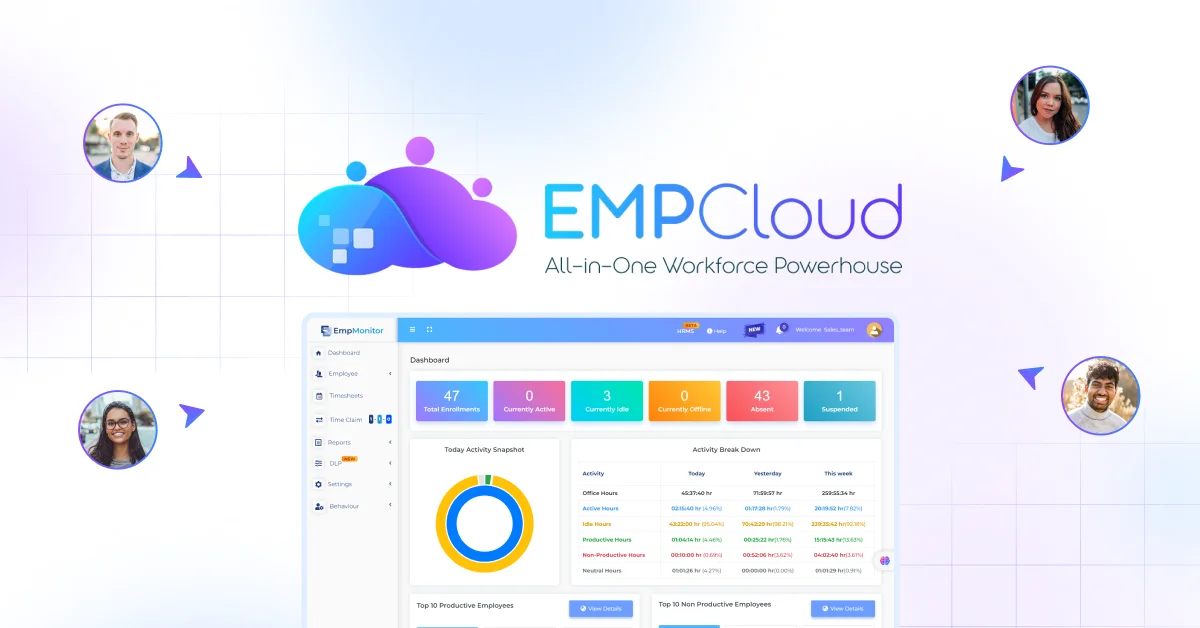
In modern organizations, structured workforce systems significantly influence how to be more productive at scale. This is where platforms like Empcloud create measurable impact. Empcloud offers a unified workforce management solution that streamlines time tracking, project management, productivity monitoring, and employee data into one centralized dashboard.
Instead of relying on scattered tools, businesses gain clear visibility into performance, attendance, and task allocation. When managers access real-time insights, teams operate with stronger alignment and improved efficiency.
How Does Empcloud Elevate Workforce Productivity?
Sustainable success requires more than personal discipline. It demands systems that support clarity and performance. Empcloud redefines how organizations manage their workforce through an integrated suite of manager-centric and HR-centric solutions.
Manager-Centric Solutions:
Empcloud empowers leaders with actionable tools that improve visibility, accountability, and operational efficiency across teams.
Time Tracking:
Monitor employee work hours and activity patterns with precision. Detailed tracking helps managers identify productivity trends, reduce time leakage, and ensure accurate performance evaluation.
Geo-Location Tracking:
Track field teams in real time to enhance coordination, verify on-site visits, and improve route efficiency. This feature ensures transparency and supports better decision-making for distributed teams.
Task & Opportunity Management:
Assign tasks with clear deadlines and monitor real-time progress through a centralized dashboard. Managers can track opportunities, measure completion rates, and maintain workflow momentum without constant follow-ups.
Client Management:
Store and organize client information in one secure system. Track communication history, monitor engagement, and improve service delivery through structured client data management.
Productivity Tracking:
Access real-time performance insights to evaluate output, identify improvement areas, and recognize high-performing team members. Data-driven visibility enables smarter management decisions.
Project Management:
Plan, allocate resources, set milestones, and oversee projects strategically to ensure timely completion. Clear project tracking reduces delays and strengthens accountability across departments.
Data Loss Prevention:
Safeguard sensitive company information with advanced monitoring and security measures. Protect business-critical data from unauthorized access, misuse, or potential breaches.
Report Generation:
Generate detailed, customizable reports that provide actionable insights into attendance, productivity, task completion, and overall performance. These reports support informed and strategic business decisions.
HR-Centric Solutions:
Empcloud enhances workforce management by automating critical HR processes, improving compliance, and reducing manual administrative workload.
Face Recognition Attendance System:
Implement secure and contactless attendance tracking with advanced facial recognition technology. This system prevents proxy attendance, enhances workplace security, and ensures accurate time records without manual intervention.
Leave & Attendance Tracking:
Maintain precise records of employee attendance, leaves, and absences through an automated system. Simplified approval workflows reduce administrative delays and improve transparency between employees and HR teams.
Policy & Document Management:
Centralize company policies, contracts, and important documents within a secure digital repository. Employees can access updated documents easily, ensuring compliance and minimizing confusion.
Automated Timesheets:
Track work hours accurately with automated timesheet generation. This feature improves resource planning, enhances billing accuracy, and reduces manual data entry errors.
Employee Access History:
Maintain detailed logs of employee entry and exit across office locations. Access history tracking strengthens security protocols and supports compliance audits when needed.
Employee Requests Management:
Streamline the management of work-from-home requests, attendance corrections, compensatory offs, and other employee submissions. A centralized request system ensures faster processing and better communication.
Exit Management Streamline:
Organize structured offboarding processes with proper documentation, asset recovery tracking, and compliance verification. A streamlined exit workflow protects company data and ensures professional transitions.
Employee Payroll Management:
Automate payroll calculations to ensure accuracy, compliance with regulations, and timely salary disbursement. Reduced manual processing minimizes errors and improves overall payroll efficiency.
How Does Empcloud Deliver Centralized Insights For Smarter Decisions?
Empcloud provides a unified, real-time dashboard that gives organizations complete visibility into workforce operations from a single platform. Instead of switching between multiple tools, managers and HR teams can access consolidated data that supports faster and more strategic decision-making.
The centralized dashboard includes:
- Time Sheets: Monitor employee work hours, overtime trends, and task-based time allocation to improve planning and efficiency.
- Live Location Tracking: View real-time location data for field teams to ensure transparency, optimize routes, and improve on-ground coordination.
- Contactless Attendance: Track secure, face-recognition-based attendance records that reduce manual errors and strengthen compliance.
- Task Allocation: Assign, track, and review task progress through a structured workflow that enhances accountability.
- Employee Performance Metrics: Analyze productivity data, output trends, and engagement levels to identify strengths and areas for improvement.
By centralizing workforce data into one intelligent system, organizations eliminate operational blind spots and reduce reliance on assumptions. Managers gain actionable insights. Teams align with measurable goals. Leadership makes data-driven decisions with confidence.
As a result, businesses move beyond isolated efforts and develop a structured understanding of how to be more productive at an organizational level rather than relying solely on individual performance.
How Can You Strengthen Focus Through Clear Boundaries?
Clear boundaries protect your time, energy, and attention. Without them, constant interruptions quietly reduce efficiency and weaken concentration.
Set defined work hours and communicate them clearly. Establish specific communication windows for emails, calls, and meetings instead of remaining constantly available. Protect deep work sessions by turning off notifications and limiting unnecessary interactions during focused periods.
When colleagues understand and respect structured schedules, collaboration becomes more intentional and productive. Meetings become purposeful. Responses become clearer. Expectations align naturally.
Strong boundaries reduce stress, prevent burnout, and significantly improve the quality of your output.
You Might Also Like:
How Do Time Management Methods Improve Productivity Today?
10 Must-Track Employee KPI Metrics For Better Performance In 2026
Track Progress And Adjust Strategically

Consistent measurement accelerates mastery of how to be more productive. When you track your daily output, you gain clarity about where your time and effort truly go. Without data, improvement becomes guesswork.
Review your weekly achievements to evaluate what worked and what needs adjustment. Identify patterns in performance, energy levels, and task completion. This structured reflection helps you eliminate inefficiencies and strengthen high-impact habits.
Visible progress boosts motivation and builds momentum. Data-driven adjustments refine your approach and prevent repeated mistakes. Small, consistent improvements compound over time, leading to measurable long-term growth.
Conclusion
Learning how to be more productive does not require extreme hustle. It requires clarity, discipline, strong systems, and consistent habits.
When you prioritize high-impact tasks, manage your energy wisely, embrace deep work, and leverage supportive tools like Empcloud, productivity transforms from a struggle into a structured advantage.
Mastering how to be more productive empowers you to control your schedule, achieve meaningful goals, and build long-term success without burnout. Start with small changes today, refine your systems gradually, and commit to steady improvement.
FAQs
1. Does multitasking improve productivity?
Multitasking often reduces efficiency rather than improving it. Switching between tasks forces your brain to reset repeatedly, which lowers concentration and increases mistakes. Focusing on one task at a time produces higher-quality results in less time.
2. How long does it take to build productive habits?
Habit formation varies from person to person, but most research suggests it can take anywhere from 21 to 66 days to establish a consistent routine. The key lies in repetition, simplicity, and attaching new habits to existing behaviors.
3. What role does mindset play in productivity?
Mindset significantly influences performance. A growth-oriented mindset encourages learning, resilience, and adaptability. When you believe improvement is possible, you take consistent action and recover faster from setbacks.
4. Can workplace tools really improve team productivity?
Yes, structured tools improve visibility, accountability, and collaboration. When teams operate with clear systems for time tracking, project management, and communication, confusion decreases and efficiency improves.
5. How can remote workers maintain consistent productivity?
Remote professionals benefit from structured schedules, clear boundaries, and a dedicated workspace. Regular check-ins, defined goals, and performance tracking systems help maintain accountability outside traditional office environments.
Quick Search Our Blogs
Type in keywords and get instant access to related blog posts.