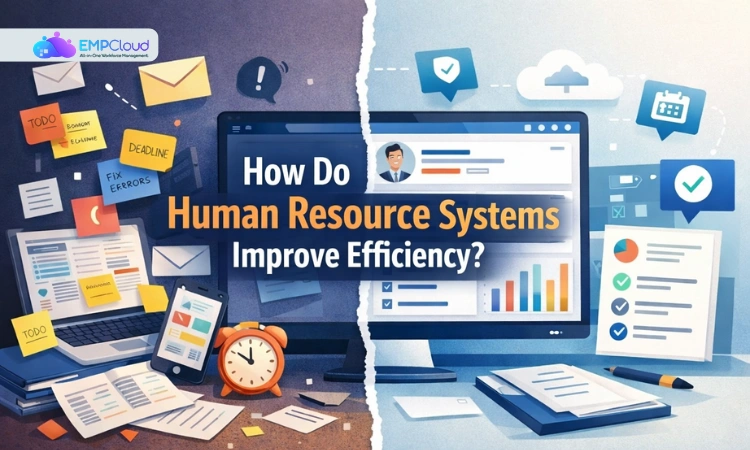
Human resource systems are often misunderstood as tools designed simply to speed things up. In reality, efficiency in HR is rarely about working faster. It is about removing friction.
Most HR teams are not inefficient because they lack skill or commitment. They are inefficient because their processes are fragmented. Payroll lives in one system. Attendance in another. Recruitment is tracked in spreadsheets. Performance reviews sit in shared drives. Benefits data might exist somewhere else entirely. Every gap between tools creates small delays, unnecessary errors, and duplicated effort that quietly drains time and energy.
Over weeks and months, those small inefficiencies compound. HR professionals spend more time coordinating information than acting on it. Strategic work gets pushed aside for administrative follow-ups. Decisions slow down because reliable data is hard to assemble.
This is exactly where human resource systems create meaningful change.
When implemented correctly, they do more than digitize paperwork. They restructure how HR operates. They centralize information, automate predictable tasks, and create visibility across the employee lifecycle.
The result is not just time saved. It is operational clarity.
Real Aloud!
The Real Problem Human Resource Systems Solve
At a basic level, human resource systems manage employee data and HR processes digitally. But if that were the only benefit, spreadsheets and shared drives would be enough.
The real value goes much deeper than storage.
The core issue these systems address is coordination.
HR touches almost every part of an organization. Recruitment, onboarding, payroll, compliance, performance management, benefits administration, employee engagement, reporting, all of it flows through HR at some point. When these functions operate in silos, small disconnects turn into daily inefficiencies.
Teams end up spending more time managing information than making decisions.
For example, a payroll delay might trace back to missing attendance approvals. A performance review might stall because goals were never formally documented. A compliance risk might surface because documentation is stored in multiple places.
A well-designed HR management system removes that friction by creating a structured ecosystem where processes connect instead of collide.
Instead of chasing approvals across email threads, workflows move automatically. Instead of reconciling spreadsheets at the end of the month, data updates in real time. Instead of relying on memory or informal follow-ups, processes are clearly defined and consistently applied.
Here’s what that coordination problem often looks like before systems are unified:
- Duplicate data entry across multiple tools
- Manual approval follow-ups that delay payroll or onboarding
- Inconsistent record-keeping between departments
- Limited visibility into employee lifecycle data
- Reporting that requires manual compilation
- Compliance documentation is scattered across folders
When these gaps are removed, something important happens.
Efficiency improves because ambiguity disappears.
Accountability becomes clear.
Information becomes reliable.
And when information is reliable, decision-making becomes faster and more confident.
Centralized Data: The Backbone of Operational Speed
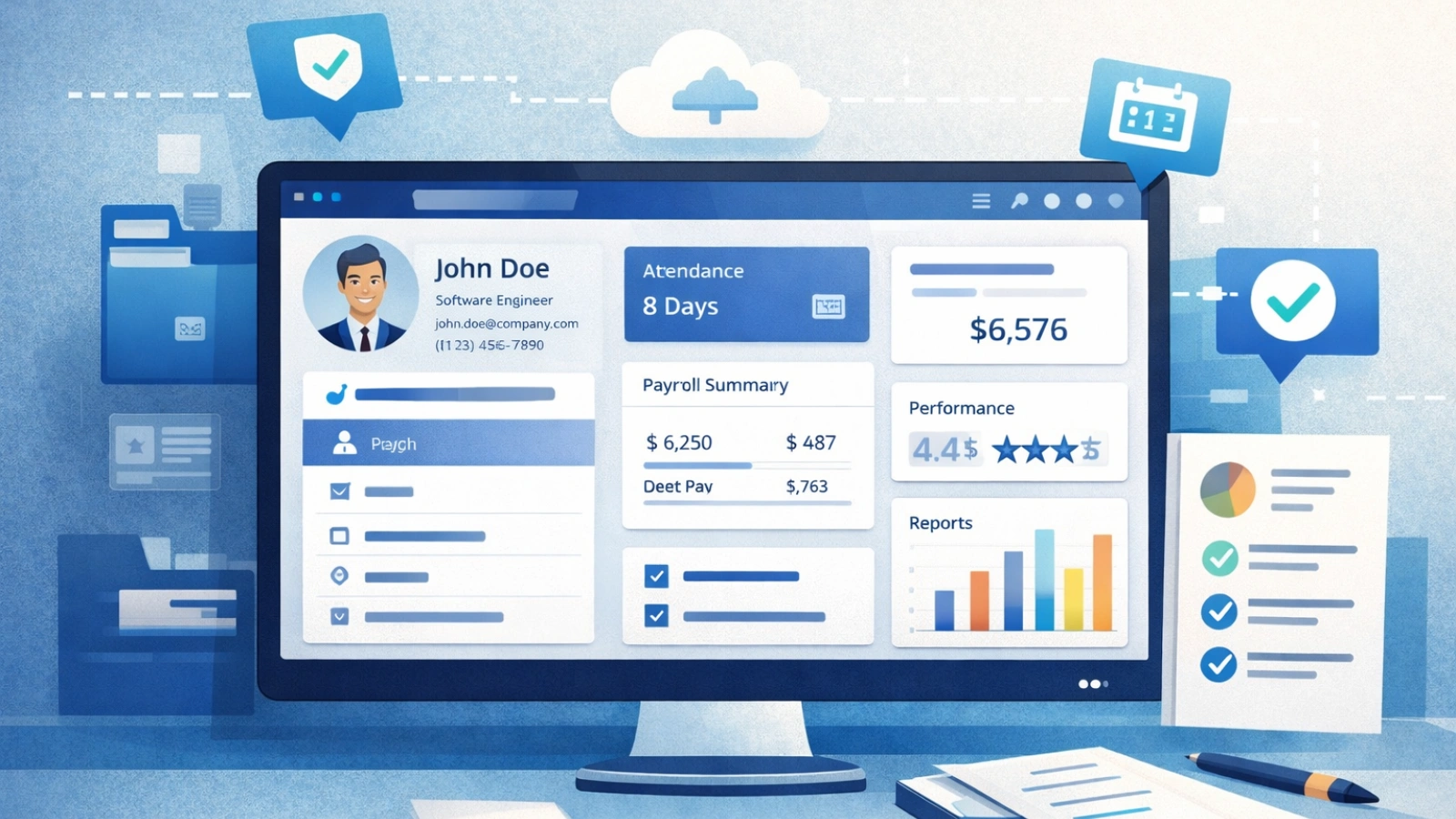
You cannot improve what you cannot see. Without centralized records, HR decisions rely on incomplete information. Reporting takes hours. Audits become stressful. Leadership requests trigger manual data compilation. Modern human resource systems consolidate employee information into one secure platform.
That includes:
- Personal and employment details
- Attendance and leave records
- Payroll data
- Performance evaluations
- Compliance documentation
When data lives in one system, reporting becomes instant instead of reactive. For example, if leadership wants to understand turnover patterns, HR can generate structured insights in minutes. Without a centralized platform, that same request may require days of data gathering. Efficiency begins with visibility.
Automation: Reducing Repetitive Work
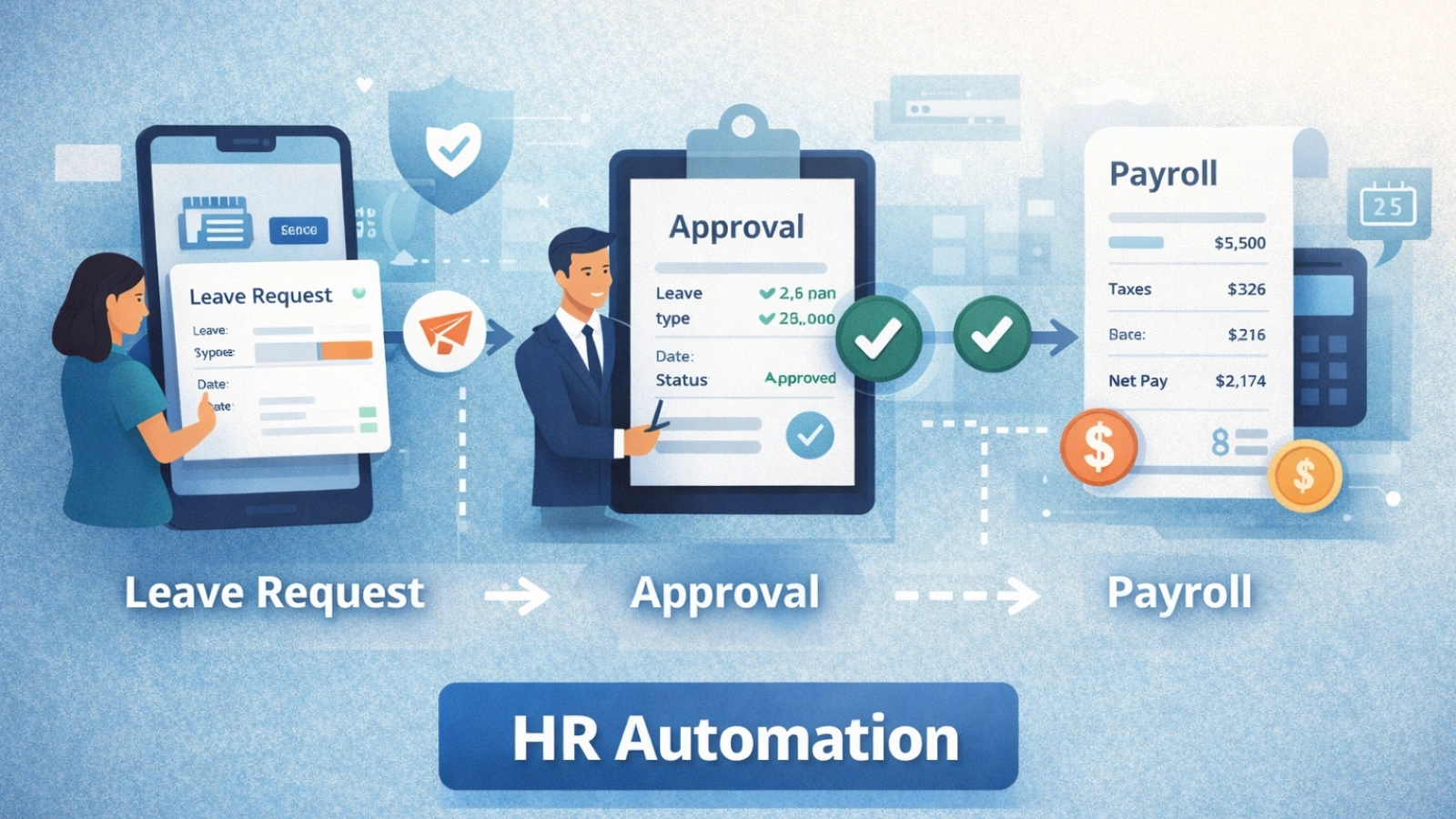
Administrative tasks quietly consume the majority of HR bandwidth. Approving leave. Calculating payroll adjustments. Updating records. Processing reimbursements. Sending reminders. Each task is small. Together, they are overwhelming.
This is where human resources management system platforms create measurable impact. Automation standardizes recurring workflows. Leave requests trigger automatic approval chains. Payroll integrates directly with attendance. Document reminders are scheduled without manual follow-ups.
The benefits are practical:
- Fewer manual errors
- Faster processing times
- Clear audit trails
- Predictable workflows
However, automation works only when processes are clearly defined. If policies are inconsistent, digitizing them will simply scale confusion. Technology enhances structure. It does not replace it.
Recruitment and Onboarding: Eliminating Delays
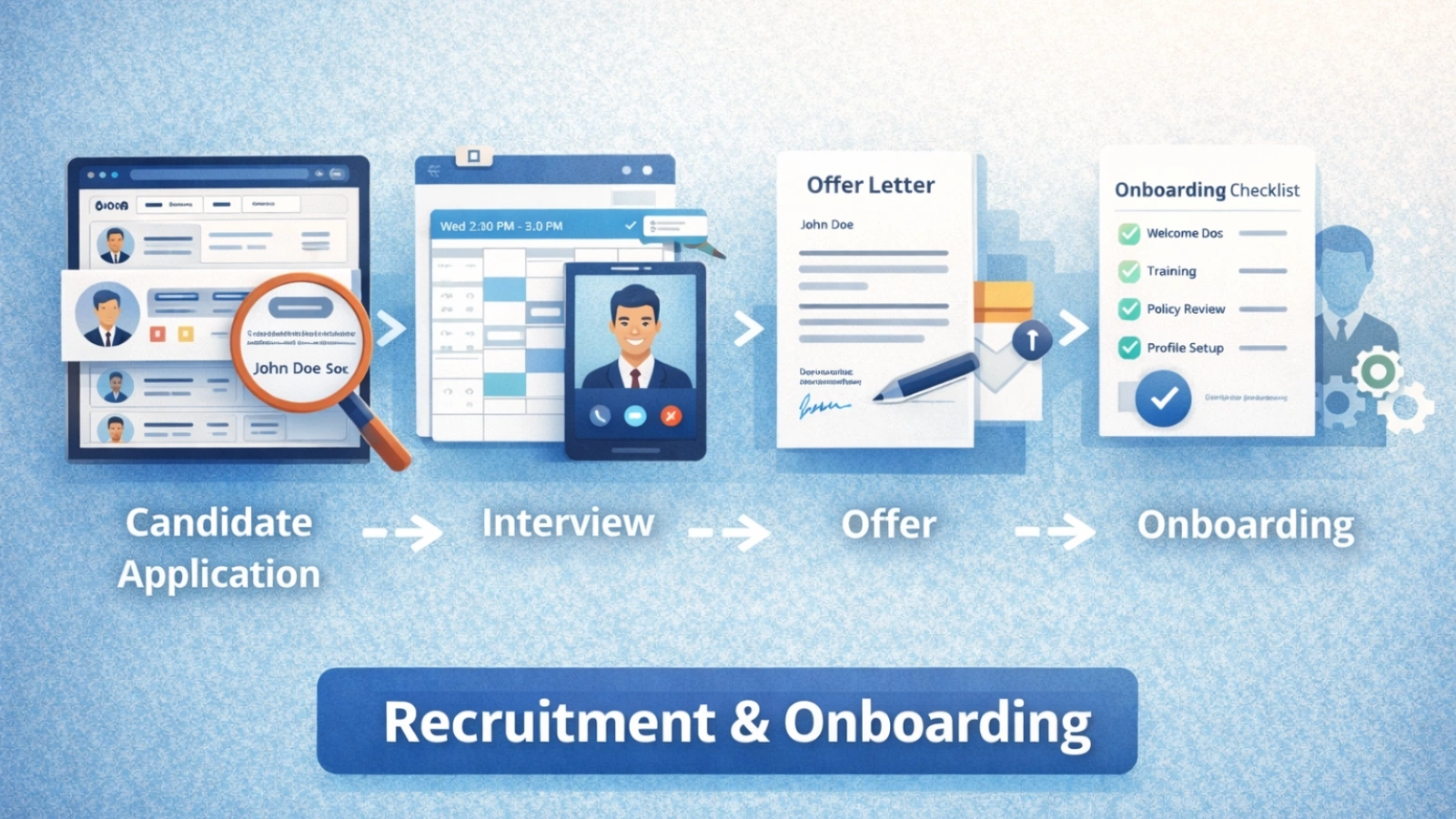
Hiring inefficiency is expensive. Open roles reduce productivity. Delayed onboarding slows team performance. Poor documentation increases compliance risk. Structured human resource systems streamline the talent cycle from application to integration.
Candidate tracking becomes organized and searchable. Interview scheduling can be coordinated within the system. Offer letters are generated consistently. Onboarding documents are digitally signed and stored.
Instead of chasing paperwork, HR teams focus on candidate experience. New employees benefit as well. When onboarding tasks, training modules, and policy acknowledgments are centralized, clarity improves. Confusion decreases. Faster integration means faster contribution.
Payroll Accuracy and Compliance Control
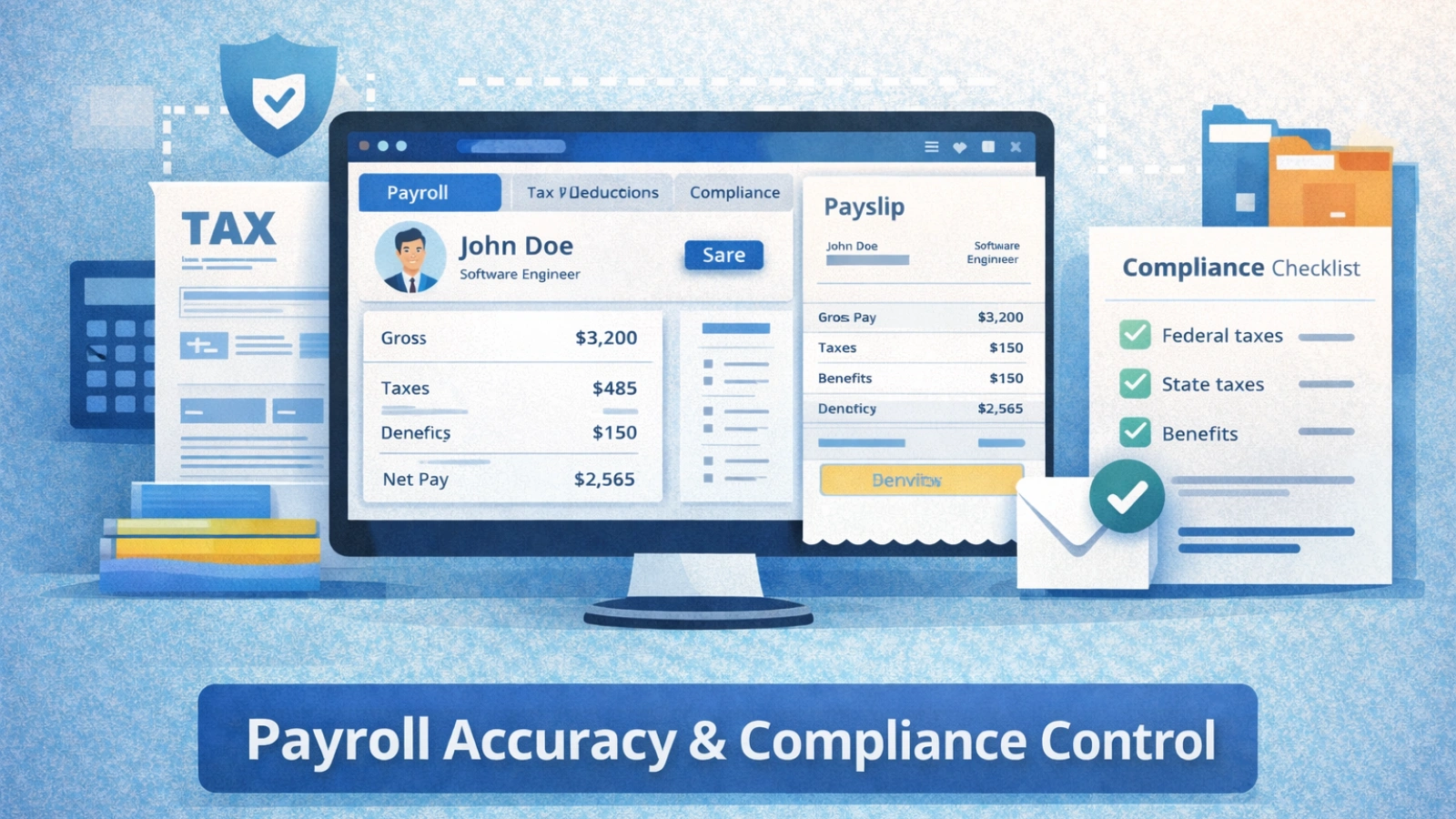
Payroll errors are not minor inconveniences. They affect trust. Manual payroll processing often relies on multiple data inputs. Attendance adjustments, tax calculations, benefits deductions, and statutory compliance checks create complexity.
An integrated HRMs system connects these moving parts. Attendance feeds into payroll automatically. Pre-configured compliance rules reduce risk. Pay slips are generated consistently. This reduces rework and limits compliance exposure.
Efficiency here is not just about speed. It is about reliability.
Performance Management Without Administrative Chaos
Performance reviews often feel disorganized. Managers forget deadlines. Feedback is inconsistent. Documentation is scattered.
A structured HRMs platform changes that dynamic. Goals are recorded within the system. Feedback is logged throughout the year. Evaluation cycles follow predefined workflows. This creates consistency across departments.
More importantly, HR can identify trends instead of manually collecting review forms. Performance management becomes developmental rather than administrative. That shift improves both engagement and operational clarity.
Employee Self-Service: Removing HR Bottlenecks
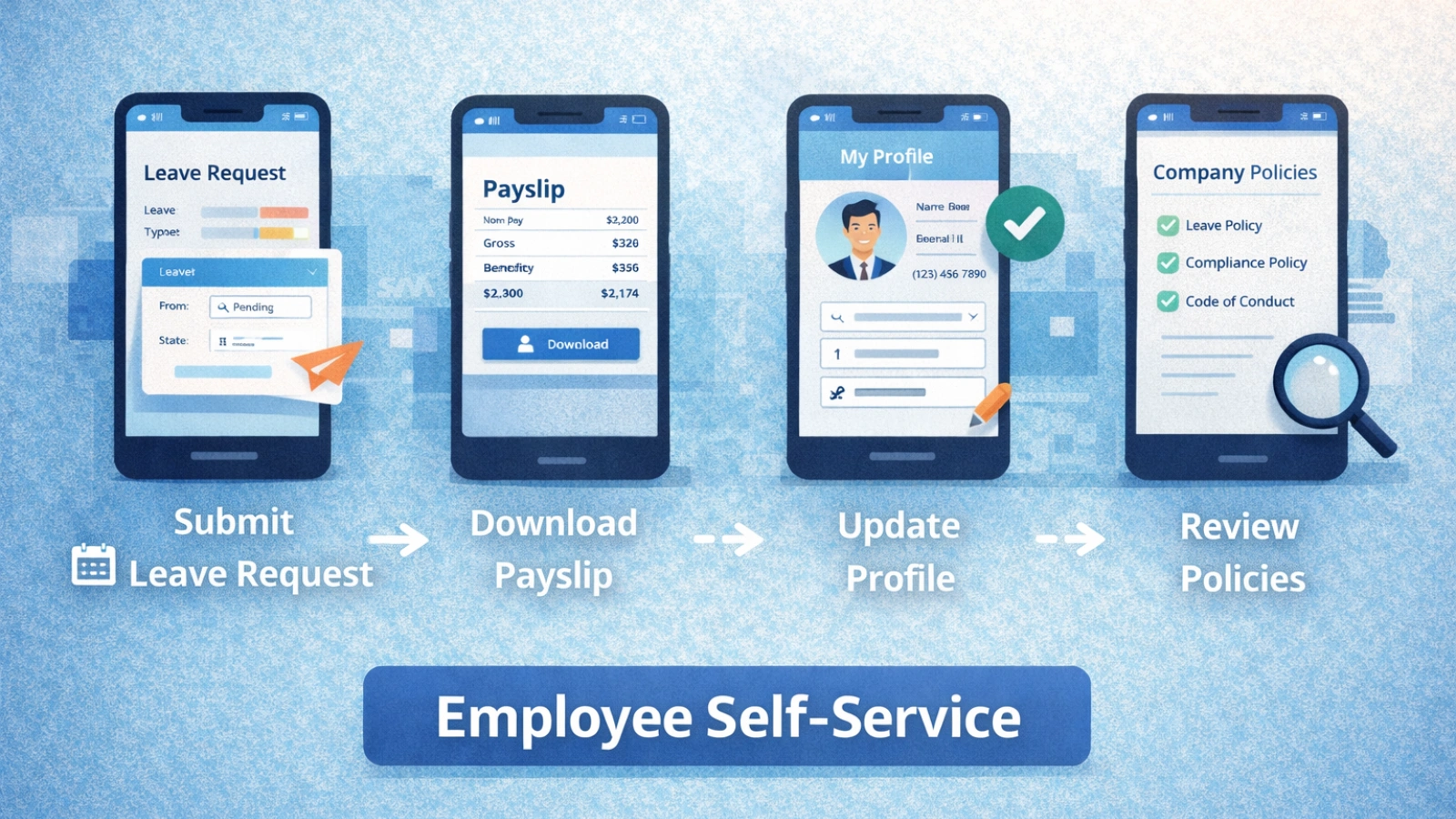
One of the most underestimated features of human resource systems is employee self-service. When employees depend on HR for pay slips, leave balances, or profile updates, communication bottlenecks grow quickly. Self-service portals reduce this dependency.
Employees can:
- Submit leave requests
- Access payroll documents
- Update personal information
- Review the policies.
HR teams regain hours previously spent responding to repetitive inquiries. Efficiency improves because responsibility is distributed appropriately. But simplicity matters. A complex interface will discourage use and recreate manual work.
Data-Driven Decision Making
Data alone does not create efficiency. Insight does. Advanced human resource systems provide dashboards that help leadership answer practical questions:
- Where is absenteeism increasing?
- Which departments experience high turnover?
- How long does recruitment typically take?
- Are performance ratings aligned across teams?
Without structured analytics, these answers require manual reporting. With real-time dashboards, strategic decisions happen faster. In competitive environments, decision speed directly impacts growth.
Integration Across Business Functions
HR in human resource systems does not operate in isolation. Payroll affects finance. Headcount impacts budgeting. Recruitment supports operational expansion. A cohesive HR management system integrates with accounting platforms and internal tools, reducing duplicate data entry.
Integration eliminates the hidden inefficiencies that live between systems. When departments operate from aligned data, planning improves. Efficiency becomes organizational rather than departmental.
How EmpCloud Supports Efficient HR Operations
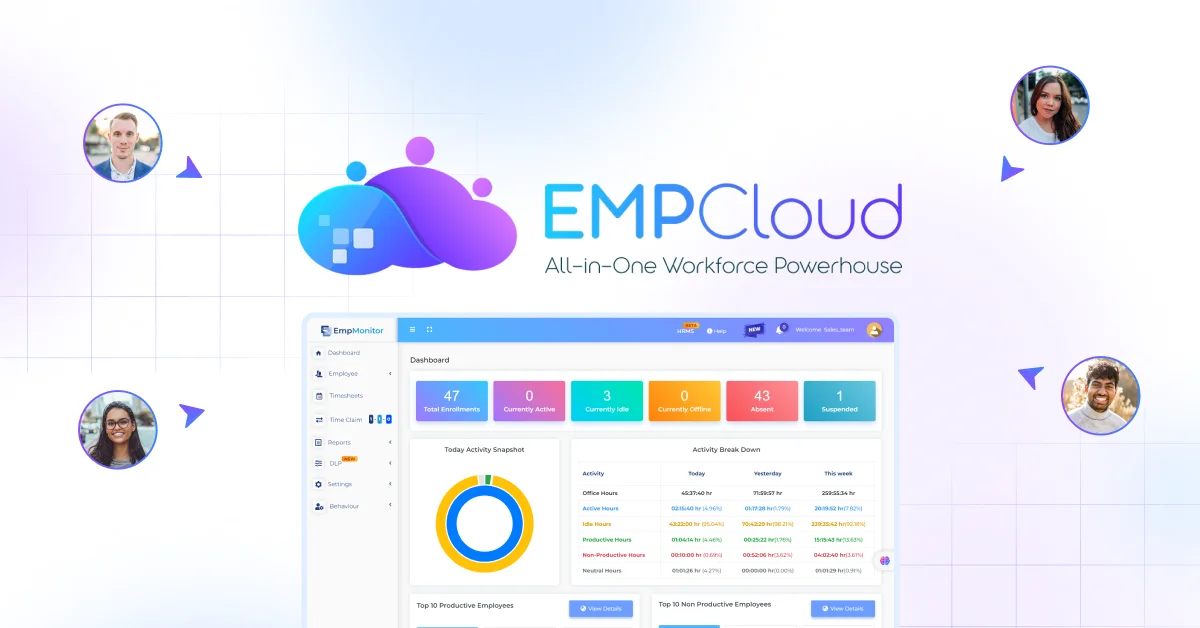
Efficiency gains depend on how a system is structured. Not every platform approach workflow designs the same way. EmpCloud is built around integration and automation, with a focus on usability. It is designed to reduce administrative overhead without overwhelming teams.
Here’s how its features contribute directly to efficiency:
- Automated payroll with compliance alignment
Salary calculations, statutory deductions, and reporting are streamlined to reduce manual intervention and compliance risk. - Centralized employee records
All employee documentation is stored securely in one platform, reducing search time and duplication. - Attendance and leave management
Integrated tracking ensures that attendance data flows seamlessly into payroll and reporting. - Performance management tools
Structured evaluation workflows create consistency and simplify tracking. - Workforce analytics dashboards
Real-time reporting enables faster leadership decisions without manual compilation. - Employee self-service functionality
Employees manage routine tasks independently, reducing administrative strain.
EmpCloud emphasizes structured simplicity. It works well for organizations seeking scalability without unnecessary complexity. Efficiency is not about adding features. It is about removing friction. EmpCloud is designed with that principle in mind.
Also Read!
Mastering Field Force Management: Tips For Success – EMPCloud | Blog
Human Resource Management: A Strategic Guide – EMPCloud | Blog
When Human Resource Systems Fail to Improve Efficiency
Technology alone does not guarantee improvement. Human resource systems fail when:
- Processes are undefined before implementation
- Leadership does not support adoption
- Data migration is poorly managed
- Employees are not trained properly
In some cases, rushed implementation temporarily reduces productivity. The solution is careful planning. Mapping workflows, cleaning historical data, and training teams thoroughly ensure long-term efficiency gains. Adoption determines impact.
The Strategic Shift: From Administrative to Advisory
When administrative tasks decline, HR capacity expands. Instead of processing paperwork, teams focus on:
- Workforce planning
- Talent development
- Employee engagement
- Policy refinement
This transformation is the real benefit of structured human resource systems. Efficiency creates strategic bandwidth. And in modern organizations, strategic HR is not optional. It is essential. Efficiency is not about replacing people. It is about refining processes.
When thoughtfully implemented, human resource systems eliminate unnecessary friction, accelerate decisions, and allow HR teams to focus on work that truly moves the organization forward.
FAQ
1. How quickly can companies see efficiency improvements?
Most organizations notice measurable time savings within a few months, especially in payroll processing and leave management workflows.
2. Are human resource systems suitable for small businesses?
Yes. Smaller teams often benefit significantly because manual processes consume a larger portion of their time.
3. What makes an hrms system different from standalone payroll software?
An hrms system integrates payroll with recruitment, performance management, attendance, and analytics, creating a connected workflow rather than isolated processing.
4. Can a human resources management system reduce compliance risk?
Yes. Built-in compliance rules and automated documentation tracking reduce the likelihood of regulatory errors.
5. What is the biggest implementation mistake companies make?
Failing to define workflows before digitizing them. Without clear processes, even advanced systems cannot deliver sustainable efficiency.
Quick Search Our Blogs
Type in keywords and get instant access to related blog posts.