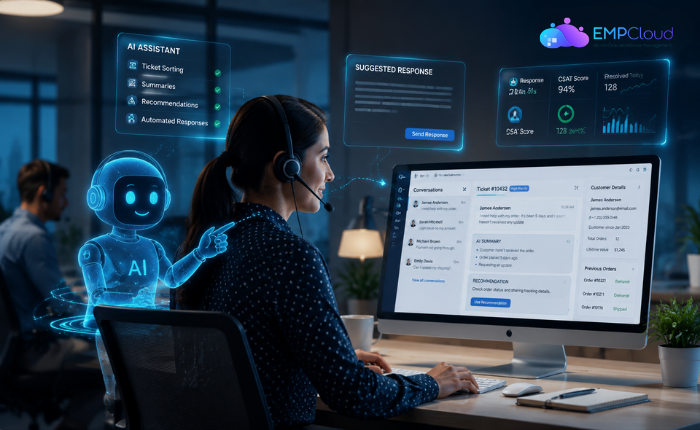
Customer service in 2026 is no longer limited to answering emails or resolving support tickets. Customers now reach out through phone, live chat, social media, messaging apps, self-service portals, and AI-powered support channels. To keep up with these expectations, businesses need customer service software that can bring these interactions together and help teams respond quickly and consistently.
The best customer service software helps businesses automate routine tasks, improve response times, track support performance, and manage conversations across multiple channels. Whether you are a growing startup or a large enterprise, the right helpdesk or contact center platform can improve customer satisfaction, agent productivity, and long-term customer retention.
What is customer service software?
Customer service software is a platform that helps businesses manage customer interactions, support tickets, communication channels, and service workflows from one central place. Depending on the product, it may work as a helpdesk, ticketing system, contact center platform, live chat tool, or broader customer experience solution.
Customer service software usually includes features such as:
- Ticket management
- Chatbots and virtual assistants
- Live chat
- Knowledge base management
- Omnichannel support
- Automation and workflow management
- Customer service analytics
- Self-service portals
- SLA management
- CRM integrations
Modern customer service platforms also include AI-powered assistance, predictive routing, sentiment analysis, automated summaries, and other capabilities that help teams deliver faster and more personalized support.
Why do businesses need customer service software in 2026?
Customer expectations have increased significantly in recent years. People expect quick responses, 24/7 support, personalized service, seamless communication across channels, fast issue resolution, self-service options when they do not want to contact an agent, and increasingly AI voice calling experiences for faster assistance.
Without a reliable customer service platform, businesses may struggle to manage support requests, track performance, and maintain a consistent customer experience across channels.
Customer service software can help businesses:
- Improve customer satisfaction
- Resolve issues faster
- Increase support agent productivity
- Automate repetitive support tasks
- Track customer service performance
- Streamline support operations
- Improve customer retention
Best customer service software
Here are some of the best customer service tools to consider in 2026.
1. Sprinklr Service
Sprinklr Service is an AI-native customer service platform built for businesses that need to manage customer interactions across voice, social, email, live chat, messaging, and digital channels. It brings omnichannel support, case management, AI-powered assistance, automation, and analytics into one platform.
The platform is especially useful for large support teams that handle high volumes of customer conversations across multiple channels. With AI-powered routing, agent assist, self-service capabilities, and real-time reporting, Sprinklr Service helps businesses deliver faster and more consistent customer experiences.
Key features:
- Omnichannel support across voice, social, email, chat, and messaging
- AI-powered conversational support
- Social media customer care
- Workflow automation
- Voice and digital channel integration
- Real-time reporting and analytics
- Sentiment analysis
- AI chatbots and virtual assistants
- Case management
- Workforce optimization
2. Zendesk
Zendesk remains one of the most widely used customer service software platforms, known for its flexibility, large feature set, and extensive app ecosystem.
The platform helps businesses manage customer support through email, live chat, social messaging, voice, AI automation, and self-service tools. It is suitable for teams that need a scalable helpdesk solution with strong ticketing, automation, and reporting capabilities.
Key features:
- Unified ticketing system
- AI agents and chatbots
- Knowledge base management
- Omnichannel support
- Workflow automation
- Advanced reporting
- Customer self-service tools
- Marketplace integrations
3. Freshdesk by Freshworks
Freshdesk is a popular customer support platform known for its clean interface, ease of use, and AI-powered support features. It helps teams manage tickets, automate workflows, and improve agent productivity across multiple support channels.
The platform is a strong option for businesses that want a practical helpdesk solution with omnichannel support, automation, collaboration tools, and customer satisfaction tracking.
Key features:
- AI-powered assistant Freddy
- Ticket management
- Omnichannel inbox
- Workflow automation
- SLA tracking
- Self-service portals
- Team collaboration
- Customer satisfaction tracking
4. HubSpot Service Hub
HubSpot Service Hub is a customer service platform that works closely with HubSpot’s CRM, sales, and marketing tools. It is useful for businesses that want customer support, customer data, and relationship management in one connected system.
The platform helps teams manage conversations, automate support workflows, collect feedback, build knowledge bases, and track customer interactions through the HubSpot CRM.
Key features:
- Shared inbox
- Help desk automation
- Customer feedback management
- Knowledge base management
- Live chat
- AI-powered customer insights
- Customer portal
- CRM integrations
Its biggest advantage is the close connection between customer service, sales, marketing, and CRM data.
5. Intercom
Intercom is a customer support platform built around conversational support and AI-powered automation. It helps businesses engage customers through live chat, automated conversations, product messaging, and self-service experiences.
The platform is especially useful for businesses that want to combine support, customer engagement, and automation in one conversational interface.
Key features:
- AI chatbots and automated conversations
- Conversational support
- Live chat
- Product tours
- Customer engagement management
- AI inbox management
- Workflow automation
- Multichannel communication
Its main strength is its AI-powered conversational support system, which can reduce manual workload for support agents.
6. Zoho Desk
Zoho Desk is a feature-rich helpdesk software platform that offers ticketing, automation, collaboration, analytics, and customer self-service tools. It is often considered a cost-effective option for businesses that need strong support capabilities without a high entry cost.
The platform works well for teams that want omnichannel ticketing, AI assistance, SLA management, and customizable dashboards in one system.
Key features:
- AI-powered chatbot Zia
- Omnichannel ticketing
- Workflow automation
- Knowledge base management
- Team collaboration
- Custom dashboards
- Customer sentiment analysis
- SLA management
Zoho Desk is known for offering a strong set of features while remaining relatively affordable.
7. Genesys Cloud CX
Genesys Cloud CX is a cloud contact center platform designed for businesses with complex customer service operations. It supports voice, digital, workforce engagement, journey analytics, routing, and reporting capabilities.
The platform is commonly used by organizations that need advanced contact center tools to manage high volumes of customer interactions across multiple channels.
Key features:
- Cloud contact center
- AI-powered workforce engagement
- Predictive routing
- Omnichannel support
- Voice and IVR systems
- Customer journey analytics
- Workforce optimization
- Advanced reporting
Genesys Cloud CX is best suited for businesses that need a full cloud contact center platform rather than a basic helpdesk tool.
8. Help Scout
Help Scout is a customer support platform focused on simple, human-centered communication. It is built around shared inboxes, knowledge bases, live chat, customer profiles, and team collaboration.
The platform is a good fit for teams that want a clean and easy-to-use support tool, especially for email-based customer service and relationship-driven support.
Key features:
- Shared inbox
- Knowledge base tools
- Live chat
- Customer profiles
- Workflow automation
- Reports and analytics
- Team collaboration
- Mobile support tools
Its clean interface and conversation-focused design make customer support feel more personal and less ticket-heavy.
9. ServiceNow
ServiceNow Customer Service Management is built for organizations that need to connect customer service with broader business workflows. It helps teams manage cases, automate processes, route work, and resolve customer issues across departments.
The platform is especially useful for businesses with complex service operations that require workflow orchestration, field service management, predictive intelligence, and enterprise integrations. Organizations can also explore reliable ServiceNow support services to maintain platform performance, streamline workflows, and address ongoing service management needs.
Key features:
- AI-powered workflows
- Case management
- Predictive intelligence
- Self-service portals
- Workflow orchestration
- Field service management
- Omnichannel support
- Enterprise integrations
ServiceNow is best suited for enterprise-level customer service operations where support often depends on multiple teams and internal processes.
10. LiveAgent
LiveAgent is a customer support platform that brings ticketing, live chat, call center tools, social media support, and knowledge base management into one system.
It is a useful option for businesses that want an all-in-one helpdesk with omnichannel capabilities and real-time monitoring features.
Key features:
- Ticket management
- Live chat
- Built-in call center management
- Social media integration
- Automation rules
- Knowledge base
- Real-time monitoring
- Gamification features
Conclusion
Customer service in 2026 is becoming more AI-powered, automated, personalized, and omnichannel. Businesses that use the right customer service software can respond faster, improve support quality, increase agent productivity, and deliver better customer experiences.
The best tool depends on your business size, support channels, budget, and operational needs. Smaller teams may prefer simple helpdesk software, while larger organizations may need advanced contact center or customer experience platforms with AI, automation, analytics, and omnichannel support.
Quick Search Our Blogs
Type in keywords and get instant access to related blog posts.