
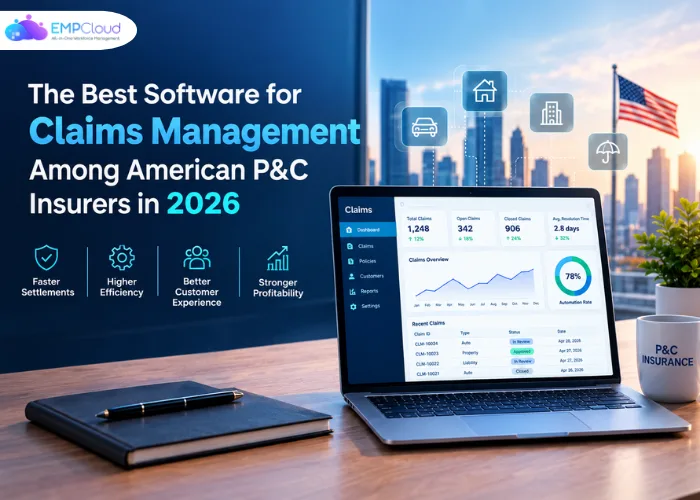
Claims management software has become essential for P&C insurers that want to process claims faster, reduce manual work, and give adjusters better access to information.
The challenge is choosing the right platform. Some systems are designed for large enterprise carriers, while others focus more closely on claims teams, independent adjusters, TPAs, and mid-sized insurers.
For this comparison, we looked at six claims platforms based on claims functionality, automation, configurability, integrations, and suitability for US P&C insurance operations.
How Was This Ranking Put Together?
The platforms were compared using publicly available product information, customer reviews, industry recognition, claims functionality, and integration capabilities.
Our shortlist includes:
- VCA—best overall for claims-focused P&C operations
- Five Sigma—Best for AI-driven claims automation
- Guidewire ClaimCenter—Best for large enterprise insurers
- Duck Creek Claims—Best for broader core modernisation
- Majesco Claims for P&C-Best for integrated P&C operations
- Snapsheet—Best for digital-first claims workflows
Comparing the Best Claims Management Software in 2026
| Platform | Best For | Main Strength |
| VCA | Carriers, TPAs, MGAs, and adjusting firms | Flexible claims and adjuster workflows |
| Five Sigma | Automation-focused insurers | AI-native claims management |
| Guidewire Claim Center | Large P&C carriers | Enterprise-scale claims management |
| Duck Creek Claims | Mid-size and large insurers | Connected insurance core platform |
| Majesco Claims for P&C | P&C carriers are modernising operations. | Claims, policy, and billing ecosystem |
| Snapsheet | Digital-first carriers and TPAs | No-code workflows and automation |
1. VCA
How Does VCA Operate?
VCA is a claims management platform used by insurers, TPAs, MGAs, independent adjusting firms, captives, and self-insured organisations.
The system supports claim assignments, reserves, payments, document management, correspondence, workflows, reporting, and integrations with other insurance tools. It gives claims teams a central place to manage activity throughout the lifecycle of a claim and keep important information connected.
For teams handling multiple claims and adjuster assignments, VCA, insurance adjuster software, can be used to manage claim files, track activity, organise documents, monitor payments, and maintain communication records in one system. This helps reduce the need to switch between separate tools during day-to-day claims handling.
What Sets VCA Apart?
VCA focuses specifically on claims, so insurers don’t have to replace their entire policy and billing infrastructure.
Teams can customise fields, file layouts, workflows, rules, reports, and integrations around their existing claims processes. It also integrates with commonly used insurance tools, including XactAnalysis, CoreLogic, Hover, and Encircle.
This makes VCA a strong choice for claims organisations that need flexibility without taking on a major enterprise core-system implementation.
2. Five Sigma
How Does Five Sigma Operate?
Five Sigma provides a cloud-based claims management platform covering the process from FNOL through settlement.
Its system combines claims workflows, automation, analytics, integrations, and AI tools designed to reduce repetitive adjuster work.
What Sets Five Sigma Apart?
Five Sigma stands out for its AI-first approach.
Its technology can help with claim intake, document handling, coverage review, routing, reserves, and other claims tasks. This makes it particularly interesting for insurers that want automation embedded directly into their claims process.
3. Guidewire ClaimCenter
How Does Guidewire ClaimCenter Operate?
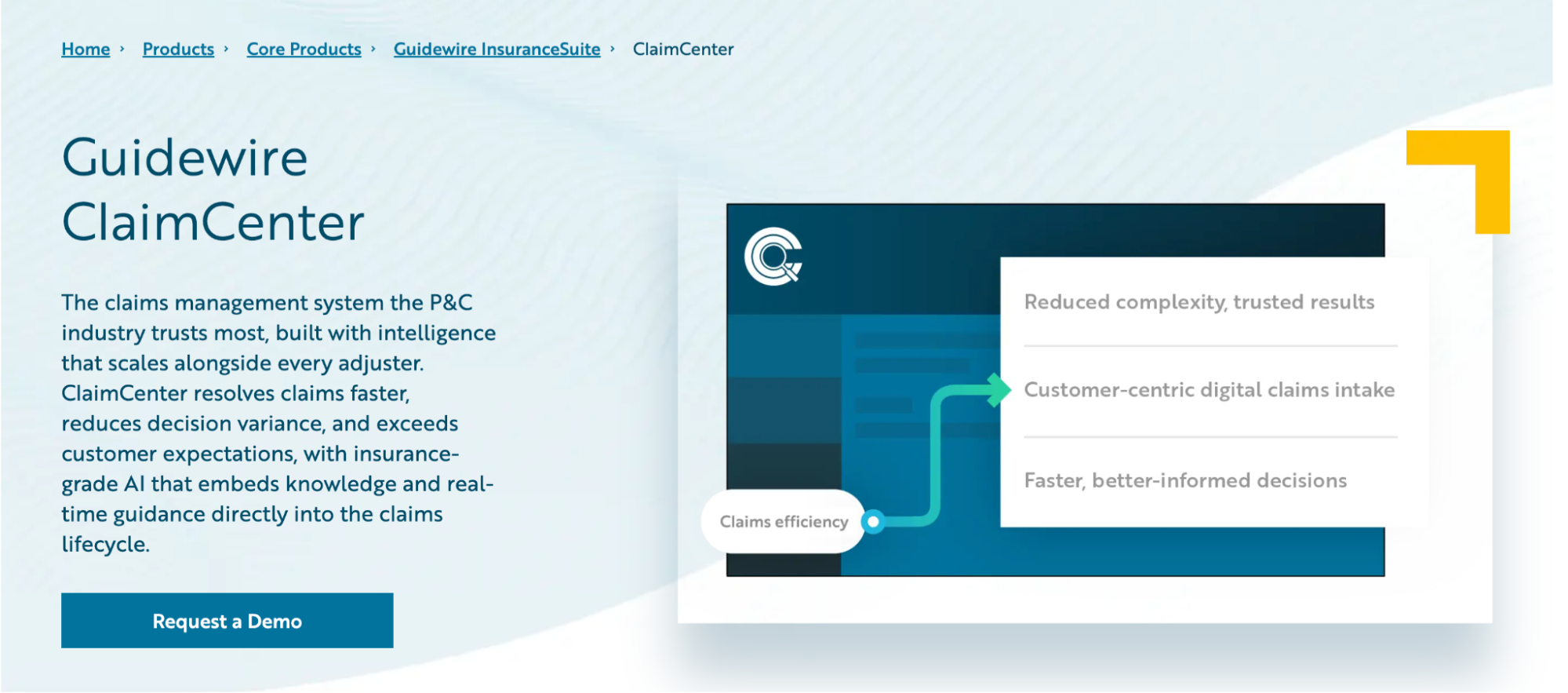
Guidewire ClaimCenter is one of the best-known enterprise claims platforms in the P&C insurance market.
It supports claim intake, assignment, evaluation, reserves, payments, negotiation, settlement, and closure while connecting with other Guidewire insurance products.
What Sets Guidewire Apart?
Guidewire’s biggest strength is its enterprise scale.
It offers a large technology ecosystem and extensive implementation partner network, making it suitable for major insurers managing complex claims operations.
However, smaller carriers and adjusting organisations may find that they do not need the size or complexity of a full Guidewire implementation.
4. Duck Creek Claims

How Does Duck Creek Claims Operate?
Duck Creek provides end-to-end claims management covering intake, assignment, reserves, payments, fraud detection, recoveries, vendor integrations, and workflow automation.
The claims system can also connect with Duck Creek’s policy, billing, rating, and data products.
What Sets Duck Creek Apart?
Duck Creek is particularly useful when claims modernisation is part of a larger insurance technology project.
Instead of replacing only the claims platform, insurers can build a broader connected ecosystem around policy administration, billing, claims, and analytics.
5. Majesco Claims for P&C

How Does Majesco Operate?
Majesco Claims for P&C supports the full claims lifecycle from FNOL through settlement and closure.
Its capabilities include claim assignment, document management, payments, correspondence, catastrophe handling, analytics, and AI-assisted workflows.
What Sets Majesco Apart?
Majesco combines claims management with broader insurance core technology.
This can make it attractive to P&C insurers that want claims, billing, and policy administration within a connected environment instead of maintaining several separate systems.
6. Snapsheet
How Does Snapsheet Operate?
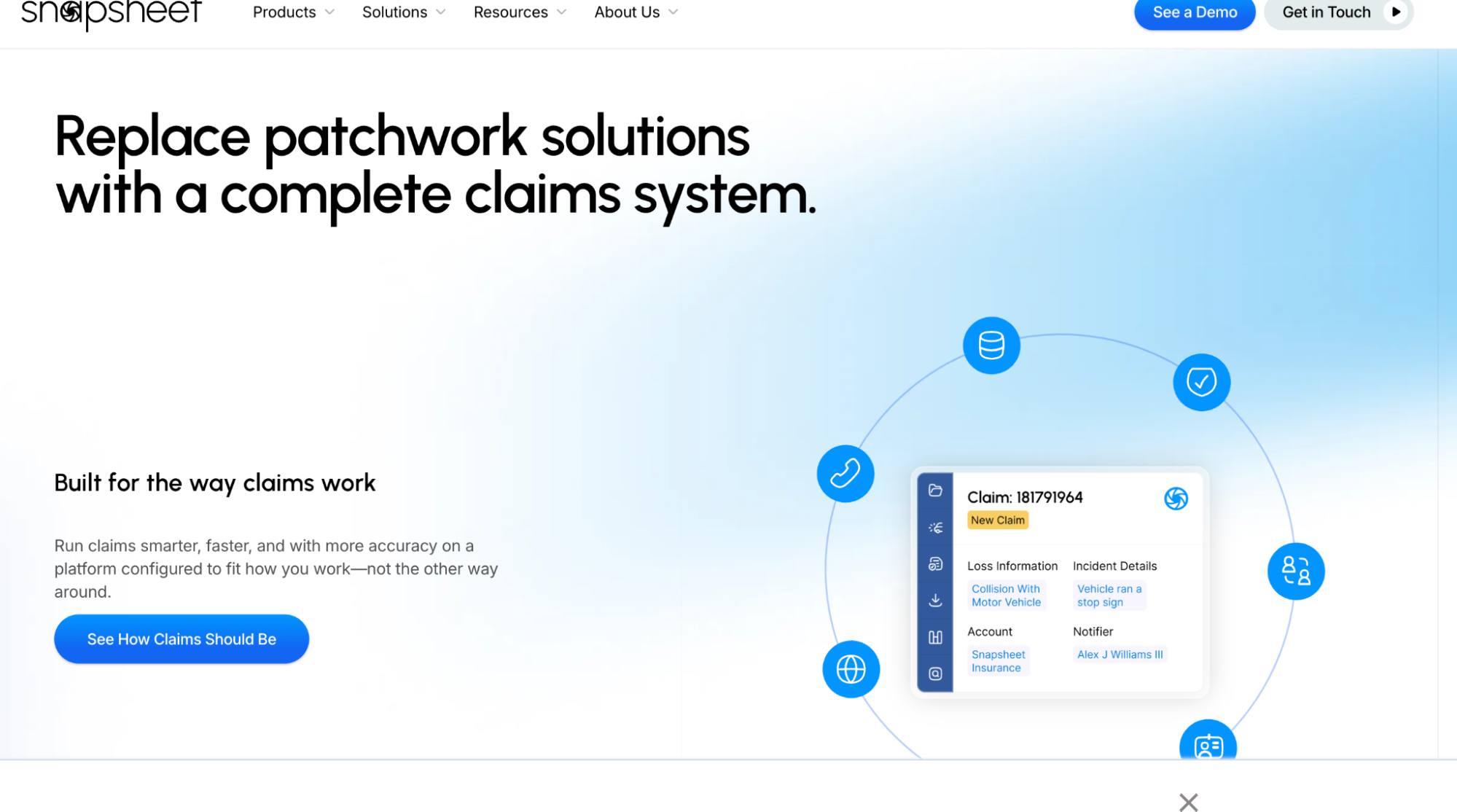
Snapsheet provides digital claims management for carriers, MGAs, and TPAs.
The platform supports FNOL, assignment, investigation, evaluation, documents, communications, payments, settlement, and vendor management.
What Sets Snapsheet Apart?
Snapsheet’s no-code workflow tools are one of its main strengths.
Claims teams can configure workflows and automate processes without relying heavily on development resources. This can make it easier to adjust processes as claim volumes or business requirements change.
How to Choose the Right Claims Management Software
The best platform depends heavily on the type and size of the insurance organisation.
Large national carriers may place more value on enterprise architecture and full core-system integration. Regional insurers, TPAs, MGAs, and independent adjusting firms may prioritise ease of implementation, adjuster usability, workflow customisation, integrations, and operating costs.
When comparing platforms, insurers should look closely at:
- Adjuster workflows and automation
- Claims assignment and routing
- Reserve and payment management
- Reporting and analytics
- Third-party integrations
- Configuration options
- Catastrophe claim scalability
- Implementation requirements
Read More!
Field Force GPS Tracking and Task Management For HR- 2026 Guide
What Is Performance Management and Why Does It Matter?
The Verdict
There is no single claims management platform that works best for every American P&C insurer.
VCA is particularly strong for claims-focused organisations that want configurable workflows, adjuster tools, reporting, integrations, and end-to-end claims functionality without replacing their entire insurance technology stack.
Five Sigma is worth considering for AI-heavy automation, while Guidewire is better suited to large enterprise carriers. Duck Creek and Majesco are strong options when claims modernisation is part of a broader core transformation, while Snapsheet stands out for digital-first and highly configurable claims workflows.
For most buyers, the right decision comes down to how closely the platform can match existing claims processes without creating unnecessary implementation complexity.
Quick Search Our Blogs
Type in keywords and get instant access to related blog posts.