Human resource teams are managing more responsibilities than ever before. Beyond hiring and employee administration, HR departments are now responsible for improving employee experience, supporting learning and development, strengthening communication, and helping organizations adapt to changing workplace needs.
AI is becoming an important part of this shift. Instead of only automating repetitive tasks, modern AI tools are helping HR teams create better employee experiences through improved communication, faster content creation, and more efficient workflows.
From creating onboarding resources to developing training materials and improving workplace communication, AI tools are helping HR teams handle growing demands without increasing manual effort.
In 2026, the most valuable AI tools for HR will not simply save time. They will help teams create more personalized, engaging, and scalable experiences for employees.
Why HR Teams Are Adopting AI Tools
HR teams often work with large amounts of information. Employee policies, training materials, internal announcements, recruitment resources, and workplace documentation all require regular updates.
Managing this information manually can become difficult as organizations grow.
AI tools help HR professionals by making it easier to:
- Create employee resources
- Organize information
- Improve communication
- Develop training content
- Personalize employee experiences
The goal is not to replace HR teams but to reduce repetitive work and allow professionals to focus on strategic initiatives.
How AI Is Changing HR Workflows
Traditional HR processes often involve multiple steps and different systems. Creating an employee training video, for example, may require writing a script, preparing visuals, recording content, editing the final version, and distributing it.
AI tools are bringing many of these steps together.
HR teams can now use AI to transform ideas, documents, and existing resources into different formats. This makes it easier to create content that employees can understand and access whenever needed.
As companies become more distributed, these AI-powered workflows are becoming increasingly valuable.
-
Invideo Agent
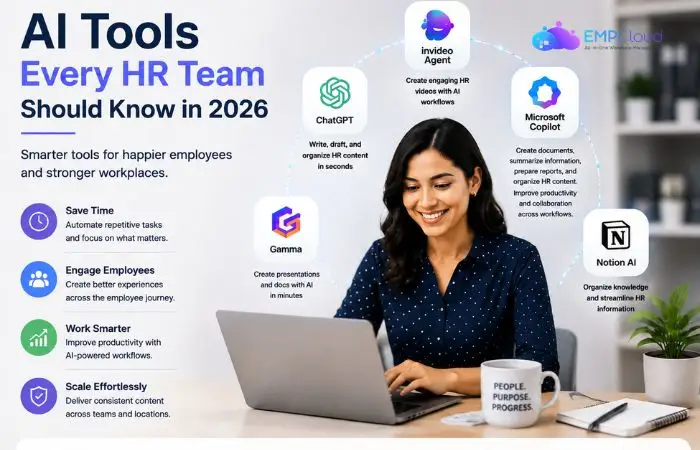
Invideo Agent helps HR teams create employee-focused video content through a connected workflow. It allows teams to move from ideas, scripts, and references to complete videos while keeping different stages of creation connected. By bringing together different AI models, teams can create more engaging and visually consistent training and communication videos.
For HR use cases, this can support onboarding videos, internal announcements, training resources, and workplace communication content. Instead of creating every video separately, teams can maintain consistency across multiple resources.
For example, an HR department creating onboarding content for different teams can use an AI-assisted workflow to develop videos that follow the same communication style and structure.
With InVideo Agent Two, larger organizations can manage broader content workflows by coordinating planning, visual development, and production decisions across multiple HR communication and training projects.
-
ChatGPT
ChatGPT is an AI assistant that helps HR teams create written content, organize information, and improve workplace communication.
HR professionals can use it for drafting job descriptions, preparing employee FAQs, creating training outlines, and developing internal communication materials.
It is particularly useful for reducing the time spent on repetitive writing tasks and helping teams structure information more effectively.
For organizations looking to improve HR productivity, ChatGPT can act as a support tool for content creation and everyday employee communication.
-
Microsoft Copilot
Microsoft Copilot helps HR teams work more efficiently by bringing AI assistance into everyday workplace tasks. It can support document creation, summarizing information, preparing reports, organizing employee-related content, and improving collaboration across teams.
-
Gamma
Gamma is an AI-powered presentation and document creation tool that helps users turn ideas into structured visual content.
For HR teams, Gamma can support the creation of employee guides, training presentations, company updates, and internal documentation.
It helps reduce the time needed to organize information and create clear, structured resources.
This makes it useful for HR professionals who frequently prepare presentations for employees, managers, or leadership teams.
-
Notion AI
Notion AI combines workspace management with AI assistance to help teams organize information, create documents, and manage knowledge.
HR teams can use it for maintaining employee resources, organizing company knowledge, creating internal documentation, and improving information access.
It can help companies build centralized knowledge systems where employees can easily find important workplace information.
For growing organizations, this improves knowledge sharing and reduces dependence on manual communication.
Also Read
Using AI for Better Employee Onboarding
Onboarding is one of the areas where HR teams can benefit significantly from AI.
New employees need information about company culture, processes, tools, and expectations. Delivering this information consistently becomes more difficult as organizations grow.
AI tools help companies create reusable onboarding resources, including videos, guides, and learning materials.
For example, an organization can create a digital onboarding experience where employees learn about company values, workplace policies, and role-specific processes through structured content.
This creates a smoother experience for new hires while reducing repetitive work for HR teams.
AI for Internal Communication and Employee Engagement
Keeping employees informed is a major responsibility for HR teams.
Important updates about company changes, policies, benefits, and workplace initiatives need to be communicated clearly.
AI tools help HR teams create more engaging communication formats instead of relying only on emails or documents.
Video-based communication, visual announcements, and personalized content can make important information easier for employees to understand.
This is especially useful for remote and hybrid teams where maintaining connection requires more intentional communication.
AI for Training and Development Programs
Employee learning is becoming an ongoing process rather than a one-time activity.
Companies need training resources that can adapt as employees develop new skills and business needs change.
AI tools help HR teams create scalable training programs by transforming existing knowledge into accessible learning content.
For example, internal documents, process guides, and expert knowledge can be converted into structured educational materials.
This allows companies to provide consistent learning experiences across different teams.
Maintaining Consistency Across HR Content
As companies create more employee resources, maintaining consistency becomes important.
Different departments may create their own training materials, announcements, and guides, which can lead to differences in tone and messaging.
AI workflows can help HR teams maintain a consistent approach across content.
This includes keeping:
- Communication style aligned
- Training structures consistent
- Information accurate
- Employee experiences connected
Consistency helps employees build trust in company communication.
Choosing the Right AI Tools for HR Teams
The best AI tools depend on the specific needs of an HR department.
Organizations focused on training may benefit from video creation and learning tools, while teams focused on documentation may need AI writing and knowledge management solutions.
Before choosing tools, HR teams should consider:
- The type of content they create
- The size of their workforce
- How often information changes
- The level of customization required
- Existing workplace systems
A combination of different AI tools often provides the strongest results.
The Future of AI in HR
AI will continue changing how HR teams create, share, and manage employee experiences.
Future HR workflows will likely include more personalized learning, automated content updates, and smarter ways to deliver information to employees.
The most successful organizations will use AI to support HR professionals while keeping human understanding at the center of employee experiences.
Final Thoughts
AI tools are becoming valuable resources for HR teams looking to improve productivity, communication, and employee engagement.
From onboarding videos and training materials to workplace communication and knowledge management, AI is helping organizations create better experiences at scale.
As businesses continue to evolve, HR teams that adopt AI strategically will be better prepared to support employees and build stronger workplaces.
Quick Search Our Blogs
Type in keywords and get instant access to related blog posts.