**Start your free trial today →
At 9:10 a.m., you tell Sam their role is ending. The right way is to plan ahead, document well, follow policy, meet with care, give clear reasons, and offboard with security and dignity. To handle employee dismissal right way, you use a fair process with solid records, a consistent trail of feedback, a respectful meeting, and a clean exit that protects people and data.
In 2026, that balance matters more than ever. You want to be fair to the person and safe for the company. So you lead with empathy, stick to your policy, and keep precise records.
You speak plainly. You avoid blame. And you close each step with care so no loose ends create risk.
Moreover, you do this work early, not just on the last day.
Regarding performance issues, you set goals and timelines weeks in advance. In cases of conduct problems, you act at once and follow your handbook. When roles are cut, you base your call on real business needs and treat people with respect.
Finally, you protect the team that stays by:
- Explain what changes
- Seal accounts
- Collect assets
- Finish pay and records with no delay
As a result, you reduce legal risk, prevent data leaks, and show the whole company you are fair and clear.

What Does Dismissal Actually Mean — And When Is It Justified?
Dismissal is when you end someone’s employment. It is not the same as resignation, which is when they choose to leave. It is also different from a layoff or redundancy, which cut roles for business reasons, not due to the person’s fault.
Fair dismissal rests on clear, lawful grounds and a fair process. In many places, basic principles include notice (or pay in lieu), a real reason you can explain, and a chance for the person to respond. For an overview of how fairness and process are discussed in many jurisdictions, see this primer on unfair dismissal.
On the other hand, unfair dismissal can happen when you fire someone for a reason you cannot defend, the reason is discriminatory, or you skip a fair process. The exact rules vary by country and state, so legal advice matters. However, the core idea is the same: be consistent, be clear, and be kind.
Common lawful grounds for ending employment include:
- Misconduct: theft, harassment, fraud, or other policy breaches
- Poor performance: not meeting clear, documented standards or goals
- Redundancy: the role is removed due to business change
- Breach of contract: serious violation of agreed terms
Specifically, if you plan to handle employee dismissal right way, you should start with your handbook and contracts. Therefore, tie your reason to policy, show prior coaching or warnings (if relevant), and keep a dated record of events, emails, and meetings.
Dismissal vs. Layoff vs. Resignation
- Resignation: employee choice; you confirm last day and offboard.
- Layoff/redundancy: role ends; you apply objective selection and fair pay rules.
- Dismissal: employer action based on conduct, performance, or contract terms.
Step-by-Step: How to Conduct a Proper Employee Dismissal
Ending a role is hard. A clear sequence helps you act with care and reduce risk. Here’s a six‑step path you can follow to handle employee dismissal right way and protect both people and data.
Prepare and Document
-
Document performance or conduct issues
First, gather facts. Keep dated notes, examples of missed goals, customer feedback, or policy reports. In addition, store emails and meeting notes in a secure folder. As a result, your final call rests on evidence, not memory. -
Follow progressive discipline
Second, give fair warning unless the issue is gross misconduct. For example, use a verbal warning, then a written warning, then a performance plan with clear, time‑bound goals. Moreover, make sure the person understands what “good” looks like and what happens if they do not meet it.
Meet and Decide
- Hold a formal meeting
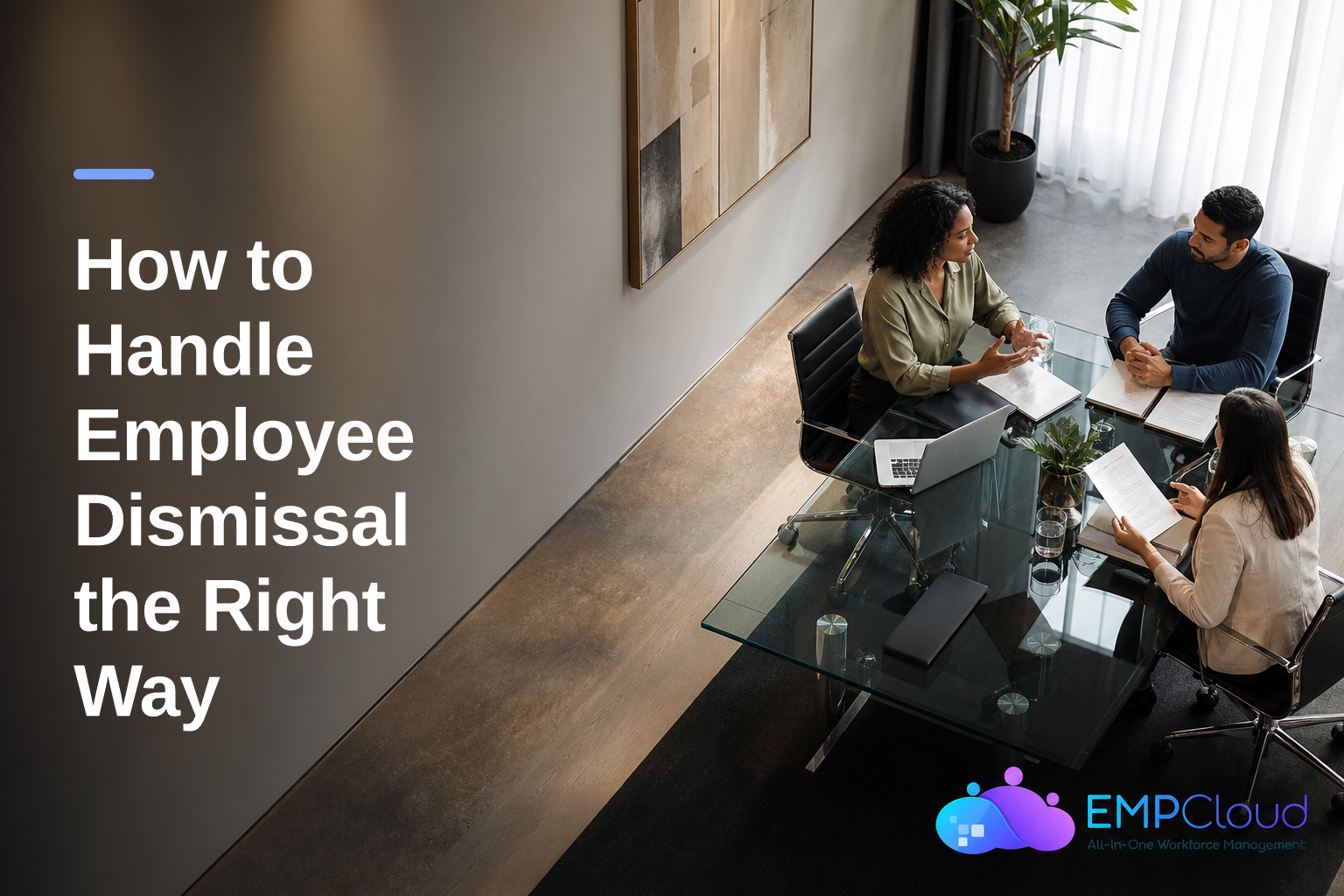
Third, schedule a private meeting with a neutral HR or manager witness. However, do not surprise the person with vague hints. Be direct about the topic.
Invite them to respond. Take notes. If your policy allows, offer a support person.
- Deliver the decision with empathy
Fourth, if the call is final, state it plainly: “We’re ending your employment, effective [date].” Then give the key reason tied to facts and policy. Importantly, do not debate or pile on new reasons. Keep the tone calm. Allow a few minutes for questions. Therefore, you preserve dignity and reduce conflict.
Notice and Offboarding
-
Handle the notice period
Fifth, confirm whether they will work notice, receive pay in lieu, or be on garden leave. In addition, align on handover tasks. If they stay for notice, set clear limits on access and scope to reduce risk. -
Execute offboarding
Sixth, close all loops the same day the person leaves:
- Access revocation with automatic integration for smooth account shutdowns
- Final pay calculation including benefits and reimbursements with clear itemization
- Knowledge handover with progress tracking so work is not lost
- Create and manage checklists for exit processes to avoid misses
- Asset return management with clean records for every device and badge

Moreover, share a written summary of terms (final pay, benefits end date, non-compete or non-solicit terms if applicable). Finally, send a kind, short departure note if the person prefers one, and keep the message factual.
“We tested EmpCloud during our exit formalities process and were impressed by how it handled employee departures and portfolio management.” — Anonymous pilot user
Also Read!
How to Reduce Employee Turnover: A Complete Guide for Every Organization
How to Reduce Employee Attrition: A Complete Guide for Every Organization
Common Dismissal Mistakes That Lead to Legal Trouble
Small gaps add up to big risks. If you want to handle employee dismissal right way, avoid these errors that create legal and security exposure.
- Skipping documentation: No dated records, no defense. Keep notes, emails, and meeting logs in protected storage.
- No progressive discipline trail: For performance cases, missing warnings or plans looks unfair.
- Dismissing without a witness: A neutral witness reduces disputes about what was said.
- Ignoring protected classes: Decisions tied to age, race, disability, religion, sex, or pregnancy are unlawful in many regions. Train managers to spot bias.
- Getting final pay wrong: Underpaying commissions, PTO, or expenses invites claims and bad will.
- Not revoking access on time: Delayed account shutdowns create live security risks across email, apps, and VPN.
- Verbal-only terminations: Without letters and signed notes, you lack a paper trail.
Furthermore, centralize your files. Protected record management with centralized storage and encryption helps you prove a fair process. In addition, generate detailed offboarding reports so you can show what access was closed, what assets came back, and what tasks finished on which dates.
As a result, you cut the chance of a claim and reduce the risk of a data leak on the same day the person exits. Moreover, you make life easier for finance and IT, who need proof for audits.
Tools and Resources for Managing Dismissals Professionally
You do not have to build every form or checklist from scratch. HR documentation templates for warnings, performance plans, and termination letters save time and improve clarity. In addition, a simple exit interview framework helps you capture lessons without blame.
Moreover, legal counsel is worth the cost for edge cases. For example, ask counsel to review letters for high‑risk exits or roles with sensitive data. In 2026, privacy and security rules keep changing, so a quick review can prevent months of pain.
Tools like EmpCloud are one option to automate offboarding checklists, account access shutdowns, and final pay calculation. Specifically, EmpCloud supports automated reminders and notifications for timely offboarding, document handling for a paperless exit process, and an integrated suite that covers recruitment, onboarding, payroll, performance, and exit management. As a result, HR, IT, and finance can work from one list with clear owners and due dates.
Furthermore, EmpCloud is SOC 2 compliant and is trusted by 1500+ businesses, operating in 15+ countries and managing 50,000+ employees. Those signals matter if you need audit‑ready trails and secure storage for sensitive records.
“EmpCloud’s Employee Monitoring has made tracking our team’s performance so easy. The insights we get have really helped us improve engagement.” — George Williams, Chief HR Officer
For general context on employment separation types across regions, you can also read this neutral overview of termination of employment. Use it as background, then follow your local law and internal policy.
What to Do After the Dismissal Meeting
The meeting ends. Now you lead the team through the next week with calm and care. First, decide how you will share the news.
Keep it short and kind. Do not share private details. For the team, focus on who owns which tasks next.
Share the news and reassign work
Second, update your org chart and tools on the same day. Therefore, assign active tickets, client threads, and approvals to new owners. In addition, post a brief “who now owns what” note in your project tools so work does not stall.
Third, wrap up records. Generate detailed offboarding reports that show closed accounts, collected assets, and final pay items. Furthermore, archive exit files in secured document storage with encryption so you are audit‑ready.
Fourth, run an exit interview if appropriate. Ask about blockers, tools, and process gaps. However, keep it optional in sensitive exits. Then thank the person for ideas and time.
Finally, reflect as a leadership team. Did the role lack clear goals? Did you coach late? Did the team face a tool or policy gap? As a result of this review, you can fix the root cause so the next hire succeeds.
- Team update: one short, kind message; no private details
- Task shift: assign work the same day
- Records: offboarding report and encrypted archive
- Exit interview: optional, focus on learning
- Root-cause review: fix the system, not the blame

Key Takeaways
- Plan early: document, coach, and follow policy to handle employee dismissal right way.
- Meet with care: be clear on the reason, stick to facts, and keep dignity front and center.
- Close loops the same day: revoke access, collect assets, and finish pay with itemized details.
- Store proof: use encrypted, centralized records and offboarding reports for audits and claims.
- Support the team: communicate changes, shift work fast, and fix root causes.
What to Do This Week
Block 90 minutes to audit your process. Write one-page checklists for documentation, the dismissal meeting, and offboarding. Ask legal to review your letters. Then test a tool that can auto‑remind owners, shut off access, track handovers, and itemize final pay. Doing this now means your next exit in 2026 is fair, fast, and secure.
Quick Search Our Blogs
Type in keywords and get instant access to related blog posts.