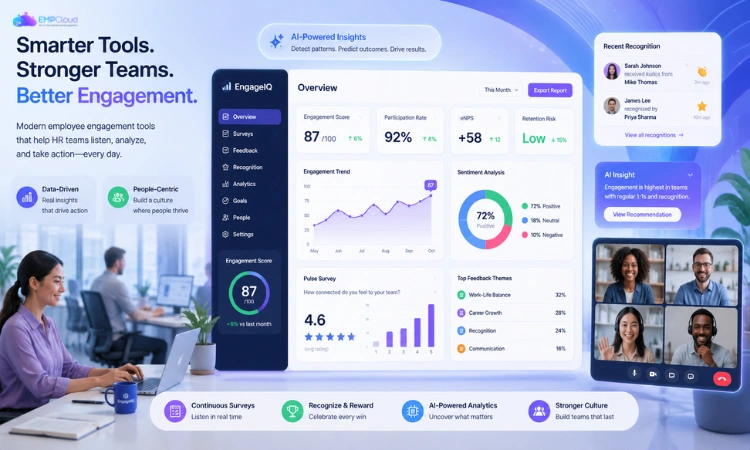
Most companies don’t lose employees overnight. Disengagement builds quietly in missed one-on-ones, in feedback that never gets addressed, in team members who stop raising their hands. By the time someone resigns, the warning signs are there for months. The right employee engagement tools help HR teams spot those signals before they become a retention crisis.
The challenge has grown more complex. Hybrid work has made it harder to read the room culture. Burnout became mainstream. And annual engagement surveys, the kind most organizations still rely on, are simply too slow to catch what’s happening in real time.
Modern HR teams need more than a once-a-year pulse check. They need continuous listening, smarter analytics, and tools that actually help managers act on what employees are saying.
Read Aloud!
Employee Engagement Tools at a Glance
Employee engagement tools are software platforms that help organizations measure employee satisfaction, collect feedback, recognize achievements, track workplace sentiment, and improve overall employee experience. They range from pulse survey tools and recognition platforms to AI-powered analytics systems and performance management software.
Companies invest in employee engagement tools for one core reason: engaged employees perform better, stay longer, and strengthen workplace culture.
Why Employee Engagement Tools Matter More Than Ever
The Link Between Engagement and Business Performance
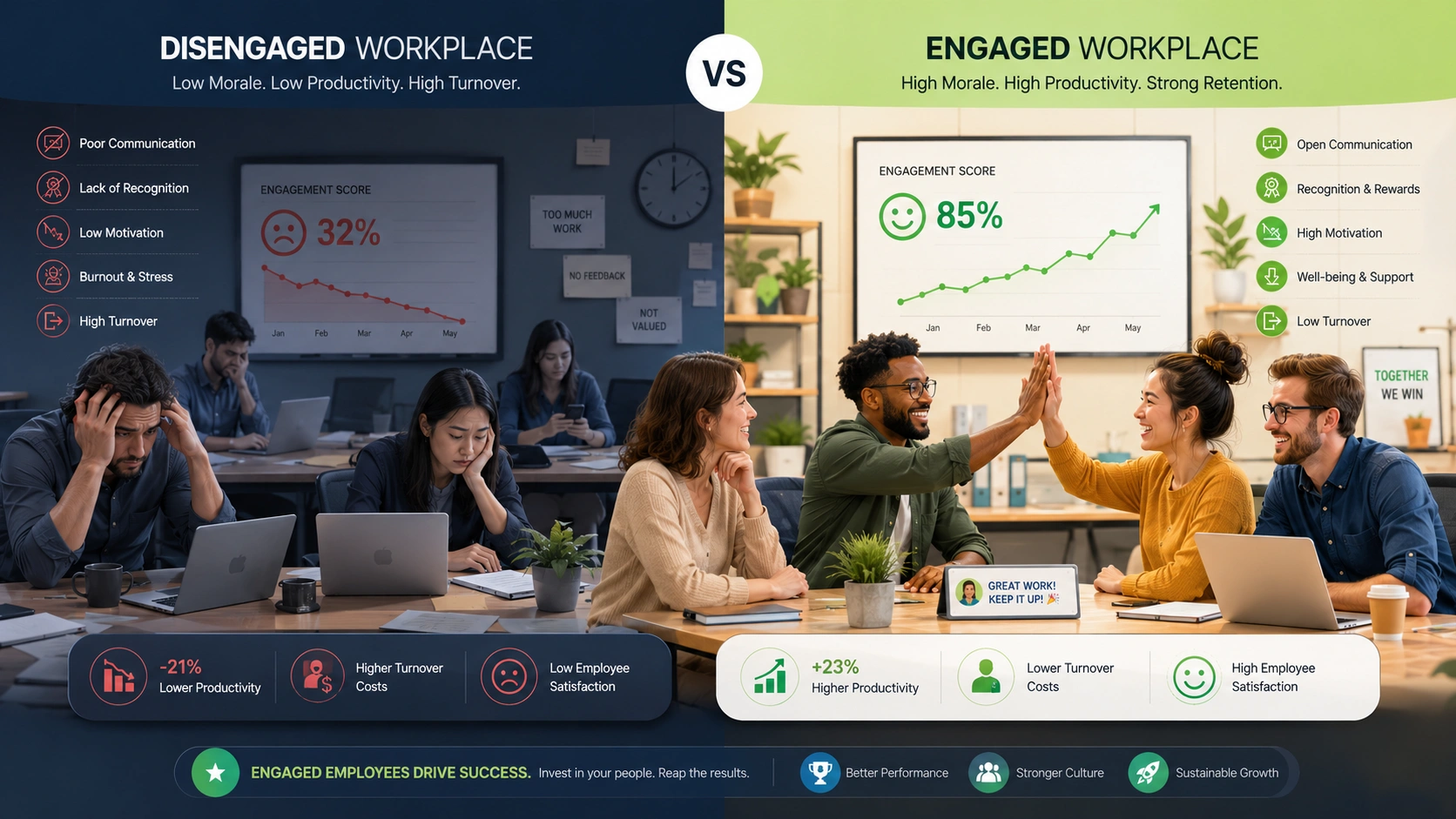
Engagement isn’t a soft HR metric. It connects directly to how a business performs. Teams with higher engagement levels consistently show stronger productivity, lower absenteeism, and better customer outcomes. When employees feel connected to their work and their team, they bring more to the table, and that shows up in the numbers.
Retention is where the financial impact is clearest. Replacing an employee typically costs between 50% and 200% of their annual salary when you factor in recruiting, onboarding, and lost productivity. Engagement directly influences whether people stay.
Signs Your Workforce May Be Disengaged
How do you know if disengagement is spreading? Watch for: declining participation in team meetings, employees going quiet in feedback channels, increased absenteeism, and subtle but consistent drops in output. “Quiet quitting,” where employees do just enough to get by, is often an engagement problem dressed up as a performance issue.
Higher turnover in specific teams, especially when managers change, is another signal worth investigating.
The Core Types of Employee Engagement Tools HR Teams Use
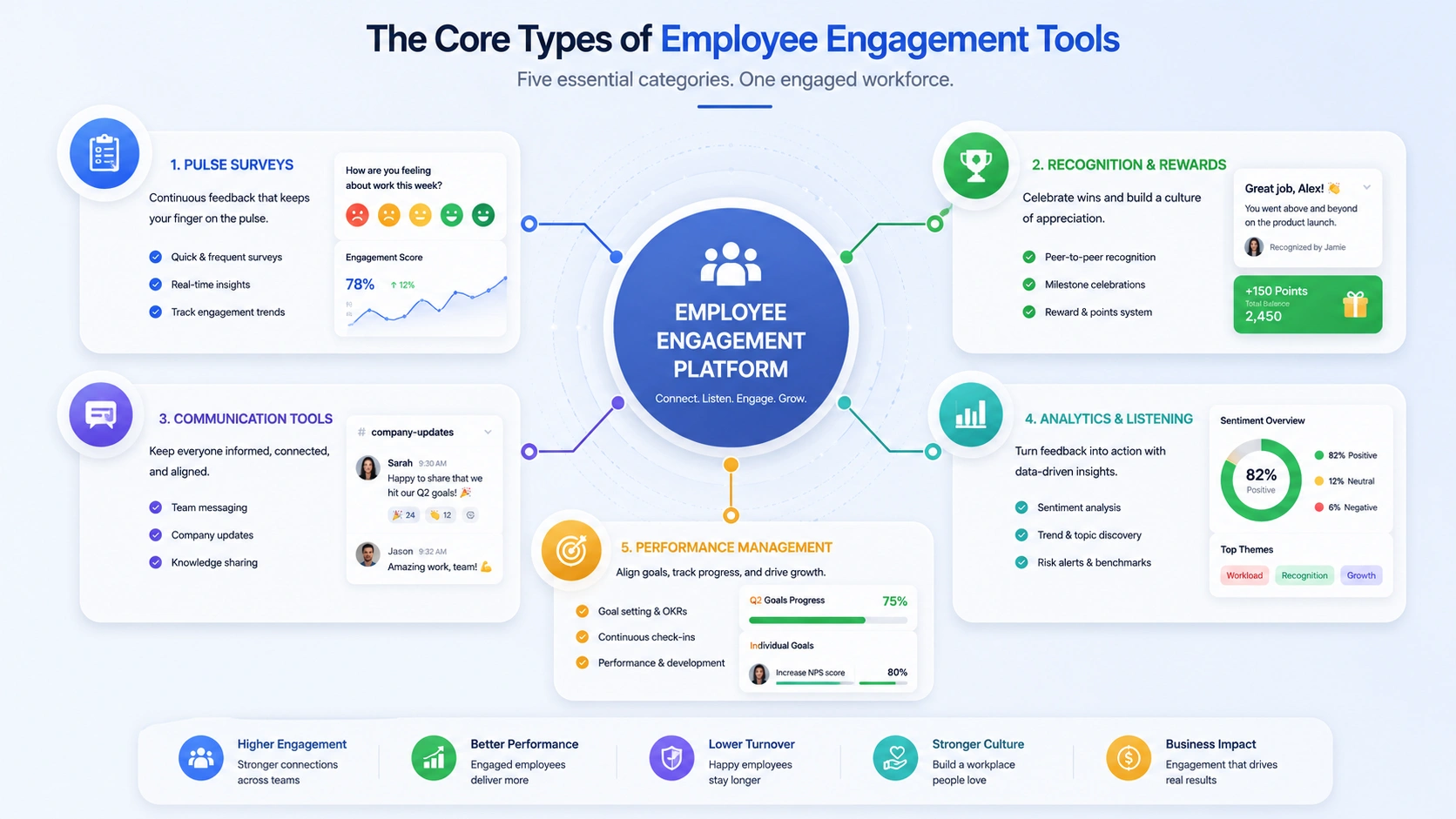
Understanding the different categories of employee engagement tools helps HR teams choose solutions that address their specific workforce challenges.
Employee Feedback and Pulse Survey Tools
These are the backbone of most engagement programs. Instead of waiting for annual reviews, pulse surveys collect feedback continuously, weekly, monthly, or on demand. The goal is a real-time window into how employees feel about their work, their managers, and the organization.
Employee engagement survey tools work best when they’re short, frequent, and actually acted on. Longer surveys with no visible follow-through tend to tank participation rates fast.
Recognition and Rewards Platforms
Recognition matters more than most leaders assume. Peer-to-peer shoutouts, milestone celebrations, and manager recognition all contribute to whether employees feel valued. Recognition platforms make this visible and consistent, not just something that happens informally or inconsistently.
Communication and Collaboration Tools
When communication breaks down, engagement follows. Tools that support internal communication, especially across distributed teams, help employees stay connected to team culture and each other. This is particularly important for hybrid and remote workforces where accidental isolation is common.
Analytics and Employee Listening Solutions
Sentiment tracking and AI-driven analytics turn qualitative feedback into patterns HR teams can actually use. Instead of manually scanning open-ended responses, these tools surface themes, flag risk areas, and identify where action is needed most.
Modern employee engagement software, such as Marlee, can also help HR teams turn these insights into practical actions that strengthen employee engagement and improve the overall employee experience.
Performance and Goal Alignment Platforms
When employees can see how their work connects to broader company goals, engagement improves. Performance platforms that support continuous check-ins and goal visibility keep that connection alive throughout the year, not just during annual reviews.
Read More!
The Features That Separate Great Employee Engagement Tools From Average Ones
Not all employee engagement tools offer the same level of insight, automation, or action planning capabilities.
Real-Time Feedback Collection
The best platforms collect feedback in the flow of work, not in a separate event. Real-time collection means HR teams and managers can respond faster, and employees feel heard more consistently.
Actionable Analytics Instead of Just Dashboards
Data is only useful if it points somewhere. Many platforms generate impressive reports but offer little guidance on what to do next. Look for tools that surface prioritized recommendations, not just scores.
Recognition and Appreciation Workflows
Recognition shouldn’t require HR to intervene every time. Built-in workflows for peer recognition and manager appreciation make it easy for everyone in the organization to participate.
Manager Accountability Features
Managers are the single biggest variable in employee engagement. Tools that give managers their own engagement dashboards and prompt them to act on feedback are far more effective than platforms that route everything through HR.
AI-Powered Insights and Sentiment Analysis
AI makes it possible to process qualitative feedback at scale. Sentiment analysis can catch early warning signs in open-ended responses that score-based surveys would miss entirely.
HRIS and Workplace Tool Integrations
Standalone engagement platforms that don’t connect to existing HR systems create extra work. Integration with your HRIS, Slack, Teams, or payroll system reduces friction and increases adoption.
Measuring Engagement vs. Improving Engagement: The Difference Most Companies Miss
Many organizations measure engagement well. Far fewer actually improve it.
The gap usually comes down to what happens after the survey closes. Scores go up in a presentation deck. Leaders nod. Then nothing changes. Employees notice, and participation in the next survey drops.
Closing the feedback loop requires clear ownership. Who is responsible for acting on this feedback? At the team level, that’s usually the manager. But without a system that surfaces specific action items and tracks follow-through, the accountability fades quickly.
The most effective employee engagement platform approaches focus on action planning, not just reporting. That means giving managers a short list of prioritized next steps based on team feedback, not a 40-slide summary with no clear owner.
Modern platforms are starting to build this follow-through directly into the product. The shift from “here’s your score” to “here’s what to do about it” is one of the most important developments in engagement technology right now.
How HR Teams Can Choose the Right Employee Engagement Tools
Step 1: Define Your Primary Goal
Before evaluating any platform, get clear on what problem you’re actually trying to solve. Is it retention? Culture visibility? Feedback volume? Recognition consistency? Different tools are built for different priorities, and trying to do everything with one platform often results in doing nothing well.
Step 2: Identify Your Workforce Type
A frontline retail team has completely different engagement needs than a distributed engineering team. Platform design, mobile accessibility, and survey frequency all look different depending on who you’re trying to reach.
Step 3: Evaluate Engagement Measurement Capabilities
Look closely at how employee engagement measurement tools collect and process data. Can they run pulse surveys, eNPS, or lifecycle surveys? Do they support manager-level reporting? Can you slice data by team, tenure, or department? Measurement quality determines the quality of insights.
Step 4: Assess Ease of Adoption
A powerful platform no one uses is worthless. Evaluate how easy it is for employees to participate and for managers to log in and act on data. High-friction tools kill engagement programs quietly.
Step 5: Prioritize Action Planning Features
Don’t just evaluate how a platform measures engagement. Evaluate what it does with the data. The best tools prompt action, not just reflection.
Common Mistakes Companies Make When Using Employee Engagement Tools
Running Surveys Without Acting on Results
This one is critical. Survey fatigue is real, but it’s rarely caused by survey frequency. It’s caused by employees feeling like nothing changes. Act visibly on feedback, and participation stays strong.
Focusing Only on Scores
An engagement score going up doesn’t automatically mean things are improving. Look at the underlying themes. A score might stabilize while a serious issue in one specific team goes unaddressed.
Ignoring Manager Accountability
If managers aren’t looped in, engagement work stays at the HR level and rarely translates to behavior change. Managers need their own data, their own prompts, and their own accountability.
Survey Fatigue From Over-Collection
Sending weekly surveys with no clear action creates noise. Less is often more, but only if what you do collect gets acted on quickly and visibly.
Treating Engagement as an HR-Only Responsibility
Engagement is a leadership function, not just an HR program. When executives and managers own the process alongside HR, the results are substantially better.
How EmpCloud Helps HR Teams Build an Engaged Workforce
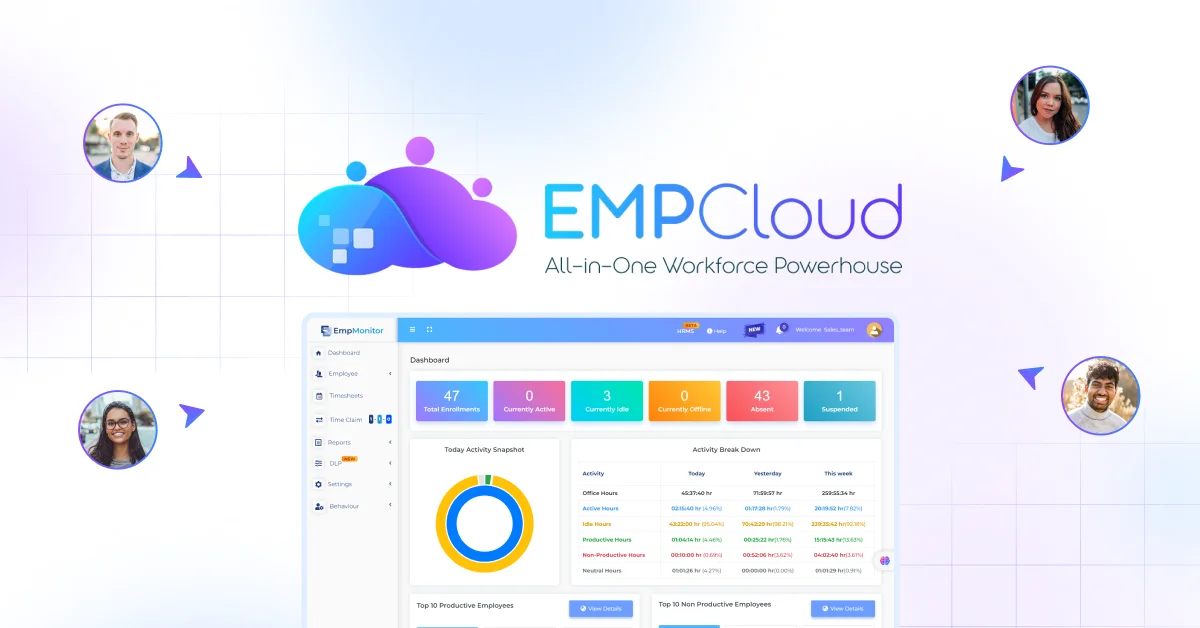
Employee engagement improves when HR teams can connect feedback, performance, communication, and employee experiences in a single system. Instead of managing engagement through disconnected tools, EmpCloud helps organizations create a more connected and data-driven workplace.
Key Features of EmpCloud That Support Employee Engagement
- Employee Self-Service Portal – Enables employees to access personal information, manage requests, view documents, and stay connected with HR processes independently.
- Performance Management & Goal Tracking – Helps managers set goals, monitor progress, conduct appraisals, and align employee performance with organizational objectives.
- 360-Degree Feedback System – Collects feedback from managers, peers, and team members to support continuous development and engagement.
- Employee Engagement Surveys – Allows HR teams to gather employee sentiment, identify concerns, and make informed decisions to improve workplace experiences.
- Attendance & Leave Management – Simplifies attendance tracking, leave requests, shift scheduling, and workforce visibility across teams.
Why It Matters
By bringing performance management, feedback, employee data, workforce administration, and analytics into one platform, EmpCloud helps HR teams gain better visibility into employee needs and take action that strengthens engagement across the organization.
The Future of Employee Engagement Tools: What HR Leaders Should Watch
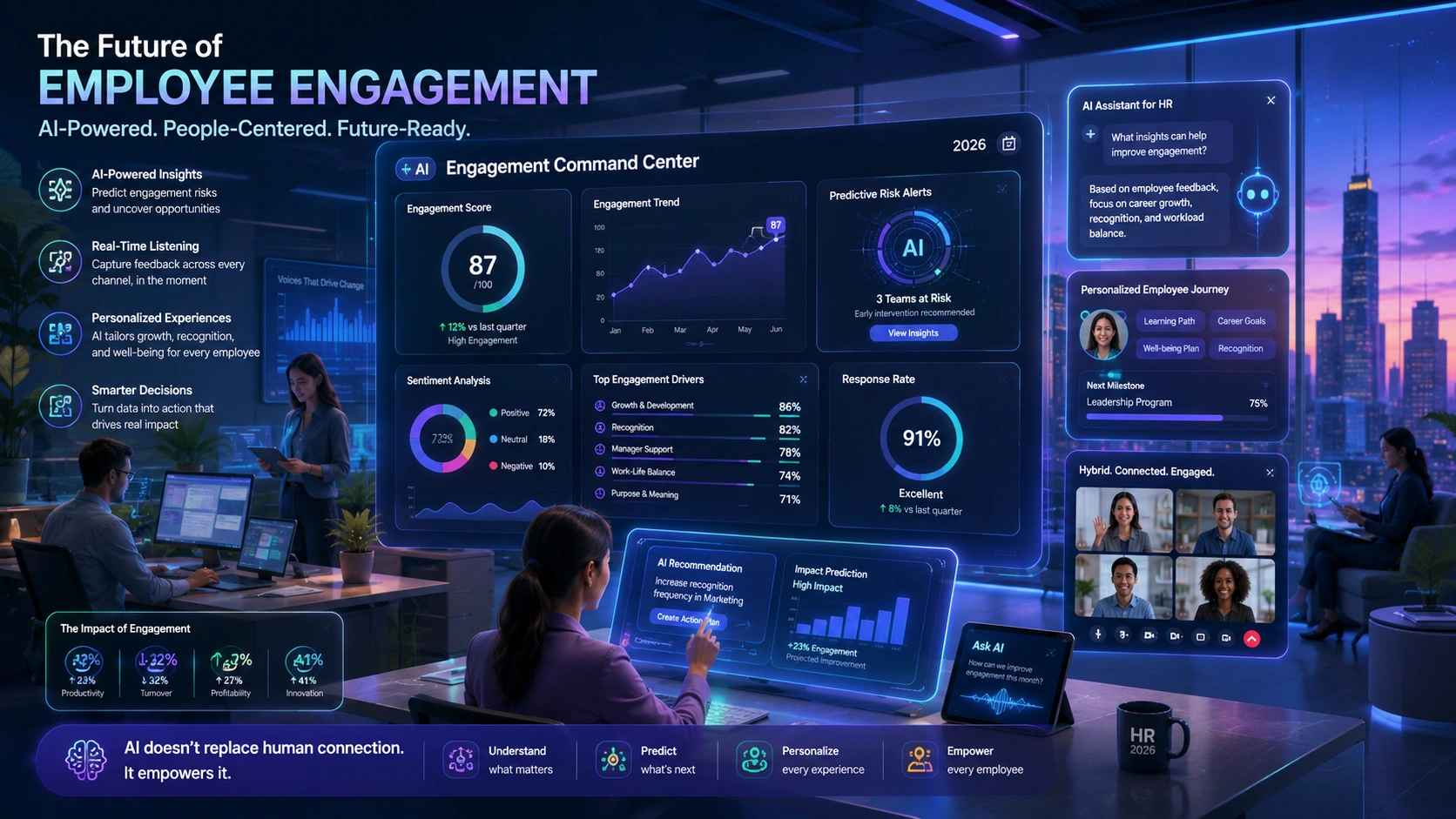
The next generation of employee engagement tools will rely heavily on AI, predictive analytics, and personalized employee experiences.
AI-Powered Employee Listening
AI is already changing how organizations process qualitative feedback. Natural language processing can analyze open-ended survey responses at scale, identifying themes and sentiment patterns that human reviewers would miss or flag too slowly.
Predictive Engagement Analytics
The next frontier is prediction. Platforms are beginning to identify which employees are at high risk of disengagement or resignation before the signals become obvious. Early intervention is far cheaper than backfilling a role.
Personalized Employee Experiences
One-size-fits-all engagement programs are fading. Future platforms will tailor survey content, recognition cadence, and development nudges based on individual employee profiles and preferences.
Continuous Listening Replacing Annual Surveys
The annual engagement survey is already becoming obsolete for high-performing HR teams. Continuous listening, shorter, more frequent check-ins integrated into the work experience, gives organizations the speed they need to actually respond to how employees feel.
Conclusion
Employee engagement is no longer something you can address once a year and move on. The workforce expects to be heard consistently, and companies that meet that expectation hold onto their best people.
The strongest programs combine the right employee engagement tools with genuine commitment from managers and leaders to act on what they learn. Technology enables listening. Culture determines whether anything changes because of it. Investing in modern employee engagement tools gives HR teams the visibility and structure needed to build a thriving workplace culture.
If your current approach relies on annual surveys and leadership town halls, it may be time to rethink the infrastructure behind your engagement strategy. The goal isn’t a better score, it’s a workplace where people actually want to stay.
Frequently Asked Questions
What are employee engagement tools?
They are software platforms designed to help organizations measure satisfaction, collect feedback, recognize employees, and improve overall workplace experience.
How do employee engagement tools improve retention?
By surfacing early signs of disengagement and giving managers the information they need to address problems before employees start looking elsewhere.
What features should an employee engagement platform include?
Pulse surveys, sentiment analysis, recognition workflows, manager dashboards, action planning tools, and HRIS integrations are the most important.
Are employee engagement survey tools still effective in 2026?
Yes, but only when feedback is acted on visibly. Survey tools alone don’t drive engagement. What happens after the survey closes matters most.
How often should companies measure employee engagement?
Most experts recommend monthly or quarterly pulse surveys, with always-on feedback channels available in between.
Quick Search Our Blogs
Type in keywords and get instant access to related blog posts.