
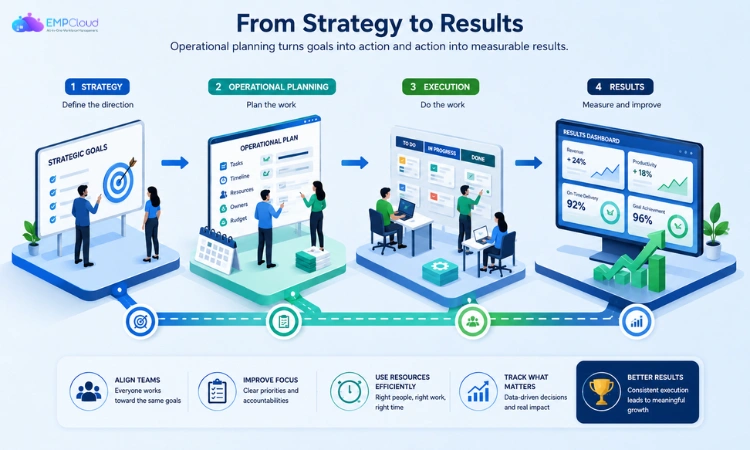
Operational planning is the difference between a strategy that delivers results and one that never moves beyond a presentation slide. Every year, organizations set ambitious goals, yet many fall short-not because the strategy was flawed, but because there was no clear system for turning those goals into consistent daily action.
Without operational planning, teams can stay busy while making little meaningful progress. Priorities become unclear, resources are stretched in the wrong areas, deadlines slip, and employees lose sight of how their work contributes to larger business objectives. The result is a costly gap between what an organization wants to achieve and what actually gets done.
That’s where operational planning becomes essential. Defining responsibilities, timelines, resources, and performance metrics creates the structure teams need to move from intention to execution. Whether you’re managing a growing business or leading a department, effective operational planning helps ensure every effort contributes to meaningful business results.
Read Aloud!
Operational Planning at a Glance
This process translates strategic objectives into specific tasks, timelines, responsibilities, budgets, and performance metrics that guide day-to-day business activity. It’s short-term, action-oriented, and focused on results you can measure.
Think of it as the bridge between where you want to go and what your teams do this week to get there.
Why Great Strategies Fail Without Operational Planning
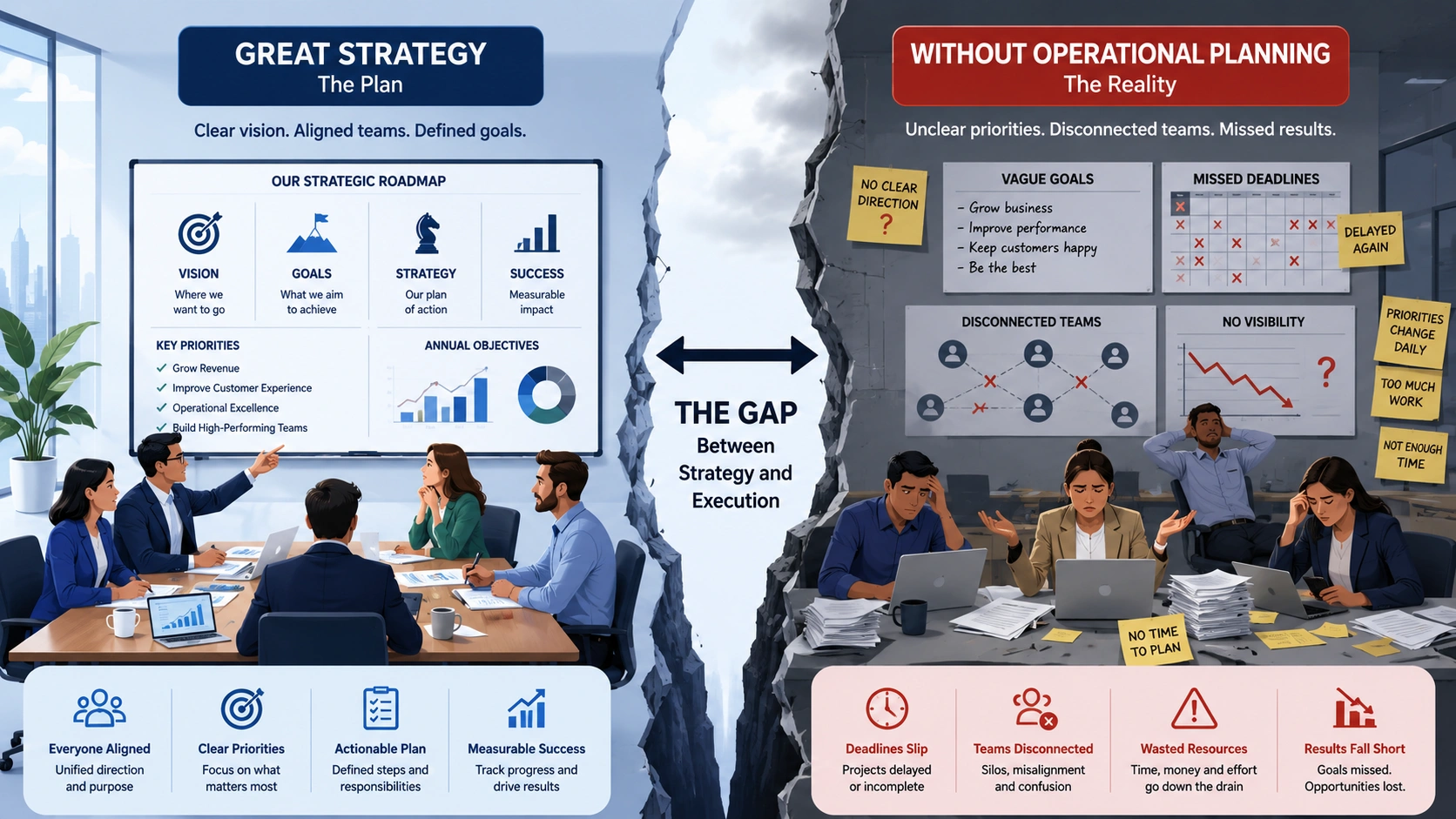
Plenty of organizations invest heavily in strategy. Workshops, consultants, vision statements on the wall. And then… nothing changes. Deadlines slip. Teams pull in different directions. The quarter ends, and no one is quite sure what got accomplished.
This isn’t a strategy problem. It’s an execution problem.
Without a structured operational plan, even well-designed goals stay abstract. One team chases revenue while another optimizes for customer retention. Nobody’s wrong, but nobody’s aligned either. Accountability becomes fuzzy, and progress becomes a matter of interpretation rather than measurement.
The cost is real. Wasted resources, missed targets, and employee frustration – all of which compound over time.
What Is Operational Planning?
The Simple Definition
This process is how an organization coordinates people, tasks, and resources to achieve specific goals within a defined time frame. It’s less about where you’re headed and more about how you get there.
How Operational Planning Supports Business Goals
This process breaks those goals into workable chunks: who does what, by when, and with what resources. Without that structure, goals are just intentions.
Who Is Responsible for Operational Planning?
Middle managers and department heads typically drive this process, translating direction from senior leadership into team-level actions. But ownership doesn’t stop there. Effective plans involve input from the people doing the work.
The Building Blocks of an Effective Operational Plan
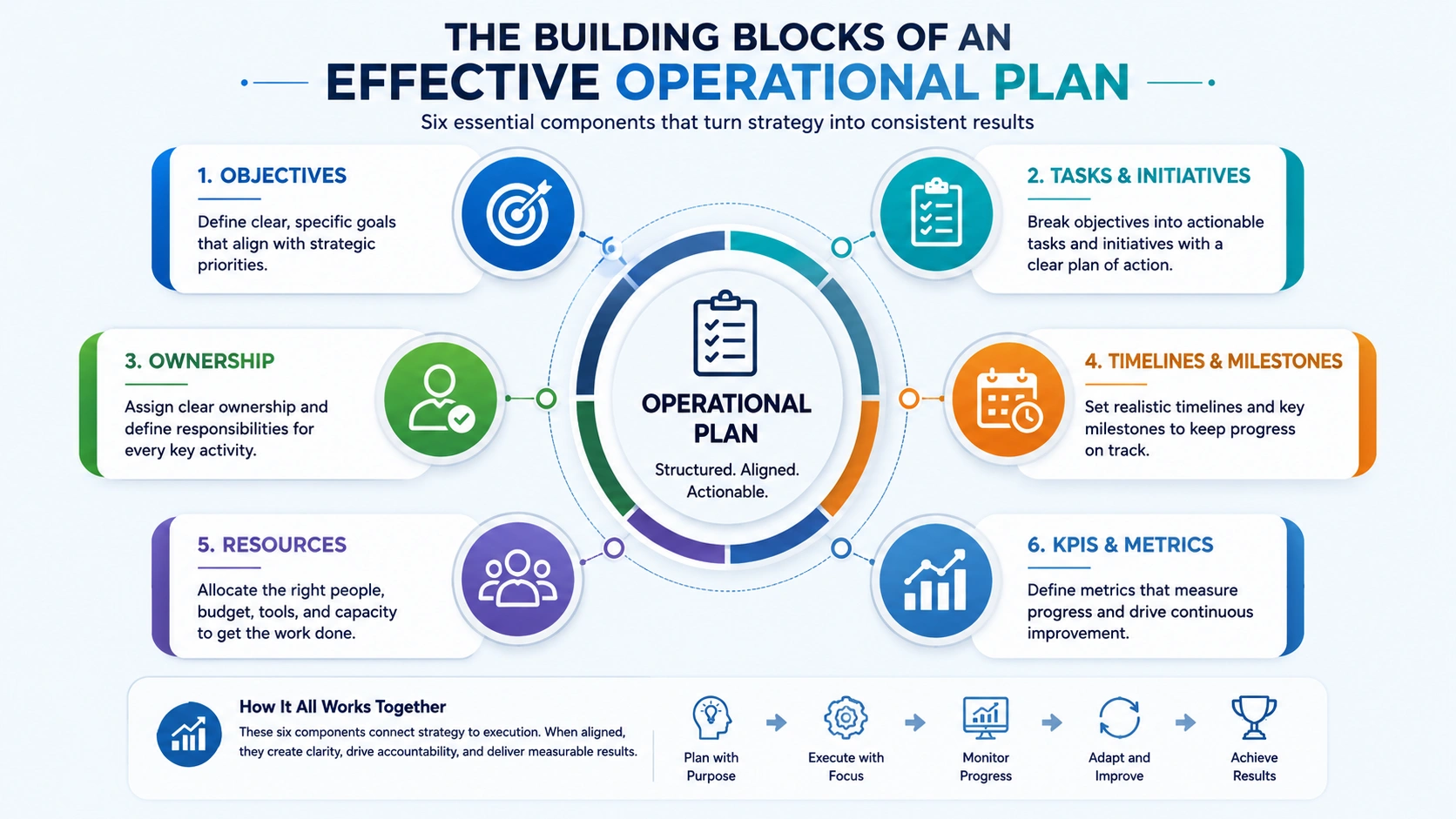
Clear Objectives and Targets
Every plan needs a destination. Objectives should be specific enough that a team member knows exactly what success looks like at the end of the period. Vague goals produce vague results.
Actionable Tasks and Initiatives
Objectives become useful only when they’re broken into concrete tasks. What exactly needs to happen? In what sequence? Identifying these actions is where plans become executable.
Roles and Responsibilities
Shared ownership is another way of saying no one owns it. Each task needs a clear owner – someone accountable for delivery, not just someone involved in the process.
Timelines and Milestones
Deadlines create focus. Milestones create momentum. A plan without time-bound checkpoints tends to drift, especially when competing priorities emerge mid-cycle.
Budget and Resource Allocation
Plans that ignore resource constraints aren’t plans – they’re wish lists. Effective planning accounts for headcount, tools, budget, and capacity.
KPIs and Performance Metrics
What gets measured gets managed. Selecting the right metrics upfront ensures the team tracks progress rather than just activity. Output matters. Effort is context.
Read More!
10 Must-Track Employee KPI Metrics For Better Performance In 2026
From Vision to Action: How the Operational Planning Process Works
Step 1 – Start With Strategic Goals
Every operational plan should trace back to a strategic objective. What is the organization trying to achieve this year? This year’s plans are only meaningful if they move toward that larger destination.
Step 2 – Break Goals Into Team Objectives
Large goals need to be distributed. Each department or team receives a translated version of the strategic goal that reflects their specific role. Marketing’s contribution looks different from operations’ contribution – and both should know exactly what theirs is.
Step 3 – Assign Ownership
Once objectives exist, assign them. Not to teams generally, but to individuals specifically. This step is where most plans start failing if skipped.
Step 4 – Allocate Resources
Match tasks to the time, budget, and people available. This step often reveals capacity gaps early – far better to discover them in planning than mid-execution.
Step 5 – Define Success Metrics
Agree upfront on how success will be measured. KPIs should be tied directly to objectives, not chosen because they’re easy to track.
Step 6 – Monitor and Adjust
Plans aren’t static. Regular check-ins – weekly or biweekly – allow teams to catch problems early and make adjustments before they become significant setbacks.
Operational Planning vs Strategic Planning: What’s the Difference?
This is one of the most common points of confusion, and the distinction matters practically, not just theoretically.
Strategic and operational planning aren’t competing approaches. They’re sequential. Strategy sets direction; operations create movement. Organizations that separate the two – treating strategy as a leadership exercise and operations as someone else’s problem – tend to struggle most with execution.
Real-World Operational Planning Examples Across Departments
Sales Team Example
A sales team with a quarterly revenue target of $2M breaks that down by rep, by region, and by month. Each rep knows their individual number, their pipeline requirements, and which accounts to prioritize. Weekly pipeline reviews keep the plan honest.
Marketing Team Example
A marketing department supporting a product launch builds a plan that maps campaign milestones, content deadlines, budget spend by channel, and lead generation targets. Each deliverable has an owner and a date.
HR Department Example
An HR team planning for a growth year maps out hiring timelines by department, onboarding capacity, training schedules, and retention initiatives. They track time-to-hire and onboarding completion rates as core metrics.
Customer Support Example
A support team anticipating increased volume after a product release plans for staffing coverage, ticket resolution targets, escalation procedures, and customer satisfaction benchmarks – all tied to specific weeks in the calendar.
Signs Your Operational Plan Is Not Working
Teams Have Conflicting Priorities
When two teams are pulling resources in opposite directions, it usually means their plans weren’t built with shared context. Misalignment at the planning stage shows up as friction during execution.
KPIs Are Rarely Reviewed
A metric no one checks isn’t a metric – it’s decoration. If KPI reviews are consistently skipped, the plan has effectively been abandoned.
Deadlines Constantly Slip
One missed deadline is a signal. A pattern of missed deadlines is a structural problem. Either the plan was unrealistic, or ownership was unclear. Often both.
Employees Don’t Understand Objectives
Ask your team what the department is trying to achieve this quarter. If the answers vary widely, the plan hasn’t been communicated – or didn’t exist in a clear enough form to communicate.
Strategic Goals Feel Disconnected
When employees can’t see how their daily work connects to the bigger picture, motivation suffers. A well-built operational plan makes that connection explicit.
How EmpCloud Simplifies Operational Planning
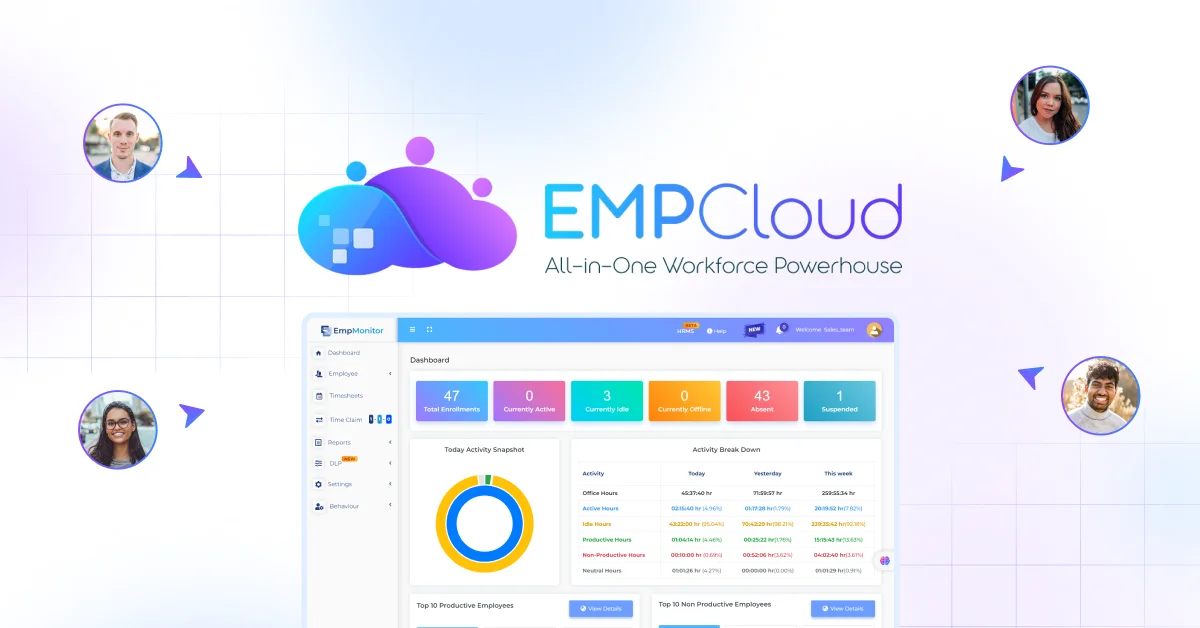
Operational planning becomes increasingly difficult as organizations scale. More goals, larger teams, and cross-functional dependencies can make it challenging to maintain visibility, accountability, and execution consistency across the business.
EmpCloud helps centralize planning, performance tracking, and workforce management, giving teams a clearer path from strategic objectives to day-to-day execution.
Key Features That Support Operational Planning
- Performance management and appraisal tracking
- Skill assessment and employee development tracking
- Employee segmentation for targeted workforce analysis
- Advanced dashboards and analytics for data-driven decision-making
- Task and project tracking to improve accountability and execution
- Recruitment and onboarding tools to support workforce growth
- HRMS integration for centralized employee and operational data
By bringing goals, performance data, workforce information, and reporting into one platform, EmpCloud helps organizations execute operational plans more effectively while maintaining alignment across teams and departments.
The Future of Operational Planning in Modern Organizations
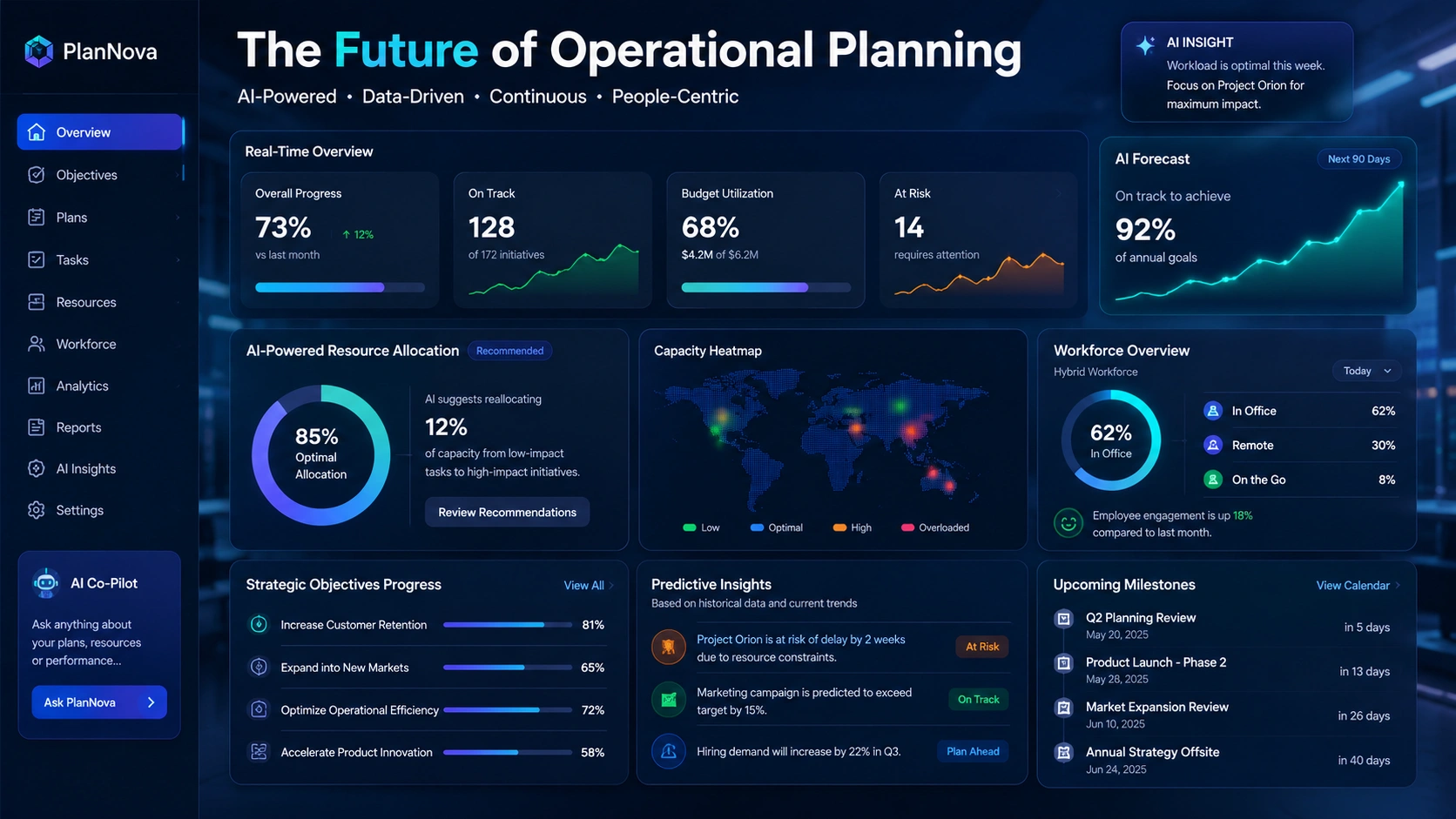
The way organizations plan is shifting. Hybrid and remote workplaces have made coordination harder, but they’ve also pushed the adoption of tools that make real-time tracking actually possible.
AI-assisted planning is beginning to help teams model scenarios, flag resource conflicts, and surface performance trends before they become problems. Dashboards now provide live views of progress that used to require weekly report compilation.
Perhaps the biggest shift is the move toward continuous planning. Rigid annual plans are giving way to rolling cycles – quarterly resets, monthly reviews, and real-time adjustments based on actual performance data. Organizations that embrace this model respond faster and waste less.
Common Operational Planning Mistakes to Avoid
Setting Too Many Priorities
If everything is a priority, nothing is. Plans with 15 goals produce teams that are busy but not productive. Focus is a feature, not a limitation.
Ignoring Resource Constraints
Planning without checking capacity is optimism masquerading as strategy. Know what your team can realistically absorb before committing.
Tracking the Wrong Metrics
Activity metrics – calls made, emails sent, hours logged – can look healthy while outcomes deteriorate. Track what actually indicates progress toward the goal.
Failing to Review Progress Regularly
A plan reviewed quarterly is already a plan running on outdated assumptions. Build in regular checkpoints before problems compound.
Treating Planning as a One-Time Activity
Markets change. Priorities shift. A plan built in January needs to reflect what’s true in March. Planning is a discipline, not a document.
Turning Plans Into Results
Clarity comes from planning. Results come from execution. Planning connects the two – turning ambitions into daily decisions that move organizations forward.
The organizations that struggle most are rarely lacking good ideas. They’re lacking the structure to act on them consistently. Reviewing and strengthening your planning process is one of the highest-leverage investments any team can make today.
FAQ
What is operational planning in business?
It’s the process of converting high-level strategic goals into specific, time-bound tasks with clear ownership, budgets, and performance measures.
What are the five main steps in planning?
Define strategic goals, translate them into team objectives, assign ownership, allocate resources, and establish metrics for tracking progress.
How does planning differ from strategic planning?
Strategic planning defines where the organization is headed over several years. Planning defines how teams will get there in the short term.
Who creates an operational plan?
Department heads and managers often work with input from senior leadership and frontline team members.
What KPIs should be included in an operational plan?
KPIs should directly measure progress toward each objective. Common examples include revenue targets, customer satisfaction scores, task completion rates, and time-to-hire.
Quick Search Our Blogs
Type in keywords and get instant access to related blog posts.