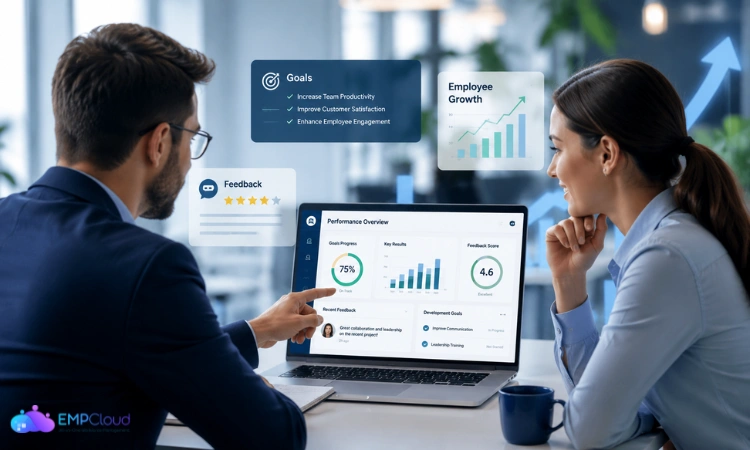
Most organizations invest heavily in hiring the right people. Then, somewhere between onboarding and the annual review, the system breaks down. Expectations drift. Feedback arrives too late. And high-potential employees quietly start looking elsewhere. That’s where performance management either saves the day or silently fails the team.
Done well, it’s not about judging people. It’s about giving them what they need to succeed, and giving the organization the visibility to support that.
Read Aloud!
Performance Management at a Glance
Performance management is the ongoing process of setting goals, tracking progress, providing feedback, evaluating results, and supporting employee growth to improve both individual and organizational outcomes.
It’s not a form you fill out once a year. It’s a continuous discipline that connects daily work to long-term business direction. When it functions well, employees know what’s expected, managers know who needs support, and leaders can make informed decisions about talent.
Why Performance Management Exists in the First Place
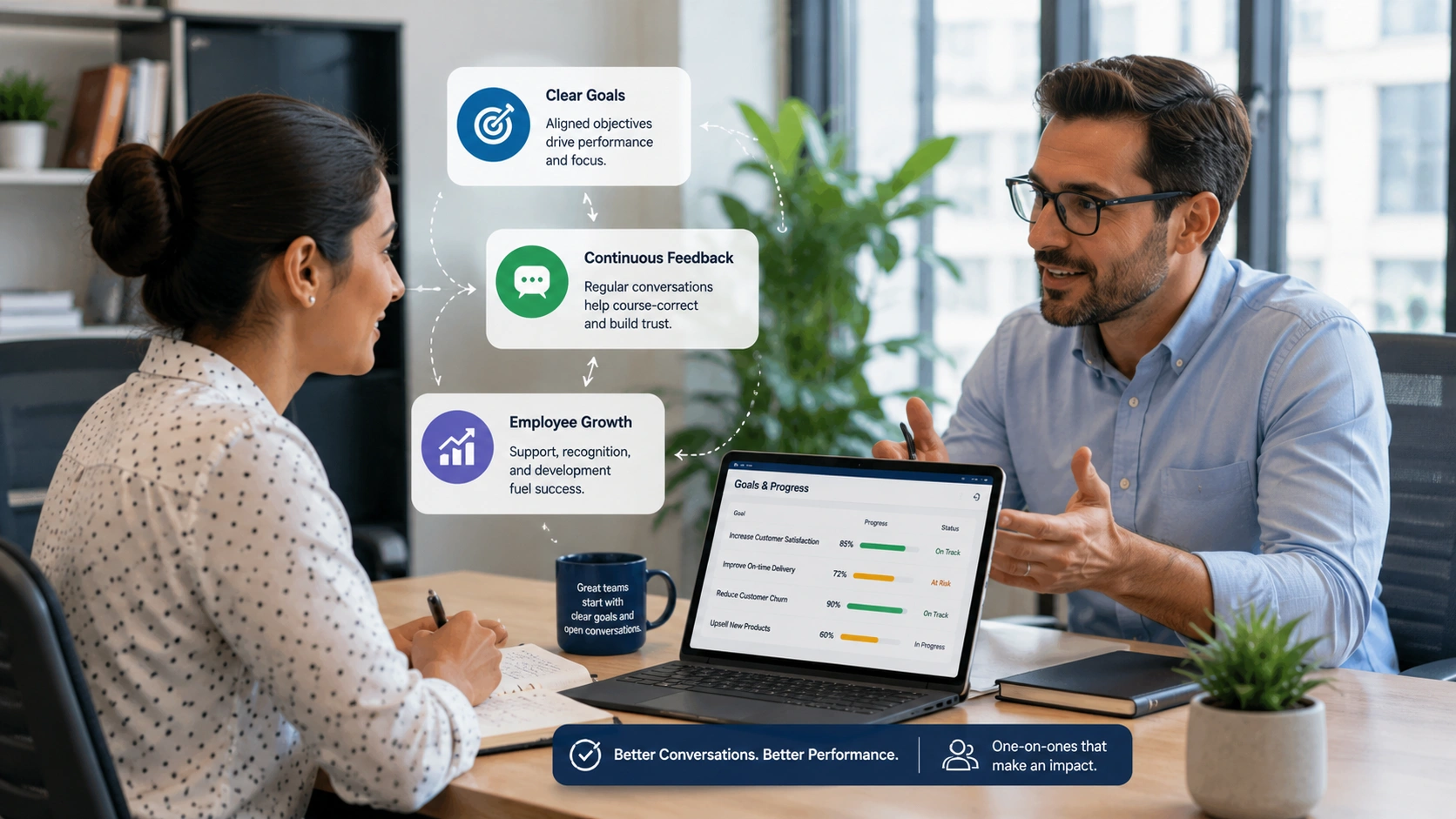
The Gap Between Expectations and Results
Here’s a common scenario: a manager assumes their team knows what “good performance” looks like. The employee assumes they’re doing fine because no one has said otherwise. Six months pass, and the annual review catches everyone off guard.
That gap, between what’s expected and what’s understood, is exactly the problem performance management is designed to close. Without structure, even capable employees can miss the mark simply because the target was never made visible.
Why Employees Need More Than Annual Reviews
Research from Gallup consistently shows that employees who receive regular, meaningful feedback are significantly more engaged than those who don’t. A once-a-year review doesn’t satisfy that need. By the time it arrives, the feedback is outdated, the context is forgotten, and the conversation feels more like a formality than a genuine exchange.
Employees want to know where they stand, not where they stood eight months ago.
How High-Performing Organizations Use It
The best-performing companies treat performance management as a strategic tool, not a compliance exercise. They use it to align individual effort with company goals, identify skill gaps before they become problems, and build a culture where growth is ongoing rather than episodic.
The Performance Management Process Explained Step by Step
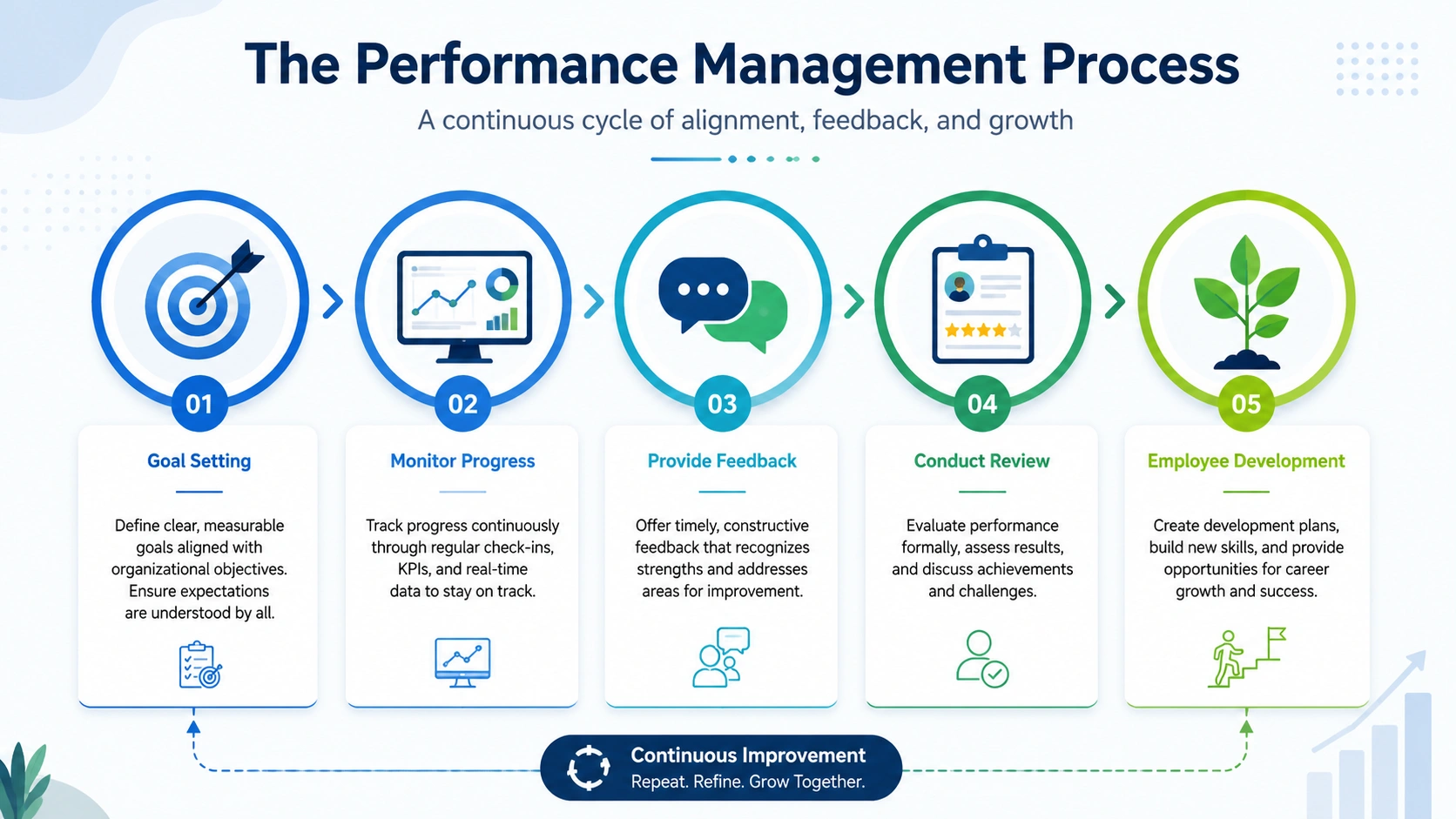
Step 1: Set Clear Goals and Expectations
Every effective process starts with clarity. Goals should be specific, measurable, and tied to what the business actually needs. SMART goals, targets with clear KPIs, or OKRs all work here. The key is that employees and managers agree on what success looks like before the work begins.
Step 2: Monitor Progress Continuously
Waiting three months to check in isn’t monitoring. Regular one-on-ones, lightweight progress updates, and real-time visibility into KPIs let managers catch problems early and recognize wins when they happen.
Step 3: Provide Meaningful Feedback
Feedback delivered in the moment lands differently than feedback delivered weeks later. A coaching mindset works better than a judging one. Effective feedback is specific, future-focused, and two-directional. Employees should have room to share what’s working for them, too.
Step 4: Conduct Performance Reviews
Formal reviews still have a role, just not as the only moment of accountability. When reviews are regular, well-documented, and grounded in ongoing conversations, they feel fair. When they’re the first time an employee hears anything critical, they feel like an ambush.
Step 5: Create Development Plans
A performance conversation that ends with no path forward is a missed opportunity. Development plans connect current performance to future capability. They might include new responsibilities, skills training, stretch projects, or long-term career progression. This is what separates performance management from performance monitoring.
Performance Management vs Performance Appraisal: They’re Not the Same Thing
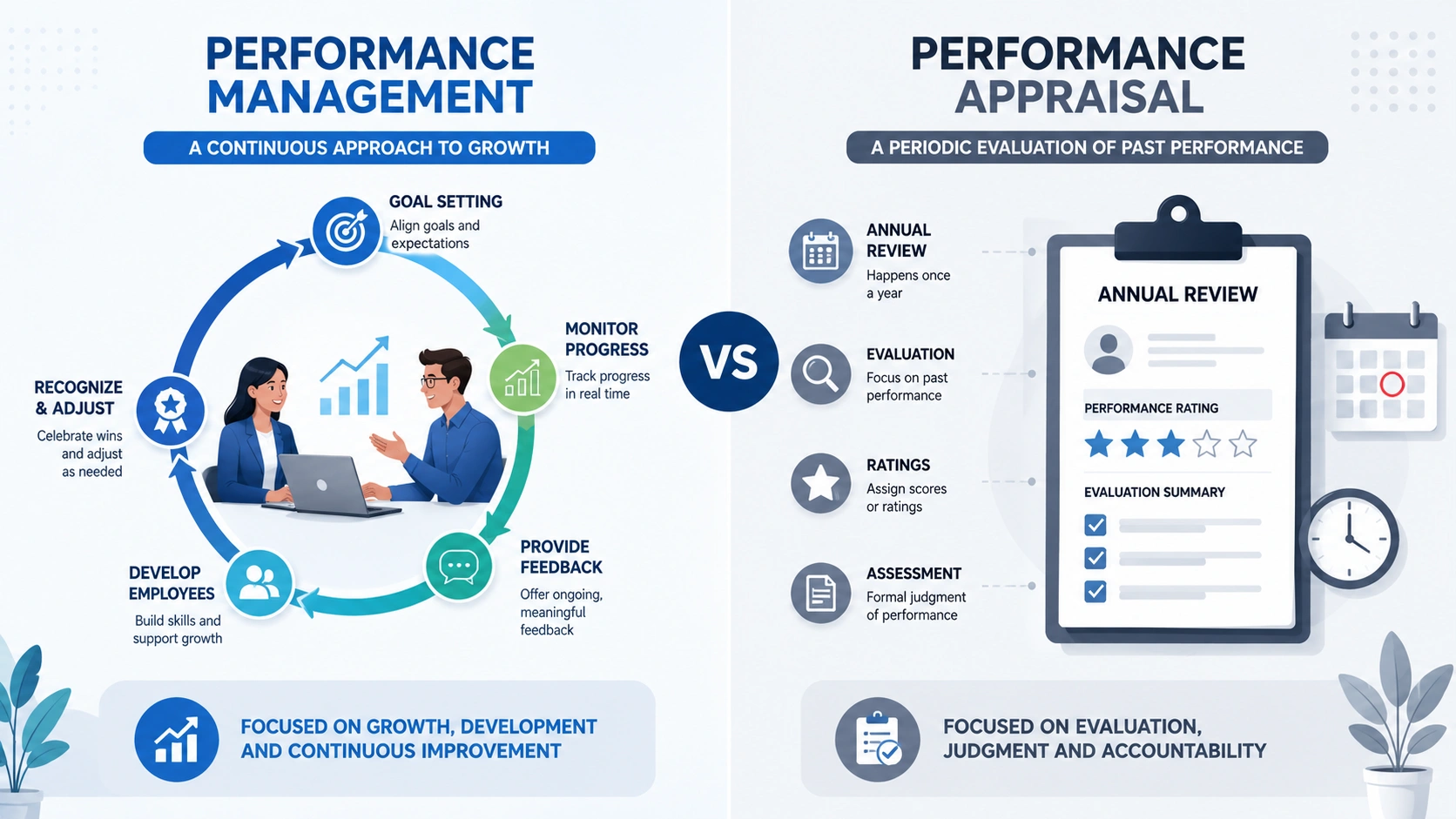
These terms are often used interchangeably, but they describe different things entirely.
A performance appraisal is one event within a broader system. Performance management is the system itself. Organizations that confuse the two tend to run annual reviews in isolation and wonder why nothing changes.
The Benefits of Effective Performance Management
Better Employee Engagement
Employees who understand what they’re working toward and why feel more connected to their work. Clarity is motivating. Ambiguity is draining.
Higher Productivity and Accountability
When goals are visible and progress is tracked, teams tend to perform better. Not because they’re being watched, but because they have a clear reason to focus.
Stronger Retention and Reduced Turnover
People don’t leave companies. They leave unclear expectations, poor managers, and stalled careers. A structured approach to performance management directly addresses all three.
Improved Leadership Decisions
When performance data is accurate and consistent, leaders can make smarter decisions about promotions, succession planning, and resource allocation.
Clearer Career Development Paths
Employees who see a path forward are more likely to stay, grow, and contribute at a higher level. Development conversations built into the process make that path visible.
What a Modern Performance Management System Looks Like
From Annual Reviews to Continuous Conversations
The shift happening across HR right now is significant. Companies like Adobe, Microsoft, and Deloitte have moved away from annual ratings toward ongoing check-ins, real-time feedback, and development-focused conversations. The result has generally been higher engagement and lower attrition.
A modern performance management system supports this shift with tools for continuous feedback, employee self-assessments, 360-degree input, and real-time reporting.
Why Traditional Systems Are Losing Effectiveness
Annual reviews made sense when work was predictable and slow-moving. Today’s work isn’t. Projects run in sprints. Teams are hybrid or fully remote. Roles evolve faster than job descriptions can keep up. A system built for yesterday’s workplace doesn’t serve today’s workforce.
Common Performance Management Mistakes That Hurt Teams
Setting Vague Goals
“Improve customer satisfaction” is not a goal. It’s a wish. Without specifics, there’s no shared understanding of what success looks like, which makes any review conversation difficult.
Giving Feedback Only During Reviews
If the first time an employee hears critical feedback is during their formal review, the system has already failed them.
Measuring Activity Instead of Outcomes
Hours logged, emails sent, meetings attended. None of these tells you whether the work actually moved anything forward. Measuring outputs over inputs leads to better decisions.
Ignoring Employee Development
Performance management that focuses only on past results without building toward future capability is incomplete. Growth needs to be part of every conversation.
Treating It as an HR Task Only
When performance management gets handed off entirely to HR, managers disengage from it. It belongs in every team, at every level.
Read More!
Work Life Balance Tips: A Practical Guide To Reclaiming Your Time
Performance Management in Action: Real Workplace Examples
Sales Team: A sales manager sets quarterly revenue targets for each rep, tied to specific pipeline metrics. Weekly check-ins review deal progress, not just numbers. When a rep struggles, coaching focuses on the specific stage in the pipeline where deals are stalling. By quarter-end, underperformers have a documented improvement plan, and top performers have visibility into promotion criteria.
Customer Support Team: Response time and satisfaction scores are tracked weekly. Agents receive feedback tied to specific ticket reviews, not vague impressions. Development plans include soft skills training for high-potential agents moving toward team lead roles.
Remote Workforce: With no shared office, visibility matters more. Async updates, monthly video check-ins, and a shared performance management software dashboard keep goals visible across time zones. Managers make a point to recognize wins publicly, since remote employees can’t benefit from hallway acknowledgment.
How to Build a Performance Management Framework That Actually Works
Start with where the business is going, then define what each role needs to contribute to get there. Train managers to have development conversations, not just evaluation conversations. Build feedback into the workflow rather than scheduling it as a separate event.
A simple framework:
Align → Track → Coach → Evaluate → Develop
Each stage feeds the next. Skip one, and the whole cycle weakens.
How EmpCloud Simplifies Performance Management
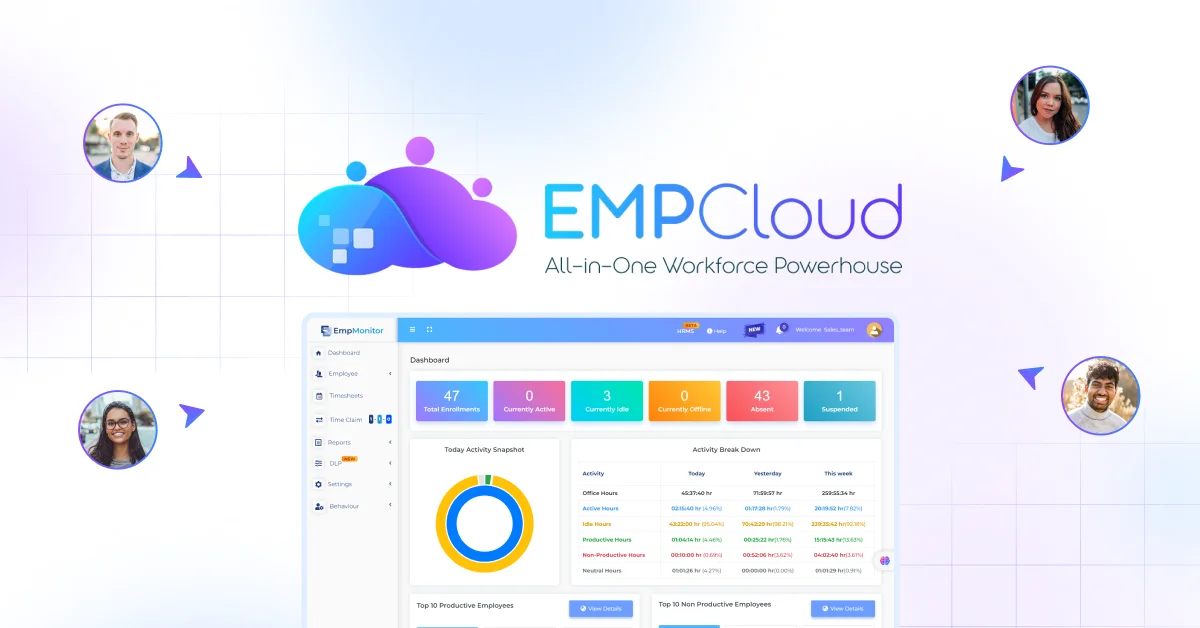
Effective performance management requires more than periodic reviews; it requires continuous alignment, feedback, and visibility across the organization. EmpCloud brings these elements together in a single platform, making it easier for HR teams, managers, and employees to stay focused on performance and growth.
Key features of EmpCloud include:
- Employee development planning to support career growth and skill-building
- Real-time analytics and reporting for data-driven decision-making
- Centralized performance records for improved consistency and transparency
- Manager dashboards for tracking progress and identifying performance trends
- Self-service employee access to goals, feedback, and review history
- Customizable performance frameworks to fit different team structures and evaluation methods
Rather than replacing the human side of performance management, EmpCloud helps organizations create more meaningful, consistent, and productive performance conversations.
The Future of Performance Management Is More Human, Not Less
AI is entering the picture here, not to replace managers but to surface patterns they might miss. Predictive analytics can flag when an employee’s engagement is declining before it becomes a retention risk. Skills-based models help map growth paths based on strengths, not just titles.
The real shift is this: organizations are moving from managing performance to enabling it. Managing implies control. Enabling implies investment. The difference sounds subtle, but it changes everything about how teams are developed, led, and retained.
Great Performance Doesn’t Happen by Accident
The organizations that consistently build high-performing teams aren’t doing it through luck or talent alone. They’ve built systems that make expectations clear, feedback frequent, and growth visible.
Performance management, done right, is less about reviewing people and more about enabling them. The future belongs to organizations that understand that difference and act on it.
If your current process relies on annual reviews and spreadsheets, now is a good time to rethink it. EmpCloud can help you build a continuous, data-informed approach that works for your managers, your employees, and your business.
Frequently Asked Questions
What is performance management in simple terms?
It’s the ongoing process of helping employees do their best work through clear goals, regular feedback, fair evaluation, and continuous development.
What are the main objectives of performance management?
Aligning individual work with business goals, improving productivity, developing employee capabilities, and retaining top talent.
What are the five stages of the performance management process?
Goal setting, monitoring, feedback, performance evaluation, and employee development.
What is the difference between performance management and performance appraisal?
A performance appraisal is a periodic review event. Performance management is the continuous system that surrounds and supports it.
Why is performance management important for employee retention?
Because people stay where they feel seen, supported, and growing. A strong process provides all three.
Quick Search Our Blogs
Type in keywords and get instant access to related blog posts.