
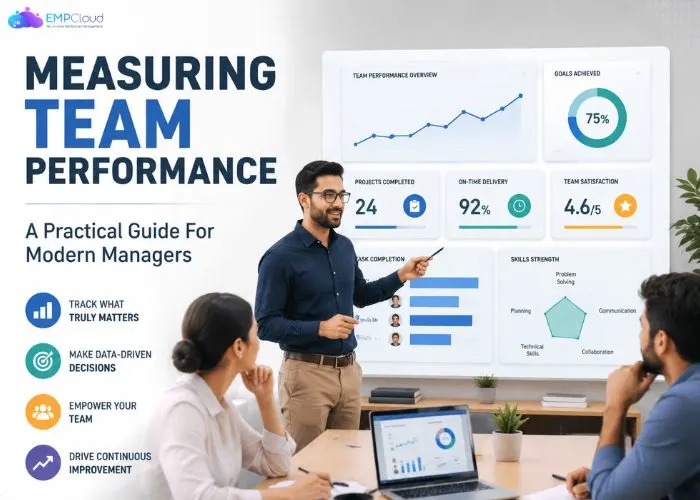
Listen To The Podcast Now!
Why Measuring Team Performance Matters?
When done right, measuring team performance gives leaders a clear view of where things stand and where intervention is needed. It removes the guesswork from promotions, raises, and project assignments. More importantly, it lets you spot small problems before they become big ones, a missed deadline here, a dip in collaboration there.
Teams without proper measurement often suffer from invisible burnout, uneven workloads, and rewarded mediocrity. On the flip side, measuring team performance the right way can boost engagement because employees feel seen.
They know their hard work won’t go unnoticed, and they understand exactly what’s expected of them. It also helps managers run better one-on-ones, since conversations are based on facts rather than gut feelings. Ultimately, this practice creates a culture of accountability and continuous improvement, which is exactly what modern workplaces need to stay competitive.
Key Indicators That Simplify the Process:

Numbers tell the story, but only if you choose the right ones. The best performance metrics sit at the intersection of business goals and individual contribution. Here are the most useful employee performance metrics to consider when building your dashboard.
Productivity indicators look at output, tasks completed, projects delivered, or revenue generated within a set period. Quality indicators focus on accuracy, customer satisfaction scores, and rework rates, which reveal whether speed is coming at the cost of standards. Collaboration metrics track how well team members support one another through peer feedback, code reviews, and cross-functional contributions.
Don’t forget engagement signals like attendance, meeting participation, and survey responses. These are critical when measuring team performance for distributed teams. Time-based metrics such as cycle time and on-time delivery rate also offer valuable insight. The trick is to balance these categories so you’re never judging people by one dimension alone. A single metric can mislead, but a combined view rarely does.
Common Mistakes to Avoid:
Even experienced managers stumble when measuring team performance. The first mistake is tracking too many things. When everything matters, nothing does, and your team ends up spending more time on reports than on actual work. Pick five to seven core indicators and stick with them.
Another common error is leaning entirely on quantitative data. Numbers are powerful, but they don’t capture context. A salesperson who closes fewer deals but mentors juniors, for example, brings real value that won’t show up on a leaderboard. Combine hard data with qualitative inputs, such as 1:1 feedback and peer reviews.
Many leaders also fall into the trap of comparing employees against each other instead of against goals. This breeds unhealthy competition and harms morale. Measuring team performance should reward growth, not rank people in a forced curve. Finally, don’t measure and forget. Reviewing the data without acting on it sends a clear signal that the exercise is just theatre, and engagement will plummet quickly.
Turning Data Into Action:

Once you have reliable numbers, the real work begins. How to improve team performance is less about pushing harder and more about removing friction. Start by sharing the data with your team openly. Transparency turns metrics into shared goals rather than secret report cards.
Next, identify patterns. Are deadlines slipping every Wednesday? Maybe meeting load is the issue. Is one squad consistently outperforming another? Find out what they’re doing differently and replicate it. Use the data to coach individuals, and tailor support based on each person’s specific gaps. After all, measuring team performance is only useful when it leads to better decisions.
Setting smaller, more frequent goals also helps. Quarterly OKRs and weekly check-ins keep momentum high without overwhelming anyone. Celebrate wins publicly, address concerns privately, and close the loop on feedback. When people see that measuring team performance leads to real changes, better tools, smarter processes, and fairer workloads, they engage with the system instead of trying to game it.
Also Read:
10 Must-Track Employee KPI Metrics For Better Performance In 2026
Streamline the Process with EmpCloud:
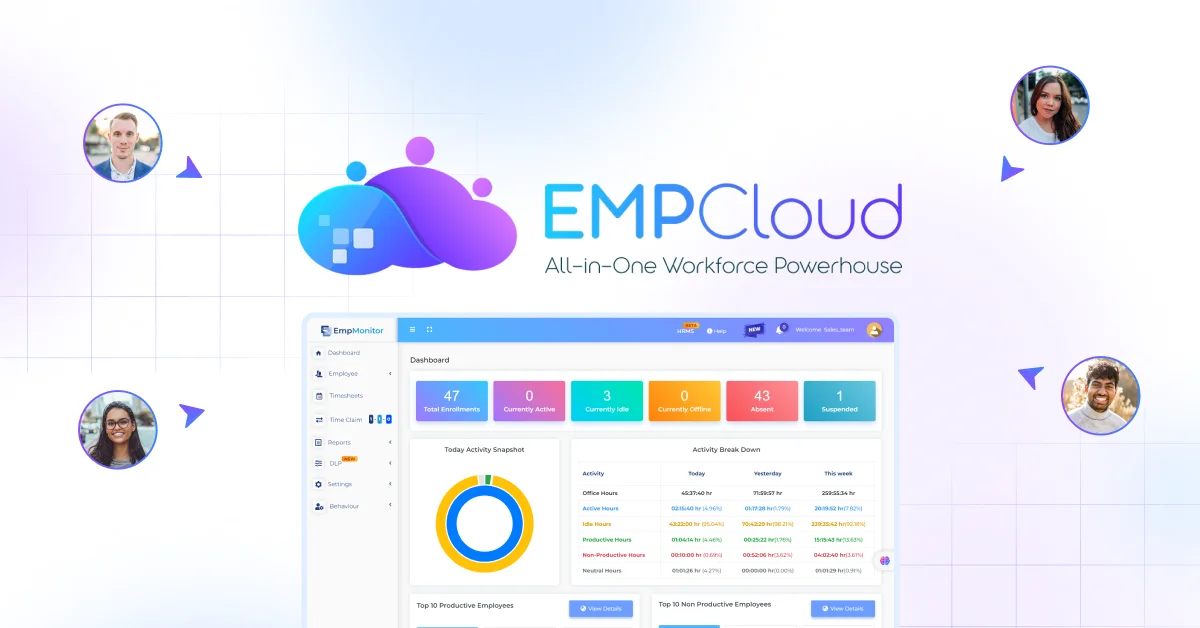
Doing all this manually is exhausting. This is where a unified platform like EmpCloud takes the load off your shoulders. Built as a complete workforce management suite, it brings every part of your HR ecosystem, from onboarding to exit, into one orchestrated dashboard. Whether you’re handling five people or five thousand, EmpCloud gives you the tools to track, analyze, and act in real time, making measuring team performance a much smoother task.
Here’s what makes it stand out:
- EmpMonitor for real-time productivity and activity insights
- Performance & Career Management module with skill-based appraisals and goal tracking
- Project Management tools featuring Gantt charts and Kanban boards
- AI-powered Rewards & Recognition that automatically spot high performers
- 41 AI tools across attendance, leave, and OKR progress for instant queries
- Cross-module reporting spanning 95+ pages and 9 languages
- Seat-based licensing, so you pay only for what you use
Best Practices Worth Following:
To make measuring team performance truly stick, you need a few non-negotiables. Start with clear definitions. If three managers interpret “productivity” three different ways, your data is useless. Document what each metric means and how it’s calculated.
Review cadence matters too. Weekly check-ins keep things tactical, monthly reviews surface trends, and quarterly deep dives shape strategy. Don’t squeeze everything into one annual meeting. Combine self-assessments with manager evaluations and peer inputs to get a 360-degree picture.
Always tie measurement to development. Numbers should fuel growth conversations, not punishment. When an employee struggles, ask what support they need rather than where they failed. And finally, keep iterating on your system. The metrics that worked last year may not fit this year’s goals. Treat measuring team performance as a living practice, not a static template, and your team will respond with better focus and steadier results.
Conclusion:
Measuring team performance isn’t about surveillance; it’s about clarity. When everyone sees the goal, the progress, and the feedback, motivation grows naturally. Pair the right metrics with the right tools, and you shift from reactive management to proactive leadership. Whether you start with a spreadsheet or a full platform like EmpCloud, what matters is taking the first step. Consistent, fair measurement builds teams that grow, deliver, and stick around for the long run.
FAQs:
Q1. How often should you be measuring team performance?
Ans: A weekly check-in for tactical updates, a monthly review for trends, and a quarterly deep dive for strategy works best for most teams.
Q2. What’s the simplest way to start measuring team performance?
Ans: Pick five core metrics tied to your business goals, document them clearly, and use a tool like EmpCloud to automate data collection.
Q3. Does measuring team performance work for remote teams?
Ans: Yes, in fact,t it’s even more important. Output-based metrics, regular surveys, and productivity software keep distributed teams aligned and engaged.
Quick Search Our Blogs
Type in keywords and get instant access to related blog posts.