

In today’s fast-paced, collaborative work environments, choosing the best productivity tools for teams is essential to driving efficiency, boosting collaboration, and improving overall workflow. With so many options on the market, it can be overwhelming to pick the right tool that suits your team’s needs. But when done right, productivity tools can save your team significant time, streamline operations, and help you achieve your goals more efficiently.
In this guide, we’ll walk you through how to choose the right productivity tools for your team, from evaluating workflows to comparing AI-powered features. By the end of this post, you’ll have a clear strategy for selecting the tools that will make your team more productive and collaborative.
What Are Productivity Tools for Teams?

Productivity tools for teams are software platforms that help organizations and their teams organize, manage, and collaborate on tasks. They are designed to improve efficiency, reduce manual tasks, and foster smoother communication between team members, regardless of their location. These tools can range from simple task management apps to complex project management systems, document collaboration tools, and AI-powered solutions.
In the era of remote work and hybrid teams, productivity tools have become even more critical, helping teams stay on track and engaged while working from different locations.
Why Productivity Tools Matter for Modern Teams

Having the right productivity tools is more than just a matter of convenience; they have a profound impact on your team’s effectiveness.
Better Collaboration
One of the key benefits of productivity tools for teams is the ability to streamline communication and collaboration. Instead of sending emails back and forth or holding multiple meetings, tools like Slack, Microsoft Teams, or Trello make it easier for teams to collaborate on documents, track tasks, and share updates in real time.
Faster Communication
Productivity tools for teams centralize communication, allowing teams to communicate instantly through direct messaging, video calls, or file sharing. With remote work becoming more common, these tools ensure that no matter where team members are located, they can still communicate efficiently.
Clearer Task Ownership
Task management tools like Asana or Jira allow team members to easily see who is responsible for each task and its deadlines. This clarity reduces the risk of tasks falling through the cracks and helps ensure that everyone stays on track.
Improved Visibility and Accountability
Most productivity tools include dashboards that allow managers and teams to see the progress of projects in real time. This level of transparency fosters accountability, ensuring everyone knows the status of tasks and projects.
Less Manual Work Through Automation
Many productivity tools come with automation features that can handle repetitive tasks, like task assignments, status updates, or even the generation of routine reports. This frees up your team to focus on more critical work.
Types of Productivity Tools for Teams

Choosing the right productivity tools for teams means understanding the different types of tools available. Here are some of the most popular categories:
Operations Management Tools
Operations management tools help organizations streamline day-to-day processes and improve efficiency across multiple functions. Solutions like DBS4POS enable teams to manage sales, process payments, track inventory, and generate reports from a single platform. By automating routine tasks and providing real-time insights, these tools reduce manual errors, improve decision-making, and help teams operate more efficiently.
Project Management Tools
Project management tools like Trello, Asana, and Jira help teams break down projects into manageable tasks, assign those tasks to team members, and track progress. These tools are essential for ensuring projects are completed on time and within budget.
Communication Tools
Effective communication is the backbone of productive teams. Slack, Microsoft Teams, and Zoom offer chat, video, and voice communication features that allow remote teams to collaborate in real-time.
Document Collaboration Tools
Tools like Google Drive and Microsoft OneDrive allow team members to collaborate on documents in real time, ensuring that everyone is on the same page and eliminating the need for version control issues.
EMPCloud is another cloud-based document collaboration tool designed to enhance team productivity. With its secure cloud storage and advanced collaboration features, EMPCloud ensures that teams can share files, collaborate on documents, and track changes effortlessly, making it an excellent choice for businesses looking for seamless document management and collaboration.
Time Management Tools
Time tracking tools like Toggl and Clockify help teams track how much time they spend on various tasks. This can help improve efficiency and prevent burnout by ensuring time is allocated to high-priority activities.
Workflow Automation Tools
Tools like Zapier and Make (formerly Integromat) help teams automate repetitive tasks and connect multiple applications without manual effort. These automation platforms reduce human error, improve efficiency, and streamline workflows across departments by automatically transferring data, updating tasks, and triggering actions between tools.
AI Productivity Tools
AI-powered tools, like Grammarly for writing assistance or Otter.ai for transcription, help automate and streamline tasks that would otherwise take up a significant amount of time. AI tools analyze data, optimize processes, and even assist with decision-making, making them indispensable for teams aiming to maximize efficiency.
Best Productivity Tools for Remote Teams: What to Look For
For remote teams, the stakes are even higher when it comes to choosing the right productivity tools. Here’s what to look for when selecting tools for a remote team:
Real-time Communication
Remote teams need tools that facilitate instant communication. Slack and Microsoft Teams are great for real-time chats, video calls, and file sharing.
Cloud-based Access
Ensure the tools you choose are cloud-based. This allows team members to access the platform from anywhere, whether they are working from home, the office, or on the go.
File Sharing and Document Collaboration
Remote teams rely heavily on shared documents. Google Docs, Dropbox, and OneDrive are essential for ensuring your team can collaborate on files, share updates, and maintain version control.
Task Tracking and Deadlines
Tools like Trello or Asana help remote teams keep track of tasks, set deadlines, and manage projects efficiently, making sure everyone stays on target.
Video Meeting Support
Video conferencing tools like Zoom, Google Meet, or Microsoft Teams are essential for remote teams to hold face-to-face meetings, brainstorm ideas, and collaborate effectively.
Mobile and Desktop Access
As remote work continues to grow, it’s important to choose tools that work seamlessly on both desktop and mobile devices to ensure your team can stay connected no matter what device they use.
How to Choose the Right Productivity Tools for Teams
Choosing the right productivity tool for teams is a strategic decision that requires careful consideration of your team’s needs. Here’s how to choose the best one:
Step 1 — Understand Your Team’s Workflow
Start by mapping out your team’s current workflow. What tasks are they doing manually that could be automated? What processes could be improved with the right tool? Understanding these will help you identify the right tool for your needs.
Step 2 — Identify Productivity Bottlenecks
What are the most time-consuming tasks? Which areas of your workflow cause the most delays? Addressing these bottlenecks with the right tools can significantly improve productivity.
Step 3 — Define Must-Have Features
Once you know your team’s needs, define the key features the tool must have to meet those needs. Consider features like task management, team communication, real-time collaboration, and integrations with other tools.
Step 4 — Check Integrations with Existing Tools
Most teams use a variety of apps for different purposes. It’s important to ensure that the productivity tool you choose can easily integrate with your existing tools to streamline workflows.
Step 5 — Review Security and Permissions
Security is a critical aspect of productivity tools, especially when dealing with sensitive information. Make sure the tool offers features like role-based access, two-factor authentication, and data encryption.
Step 6 — Compare Pricing and ROI
Finally, consider the pricing structure. Make sure it fits within your budget while offering a good ROI. A tool that helps you save time or increase revenue is a worthy investment.
Step 7 — Test Tools with a Small Team
Most tools offer a free trial. Take advantage of this by testing the tool with a small team to get real feedback and see how well it meets your needs.
EMPCloud: An All-in-One Workforce Productivity Platform
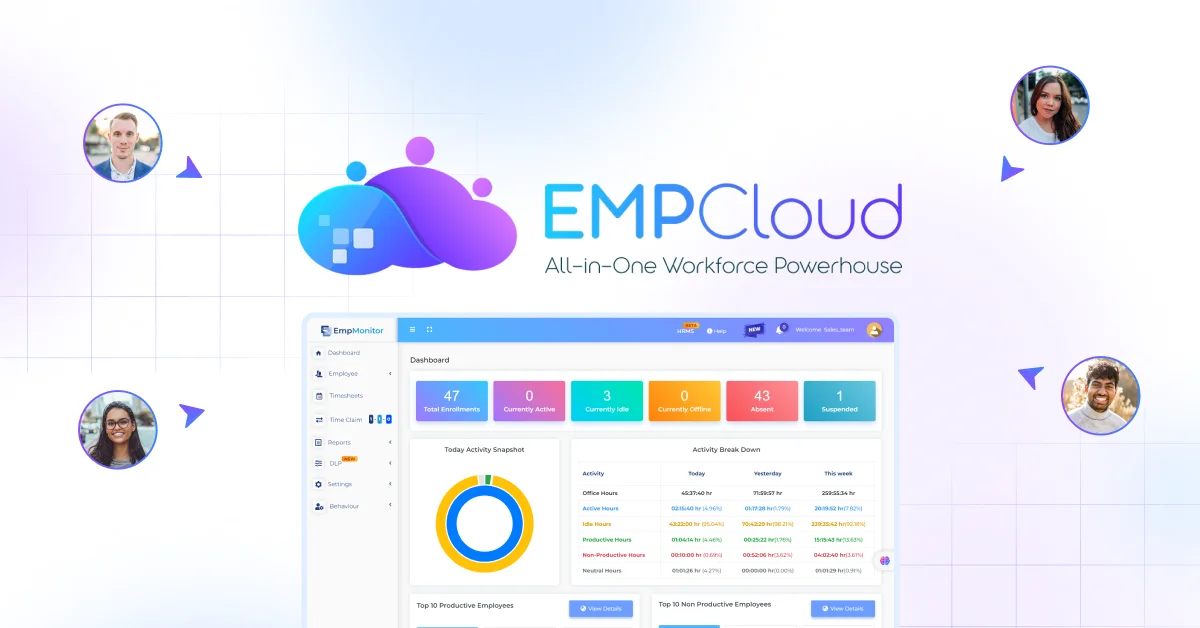
For businesses looking for more than basic collaboration software, EMPCloud offers an all-in-one workforce productivity platform designed to improve operational efficiency, employee tracking, and project visibility.
Unlike standalone communication or task management tools, EMPCloud combines project management, workforce monitoring, reporting, time tracking, and collaboration features within a centralized platform. This makes it especially useful for businesses managing remote teams, field employees, or multi-department operations.
Key Features of EMPCloud
Project Management
Plan projects, assign responsibilities, track milestones, and monitor progress from a centralized dashboard.
Time Tracking
Monitor employee work hours and productivity in real time to improve resource allocation and operational efficiency.
Geo-Location Tracking
Track field teams and mobile employees in real time for better coordination and route optimization.
Client Management
Manage client interactions, communication history, and important information from a single platform.
Report Generation and Analytics
Generate detailed performance reports and workflow insights to support data-driven business decisions.
Data Security and Access Control
Protect sensitive company information with advanced permissions, monitoring, and enterprise-grade security measures.
EMPCloud is best suited for businesses that need workforce management, productivity monitoring, project coordination, and collaboration tools within one integrated system.
Also Read:
7 Best Clock In and Out App & Tool Features
Can An Employee Time Tracking App Save Your Business Money?
How Project Tracking Software Improves Team Productivity?
Key Features the Best Productivity Tools Should Have
When evaluating productivity tools for teams, make sure they include these key features:
- Task Management: Easy-to-use task tracking and project management features.
- Team Collaboration: Real-time collaboration and communication tools.
- Automation: Tools that automate repetitive tasks and improve efficiency.
- AI Assistance: Tools that help with decision-making, content creation, and data analysis.
- Reporting and Dashboards: Tools that provide real-time insights and visual progress tracking.
- Integrations: Seamless integrations with other tools and apps your team already uses.
- User Permissions: Features that allow you to set permissions and access control for team members.
AI Productivity Tools: Are They Worth It for Teams?
AI productivity tools are gaining popularity for their ability to automate repetitive tasks and provide actionable insights. From writing assistants like Grammarly to project management tools with AI features like Monday.com, AI tools can make your team more efficient by eliminating manual tasks, optimizing workflows, and speeding up decision-making.
How AI Can Save Time
AI tools automate tasks like data entry, scheduling, and generating reports, which frees up your team to focus on more creative or strategic tasks.
Where AI Tools Are Most Useful
AI tools are especially useful in areas like customer support, marketing, data analysis, and content creation, where automation can reduce human error and increase productivity.
Common Mistakes When Choosing Productivity Tools for Teams
Avoid these common mistakes when selecting productivity tools for your team:
- Choosing Based Only on Popularity: Popular tools are not always the best fit for your team’s needs.
- Ignoring Team Feedback: Your team members are the ones who will use the tools, so their feedback is essential.
- Overpaying for Features: Avoid tools with more features than your team needs, as this can lead to wasted costs.
- Skipping Onboarding and Training: Proper training ensures your team adopts the tool successfully.
Final Thoughts: Choosing the Best Productivity Tools for Teams
Selecting the best productivity tools for teams is crucial for improving efficiency, collaboration, and overall workflow. The right tools should align with your team’s needs, integrate seamlessly with existing systems, and help streamline communication and task management. By carefully evaluating and testing options, you can identify the productivity tools for teams that fit your unique goals.
Remember, the best productivity tools for teams are those that not only enhance collaboration but also offer long-term value through automation, security, and scalability. Taking the time to choose the right tools ensures your team can work smarter, achieve their goals, and ultimately improve overall performance.
FAQ
- What are the best productivity tools for teams?
The best productivity tools for teams are those that improve communication, task management, collaboration, and workflow efficiency. Popular options include EMPCloud, Trello, Asana, Slack, and Microsoft Teams.
- What are AI productivity tools?
AI productivity tools use artificial intelligence to automate repetitive tasks, analyze data, assist with scheduling, generate content, and improve workflow efficiency.
- How do I choose the best productivity tools for remote teams?
For remote teams, prioritize tools that support real-time communication, cloud-based access, task management, video meetings, and seamless integrations with other workplace applications.
- Are paid productivity tools better than free ones?
Paid productivity tools usually offer more advanced features, stronger security, greater customization, and dedicated support compared to free versions, making them more suitable for growing teams.
- How much should teams budget for productivity tools?
The cost of productivity tools depends on team size, required features, and integrations. Many platforms offer free plans, while advanced business plans typically charge per user each month.
Quick Search Our Blogs
Type in keywords and get instant access to related blog posts.