
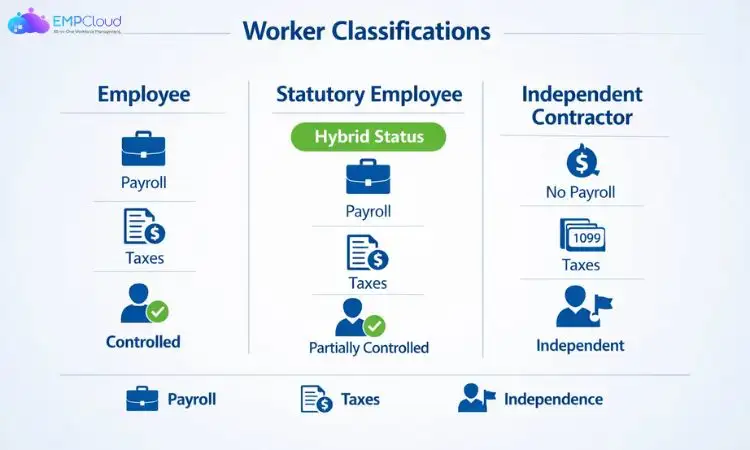
Employment classifications can sometimes be confusing, especially when businesses work with a mix of employees, freelancers, and contractors. One category that often raises questions is the statutory employee.
This classification sits between a traditional employee and an independent contractor. While the worker may operate with some independence, the law requires employers to treat them as employees for certain tax purposes, particularly Social Security and Medicare contributions.
Understanding what is a statutory employee is important for both employers and workers. It affects how taxes are reported, what expenses can be deducted, and how payroll is managed.
Listen to the podcast.
What Is a Statutory Employee?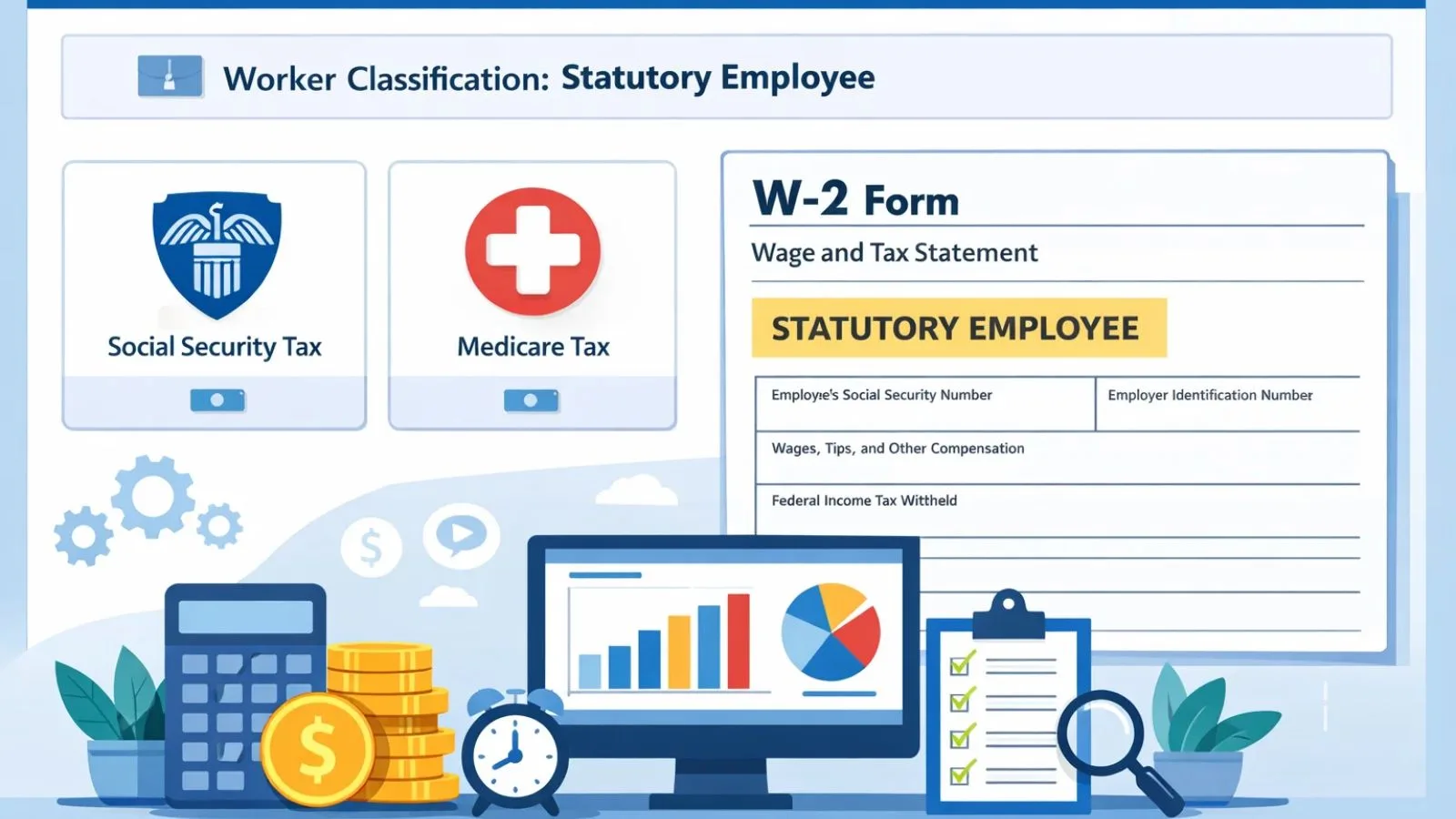
A statutory employee is a worker who is treated as an employee for certain tax purposes, even though their working arrangement may resemble that of an independent contractor. This classification mainly exists to ensure that specific payroll taxes, such as Social Security and Medicare, are handled correctly.
Unlike traditional employees, workers in this category often operate with more independence. They may manage their own schedules, cover some work expenses, or perform services outside the employer’s office. However, because their services are closely connected to a company’s business, tax rules require employers to contribute to certain payroll taxes on their behalf.
A statutory employee typically receives a Form W-2 rather than a Form 1099. The form includes a special designation that identifies the worker’s tax classification.
Another important feature is that these workers can usually deduct business-related expenses connected to their work. This creates a hybrid structure that combines aspects of employment and independent contracting.
Key Characteristics of a Statutory Employee
To better understand how this classification works, it helps to look at the typical traits associated with it. While every situation may vary, a statutory employee usually shares several common characteristics defined by tax regulations.
One key feature is the nature of the work relationship. These workers often perform services that are closely connected to a company’s products or operations. For example, they might represent the company in sales or distribute its products.
Another characteristic is tax treatment. Employers must handle Social Security and Medicare taxes for these workers, which is similar to how traditional employees are treated for payroll taxes. However, income tax withholding may still be handled differently depending on the agreement.
These workers also tend to have greater independence than regular employees. They may work remotely, set their own schedules, or use their own equipment to complete tasks.
Finally, a statutory employee typically receives a W-2 tax form instead of a 1099 form. This designation helps tax authorities correctly classify their income and payroll contributions.
Statutory Employee Examples
Looking at real-world situations can make it easier to understand how this classification works. There are several common examples recognized under tax regulations.
One well-known example is delivery drivers who distribute goods such as beverages, bakery items, or laundry products for a company. These workers may operate independently while still representing the company’s products and services.
Another example includes full-time life insurance sales agents who primarily sell policies for one insurance provider. Although they may manage their own schedules and client relationships, their work is closely tied to the company they represent.
Home-based workers may also fall into this category. These individuals typically assemble products or complete tasks using materials supplied by a company, often following specific instructions.
Finally, traveling or city salespeople can qualify under this classification. They usually visit retailers or wholesalers to sell products on behalf of a company.
These examples show how the classification often applies to workers who represent a business while maintaining some independence in how they perform their work.
Statutory Employee Benefits
Although this classification primarily focuses on taxation, there are several benefits that make it appealing to both workers and employers.
One important advantage is Social Security and Medicare contributions. Employers are required to pay a portion of these payroll taxes, which helps workers build eligibility for future benefits such as retirement and healthcare coverage.
Another benefit is the ability to deduct business expenses. Unlike traditional employees who often have limited deduction options, workers in this category may be able to claim expenses related to their job. This can include travel costs, equipment, or other necessary work-related expenses.
There is also a level of financial flexibility. Workers can maintain some independence in how they perform their work while still receiving certain tax advantages associated with employee status.
For businesses, this classification can provide a clear framework for handling payroll taxes and reporting requirements. Understanding these benefits helps both employers and workers manage their responsibilities more effectively while maintaining a structured working relationship.
Understanding Statutory Employee Taxes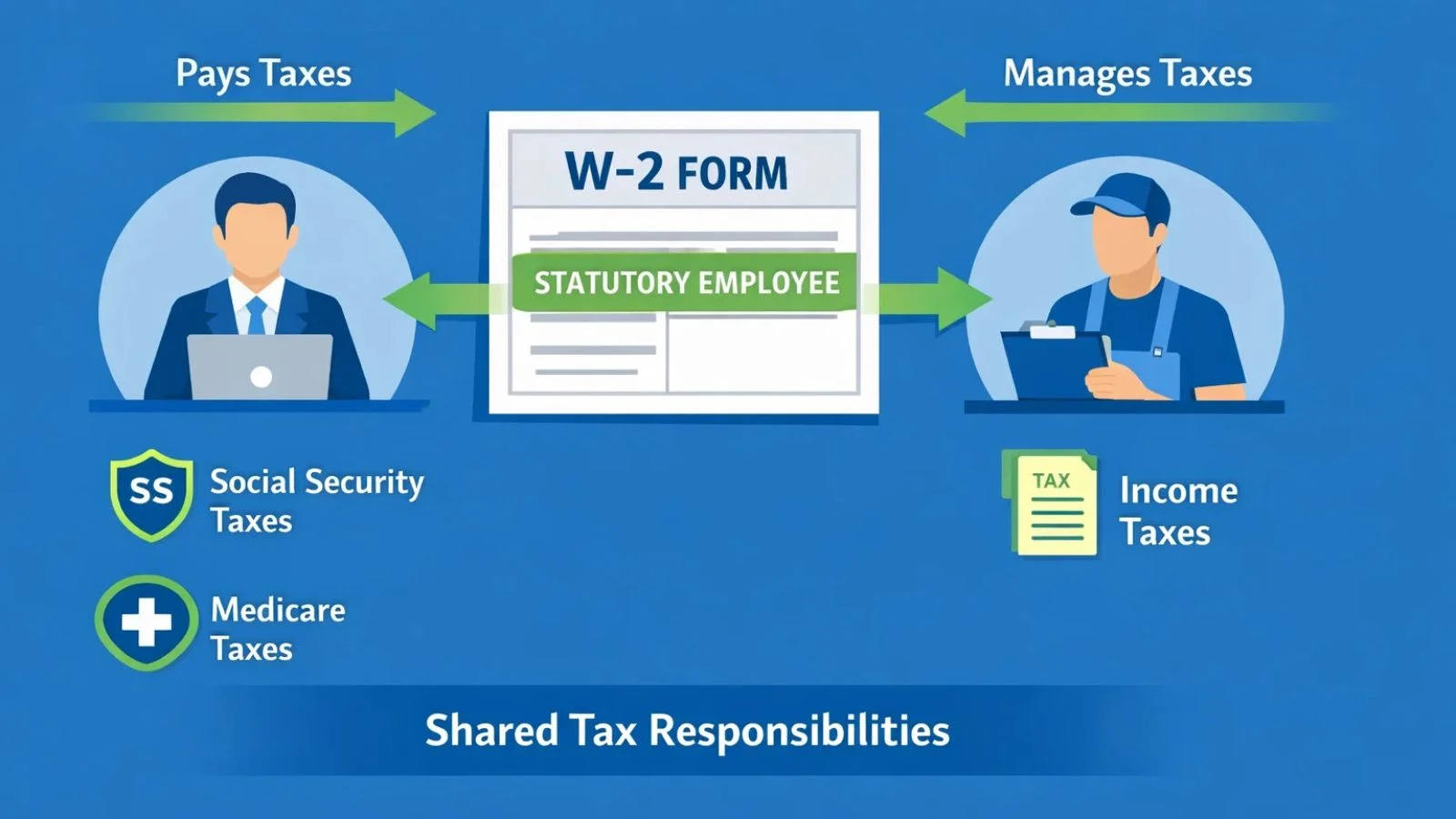
One of the most important aspects of this classification is how statutory employee taxes are handled. The tax treatment differs from both traditional employees and independent contractors, which is why understanding the rules is important for both workers and employers.
In most cases, employers must withhold and contribute Social Security and Medicare taxes for workers in this category. This is similar to how payroll taxes are handled for regular employees. These contributions help workers build eligibility for benefits such as retirement and Medicare coverage.
However, income tax withholding is usually not required. This means workers may need to manage their own federal or state income tax payments, often by making estimated tax payments during the year.
Another important detail is the tax form used for reporting income. Instead of receiving a Form 1099 like independent contractors, these workers receive a Form W-2. The form includes a special designation that identifies their classification.
Because of this structure, statutory employee taxes create a hybrid system where payroll taxes are partially handled by the employer, while the worker still manages some aspects of their own tax obligations.
Statutory Employee vs Independent Contractor
Many people confuse this classification with independent contracting, but there are several important differences. Understanding these differences helps businesses avoid misclassification and ensures that workers follow the correct tax rules.
One of the biggest distinctions involves tax responsibilities. With a statutory employee, the employer is responsible for paying part of the Social Security and Medicare taxes. Independent contractors, on the other hand, must pay the full self-employment tax themselves.
Another difference is the tax form used for reporting income. Workers in this classification receive a W-2 form from the employer, while independent contractors usually receive Form 1099.
The working relationship can also differ. Independent contractors often work with multiple clients and have complete control over how they perform their services. In contrast, a statutory employee usually works closely with one company and represents its products or services.
Understanding the difference between these two classifications is important for compliance, payroll management, and proper tax reporting.
Industries That Commonly Use This Classification
Certain industries rely more heavily on this worker category because their work structures involve a mix of independence and company representation. These roles often require workers to operate outside a traditional office while still maintaining a close relationship with a business.
One common industry is product distribution and delivery services. Companies that distribute beverages, baked goods, or other products often work with delivery drivers who represent the company while operating independently.
The insurance industry is another area where this classification appears frequently. Many life insurance agents work primarily for one company while managing their own client relationships and schedules.
Sales and product representation roles also commonly fall into this category. Traveling or city sales representatives who promote products to retailers or wholesalers may qualify depending on their working arrangement.
Additionally, some home-based production roles can fall under this classification. Workers who assemble products or complete tasks using materials provided by a company may qualify when certain conditions are met.
Because these industries often involve flexible work arrangements, businesses must carefully evaluate worker relationships to determine the correct classification and ensure proper tax compliance.
How Businesses Can Manage Worker Classification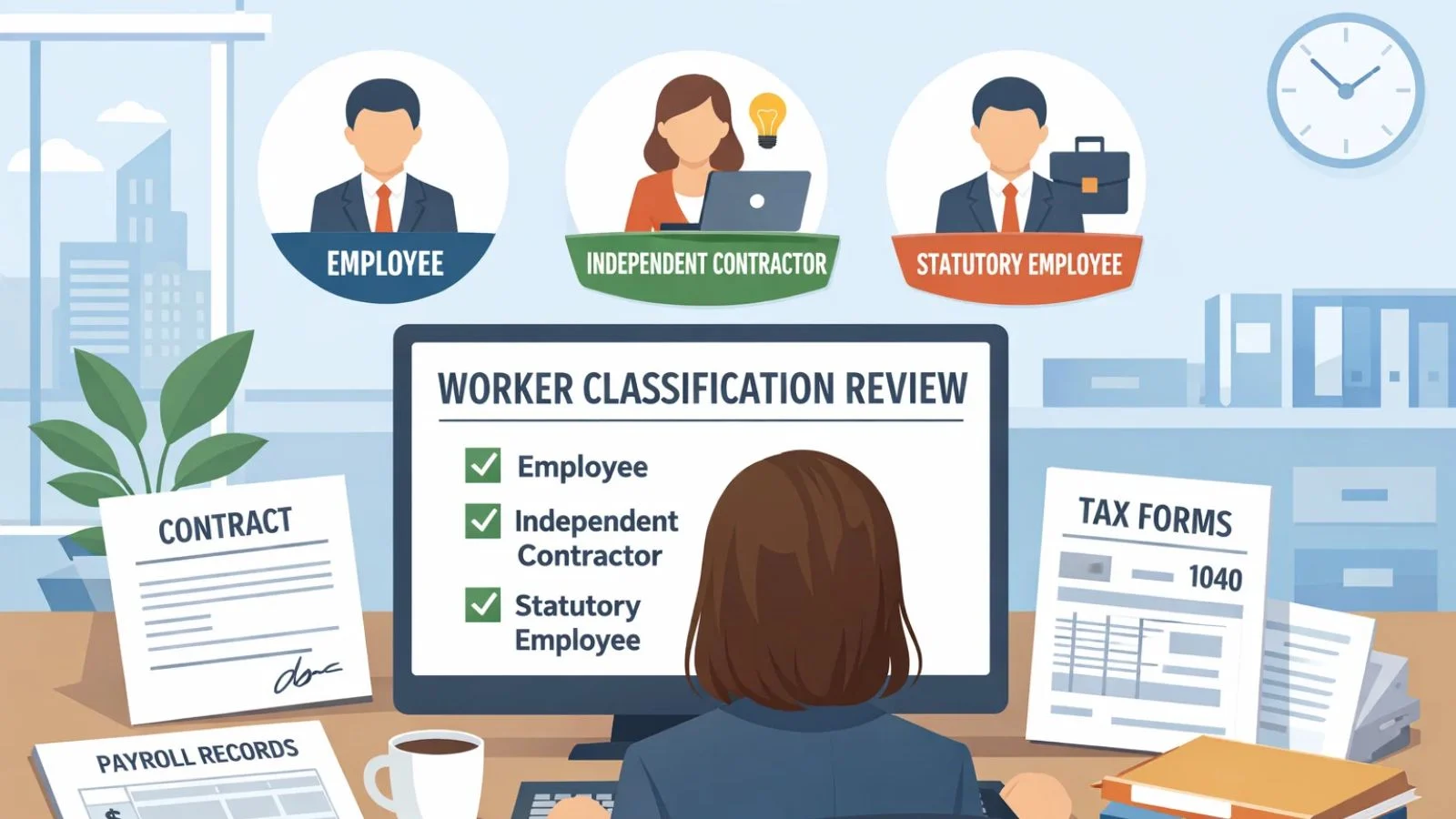
Correctly managing worker classification is important for avoiding tax issues and maintaining compliance with labor regulations. When businesses work with different types of workers, including employees, contractors, and a statutory employee, clear processes become essential.
The first step is reviewing the nature of the working relationship. Businesses should evaluate how the work is performed, whether the worker represents the company’s products, and how closely the role is tied to business operations. These factors help determine the correct classification.
Another important step is maintaining proper documentation. Written contracts should clearly outline job responsibilities, compensation structures, and the worker’s classification. This helps prevent confusion later and provides a record if questions arise during tax reporting.
Businesses should also ensure accurate payroll and tax reporting. Since payroll taxes are handled differently for various worker types, keeping records organized is critical.
Using workforce management tools can make this process easier. HR and payroll platforms allow companies to track employee records, monitor classifications, and maintain compliance more efficiently.
By implementing clear policies and organized systems, businesses can reduce the risk of misclassification and manage their workforce with greater confidence.
How EmpCloud Helps Manage Workforce Compliance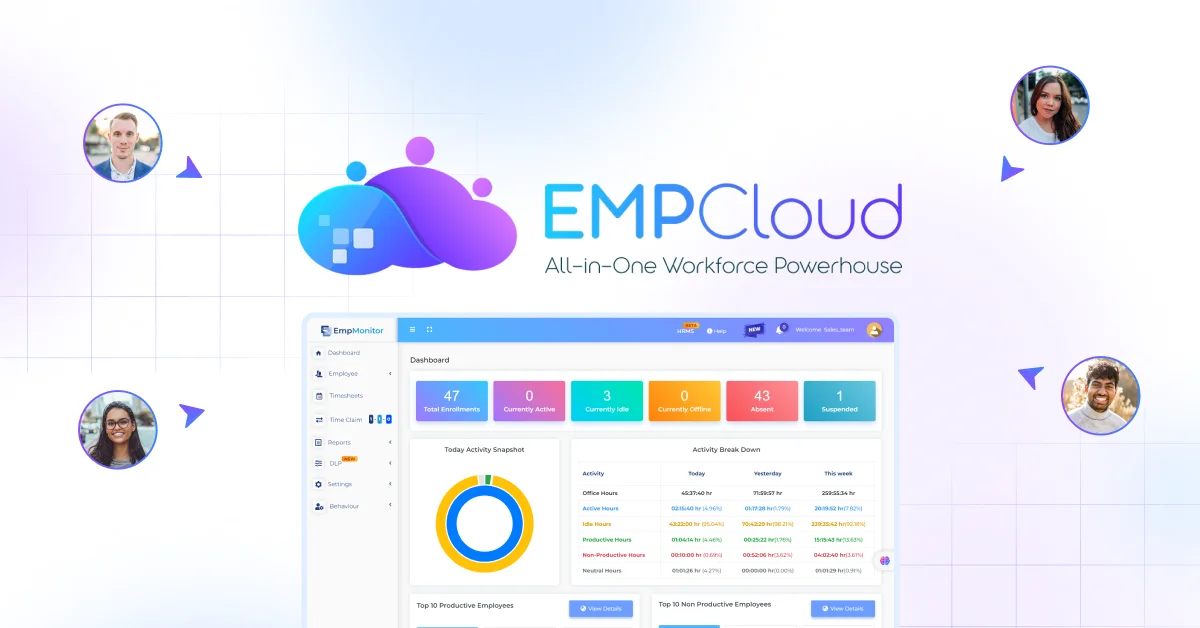
Managing a diverse workforce can be challenging for growing businesses. EmpCloud simplifies these tasks by offering the following features:
- Simplified Worker Classification
Track and manage full-time employees, contractors, and other worker categories with ease, ensuring correct payroll and tax treatment. - Centralized Employee Information
EmpCloud organizes employee records, payroll, and tax documentation in one centralized system, eliminating the risk of mistakes. - Accurate Payroll & Tax Management
Ensure correct payroll taxes and documentation, especially for roles requiring special tax treatment (e.g., statutory employees). - Streamlined HR Tasks
Simplify employee onboarding, attendance tracking, and HR documentation—all within a single platform. - Reduced Administrative Workload
By automating key processes, EmpCloud minimizes manual work, allowing businesses to focus on growth and operations. - Maintains Compliance
EmpCloud offers an efficient solution to manage employee data and payroll processes, ensuring compliance across all worker types.Also Read,
How To Calculate Payroll Accurately: Step-by-Step Guide
Payroll Management Explained: Process, Systems, Software & Best Practices
Conclusion
Understanding this worker classification is important for both businesses and individuals. It helps bridge the gap between traditional employees and independent contractors, especially in how payroll taxes are managed.
As discussed, this classification applies to certain roles where individuals work with a degree of independence but still represent a company’s products or services. Common examples, such as delivery drivers or insurance sales agents, show how this arrangement functions in real-world scenarios.
There are also notable benefits, particularly in terms of tax treatment and the ability to deduct work-related expenses. At the same time, having a clear understanding of the tax responsibilities involved is essential so that both employers and workers can meet reporting requirements correctly.
For businesses, proper worker classification is key to avoiding compliance issues and potential penalties. Maintaining clear contracts, organized documentation, and efficient payroll processes plays an important role in managing these relationships effectively.
FAQs
What are common examples of a statutory employee?
Common examples include delivery drivers who distribute a company’s products, full-time life insurance sales agents, home-based workers assembling goods using company-provided materials, and traveling sales representatives who sell products to retailers.
What benefits do statutory employees receive?
Statutory employees receive employer contributions toward Social Security and Medicare taxes. They may also be eligible to deduct certain work-related expenses, providing a combination of tax advantages and work flexibility.
How do taxes work for statutory employees?
For statutory employees, employers pay Social Security and Medicare taxes on behalf of the worker. The worker is responsible for managing income tax payments independently. A W-2 form is issued, clearly identifying the worker under this classification.
Quick Search Our Blogs
Type in keywords and get instant access to related blog posts.