Trust sits at the center of every healthy workplace relationship. Without it, even the most well-funded organizations struggle to retain talent, maintain productivity, or foster meaningful team collaboration. With it, teams operate with confidence, purpose, and a shared sense of direction. Employee trust is no longer a “soft” concept tied only to culture—it directly impacts performance, engagement, and long-term business outcomes. Understanding what it truly means, why it matters, and how to measure and improve it is essential for modern organizations.
Listen To The Podcast!
What Is Employee Trust?

To understand how trust works at work, we first need clarity on the concept itself.
Employee trust refers to the confidence employees have in their organization, leadership, systems, and decision-making. It is built when employees believe they are treated fairly, their efforts are valued, and their organization acts with consistency and integrity.
In simple terms, employee trust answers this question for workers:
“Can I rely on this organization to support my goals, respect my effort, and act in my best interest—even when I’m not being closely watched?”
When the answer is yes, trust exists. When it isn’t, cracks begin to form in motivation, engagement, and loyalty.
Why Is Employee Trust Important?
Many organizations invest heavily in tools, policies, and performance frameworks, yet overlook trust as the foundation holding everything together. That oversight often shows up in subtle but costly ways.
When trust in the workplace is strong, employees are more likely to:
- Take initiative without fear
- Communicate openly with managers
- Collaborate across teams
- Stay committed during periods of change
- Go beyond basic job requirements
On the other hand, low trust creates hesitation. Employees may comply with instructions but disengage emotionally. They show up, but they stop caring.
Research consistently links employee trust to better outcomes such as:
- Higher productivity and work quality
- Increased innovation and problem-solving
- Lower absenteeism and turnover
- Stronger employer reputation
In short, trust influences not just how employees feel—but how they perform.
Employee Trust and Trust in the Workplace
Trust in the workplace goes beyond individual relationships. It extends to systems, policies, and everyday experiences.
Employees don’t only assess whether they trust their manager. They also observe:
- How performance is evaluated
- Whether rules are applied consistently
- How transparent leadership is during change
- How feedback is handled
- Whether promises are followed by action
Each interaction reinforces or weakens trust. Over time, these signals shape how safe employees feel investing their energy, ideas, and commitment in their work.
The Key Elements That Shape Employee Trust
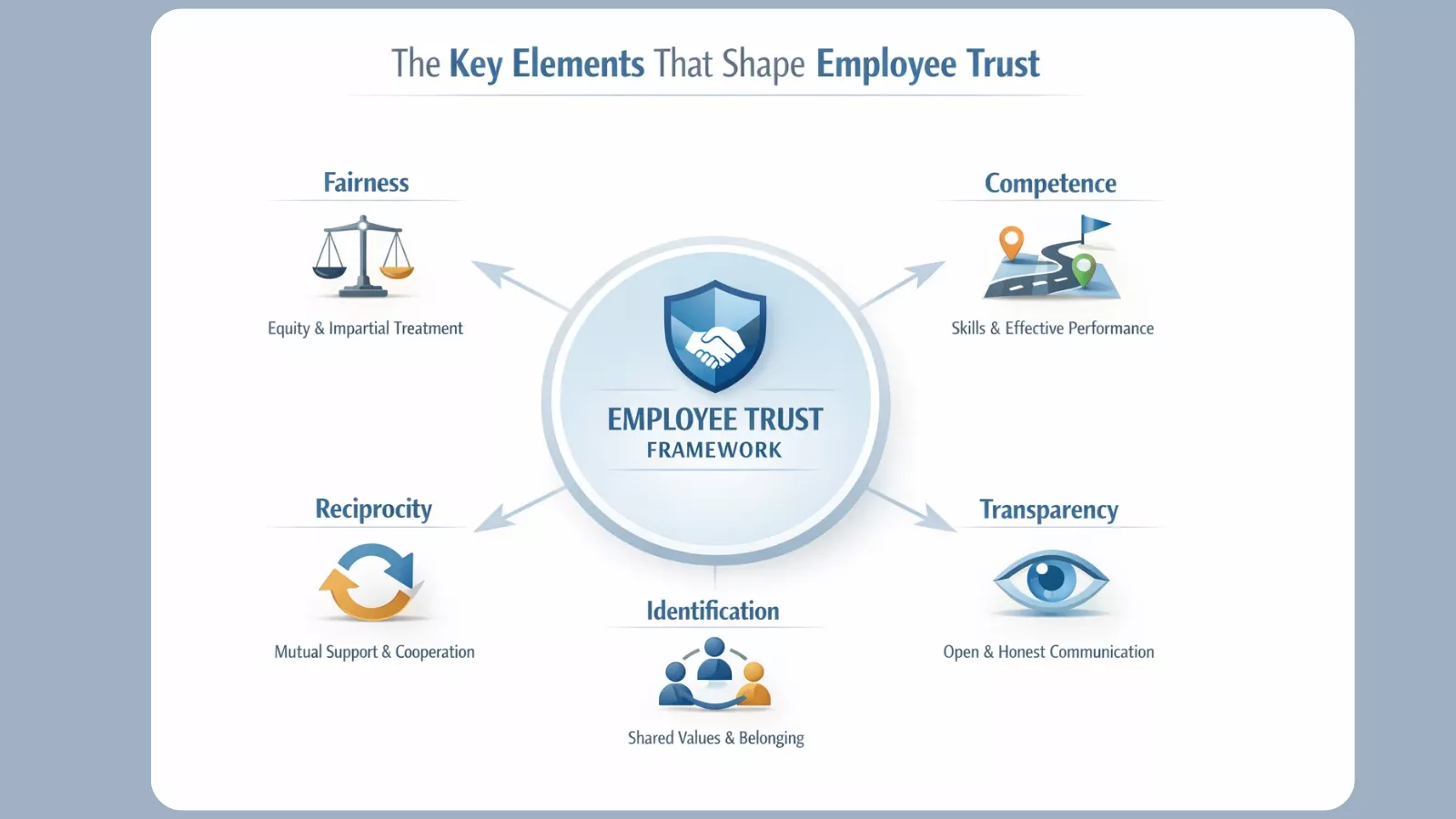
Employee trust isn’t a single emotion—it’s built from multiple dimensions working together.
Fairness
Employees need to believe that decisions around pay, promotions, workload, and recognition are impartial. Favoritism, unclear criteria, or inconsistent treatment quickly erode trust.
Competence
Trust grows when employees believe leadership knows what it’s doing. Clear direction, sound decision-making, and well-managed processes signal organizational competence.
Identification
Employees are more likely to trust organizations they feel connected to. Shared values, a sense of belonging, and alignment with company goals strengthen this bond.
Reciprocity
Trust deepens when effort is mutual. Employees give time and skills; organizations return support, growth opportunities, and respect.
Transparency
Transparency reduces uncertainty. When employees understand why decisions are made—even difficult ones—they’re more likely to accept and trust them.
Together, these elements create a structure that supports long-term trust rather than short-term compliance.
The Modern Challenges To Employee Trust
Workplace trust has been tested in recent years. Remote and hybrid work reshaped expectations, autonomy increased, and employees proved they could deliver results without constant supervision. At the same time, the rise of remote employee monitoring has sparked important conversations about visibility, accountability, and trust.
Yet in many organizations, trust has quietly weakened due to:
- Increased micromanagement
- Overreliance on remote employee monitoring without transparency
- Return-to-office mandates without clear justification
- Poor communication during change
- Lack of follow-through on employee feedback
These challenges affect remote and on-site teams alike. The issue isn’t where employees work—it’s whether leadership demonstrates confidence in how they work while using monitoring systems responsibly and transparently.
How Organizations Can Build Employee Trust Effectively?

Building trust isn’t about grand gestures. It’s about consistency in everyday actions.
Lead With Trust From the Start
Trust shouldn’t be conditional. When leaders assume positive intent, employees are more likely to respond with responsibility and ownership.
Managers who are dependable, honest, and supportive set the tone for trust across teams.
Communicate Clearly and Consistently
Uncertainty creates doubt. Clear expectations, regular updates, and open channels for questions reduce confusion and prevent misinformation.
Two-way communication matters. Employees need to feel heard—not just informed.
Recognize Effort and Output
Recognition signals value. When employees see their work acknowledged fairly, trust strengthens.
Recognition doesn’t always require rewards. Sometimes, timely appreciation and visibility are enough to reinforce confidence.
Create Safe Feedback Loops
Feedback builds trust only when it leads to action. When employees speak up and see changes follow, they feel respected.
Regular check-ins, anonymous feedback options, and visible follow-through help close the trust gap.
Support Autonomy With Accountability
Trust grows when employees are given autonomy alongside clear goals. Focusing on outcomes rather than constant monitoring shows confidence in people’s abilities.
Modern employee management platforms like EmpCloud support this balance by providing visibility into performance without fostering micromanagement—allowing trust and accountability to coexist.
Also Read
The Powerful Impact Of Project Management On Team Collaboration
How To Implement Remote Employee Monitoring Without Micromanaging
How an Employee Trust Survey Helps
Trust can’t be improved if it isn’t understood.
An employee trust survey goes beyond surface-level engagement metrics. It helps organizations identify:
- Where trust is strong
- Where it’s weakening
- Which elements (fairness, transparency, leadership) need attention
Unlike one-off pulse checks, consistent trust measurement reveals patterns over time. It allows leaders to benchmark progress and adjust strategies before issues escalate.
The most effective surveys give employees space to speak honestly and ensure leadership acts on the insights gathered.
Measuring and Maintaining Employee Trust Over Time
Employee trust isn’t static. It evolves with leadership decisions, organizational changes, and daily experiences.
Maintaining trust requires:
- Regular measurement
- Open communication around results
- Visible action on feedback
- Ongoing consistency in leadership behavior
Platforms like EmpCloud can support this by offering structured visibility into attendance, performance, and workflows—reducing ambiguity while maintaining fairness and transparency.
EmpCloud: A Unified Platform for Transparent Workforce Management
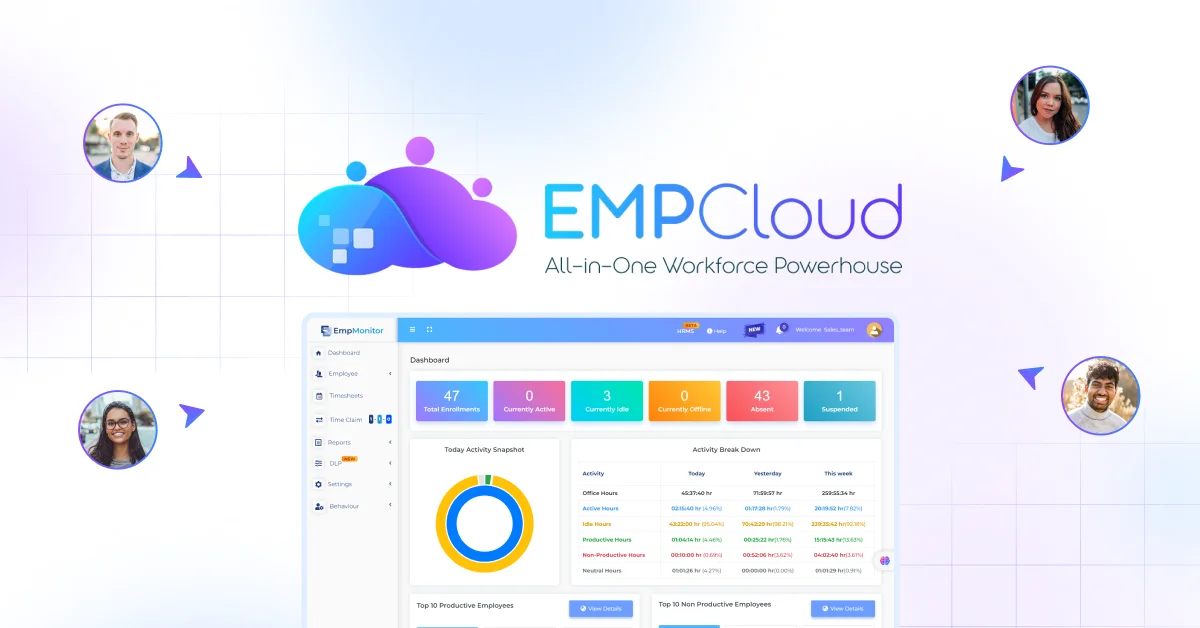 EmpCloud is a comprehensive workforce management ecosystem designed to bring structure, visibility, and accountability to every stage of the employee lifecycle. Instead of operating through disconnected tools, organizations can manage hiring, attendance, performance, payroll, field operations, and employee development within a single, integrated platform.
Built to support both office and field teams, EmpCloud combines operational efficiency with structured oversight—helping businesses maintain transparency while enabling growth.
Let us understand some of its advanced features:
Recruitment & Onboarding
EmpCloud simplifies hiring and new employee integration by streamlining recruitment workflows, documentation, and onboarding processes. It helps organizations reduce delays, improve candidate experience, and ensure every new hire transitions smoothly into their role.
Biometrics
With integrated biometric verification, EmpCloud strengthens attendance accuracy and workplace security. It minimizes manual errors, reduces time fraud, and ensures reliable employee authentication.
EmpMonitor
EmpCloud’s productivity intelligence layer, EmpMonitor, provides real-time insights into employee activity and performance trends. Managers gain structured visibility without disrupting workflows, enabling data-backed decisions that support accountability and efficiency.
HRMS
The HRMS module centralizes attendance tracking, leave management, compliance documentation, and essential employee records. This reduces administrative overhead and ensures consistent policy implementation across teams.
Project Management
EmpCloud enables teams to manage tasks, timelines, and collaboration within a structured environment. Managers can assign responsibilities, track progress, and maintain alignment across departments.
Performance & Career Management
EmpCloud supports structured performance evaluations and career development planning. Organizations can monitor growth, identify skill gaps, and guide employees toward long-term progression.
Payroll Management
Payroll processing is simplified through automated calculations, tax management, and compliance support, reducing errors and administrative workload.
Exit & Portfolio Management
EmpCloud ensures smooth offboarding processes, documentation handling, and background verification portfolio management—maintaining compliance and organizational continuity.
By integrating these capabilities into a single system, EmpCloud delivers clarity, operational control, and workforce transparency—supporting organizations that aim to build trust through structured management.
The Role of Power Imbalance In Employee Trust
Employee trust is fundamentally different from trust in personal or peer relationships because it exists within a clear power imbalance. When employees place their trust in an organization, they are taking a meaningful risk.
Employers hold significant influence over critical aspects of an employee’s professional life, including compensation, promotions, job stability, workload, performance evaluations, and access to growth opportunities. Even when employees perform well, they do not have full control over these outcomes. Trust, in this context, means believing that decisions will be made fairly, consistently, and without hidden motives.
This imbalance makes employee trust both fragile and highly valuable. Unlike trust between equals, workplace trust depends heavily on leadership behavior, transparency, and consistency. A single broken promise, unclear decision, or unexplained policy shift can quickly weaken it.
For organizations aiming to build lasting trust in the workplace, acknowledging this dynamic is essential. Trust grows when leaders act responsibly—communicating openly, applying policies consistently, and demonstrating that employee well-being is not secondary to short-term results. When employees feel their trust is respected rather than exploited, confidence deepens, loyalty strengthens, and long-term commitment naturally follows.
Final Thoughts
Employee trust is not built through slogans or one-time initiatives. It grows when organizations consistently show fairness, competence, transparency, and respect.
When employees trust their workplace, they don’t just complete tasks—they invest themselves in outcomes. They collaborate more freely, adapt faster, and stay longer.
In an environment where talent has choices, trust becomes a defining advantage. Organizations that take employee trust seriously don’t just build better cultures—they build stronger, more resilient businesses.
FAQs
What is the difference between employee trust and employee engagement?
Employee trust reflects an employee’s confidence in the organization’s intentions, fairness, and reliability, while engagement measures how emotionally invested and involved employees feel in their work. Trust often acts as the foundation for sustained engagement.
Can employee trust exist even during organizational change?
Yes. Trust can remain strong during change when communication is clear, expectations are managed honestly, and employees understand how decisions are made. Lack of transparency during change is often what weakens trust.
How long does it take to build employee trust?
Employee trust develops over time through consistent actions, fair policies, and dependable leadership behavior. It cannot be built through one initiative alone and requires ongoing reinforcement.
Is employee trust measurable?
Employee trust can be measured through structured surveys that evaluate fairness, competence, identification, reciprocity, and transparency. These measurements provide more clarity than single-score metrics.
Quick Search Our Blogs
Type in keywords and get instant access to related blog posts.